This is a landscape photo of the Klamath River with mountains on either side of the photo. The Western Fisheries Research Center is researching the effects of flow management before and after dam removal on juvenile Chinook salmon survival to the ocean.
Images
Search here for some of our available images.
This is a landscape photo of the Klamath River with mountains on either side of the photo. The Western Fisheries Research Center is researching the effects of flow management before and after dam removal on juvenile Chinook salmon survival to the ocean.
This photo shows the California Department of Fish and Wilflife’s screw trap on the lower Shasta River, where Western Fisheries Research Center (WFRC) scientists surgically implant acoustic telemetry tags and passive integrated transponder tags into juvenil Chinook salmon collected at this site.
In this photo a USGS Biological Science Technician Brittany Graham is surgically implanting an acoustic telemetry tag into a juvenile salmon on the banks of the lower Shasta River. The Western Fisheries Research Center (WFRC) uses fish with acoustic transmitters to track fish movements and estimate survival. This information provides water managers with ro
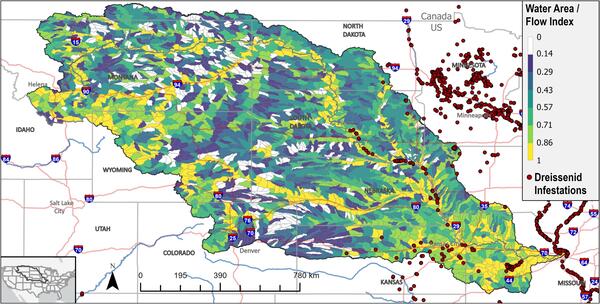
Mussel Infestation Risk for the Missouri River Basin
Mussel Infestation Risk for the Missouri River BasinExample of model results for the Missouri River Basin, illustrating that the risk of infestation is not equal across a watershed. This reinforces the value of using these risk assessment models in places like the Columbia River basin so monitoring, control and mitigation actions can be targeted.
Mussel Infestation Risk for the Missouri River Basin
Mussel Infestation Risk for the Missouri River BasinExample of model results for the Missouri River Basin, illustrating that the risk of infestation is not equal across a watershed. This reinforces the value of using these risk assessment models in places like the Columbia River basin so monitoring, control and mitigation actions can be targeted.
This is an image of a stormwater drain in Seattle. Dangerous tire particles, such as 6PPD-quinone, can land up in water bodies through drains such as the one depicted above and can cause deaths in a variety of fish, including salmon.
This is a water drain that drains water from downtown Seattle to the Puget Sound.
This is a photograph of Ryan Byrne, a scientist at the Klamath Falls Field Station in Klamath Falls, OR. He is a part of the Western Fisheries Research Center.
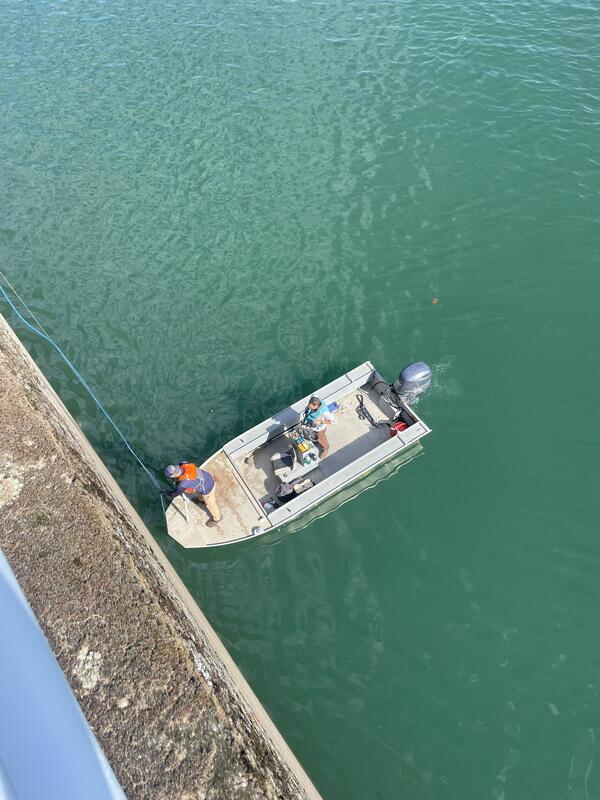
Lower End of Fish Ladder at Keno Dam Looking Downstream
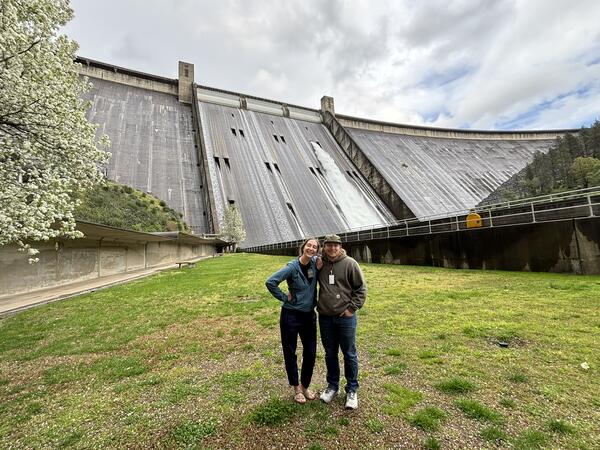
Lower End of Fish Ladder at Keno Dam Looking DownstreamThis is Keno Dam, in Klamath, OR. The Western Fisheries Research Center (WFRC) is doing work here to ensure proper fish passage is functioning and to provide science to help better address the water needs of the Klamath River Basin.
Lower End of Fish Ladder at Keno Dam Looking Downstream
Lower End of Fish Ladder at Keno Dam Looking DownstreamThis is Keno Dam, in Klamath, OR. The Western Fisheries Research Center (WFRC) is doing work here to ensure proper fish passage is functioning and to provide science to help better address the water needs of the Klamath River Basin.
The Western Fisheries Research Center (WFRC) is partnering with the U.S. Bureau of Reclamation to discuss ways to monitor fish passage at Keno Dam. With the recent removal of four mainstem dams along the Klamath River, Keno Dam now stands as the most downstream fish passage challenge , and the first major obstacle for migrating salmon returning upstream.
Check out these photos from the field! Lisa K Weiland (sitting) and Leah Tai from the U.S. Fish and Wildlife Service are shown above. This project is working to learn how larval lampreys use soft substrates for burrowing.
Scientists Inject Yukon River Chinook salmon with Ichthyophonus Parasite
Scientists Inject Yukon River Chinook salmon with Ichthyophonus ParasiteUSGS scientist Jake Gregg training Alaska Pacific University graduate student Nadia Barcelona how to inject Yukon River Chinook salmon with Ichthyophonus at the Marrowstone Marine Field Station
Scientists Inject Yukon River Chinook salmon with Ichthyophonus Parasite
Scientists Inject Yukon River Chinook salmon with Ichthyophonus ParasiteUSGS scientist Jake Gregg training Alaska Pacific University graduate student Nadia Barcelona how to inject Yukon River Chinook salmon with Ichthyophonus at the Marrowstone Marine Field Station
This is a photograph of a fish wheel, one of the primary means of catching Chinook salmon in the middle section of the Yukon River.
The Pacific sand lance is an important forage fish found in Puget Sound. They employ a unique strategy of burrowing into sand to rest and conserve energy, and to avoid predation. The USGS is currently studying forage fish spawning, and how human development may be affecting their habitat.
Artificial Light At Night Over Lake Washington, WA
Artificial Light At Night Over Lake Washington, WAArtificial light at night (ALAN) can be a threat to aquatic ecosystems. Light in the sky penetrates through the water and brightens the water column. Even small increases in light at night can dramatically improve some predators’ ability to hunt and kill their prey.
Artificial Light At Night Over Lake Washington, WA
Artificial Light At Night Over Lake Washington, WAArtificial light at night (ALAN) can be a threat to aquatic ecosystems. Light in the sky penetrates through the water and brightens the water column. Even small increases in light at night can dramatically improve some predators’ ability to hunt and kill their prey.
Artificial Light At Night Reflected into Lake Washington
Artificial Light At Night Reflected into Lake WashingtonArtificial light at night (ALAN) can be a threat to aquatic ecosystems. Light in the sky penetrates through the water and brightens the water column. Even small increases in light at night can dramatically improve some predators’ ability to hunt and kill their prey.
Artificial Light At Night Reflected into Lake Washington
Artificial Light At Night Reflected into Lake WashingtonArtificial light at night (ALAN) can be a threat to aquatic ecosystems. Light in the sky penetrates through the water and brightens the water column. Even small increases in light at night can dramatically improve some predators’ ability to hunt and kill their prey.
Steve Waste's Last Day of Work at Columbia River Research Laboratory
Steve Waste's Last Day of Work at Columbia River Research LaboratoryThis image is from Steve Waste's last day at the Columbia River Research Laboratory. Steve served as the Director of the Columbia River Research Laboratory, a facility of the Western Fisheries Research Center of USGS, from 2008 to 2024. He retired in 2024 and now continues to support WFRC as a Scientist Emeritus. Steve holds a Ph.D.
Steve Waste's Last Day of Work at Columbia River Research Laboratory
Steve Waste's Last Day of Work at Columbia River Research LaboratoryThis image is from Steve Waste's last day at the Columbia River Research Laboratory. Steve served as the Director of the Columbia River Research Laboratory, a facility of the Western Fisheries Research Center of USGS, from 2008 to 2024. He retired in 2024 and now continues to support WFRC as a Scientist Emeritus. Steve holds a Ph.D.
This is a map of the Snake River, used in the publication Back from the Brink: Estimating daily and annual abundance of natural-origin salmon smolts from 30 years of mixed-origin capture-recapture data.
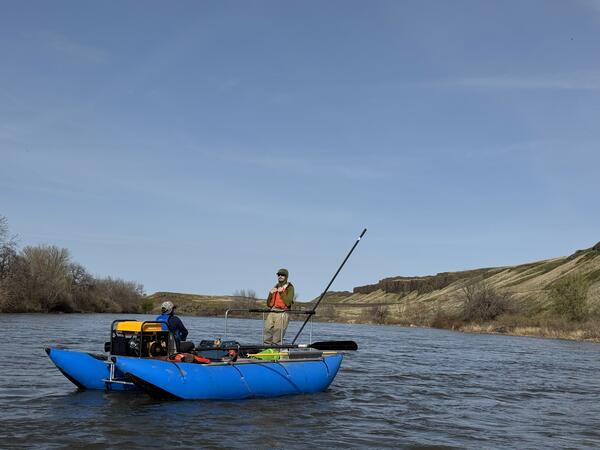
This is an image of Kenneth Tiffan out in the field. Ken works to conduct applied research to provide information that would increase our understanding of Snake River fall Chinook salmon, listed as “threatened” under the ESA in 1992. His career has focused on this unique stock and facilitating recovery efforts.
Artificial light at night (ALAN) can be a threat to aquatic ecosystems. Light in the sky penetrates through the water and brightens the water column. Even small increases in light at night can dramatically improve some predators’ ability to hunt and kill their prey.
Light Sensor Attached to Boat for Artificial Light At Night Study
Light Sensor Attached to Boat for Artificial Light At Night StudyUSGS Western Fisheries Research Center scientists are investigating the relationship between ALAN, predators’ hunting ability, and juvenile salmon survival in Lake Washington. This includes using a new instrument that overcomes significant issues experienced when attempting to measure light at night underwater.
Light Sensor Attached to Boat for Artificial Light At Night Study
Light Sensor Attached to Boat for Artificial Light At Night StudyUSGS Western Fisheries Research Center scientists are investigating the relationship between ALAN, predators’ hunting ability, and juvenile salmon survival in Lake Washington. This includes using a new instrument that overcomes significant issues experienced when attempting to measure light at night underwater.
These are graphs detailing the number of natural origin age-0 Chinook salmon passing Lower Granite Dam over the years.