
U.S. flag

An official website of the United States government

“How much money did that save our community by making these investments?” said Keith Brooks, general manager of the Douglas Electric Cooperative. “It’s hard to quantify the fire that never happens.” 

Tree Removal

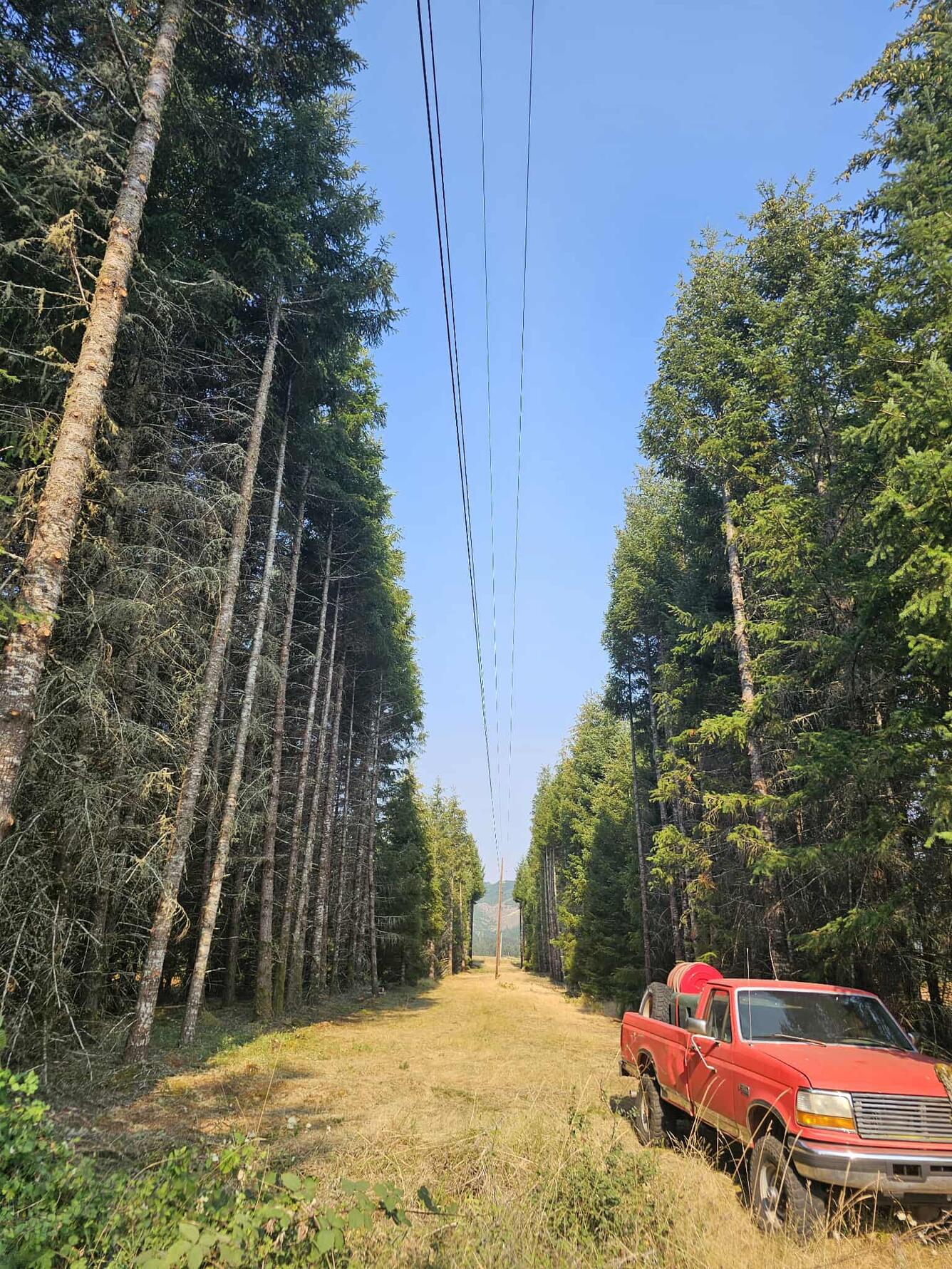
The utility in southwest Oregon received a \$9.1 million Community Wildfire Defense Grant (CWDG) in 2023 and hired extra crews to remove trees along its 1,300 miles of powerlines. Damaged trees near powerlines can snap and cause fires if left untouched. And when trees hit powerlines, fire is often an unintended consequence: 1 out of every 10 wildfires in the United States is caused by utilities. “This grant has blessed this community. I have no doubt that it is helping us reduce wildfire risk in a way that we couldn’t before.” Brooks used wildfire risk data based on LANDFIRE to show his area was at high risk of experiencing a fire. 

LANDFIRE, short for Landscape Fire and Resource Management Planning Tools, maps plant materials that fuel fires in the United States, helping communities assess wildfire risk. 

Douglas Electric removed 10,000 trees over two seasons. The utility has seen a 30% drop in tree-related power outages.

Douglas Electric powerline

Making Data Accessible for All Communities

Media
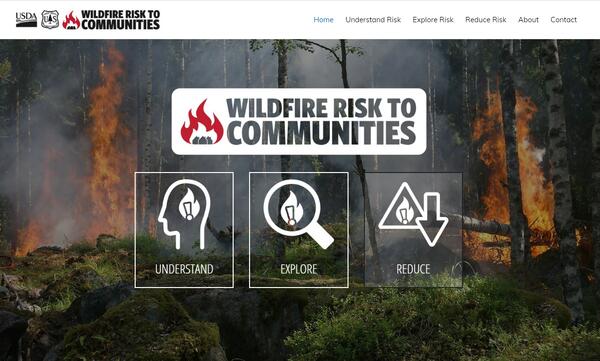
Screenshot of Wildfire Risk to Communities Tool
Wildfire Risk to Communities (wildfirerisk.org) is a USDA Forest Service program that incorporates LANDFIRE data to help assess risk across the entire United States.

The LANDFIRE project uses Landsat satellite data to map wildland fuels. When combined with information about weather and population, LANDFIRE data can then be used to map wildfire risk. 

LANDFIRE is a shared program between the wildland fire management programs of the U.S. Department of Agriculture Forest Service and U.S. Department of the Interior, with support from the USGS National Land Imaging (NLI) Program and USGS Gap Analysis Project (GAP)

The Community Wildfire Defense Grant program uses LANDFIRE-based wildfire risk data available on the Wildfire Risk to Communities website, wildfirerisk.org, a Forest Service program mandated by Congress in 2018.

“Since wildfirerisk.org launched in 2020, there have been 2 million views of the website,” said Kelly Pohl, associate director of Headwaters Economics, a nonprofit research group that helps manage the user dashboard.  “LANDFIRE is a fundamental building block for what we do at wildfirerisk.org, and without it, it would be nearly impossible to continue to map wildfire risk for the country.”

LANDFIRE data is available at no charge on its website LANDFIRE.gov

Protecting Homes from Burning Embers

Media
A map of four Montana counties
This section from LANDFIRE’s Existing Vegetation Cover (2023) shows the four counties in Montana—Gallatin, Park, Stillwater and Carbon—that commissioned the Trans-County Wildfire Risk Assessment. Dark green pixels indicate tree cover; orange, herb cover; light yellow, row crops; and red or pink, developed land in towns and cities. 

Another example of LANDFIRE data helping save lives and property comes from four Montana counties that commissioned an assessment of their risk for wildfires, paid for in part by a grant from CWDG. The four counties—Gallatin, Park, Stillwater and Carbon—all include parts of the Custer-Gallatin National Forest and touch several wilderness areas. Two of the counties border Yellowstone National Park.

Protecting homes and people’s lives amid so much forestland is a major concern, said Patrick Lonergan, chief of Emergency Management and Fire for Gallatin County. “Rarely does the main body of a fire burn into a community and burn the community down,” he said. “The main body of the fire produces embers because of the fuel makeup and the intensity of the fire, which then launches embers, starting spot fires and directly igniting buildings.” 

Vibrant Planet, the company conducting the assessment, uses LANDFIRE data to map fuels—the plant life on the ground that might burn—and then adds more data like wind and weather conditions to predict what it calls Sources of Ember Load to Buildings.

Once potential sources of embers are identified, communities can target those areas strategically before a wildfire even starts in order to prevent homes and other personal property from burning.

LANDFIRE’s Continuous Improvements into the Future

Media
Thumbnail image of Landsat Next, showing three satellites in orbit
Landsat Next is a trio of satellites with expanded capabilities that will orbit Earth more frequently than current Landsat satellites.

In 2024, the project started releasing annual LANDFIRE updates. “If you’re not making your decisions based on good, usable data, then you’re just sort of punching in the dark,” Brooks said. “The LANDFIRE datasets and the website are valuable tools to help you make smart decisions.”

LANDFIRE will gain even more insight in the future with the next generation of Landsat. A trio of satellites is planned to launch in late 2030/early 2031 as Landsat Next, capturing far more detail about features of the Earth’s surface more frequently than current Landsat satellites. “As far as LNEXT goes, LANDFIRE will welcome every bit of data Landsat Next will provide.  The expanded infrared capabilities will help gauge the health of vegetation as well as potentially help differentiate additional vegetation types. I’m also hopeful new methods for analysis of fire damage will spring from the expanded bands keyed towards this very problem,” said LANDFIRE USGS Project Manager Jon Dewitz.

Note: LANDFIRE products are generated at the U.S. Geological Survey (USGS) Earth Resources Observation and Science (EROS) Center through an interagency partnership between the Department of the Interior and the U.S. Department of Agriculture Forest Service, with The Nature Conservancy as an additional partner. Both Landsat and LANDFIRE data are available to the public at no cost.

Disclaimer: This web page contains hypertext links to information created and maintained by other organizations. USGS is not responsible for the content of any off-site pages. Reference herein to any specific commercial products, processes, or services by trade name, trademark, manufacturer, or otherwise, does not constitute or imply its endorsement or recommendation by the United States Government. 


More Landsat at Work Examples

    • Landsat at Work: Transforming Data into Solutions Landsat at Work: Transforming Data into Solutions

      Landsat’s satellite imagery provides valuable data used by industries and decision makers in the field, ranging from energy and utilities to agriculture, insurance and more. Landsat’s archive reaches back more than 50 years, providing valuable insights into land, water and environmental conditions that shape planning, management, and response.
      Landsat at Work: Transforming Data into Solutions

      Landsat at Work: Transforming Data into Solutions

      Landsat’s satellite imagery provides valuable data used by industries and decision makers in the field, ranging from energy and utilities to agriculture, insurance and more. Landsat’s archive reaches back more than 50 years, providing valuable insights into land, water and environmental conditions that shape planning, management, and response.
      Learn More
Was this page helpful?