U.S. flag

An official website of the United States government

Drinking Water

Filter Total Items: 23

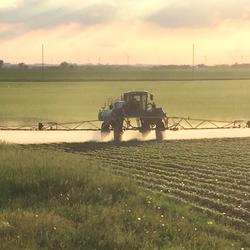
Bioenergy and Pesticides: Lessons from the AltEn Bioenergy Plant

Ethanol production from seed corn, while reducing waste and promoting renewable energy, can have environmental and health implications. A USGS study on a former bioenergy plant that received pesticide-coated seeds used for ethanol production, revealed that the process led to contaminated wastewater and solid residue, resulting in elevated pesticide levels in nearby surface waters even after the...
Bioenergy and Pesticides: Lessons from the AltEn Bioenergy Plant

Bioenergy and Pesticides: Lessons from the AltEn Bioenergy Plant

Ethanol production from seed corn, while reducing waste and promoting renewable energy, can have environmental and health implications. A USGS study on a former bioenergy plant that received pesticide-coated seeds used for ethanol production, revealed that the process led to contaminated wastewater and solid residue, resulting in elevated pesticide levels in nearby surface waters even after the...
Learn More

Effective Communication in PFAS Research: Moving Beyond "Ubiquitous"

In recent years, per- and polyfluoroalkyl substances (PFAS), have gained attention for their environmental presence; however, the term "ubiquitous" used to describe them can be misleading. USGS scientists push to use more precise language such as "widespread" and “commonly detected” to avoid confusion and misinformation. This distinction is crucial for understanding the actual occurrence of PFAS...
Effective Communication in PFAS Research: Moving Beyond "Ubiquitous"

Effective Communication in PFAS Research: Moving Beyond "Ubiquitous"

In recent years, per- and polyfluoroalkyl substances (PFAS), have gained attention for their environmental presence; however, the term "ubiquitous" used to describe them can be misleading. USGS scientists push to use more precise language such as "widespread" and “commonly detected” to avoid confusion and misinformation. This distinction is crucial for understanding the actual occurrence of PFAS...
Learn More

Navigating PFAS Contamination: Insights from the USGS Potomac River Watershed Study

The Potomac River is a major watershed in the eastern United States that serves as a crucial water supply for millions of people. USGS researchers conducted a comprehensive investigation to identify the contributions of municipal and industrial wastewater treatment plant effluent to the levels of per-and polyfluoroalkyl substances (PFAS) in the Potomac River. This study included measuring PFAS...
Navigating PFAS Contamination: Insights from the USGS Potomac River Watershed Study

Navigating PFAS Contamination: Insights from the USGS Potomac River Watershed Study

The Potomac River is a major watershed in the eastern United States that serves as a crucial water supply for millions of people. USGS researchers conducted a comprehensive investigation to identify the contributions of municipal and industrial wastewater treatment plant effluent to the levels of per-and polyfluoroalkyl substances (PFAS) in the Potomac River. This study included measuring PFAS...
Learn More

USGS Environmental Health Program: Integrating Science for Public Health and Resource Management

The USGS Environmental Health Program seeks to understand how environmental factors, especially contaminants and pathogens, influence human health and ecosystems. It focuses on studying the distribution and effects of toxic substances, environmental stressors, and their pathways. The program prioritizes collaboration with State, Federal and local governments; Tribes; non-government organizations...
USGS Environmental Health Program: Integrating Science for Public Health and Resource Management

USGS Environmental Health Program: Integrating Science for Public Health and Resource Management

The USGS Environmental Health Program seeks to understand how environmental factors, especially contaminants and pathogens, influence human health and ecosystems. It focuses on studying the distribution and effects of toxic substances, environmental stressors, and their pathways. The program prioritizes collaboration with State, Federal and local governments; Tribes; non-government organizations...
Learn More

Algal and Environmental Toxins Research Laboratory — Lawrence, Kansas

About the Laboratory The Environmental Health Program collaborates with scientists at the Organic Geochemistry Research Laboratory (OGRL) in Lawrence, Kansas, to develop and employ targeted and non-targeted analytical methods for identification and quantitation of known and understudied algal/cyanobacterial toxins. The laboratory contructed in 2019 is a 2,500 square foot modern laboratory facility...
Algal and Environmental Toxins Research Laboratory — Lawrence, Kansas

Algal and Environmental Toxins Research Laboratory — Lawrence, Kansas

About the Laboratory The Environmental Health Program collaborates with scientists at the Organic Geochemistry Research Laboratory (OGRL) in Lawrence, Kansas, to develop and employ targeted and non-targeted analytical methods for identification and quantitation of known and understudied algal/cyanobacterial toxins. The laboratory contructed in 2019 is a 2,500 square foot modern laboratory facility...
Learn More

Understanding the Dynamics of Per- and Polyfluoroalkyl Substances (PFAS): Insights from USGS Research

The USGS Environmental Health (EH) Program research where per- and polyfluoroalkyl substances PFAS are found, how they move and change in the environment, how they might affect both ecosystems and human health, and ways to reduce their impact. The three teams focusing on these issues within the EH Program include: 1) the PFAS Integrated Science Team, 2) the PFAS Core Technology Team, and 3) the...
Understanding the Dynamics of Per- and Polyfluoroalkyl Substances (PFAS): Insights from USGS Research

Understanding the Dynamics of Per- and Polyfluoroalkyl Substances (PFAS): Insights from USGS Research

The USGS Environmental Health (EH) Program research where per- and polyfluoroalkyl substances PFAS are found, how they move and change in the environment, how they might affect both ecosystems and human health, and ways to reduce their impact. The three teams focusing on these issues within the EH Program include: 1) the PFAS Integrated Science Team, 2) the PFAS Core Technology Team, and 3) the...
Learn More

Beneath the Surface: Exploring PFAS and Drinking Water on French Island, Wisconsin

The growing concern of finding per- and polyfluoroalkyl substances (PFAS) in drinking water has led USGS scientists to conduct more comprehensive analyses that encompass an extensive list of compounds that can be found in drinking water. These analyses will develop a more complete drinking water contaminant list that managers can use to make more informed public health decisions.
Beneath the Surface: Exploring PFAS and Drinking Water on French Island, Wisconsin

Beneath the Surface: Exploring PFAS and Drinking Water on French Island, Wisconsin

The growing concern of finding per- and polyfluoroalkyl substances (PFAS) in drinking water has led USGS scientists to conduct more comprehensive analyses that encompass an extensive list of compounds that can be found in drinking water. These analyses will develop a more complete drinking water contaminant list that managers can use to make more informed public health decisions.
Learn More

Drinking Water and Wastewater Infrastructure Science Team

The team studies toxicants and pathogens in water resources from their sources, through watersheds, aquifers, and infrastructure to human and wildlife exposures. That information is used to develop decision tools that protect human and wildlife health.
Drinking Water and Wastewater Infrastructure Science Team

Drinking Water and Wastewater Infrastructure Science Team

The team studies toxicants and pathogens in water resources from their sources, through watersheds, aquifers, and infrastructure to human and wildlife exposures. That information is used to develop decision tools that protect human and wildlife health.
Learn More

USGS Scientists Develop an Interactive Mapping Tool to Visualize PFAS in Tap Water

A new interactive dashboard is available to visualize PFAS measurements for 716 tap water samples collected at select sites across the nation between 2016 and 2021 from private and public supplies.
USGS Scientists Develop an Interactive Mapping Tool to Visualize PFAS in Tap Water

USGS Scientists Develop an Interactive Mapping Tool to Visualize PFAS in Tap Water

A new interactive dashboard is available to visualize PFAS measurements for 716 tap water samples collected at select sites across the nation between 2016 and 2021 from private and public supplies.
Learn More

Collaborative Science Provides Understanding of Contaminants in Bottled Water-an Increasingly Common Alternate Drinking Water Source

U.S. Geological Survey researchers and public health experts collaborated to determine what contaminants occur in bottled water, which is an increasingly common alternate drinking water source, to broaden their understanding of human exposure to contaminants in drinking water supply chains. Bottled water, like public-supply and private-well tap water supply chains, contained multiple organic...
Collaborative Science Provides Understanding of Contaminants in Bottled Water-an Increasingly Common Alternate Drinking Water Source

Collaborative Science Provides Understanding of Contaminants in Bottled Water-an Increasingly Common Alternate Drinking Water Source

U.S. Geological Survey researchers and public health experts collaborated to determine what contaminants occur in bottled water, which is an increasingly common alternate drinking water source, to broaden their understanding of human exposure to contaminants in drinking water supply chains. Bottled water, like public-supply and private-well tap water supply chains, contained multiple organic...
Learn More

U.S. Geological Survey Per- and Polyfluoroalkyl Substances Science Strategy Identifies Science Gaps and Opportunities

USGS recently (2022) released a strategic vision document that identifies science gaps and opportunities for per- and polyfluoroalkyl substances (PFAS) monitoring, assessment, and research activities (sampling protocols and analytical methods, environmental sources and source apportionment, environmental occurrence, environmental fate and transport, human and wildlife exposure routes...
U.S. Geological Survey Per- and Polyfluoroalkyl Substances Science Strategy Identifies Science Gaps and Opportunities

U.S. Geological Survey Per- and Polyfluoroalkyl Substances Science Strategy Identifies Science Gaps and Opportunities

USGS recently (2022) released a strategic vision document that identifies science gaps and opportunities for per- and polyfluoroalkyl substances (PFAS) monitoring, assessment, and research activities (sampling protocols and analytical methods, environmental sources and source apportionment, environmental occurrence, environmental fate and transport, human and wildlife exposure routes...
Learn More

Ecotoxicology and Ecological Risks of Per‐ and Polyfluoroalkyl Substances

Ecotoxicology and ecological risks of per- and polyfluoroalkyl substances are summarized to highlight critical gaps and uncertainties, and to provide potential approaches to fill those gaps, including the development of targeted monitoring programs and cross-disciplinary approaches.
Ecotoxicology and Ecological Risks of Per‐ and Polyfluoroalkyl Substances

Ecotoxicology and Ecological Risks of Per‐ and Polyfluoroalkyl Substances

Ecotoxicology and ecological risks of per- and polyfluoroalkyl substances are summarized to highlight critical gaps and uncertainties, and to provide potential approaches to fill those gaps, including the development of targeted monitoring programs and cross-disciplinary approaches.
Learn More
Was this page helpful?