



Pesticides and Pesticide Degradates
Pesticides and Pesticide Degradates
Filter Total Items: 26

Bioenergy and Pesticides: Lessons from the AltEn Bioenergy Plant
Ethanol production from seed corn, while reducing waste and promoting renewable energy, can have environmental and health implications. A USGS study on a former bioenergy plant that received pesticide-coated seeds used for ethanol production, revealed that the process led to contaminated wastewater and solid residue, resulting in elevated pesticide levels in nearby surface waters even after the...

Helping Secure Our Nation’s Food Supply: The Intersection of Agriculture, Health, and Environment
Agriculture is vital to the U.S. economy, supplying food, fibers, fuels, and jobs. Ensuring the quality of our natural resources is essential for keeping our food safe and plentiful. The USGS studies environmental factors affecting food security and offers valuable insights to reduce health risks, ensuring a safer food supply and a healthier environment.

Healthy Fish and Wildlife: Community Livelihoods, Fishing and Hunting Heritage, Recreation, and Economic Security
Healthy fish and wildlife underpin the economic vitality, food security, recreational enjoyment, and cultural heritage of fishing and hunting in communities across the United States. Fishing and hunting resources scale from the personal recreation of families to multi-billion-dollar industries. Recognizing these critical connections, the U.S. Geological Survey (USGS) works to understand, protect...
By
Ecosystems Mission Area, Contaminant Biology, Environmental Health Program, Toxic Substances Hydrology, California Water Science Center, Central Midwest Water Science Center, Columbia Environmental Research Center, Eastern Ecological Science Center, Forest and Rangeland Ecosystem Science Center, Upper Midwest Environmental Sciences Center, Upper Midwest Water Science Center

USGS Environmental Health Program: Integrating Science for Public Health and Resource Management
The USGS Environmental Health Program seeks to understand how environmental factors, especially contaminants and pathogens, influence human health and ecosystems. It focuses on studying the distribution and effects of toxic substances, environmental stressors, and their pathways. The program prioritizes collaboration with State, Federal and local governments; Tribes; non-government organizations...

Food Resources Lifecycle Integrated Science Team
The team studies the movement of toxicants and pathogens that could originate from the growing, raising, and processing/manufacturing of plant and animal products through the environment where exposure can occur. This information is used to understand if there are adverse effects upon exposure and to develop decision tools to protect health.

Organic Chemistry Research Core Technology Team
About the Research The Organic Chemistry Research Laboratory Core Technology Team (CTT) as part of the Environmental Health Program focuses on the identification and quantitation of trace level organic contaminants (with a special focus on pesticides) in a wide array of environmental media (water, sediment/soil, plants, biota, etc.).

Organic Geochemistry Research Core Technology Team
About the Research The Organic Geochemistry Research Laboratory Core Technology Team (CTT) as part of the Environmental Health Program works to develop targeted and non-targeted analytical methods for the identification and quantitation of chemicals that can impact the health of humans and other organisms, and uses bioassays to screen for receptor inhibition.

Pesticides Detected in Bees, Flowers, Soil, and Air within Pollinator-Attractive Row-Crop Border Plantings
Field study in California describes the potential for pollinator-attractive field borders in agricultural areas to become a pesticide exposure pathway to bees through soil, air, and plants.
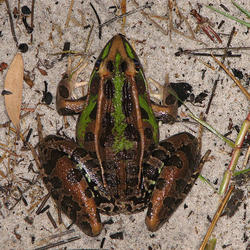
Clothianidin Exposure Associated with Changes in Tadpole Behavior
During a laboratory exposure study, tadpole movement decreased with increased concentrations of clothianidin, a neonicotinoid pesticide. Decreased movement could affect a tadpole’s ability to forage, escape predation, and metamorphose before ponds dry.

No Evidence of Toxicity to Birds Ingesting Neonicotinoid-Coated Wheat Seeds During Controlled Laboratory Study
Scientists determined what happens to the neonicotinoid insecticide, imidacloprid, on coated wheat seeds once ingested by Japanese quail (Coturnix japonica)—a model species for free-range, seed-eating, upland game birds. Imidacloprid was found to be rapidly adsorbed, metabolized, and excreted, and resulted in no overt signs of toxicity during a controlled laboratory study.

Can There be Unintended Benefits when Wastewater Treatment Infrastructure is Upgraded?
Science from the U.S. Geological Survey (USGS) and other entities has shown that a mixture of natural and synthetic estrogens and other similar chemicals are discharged from wastewater treatment plants (WWTPs) to streams and rivers.

Unique Methods Used to Understand Frog Exposure to Pesticides in Agricultural Settings
Adult frog exposure to pesticides in aquatic and terrestrial habitats was quantified using a novel combination of radio telemetry and passive sampling techniques to better understand factors affecting frog health and survival in agricultural landscapes.