
U.S. flag

An official website of the United States government

Environmental Health Featured Science Activities

Our science activities are summarized in a series of feature articles that highlight recent U.S. Geological Survey (USGS) environmental health science activities. They are short summaries of peer-reviewed journal articles and USGS reports co-authored by our specialized teams of scientists.
 

Filter Total Items: 260

Estrogenic Contaminants from Plants and Fungi Found in Iowa Streams

An international group of scientists from the U.S. Geological Survey (USGS) and Agroscope Reckenholz-Tänikon, Research Station ART (Switzerland) have documented the common occurrence of six phytoestrogens and two mycotoxins in streams across Iowa. Phytoestrogens (derived from plants) and mycotoxins (derived from fungi) are naturally occurring compounds. Scientists have known that phytoestrogens...
Estrogenic Contaminants from Plants and Fungi Found in Iowa Streams

Estrogenic Contaminants from Plants and Fungi Found in Iowa Streams

An international group of scientists from the U.S. Geological Survey (USGS) and Agroscope Reckenholz-Tänikon, Research Station ART (Switzerland) have documented the common occurrence of six phytoestrogens and two mycotoxins in streams across Iowa. Phytoestrogens (derived from plants) and mycotoxins (derived from fungi) are naturally occurring compounds. Scientists have known that phytoestrogens...
Learn More

Mixtures of Pesticides Detected in Crab Embryos

Crab embryos from two Northern California salt marshes accumulate mixtures of currently used as well as discontinued pesticides, according to a study published by U.S. Geological Survey (USGS) and University of California scientists in the journal Environmental Toxicology and Chemistry.
Mixtures of Pesticides Detected in Crab Embryos

Mixtures of Pesticides Detected in Crab Embryos

Crab embryos from two Northern California salt marshes accumulate mixtures of currently used as well as discontinued pesticides, according to a study published by U.S. Geological Survey (USGS) and University of California scientists in the journal Environmental Toxicology and Chemistry.
Learn More

Understudied Fungicides Common in U.S. Streams Draining Agricultural Land

U.S. Geological Survey (USGS) scientists have detected one or more fungicides in 20 of 29 streams across the United States that were sampled during 2005 and 2006 in areas where soybeans are grown. The number of fungicides used has increased significantly since 2002, and very little is known about their occurrence in the environment. For some of the fungicides this is the first data documenting...
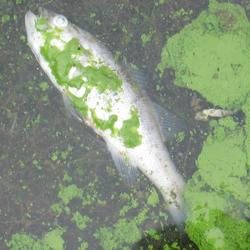
Understudied Fungicides Common in U.S. Streams Draining Agricultural Land

Understudied Fungicides Common in U.S. Streams Draining Agricultural Land

U.S. Geological Survey (USGS) scientists have detected one or more fungicides in 20 of 29 streams across the United States that were sampled during 2005 and 2006 in areas where soybeans are grown. The number of fungicides used has increased significantly since 2002, and very little is known about their occurrence in the environment. For some of the fungicides this is the first data documenting...
Learn More

Algal Blooms Consistently Produce Complex Mixtures of Cyanotoxins and Co-Occur with Taste-and-Odor Causing Compounds in 23 Midwestern Lakes

U.S. Geological Survey (USGS) scientists studying the effects of harmful algal blooms on lake water quality found that blooms of blue-green algae (cyanobacteria) in Midwestern lakes produced mixtures of cyanotoxins and taste-and-odor causing compounds, which co-occurred in lake water samples. Cyanotoxins can cause allergic and/or respiratory issues, attack the liver and kidneys, or affect the...
Algal Blooms Consistently Produce Complex Mixtures of Cyanotoxins and Co-Occur with Taste-and-Odor Causing Compounds in 23 Midwestern Lakes

Algal Blooms Consistently Produce Complex Mixtures of Cyanotoxins and Co-Occur with Taste-and-Odor Causing Compounds in 23 Midwestern Lakes

U.S. Geological Survey (USGS) scientists studying the effects of harmful algal blooms on lake water quality found that blooms of blue-green algae (cyanobacteria) in Midwestern lakes produced mixtures of cyanotoxins and taste-and-odor causing compounds, which co-occurred in lake water samples. Cyanotoxins can cause allergic and/or respiratory issues, attack the liver and kidneys, or affect the...
Learn More

Some Ecosystems will Respond to Reductions in Mercury Emissions

An international team of scientists investigating mercury cycling in an experimental watershed in Ontario, Canada, conclusively demonstrated at the ecosystem scale that changes in mercury loadings are expected to result in proportional or near proportional changes in mercury bioaccumulation in fish. Policies to reduce atmospheric emissions of mercury are intended to reduce mercury bioaccumulation...
Some Ecosystems will Respond to Reductions in Mercury Emissions

Some Ecosystems will Respond to Reductions in Mercury Emissions

An international team of scientists investigating mercury cycling in an experimental watershed in Ontario, Canada, conclusively demonstrated at the ecosystem scale that changes in mercury loadings are expected to result in proportional or near proportional changes in mercury bioaccumulation in fish. Policies to reduce atmospheric emissions of mercury are intended to reduce mercury bioaccumulation...
Learn More

Antidepressants in Stream Waters! Are They in the Fish Too?

For some fish living downstream of sewage treatment plants the answer is yes. U.S. Geological Survey (USGS) scientists and their colleagues published a paper in Environmental Science and Technology documenting that specific antidepressants and their degradates found in wastewater discharged into streams by municipal wastewater treatment plants are taken up into the bodies of fish living downstream...
Antidepressants in Stream Waters! Are They in the Fish Too?

Antidepressants in Stream Waters! Are They in the Fish Too?

For some fish living downstream of sewage treatment plants the answer is yes. U.S. Geological Survey (USGS) scientists and their colleagues published a paper in Environmental Science and Technology documenting that specific antidepressants and their degradates found in wastewater discharged into streams by municipal wastewater treatment plants are taken up into the bodies of fish living downstream...
Learn More

Manufacturing Facilities Release Pharmaceuticals to the Environment

In a 2004-2009 study, U.S. Geological Survey (USGS) scientists found that pharmaceutical manufacturing facilities can be a significant source of pharmaceuticals to the environment. Effluents from two wastewater treatment plants (WWTPs) that receive discharge from pharmaceutical manufacturing facilities (PMFs) had 10 to 1000 times higher concentrations of pharmaceuticals than effluents from 24...
Manufacturing Facilities Release Pharmaceuticals to the Environment

Manufacturing Facilities Release Pharmaceuticals to the Environment

In a 2004-2009 study, U.S. Geological Survey (USGS) scientists found that pharmaceutical manufacturing facilities can be a significant source of pharmaceuticals to the environment. Effluents from two wastewater treatment plants (WWTPs) that receive discharge from pharmaceutical manufacturing facilities (PMFs) had 10 to 1000 times higher concentrations of pharmaceuticals than effluents from 24...
Learn More

Tackling Fish Endocrine Disruption

Intersex, the presence of both male and female characteristics within the same fish, is being observed in fish in more streams across the Nation. Intersex is one manifestation of endocrine disruption in fish. Endocrine disruption can result in adverse effects on the development of the brain and nervous system, the growth and function of the reproductive system, and the response to stressors in the...
Tackling Fish Endocrine Disruption

Tackling Fish Endocrine Disruption

Intersex, the presence of both male and female characteristics within the same fish, is being observed in fish in more streams across the Nation. Intersex is one manifestation of endocrine disruption in fish. Endocrine disruption can result in adverse effects on the development of the brain and nervous system, the growth and function of the reproductive system, and the response to stressors in the...
Learn More

Measuring Antidepressants, Fungicides, and Insecticides in the Environment

U.S. Geological Survey (USGS) scientists are developing new laboratory analytical methods to measure contaminants in samples of environmental water, sediment, and soil. The work is part of a continuing effort to provide information on new and understudied contaminants to water-resource managers, environmental regulators, and the public. The new methods are used by USGS scientists and others to...
Measuring Antidepressants, Fungicides, and Insecticides in the Environment

Measuring Antidepressants, Fungicides, and Insecticides in the Environment

U.S. Geological Survey (USGS) scientists are developing new laboratory analytical methods to measure contaminants in samples of environmental water, sediment, and soil. The work is part of a continuing effort to provide information on new and understudied contaminants to water-resource managers, environmental regulators, and the public. The new methods are used by USGS scientists and others to...
Learn More

Emerging Contaminants Targeted in a Reconnaissance of Ground Water and Untreated Drinking-Water Sources

Two national-scale reconnaissance studies recently conducted by the U.S. Geological Survey (USGS) were the first to collect baseline information on the environmental occurrence of pharmaceuticals, personal-care products, detergents, flame retardants, naturally occurring sterols, and other organic contaminants in ground water and untreated sources of drinking water in the United States. These...
Emerging Contaminants Targeted in a Reconnaissance of Ground Water and Untreated Drinking-Water Sources

Emerging Contaminants Targeted in a Reconnaissance of Ground Water and Untreated Drinking-Water Sources

Two national-scale reconnaissance studies recently conducted by the U.S. Geological Survey (USGS) were the first to collect baseline information on the environmental occurrence of pharmaceuticals, personal-care products, detergents, flame retardants, naturally occurring sterols, and other organic contaminants in ground water and untreated sources of drinking water in the United States. These...
Learn More

Household Chemicals and Drugs Found in Biosolids from Wastewater Treatment Plants

Biosolids, the treated sludge generated by the treatment of sewage at wastewater treatment plants, is something that most people don't think about as they flush everyday chemicals and drugs down the drain. However, U.S. Geological Survey (USGS) scientists found that biosolids contain relatively high concentrations (hundreds of milligrams per kilogram) of the active ingredients commonly found in a...
Household Chemicals and Drugs Found in Biosolids from Wastewater Treatment Plants

Household Chemicals and Drugs Found in Biosolids from Wastewater Treatment Plants

Biosolids, the treated sludge generated by the treatment of sewage at wastewater treatment plants, is something that most people don't think about as they flush everyday chemicals and drugs down the drain. However, U.S. Geological Survey (USGS) scientists found that biosolids contain relatively high concentrations (hundreds of milligrams per kilogram) of the active ingredients commonly found in a...
Learn More

Pharmaceuticals Found in Soil Irrigated with Reclaimed Water

Many areas of the Nation are faced with water shortages due to significant demand for water. As a result, supplies are being augmented with treated wastewater for uses such as irrigation. In a study recently published in the journal "Environmental Toxicology and Chemistry," a team of U.S. Geological Survey (USGS) scientists reported that pharmaceuticals in wastewater used for irrigation persist in...
Pharmaceuticals Found in Soil Irrigated with Reclaimed Water

Pharmaceuticals Found in Soil Irrigated with Reclaimed Water

Many areas of the Nation are faced with water shortages due to significant demand for water. As a result, supplies are being augmented with treated wastewater for uses such as irrigation. In a study recently published in the journal "Environmental Toxicology and Chemistry," a team of U.S. Geological Survey (USGS) scientists reported that pharmaceuticals in wastewater used for irrigation persist in...
Learn More
Was this page helpful?