



Fishing, Hunting and Subsistence Living Integrated Science Team
Fishing, Hunting and Subsistence Living Integrated Science Team
The Fishing, Hunting and Subsistence Living Integrated Science Team focuses on contaminant and pathogen exposures in the environment that could impact the presence and vitality of fish and wildlife populations that drive commercial, recreational and subsistence activities such as hunting and fishing.


Filter Total Items: 6
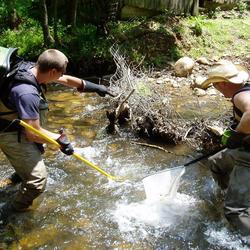
EESC Makes an Impact: Enhancing Recreational & Commercial Fishing
The USGS Eastern Ecological Science Center (EESC) provides world-class science to inform natural resource decisions on aquatic ecosystems, species populations and management, disease, and invasive species. Our scientific products represent critical contributions that enhance the ecological and economic sustainability of recreational and commercial fishing. In the United States, anglers contribute...

Healthy Fish and Wildlife: Community Livelihoods, Fishing and Hunting Heritage, Recreation, and Economic Security
Healthy fish and wildlife underpin the economic vitality, food security, recreational enjoyment, and cultural heritage of fishing and hunting in communities across the United States. Fishing and hunting resources scale from the personal recreation of families to multi-billion-dollar industries. Recognizing these critical connections, the U.S. Geological Survey (USGS) works to understand, protect...
By
Ecosystems Mission Area, Contaminant Biology, Environmental Health Program, Toxic Substances Hydrology, California Water Science Center, Central Midwest Water Science Center, Columbia Environmental Research Center, Eastern Ecological Science Center, Forest and Rangeland Ecosystem Science Center, Upper Midwest Environmental Sciences Center, Upper Midwest Water Science Center

USGS Environmental Health Program: Integrating Science for Public Health and Resource Management
The USGS Environmental Health Program seeks to understand how environmental factors, especially contaminants and pathogens, influence human health and ecosystems. It focuses on studying the distribution and effects of toxic substances, environmental stressors, and their pathways. The program prioritizes collaboration with State, Federal and local governments; Tribes; non-government organizations...

Environmental Health: Science to Support Natural Resource Use
The Environmental Health Program integrates multidisciplinary research to tackle the environmental challenges that impact the nation's natural resource assets. By providing comprehensive research and data, the program assesses both actual and perceived risks associated with environmental contaminants and pathogens while supporting a variety of uses of our natural resources.

Per- and Polyfluoroalkyl Substance (PFAS) Core Technology Team
The Per- and Polyfluoroalkyl Substance (PFAS) Core Technology Team (CTT) within the Environmental Health Program partners with external and internal stakeholders to develop and apply analytical methods for measuring PFAS in complex matrices, addressing environmental health issues related to transport, distribution, fate, effects, and exposure.
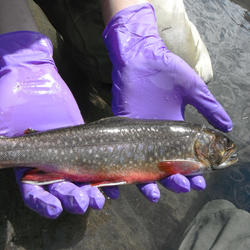
Outdoor Resources Integrated Science Team
The Outdoor Resources Integrated Science Team studies how contaminants, pathogens, and other environmental stressors affect the health of fish and wildlife that support recreational and cultural traditions, providing practical science that guides responsible land and water use, supports informed stewardship, and helps ensure resilient outdoor resources for all communities.