Collecting water quality samples in the Grand Canyon
Collecting water quality samples in the Grand CanyonA USGS scientist collects water quality samples in the Grand Canyon in Arizona.
An official website of the United States government
Here's how you know
Official websites use .gov
A .gov website belongs to an official government organization in the United States.
Secure .gov websites use HTTPS
A lock () or https:// means you’ve safely connected to the .gov website. Share sensitive information only on official, secure websites.
See our science through the images below.
A USGS scientist collects water quality samples in the Grand Canyon in Arizona.
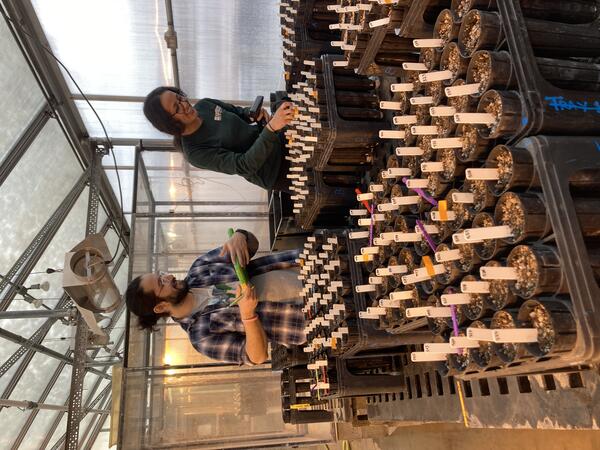
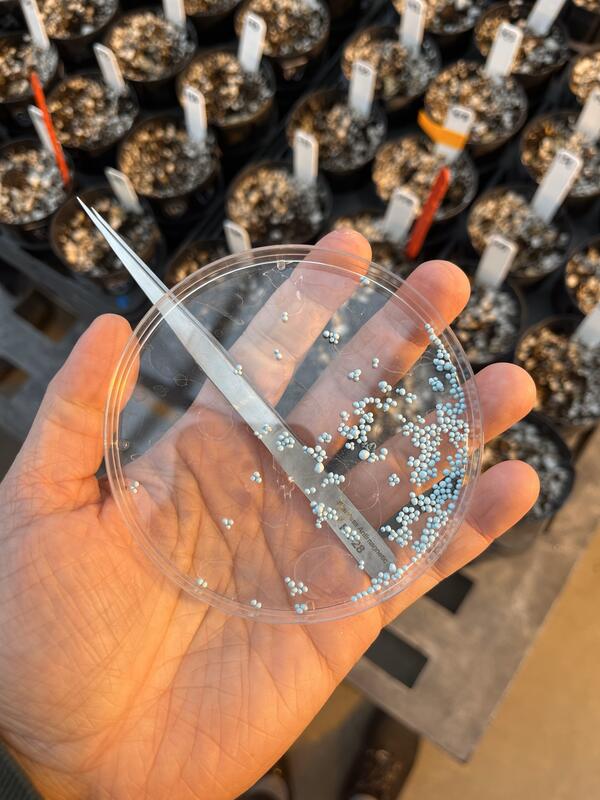
Implementing the Seed Strategy creates jobs and provides career-building opportunities for students and early career professionals.
Suspect screening/non-target analysis is done with LC-HRMS at the Organic Chemistry Research Laboratory (OCRL) in Sacramento, CA.
Photo credit: Michelle Hladik
Suspect screening/non-target analysis is done with LC-HRMS at the Organic Chemistry Research Laboratory (OCRL) in Sacramento, CA.
Photo credit: Michelle Hladik
Scientists travel by raft to collect various samples on the Colorado River in the Grand Canyon.
USGS scientist collects a water-quality sample in the Grand Canyon, Arizona.
Bumble bees being prepped for pesticide residue analysis at the USGS Organic Chemistry Research Laboratory (OCRL), California.
Water samples are extracted for pesticides at the USGS Organic Chemistry Research Laboratory.
Photo credit: Elisabeth LaBarbera
Water samples are extracted for pesticides at the USGS Organic Chemistry Research Laboratory.
Photo credit: Elisabeth LaBarbera
Long-tailed duck diving for underwater hearing testing in an experimental chamber in which the birds’ diving behavior can be studied under various environmental conditions.
The USGS Fire, Invasives, Restoration, and Ecology in Sagebrush Steppe (FIREss Team) plants a common garden of rubber rabbitbrush (Ericameria nauseosa) near Boise, Idaho in collaboration with USFS.
I completed a B.S. in Wildlife and Fisheries Conservation at the University of Massachusetts in Amherst in 2004, a M.S. in Biology at Purdue at Fort Wayne in 2008, and a PhD in Natural Resources at University of Illinois in 2014.
Javan was born and raised in the Pacific Northwest (Washington and Idaho) and received his M.S. from Idaho State University where he studied the movement and habitat ecology of prairie rattlesnakes. He then worked for non-profit reptile conservation organization, The Orianne Society, conducting and directing research projects to guide reptile conservation efforts.
Juvenile Coho salmon (Oncorhynchus kisutch) behavior is assessed following exposure to 6PPD-quinone, a derivative of the compound 6PPD which is used in tires to prevent wear.
Due to multiple reasons including the widespread use of microplastics, their environmental persistence, the global connectedness of aquatic environments, and the long-range transport of microplastics, these particles have been documented in every environmental compartment (e.g., air, water, soils).
The Adélie penguin is a sea-ice obligate species so ocean habitats in the Southern Ocean surrounding Antarctica are crucial during all stages of the species annual cycle.
At the heart of Wisconsin’s rich fishing culture is the walleye – a legendary fish with big, pearly, reflective eyes. In Ojibwe, the fish is called “ogaa" and symbolizes knowledge, illumination, and guidance. Their unique eyes guide them through cool, dark, murky waters, making them formidable predators and a challenging catch for anglers.
Benjamin Miller holding an endangered razorback sucker (Xyrauchen texanus) captured at an experimental wood addition site on the San Juan River.
USGS and NPS walk Drakes Beach to sample a pond for the presence of AIV at Point Reyes National Seashore, California
Fragmented tropical forest in western Costa Rica near USGS Las Cruces Biological Station.
USGS collects environmental samples for AIV detection at Crissy Marsh at Golden Gate National Recreation Area
Contiguous tropical forest in western Costa Rica near Las Cruces Biological Station