



Wildlife Disease Surveillance
Wildlife Disease Surveillance
Filter Total Items: 60
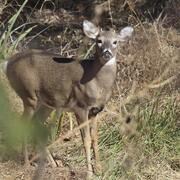
Understanding and Containing Chronic Wasting Disease
Chronic wasting disease (CWD) is a contagious and fatal neurodegenerative disease affecting cervids (deer, elk, caribou, and moose) that is threatening the health and sustainability of cervid populations across North America. CWD is caused by misfolded proteins known as prions, which can be transmitted by direct contact or environmental exposure. The USGS National Wildlife Health Center conducts...
The National Wildlife Disease Database
The National Wildlife Disease Database (NWDD) is a congressionally funded USGS tool that integrates multi-jurisdictional wildlife disease data with advanced artificial intelligence capabilities to provide situational awareness, detect unusual disease events, and support early warning and data-driven decision-making.
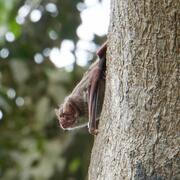
Dynamics of Rabies Transmission in Vampire Bats and Potential for Control Through Vaccination
Vampire bats are the primary spreader of rabies, a lethal disease that harms livestock and people across Latin America. Growth of the livestock industry and environmental changes in this region are leading to the expansion of vampire bats’ habitat range, and it is considered likely this species will move into the southern United States.
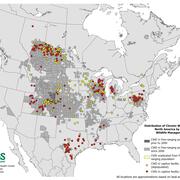
Expanding Distribution of Chronic Wasting Disease
Chronic wasting disease (CWD) has been detected in 37 US states and five Canadian provinces in free-ranging cervids and/or captive cervid facilities.

USGS Northern Rocky Mountain Science Center Fiscal Year 2025 Highlights
The USGS Northern Rocky Mountain Science Center (NOROCK) proudly supports Federal, State, Tribal, and other partners by delivering high-quality data, cutting-edge science, and practical tools to support natural resource management. Below are some of NOROCK’s highlights during fiscal year 2025.
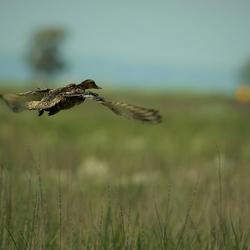
Avian Influenza Spread, Prevalence and Persistence
USGS researchers seek to understand the factors influencing the spread and persistence of avian influenza viruses on the landscape. This research also addresses how novel strains of highly pathogenic avian influenza are impacting a larger number and diversity of host species, including waterfowl, shorebirds, raptors and other birds.
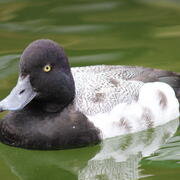
Combining Field and Laboratory Studies to Understand Viral Ecology in Avian Species
USGS researchers are pairing field and laboratory studies to gain deeper insights into the role of Lesser Scaup ( Aythya affinis) in the spread and persistence of avian influenza viruses.

Avian Influenza and Wildlife Health: 2025 Year in Review
Avian influenza, once largely limited to poultry, is now reshaping wildlife health across North America, affecting wild birds, mammals, and even people. This 2025 Year in Review highlights how USGS science is helping track, understand, and respond to this rapidly evolving disease. From large-scale wildlife die-offs to new tools for detecting and monitoring the virus, USGS research supports...

Batrachochytrium salamandrivorans (Bsal) Surveillance
Scientists of the USGS National Wildlife Health Center (NWHC) in collaboration with partners have developed risk assessments for Batrachochytrium salamandrivorans ( Bsal ) in the United States and are sampling high-risk locations for the fungus.

Mapping Chronic Wasting Disease Management: Identify Opportunities for Intervention
This research effort is an interagency partnership between U.S. Geological Survey and U.S. Fish and Wildlife Service to model the social-ecological system that encompasses chronic wasting disease management in the United States. Chronic wasting disease (CWD) is a fatal, neurologically degenerative disease that impacts many cervid species in North America (e.g., elk, moose, mule deer, and white...

North American Bat Monitoring Program (NABat)
Bats are essential contributing members of healthy, functioning ecosystems. They perform numerous ecosystem services like insect pest control and plant pollination, and provide enormous economic benefits through ecotourism, medical research, and novel biotechnologies. North American bats face unprecedented threats including habitat loss and fragmentation, white-nose syndrome, and wind energy...

Key Values of a Century of EESC Science
The USGS Eastern Ecological Science Center (EESC) is rooted in a proud tradition of service to the nation—advancing science that informs the conservation and management of fish, wildlife, and habitats across the eastern United States and beyond. Our mission is clear: deliver reliable, partner-driven science that supports natural resource decisions today, while ensuring these resources remain...