



Tagged walleye from the Escanaba River, Michigan. The Wisconsin Cooperative Fishery Research Unit (WICFRU) is working extensively with the Wisconsin and Michigan Departments of Natural Resources to better understand spawning locations and distribution of walleyes in Green Bay.
Images
We are cultivating and sharing the creativity, vision, and innovative perspectives that can be found among our graduate student, staff, faculty, and friends.
Filter Total Items: 391
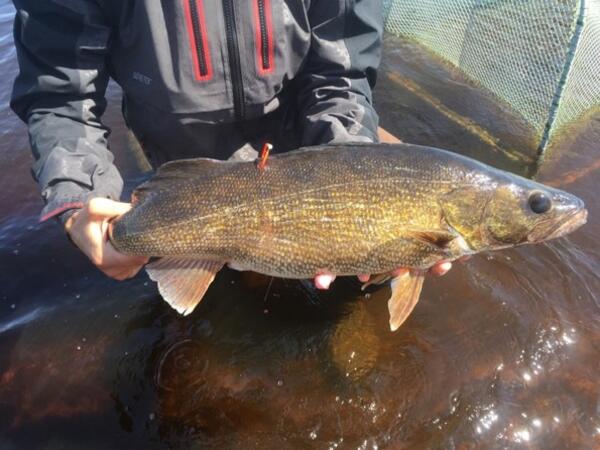
Walleye
Tagged walleye from the Escanaba River, Michigan. The Wisconsin Cooperative Fishery Research Unit (WICFRU) is working extensively with the Wisconsin and Michigan Departments of Natural Resources to better understand spawning locations and distribution of walleyes in Green Bay.
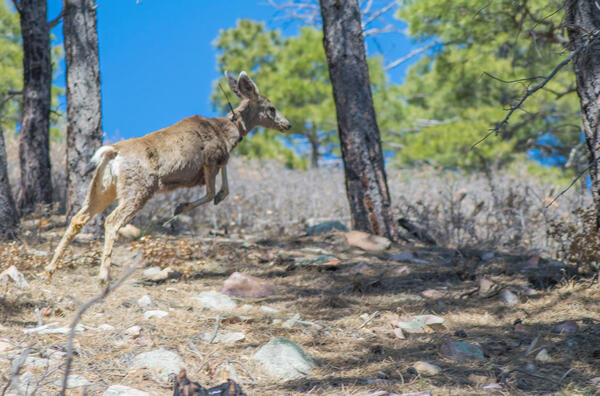
Mule deer
Habitat change is putting iconic wildlife such as mule deer, elk, mountain lions, and black bears at risk in the western U.S.
Habitat change is putting iconic wildlife such as mule deer, elk, mountain lions, and black bears at risk in the western U.S.
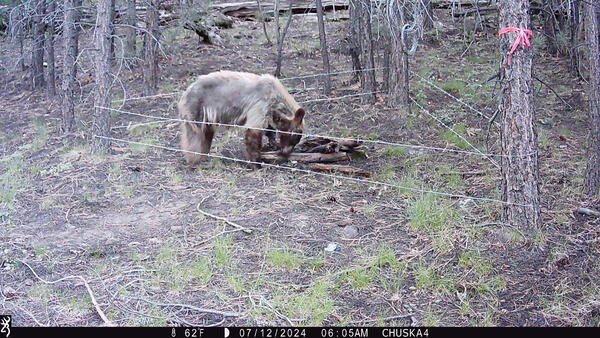
An American black bear investigates a scent lure at a hair-snare station
An American black bear investigates a scent lure at a hair-snare stationIn Navajo culture, the American black bear holds deep significance, symbolizing strength, protection, and a sacred connection to nature and the spiritual world. Little is known about their ecology or how they interact with humans in Arizona.
An American black bear investigates a scent lure at a hair-snare station
An American black bear investigates a scent lure at a hair-snare stationIn Navajo culture, the American black bear holds deep significance, symbolizing strength, protection, and a sacred connection to nature and the spiritual world. Little is known about their ecology or how they interact with humans in Arizona.
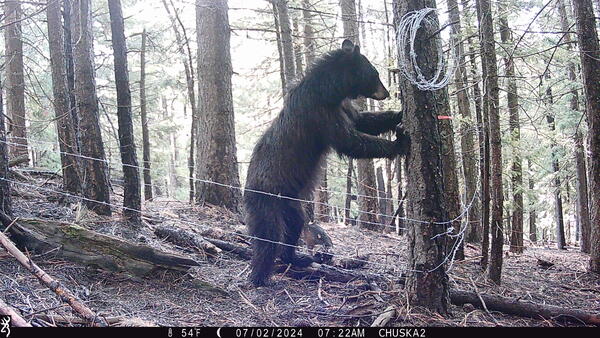
An American black bear investigates a scent lure at a hair-snare station
An American black bear investigates a scent lure at a hair-snare stationIn Navajo culture, the American black bear holds deep significance, symbolizing strength, protection, and a sacred connection to nature and the spiritual world. Little is known about bear ecology in the area or how they interact with humans.
An American black bear investigates a scent lure at a hair-snare station
An American black bear investigates a scent lure at a hair-snare stationIn Navajo culture, the American black bear holds deep significance, symbolizing strength, protection, and a sacred connection to nature and the spiritual world. Little is known about bear ecology in the area or how they interact with humans.
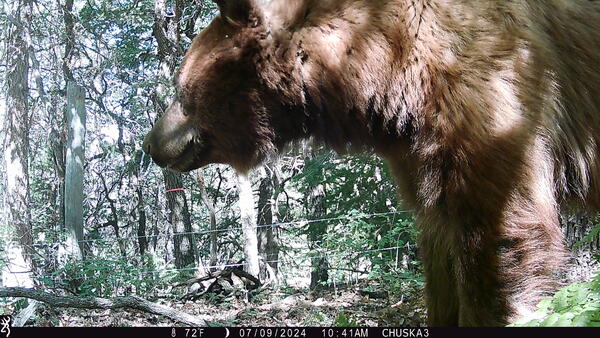
An American black bear investigates a scent lure at a hair-snare station
An American black bear investigates a scent lure at a hair-snare stationIn Navajo culture, the American black bear holds deep significance, symbolizing strength, protection, and a sacred connection to nature and the spiritual world. Little is known about their ecology or how they interact with humans in Arizona.
An American black bear investigates a scent lure at a hair-snare station
An American black bear investigates a scent lure at a hair-snare stationIn Navajo culture, the American black bear holds deep significance, symbolizing strength, protection, and a sacred connection to nature and the spiritual world. Little is known about their ecology or how they interact with humans in Arizona.
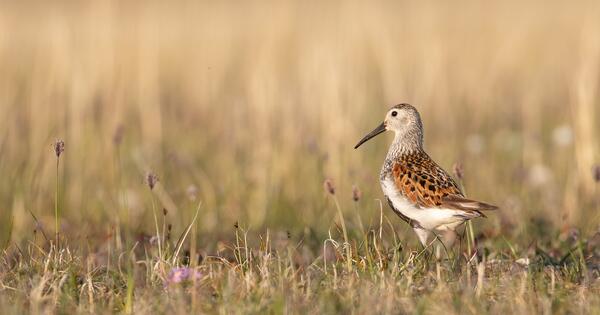
Dunlin shorebird in northern Alaska
Arctic-breeding shorebirds have experienced widespread population declines in recent decades. These declines are occurring even though Arctic nesting grounds are relatively undisturbed by human infrastructure and fragmentation, although future infrastructure expansion poses a threat to breeding birds.
Arctic-breeding shorebirds have experienced widespread population declines in recent decades. These declines are occurring even though Arctic nesting grounds are relatively undisturbed by human infrastructure and fragmentation, although future infrastructure expansion poses a threat to breeding birds.

Researchers use high frequency GPS tracking devices to monitor movements of dunlin shorebirds in northern Alaska
Researchers use high frequency GPS tracking devices to monitor movements of dunlin shorebirds in northern AlaskaArctic-breeding shorebirds have experienced widespread population declines in recent decades. These declines are occurring even though Arctic nesting grounds are relatively undisturbed by human infrastructure and fragmentation, although future infrastructure expansion poses a threat to breeding birds.
Researchers use high frequency GPS tracking devices to monitor movements of dunlin shorebirds in northern Alaska
Researchers use high frequency GPS tracking devices to monitor movements of dunlin shorebirds in northern AlaskaArctic-breeding shorebirds have experienced widespread population declines in recent decades. These declines are occurring even though Arctic nesting grounds are relatively undisturbed by human infrastructure and fragmentation, although future infrastructure expansion poses a threat to breeding birds.

Dunlin shorebird in northern Alaska
Arctic-breeding shorebirds have experienced widespread population declines in recent decades. These declines are occurring even though Arctic nesting grounds are relatively undisturbed by human infrastructure and fragmentation, although future infrastructure expansion poses a threat to breeding birds.
Arctic-breeding shorebirds have experienced widespread population declines in recent decades. These declines are occurring even though Arctic nesting grounds are relatively undisturbed by human infrastructure and fragmentation, although future infrastructure expansion poses a threat to breeding birds.
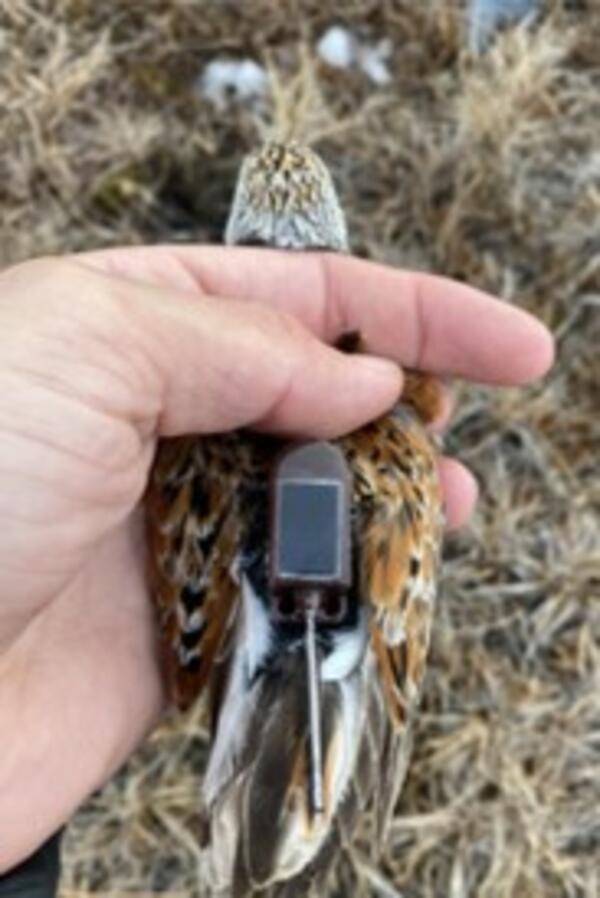
Researcher attaches a GPS tracking device to monitor the movements of dunlin shorebirds
Researcher attaches a GPS tracking device to monitor the movements of dunlin shorebirdsArctic-breeding shorebirds have experienced widespread population declines in recent decades. These declines are occurring even though Arctic nesting grounds are relatively undisturbed by human infrastructure and fragmentation, although future infrastructure expansion poses a threat to breeding birds.
Researcher attaches a GPS tracking device to monitor the movements of dunlin shorebirds
Researcher attaches a GPS tracking device to monitor the movements of dunlin shorebirdsArctic-breeding shorebirds have experienced widespread population declines in recent decades. These declines are occurring even though Arctic nesting grounds are relatively undisturbed by human infrastructure and fragmentation, although future infrastructure expansion poses a threat to breeding birds.
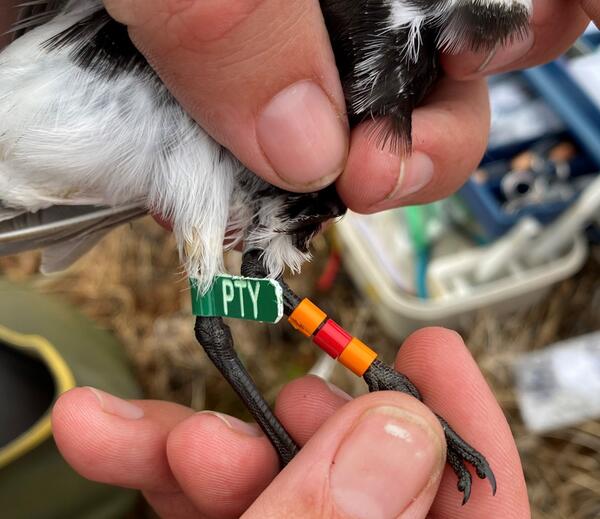
Researcher attaches a bird band to track the movement patterns of dunlin shorebirds in northern Alaska
Researcher attaches a bird band to track the movement patterns of dunlin shorebirds in northern AlaskaAaron Yappert is a master’s student at Iowa State University in the USGS Iowa Cooperative Fish and Wildlife Research Unit. His research focuses on the movement ecology of Dunlin, a medium-sized shorebird, on the breeding grounds in northern Alaska.
Researcher attaches a bird band to track the movement patterns of dunlin shorebirds in northern Alaska
Researcher attaches a bird band to track the movement patterns of dunlin shorebirds in northern AlaskaAaron Yappert is a master’s student at Iowa State University in the USGS Iowa Cooperative Fish and Wildlife Research Unit. His research focuses on the movement ecology of Dunlin, a medium-sized shorebird, on the breeding grounds in northern Alaska.
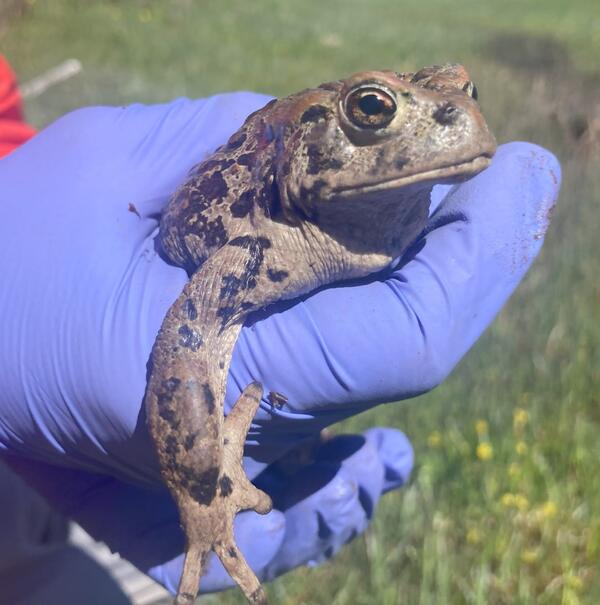
Boreal toad
Boreal toads, once common in the Rocky Mountain Region have experienced significant population declines. These declines are linked to habitat loss and infection by the fungal pathogen Batrachochytrium dendrobatidis. This boreal toad pictured is from the La Barge Creek watershed in Wyoming.
Boreal toads, once common in the Rocky Mountain Region have experienced significant population declines. These declines are linked to habitat loss and infection by the fungal pathogen Batrachochytrium dendrobatidis. This boreal toad pictured is from the La Barge Creek watershed in Wyoming.
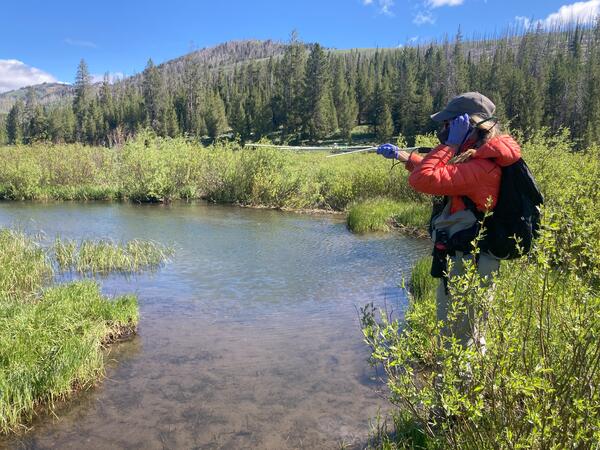
Margot Breiner, MS student, using telemetry to re-locate a boreal toad
Margot Breiner, MS student, using telemetry to re-locate a boreal toadMargot Breiner, MS student, using telemetry to re-locate a boreal toad. Boreal toads, once common in the Rocky Mountain region, have experienced significant population declines. These declines are linked to habitat loss and infection by the fungal pathogen Batrachochytrium dendrobatidis.
Margot Breiner, MS student, using telemetry to re-locate a boreal toad
Margot Breiner, MS student, using telemetry to re-locate a boreal toadMargot Breiner, MS student, using telemetry to re-locate a boreal toad. Boreal toads, once common in the Rocky Mountain region, have experienced significant population declines. These declines are linked to habitat loss and infection by the fungal pathogen Batrachochytrium dendrobatidis.

Sammy King taking a break from skiing at Crater Lake
Sammy King taking a break from skiing at Crater LakeIn January 2025, Sammy accepted the CRU Regional Unit Supervisor for the Northeast Region. Unit scientists and unit supervisors work with cooperators to help them identify their needs, and unit
supervisors ensure that all research conducted is aligned with the USGS mission.
Sammy King taking a break from skiing at Crater Lake
Sammy King taking a break from skiing at Crater LakeIn January 2025, Sammy accepted the CRU Regional Unit Supervisor for the Northeast Region. Unit scientists and unit supervisors work with cooperators to help them identify their needs, and unit
supervisors ensure that all research conducted is aligned with the USGS mission.
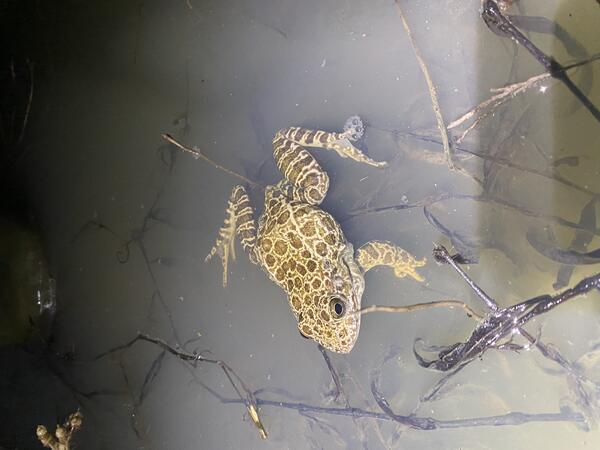
Crawfish frog in their breeding wetland
Crawfish frog in its breeding wetland, this frog was captured and outfitted with radio-transmitters to understand how far from the wetlands they travel after breeding season ends.
Crawfish frog in its breeding wetland, this frog was captured and outfitted with radio-transmitters to understand how far from the wetlands they travel after breeding season ends.
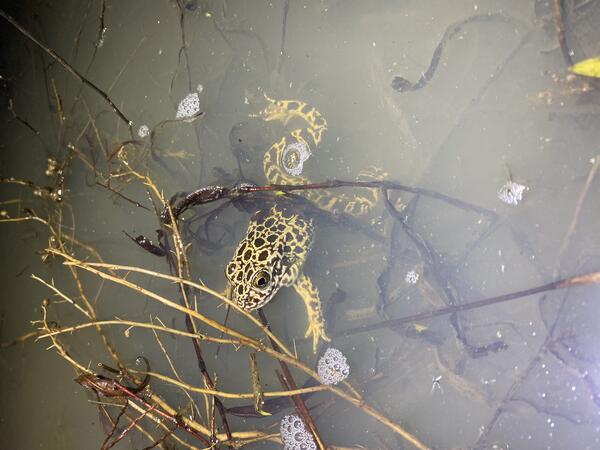
Crawfish frog in a wetland
A crawfish frog in its breeding wetland. We attached radio-transmitters to the crawfish frogs to understand how far from the wetlands they travel after breeding season ends. The crawfish frog is rapidly declining across its range. This unique species lives primarily in upland habitats and relies on crayfish/mammal burrows.
A crawfish frog in its breeding wetland. We attached radio-transmitters to the crawfish frogs to understand how far from the wetlands they travel after breeding season ends. The crawfish frog is rapidly declining across its range. This unique species lives primarily in upland habitats and relies on crayfish/mammal burrows.
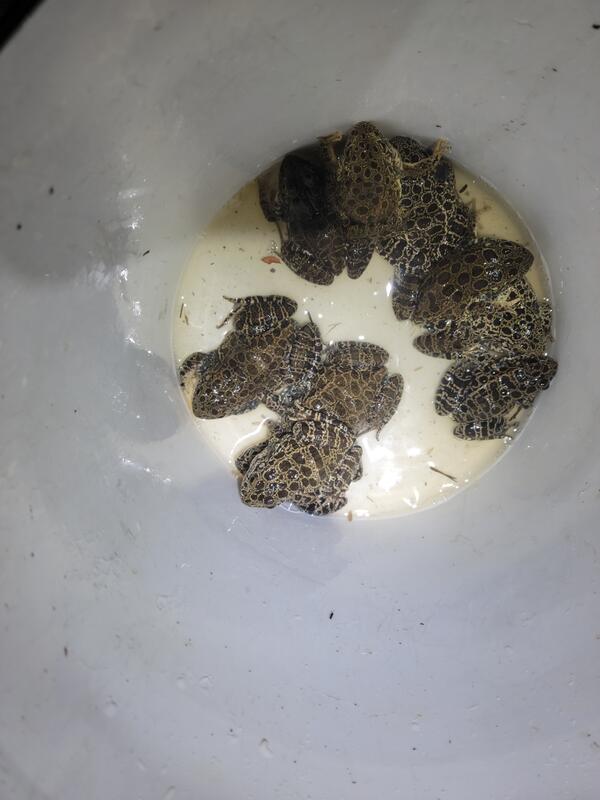
Crawfish frogs
A bucket full of crawfish frogs captured at their breeding wetland in Arkansas to better understand their habitat requirements.
A bucket full of crawfish frogs captured at their breeding wetland in Arkansas to better understand their habitat requirements.

Conor McGowan
Conor is the Assistant Unit Leader of the Florida Cooperative Fish and Wildlife Research Unit. Conor's research focuses population assessment and predictive modeling to support decision making for both harvested species and imperiled species.
Conor is the Assistant Unit Leader of the Florida Cooperative Fish and Wildlife Research Unit. Conor's research focuses population assessment and predictive modeling to support decision making for both harvested species and imperiled species.
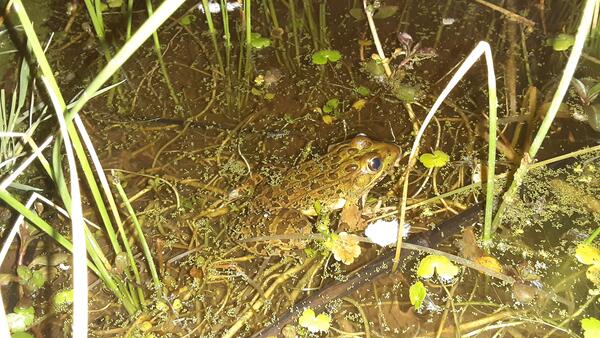
Chiricahua leopard frog
American bullfrogs are causing big problems for our native wildlife in Arizona. These non-native frogs are a threat to species like the federally threatened Chiricahua leopard frog. Bullfrogs breed quickly and spread far, making it tough to control their numbers.
American bullfrogs are causing big problems for our native wildlife in Arizona. These non-native frogs are a threat to species like the federally threatened Chiricahua leopard frog. Bullfrogs breed quickly and spread far, making it tough to control their numbers.

Chiricahua leopard frog breeding site, Las Cienegas National Conservation Area, Arizona
Chiricahua leopard frog breeding site, Las Cienegas National Conservation Area, ArizonaChiricahua leopard frog breeding site, Las Cienegas National Conservation Area, Arizona. American bullfrogs are causing big problems for native wildlife in Arizona. These non-native frogs are a threat to species like the federally threatened Chiricahua leopard frogs.
Chiricahua leopard frog breeding site, Las Cienegas National Conservation Area, Arizona
Chiricahua leopard frog breeding site, Las Cienegas National Conservation Area, ArizonaChiricahua leopard frog breeding site, Las Cienegas National Conservation Area, Arizona. American bullfrogs are causing big problems for native wildlife in Arizona. These non-native frogs are a threat to species like the federally threatened Chiricahua leopard frogs.
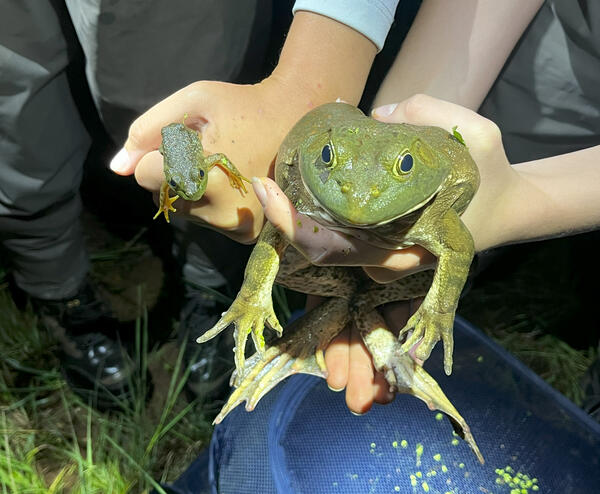
American bullfrogs are a threat to native wildlife in southeast Arizona
American bullfrogs are a threat to native wildlife in southeast ArizonaInvasive American bullfrogs are a big threat to our native wildlife in southeast Arizona, including some endangered reptiles and amphibians like Chiricahua leopard frogs and northern Mexican garter snakes. These bullfrogs can spread quickly and reproduce easily, making it tough to manage their population.
American bullfrogs are a threat to native wildlife in southeast Arizona
American bullfrogs are a threat to native wildlife in southeast ArizonaInvasive American bullfrogs are a big threat to our native wildlife in southeast Arizona, including some endangered reptiles and amphibians like Chiricahua leopard frogs and northern Mexican garter snakes. These bullfrogs can spread quickly and reproduce easily, making it tough to manage their population.
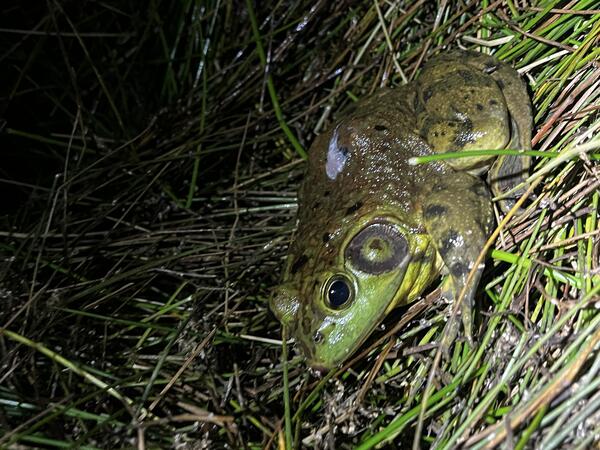
American bullfrog
Invasive American bullfrogs are a BIG threat to our native wildlife in southeast Arizona, including some endangered reptiles and amphibians like Chiricahua leopard frogs and northern Mexican garter snakes. These bullfrogs can spread quickly and reproduce easily, making it tough to manage their population.
Invasive American bullfrogs are a BIG threat to our native wildlife in southeast Arizona, including some endangered reptiles and amphibians like Chiricahua leopard frogs and northern Mexican garter snakes. These bullfrogs can spread quickly and reproduce easily, making it tough to manage their population.