



USGS researchers at the New York Cooperative Fish and Wildlife Research Unit are using trail cameras to track bobcats, black bears, and coyotes across New York. The researchers created an online database where the public can report wildlife sightings.
Images
We are cultivating and sharing the creativity, vision, and innovative perspectives that can be found among our graduate student, staff, faculty, and friends.
Filter Total Items: 387
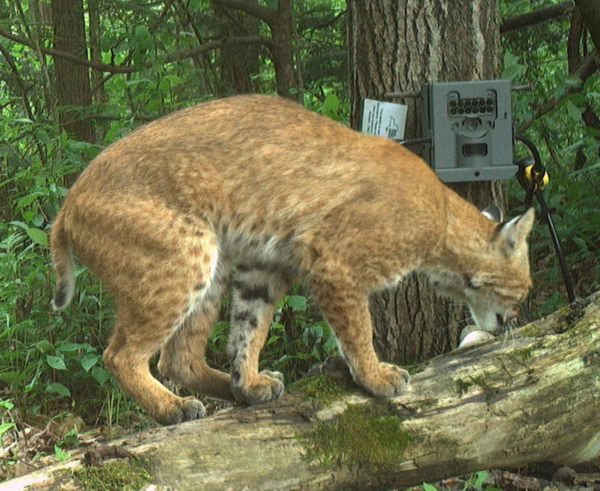
Screenshot of a bobcat spotted on a trail camera
USGS researchers at the New York Cooperative Fish and Wildlife Research Unit are using trail cameras to track bobcats, black bears, and coyotes across New York. The researchers created an online database where the public can report wildlife sightings.
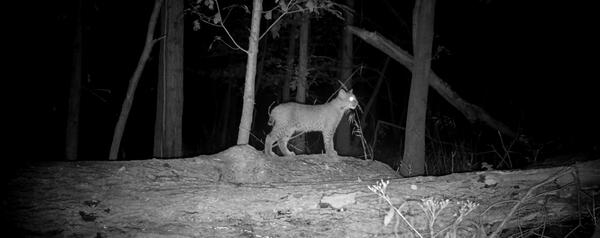
Bobcat spotted on a trail camera
USGS researchers at the New York Cooperative Fish and Wildlife Research Unit are using trail cameras to track bobcats, black bears, and coyotes across New York. The researchers created an online database where the public can report wildlife sightings.
USGS researchers at the New York Cooperative Fish and Wildlife Research Unit are using trail cameras to track bobcats, black bears, and coyotes across New York. The researchers created an online database where the public can report wildlife sightings.
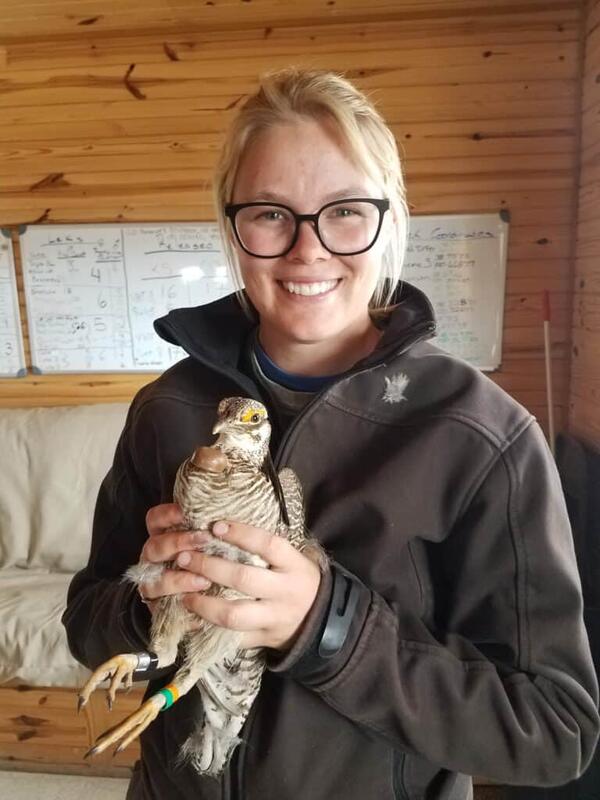
Elisabeth Teige holds a lesser prairie-chicken
The Wildlife Society has awarded Elisabeth “Elli” Teige, graduate student at the Kansas Cooperative Fish and Wildlife Research Unit, the Donald H. Rusch Memorial Game Bird Scholarship, which honors the memory and furthers the legacy of Donald H. Rusch by supporting graduate students researching the biology and management of upland game birds or waterfowl.
The Wildlife Society has awarded Elisabeth “Elli” Teige, graduate student at the Kansas Cooperative Fish and Wildlife Research Unit, the Donald H. Rusch Memorial Game Bird Scholarship, which honors the memory and furthers the legacy of Donald H. Rusch by supporting graduate students researching the biology and management of upland game birds or waterfowl.
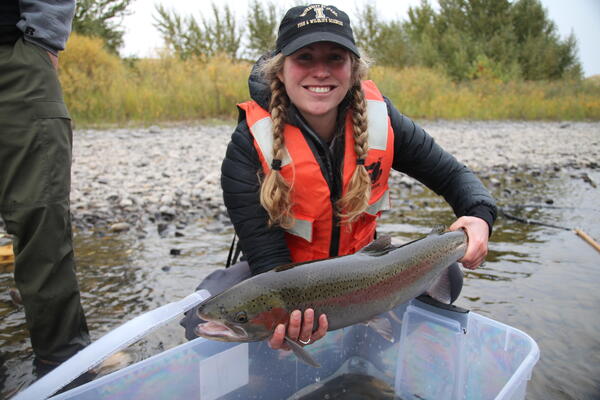
A graduate student poses with a steelhead (a type of rainbow trout)
A graduate student poses with a steelhead (a type of rainbow trout)USGS researchers at the Idaho Cooperative Fish and Wildlife Research Unit (Idaho CRU) and graduate students at the University of Idaho are working with the Idaho Fish and Game (IDFG) on projects focused on better understanding the dynamics of steelhead fisheries in Idaho. These projects are highly collaborative, with IDFG identifying the most relevant research
A graduate student poses with a steelhead (a type of rainbow trout)
A graduate student poses with a steelhead (a type of rainbow trout)USGS researchers at the Idaho Cooperative Fish and Wildlife Research Unit (Idaho CRU) and graduate students at the University of Idaho are working with the Idaho Fish and Game (IDFG) on projects focused on better understanding the dynamics of steelhead fisheries in Idaho. These projects are highly collaborative, with IDFG identifying the most relevant research
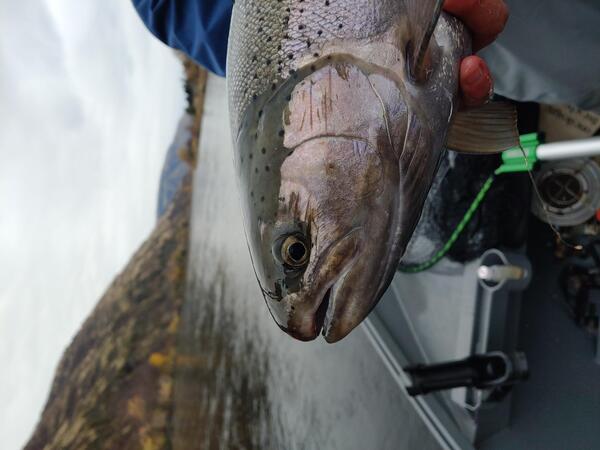
Steelhead (rainbow trout)
USGS researchers at the Idaho Cooperative Fish and Wildlife Research Unit (Idaho CRU) and graduate students at the University of Idaho are working with the Idaho Fish and Game (IDFG) on projects focused on better understanding the dynamics of steelhead fisheries in Idaho. These projects are highly collaborative, with IDFG identifying the most relevant research
USGS researchers at the Idaho Cooperative Fish and Wildlife Research Unit (Idaho CRU) and graduate students at the University of Idaho are working with the Idaho Fish and Game (IDFG) on projects focused on better understanding the dynamics of steelhead fisheries in Idaho. These projects are highly collaborative, with IDFG identifying the most relevant research
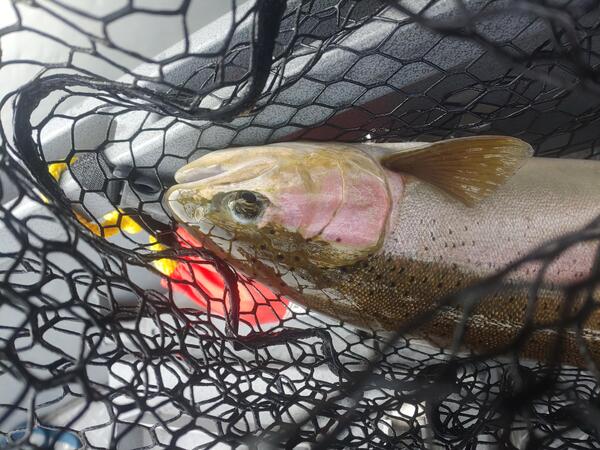
Steelhead (rainbow trout)
USGS researchers at the Idaho Cooperative Fish and Wildlife Research Unit (Idaho CRU) and graduate students at the University of Idaho are working with the Idaho Fish and Game (IDFG) on projects focused on better understanding the dynamics of steelhead fisheries in Idaho. These projects are highly collaborative, with IDFG identifying the most relevant research
USGS researchers at the Idaho Cooperative Fish and Wildlife Research Unit (Idaho CRU) and graduate students at the University of Idaho are working with the Idaho Fish and Game (IDFG) on projects focused on better understanding the dynamics of steelhead fisheries in Idaho. These projects are highly collaborative, with IDFG identifying the most relevant research
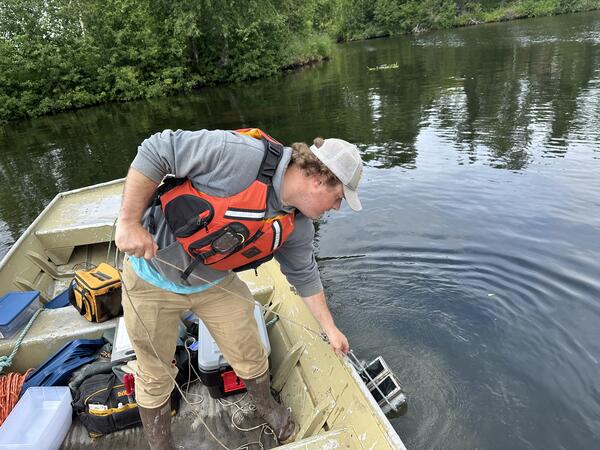
Graduate student is collecting substrate samples on Big Lake, Alaska
Graduate student is collecting substrate samples on Big Lake, AlaskaUSGS researchers at the Alaska Cooperative Fish and Wildlife Research Unit are working with the Alaska Department of Fish and Game, the U.S. Fish and Wildlife Service and private landowners to implement a successful cost-share program for restoring and stabilizing eroding shorelines.
Graduate student is collecting substrate samples on Big Lake, Alaska
Graduate student is collecting substrate samples on Big Lake, AlaskaUSGS researchers at the Alaska Cooperative Fish and Wildlife Research Unit are working with the Alaska Department of Fish and Game, the U.S. Fish and Wildlife Service and private landowners to implement a successful cost-share program for restoring and stabilizing eroding shorelines.
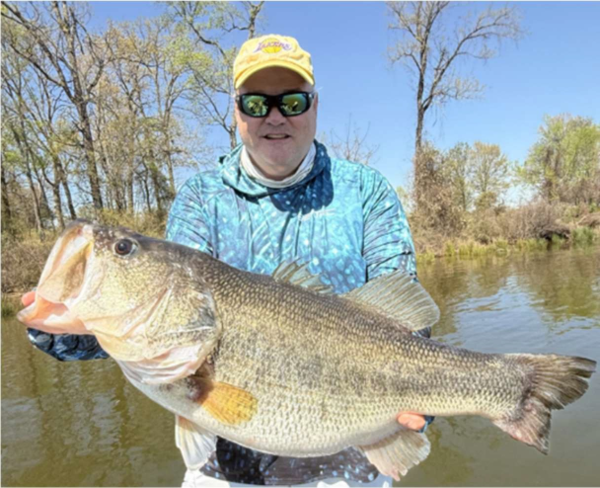
Researcher is holding a lunker bass
A lunker bass weighing 11.7 pounds was captured at Lake Fork reservoir in Texas by a collaborating angler. USGS researchers at the Mississippi Cooperative Fish and Wildlife Research Unit are leading ongoing research with Texas Parks & Wildlife Department (TPWD) and volunteer anglers to explore a one-of-a-kind fisheries database.
A lunker bass weighing 11.7 pounds was captured at Lake Fork reservoir in Texas by a collaborating angler. USGS researchers at the Mississippi Cooperative Fish and Wildlife Research Unit are leading ongoing research with Texas Parks & Wildlife Department (TPWD) and volunteer anglers to explore a one-of-a-kind fisheries database.
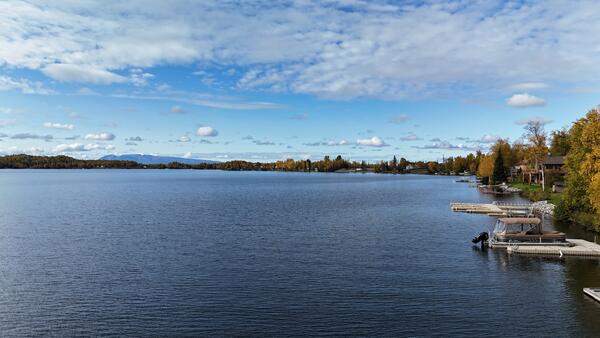
Big Lake Alaska
USGS researchers at the Alaska Cooperative Fish and Wildlife Research Unit are working with the Alaska Department of Fish and Game, the U.S. Fish and Wildlife Service and private landowners to implement a successful cost-share program for restoring and stabilizing eroding shorelines.
USGS researchers at the Alaska Cooperative Fish and Wildlife Research Unit are working with the Alaska Department of Fish and Game, the U.S. Fish and Wildlife Service and private landowners to implement a successful cost-share program for restoring and stabilizing eroding shorelines.
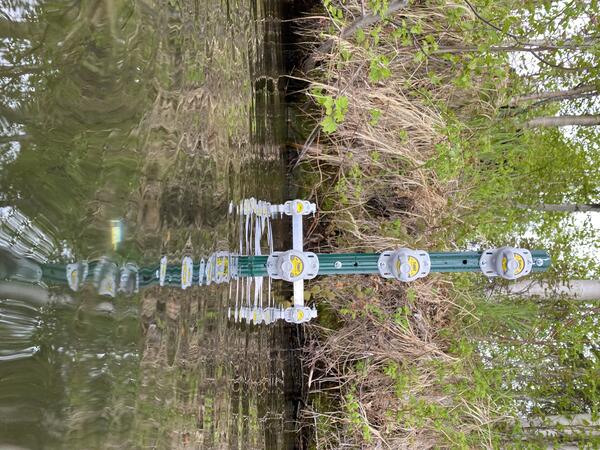
USGS researchers deploy a wake detection array at Big Lake, Alaska
USGS researchers deploy a wake detection array at Big Lake, AlaskaUSGS researchers at the Alaska Cooperative Fish and Wildlife Research Unit are working with the Alaska Department of Fish and Game, the U.S. Fish and Wildlife Service and private landowners to implement a successful cost-share program for restoring and stabilizing eroding shorelines.
USGS researchers deploy a wake detection array at Big Lake, Alaska
USGS researchers deploy a wake detection array at Big Lake, AlaskaUSGS researchers at the Alaska Cooperative Fish and Wildlife Research Unit are working with the Alaska Department of Fish and Game, the U.S. Fish and Wildlife Service and private landowners to implement a successful cost-share program for restoring and stabilizing eroding shorelines.
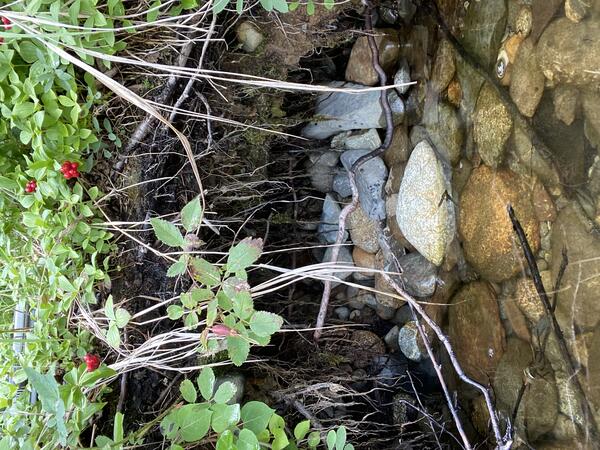
Erosion at Big Lake, Alaska
USGS researchers at the Alaska Cooperative Fish and Wildlife Research Unit, the Alaska Department of Fish and Game, the U.S. Fish and Wildlife Service and private landowners are partnering to implement a successful cost-share program for restoring and stabilizing eroding shorelines.
USGS researchers at the Alaska Cooperative Fish and Wildlife Research Unit, the Alaska Department of Fish and Game, the U.S. Fish and Wildlife Service and private landowners are partnering to implement a successful cost-share program for restoring and stabilizing eroding shorelines.
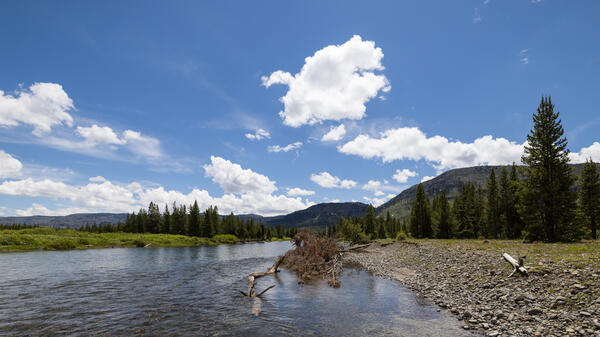
Yellowstone River
USGS researchers at the Montana Cooperative Fishery Research Unit are working with Yellowstone National park to understand Yellowstone cutthroat trout. Yellowstone National Park generates \$834 million in economic benefits and supports about 9,000 jobs for the local economy. A key part of this economic engine are the animals that the public come to see and enjoy.
USGS researchers at the Montana Cooperative Fishery Research Unit are working with Yellowstone National park to understand Yellowstone cutthroat trout. Yellowstone National Park generates \$834 million in economic benefits and supports about 9,000 jobs for the local economy. A key part of this economic engine are the animals that the public come to see and enjoy.

Dr. Matthew Kauffman
In 2012, Matt co-founded (and now directs) the Wyoming Migration Initiative (migrationinitiative.org), whose mission is to advance the understanding, appreciation, and conservation of Wyoming's migratory ungulates. He teaches graduate seminars in quantitative analysis of spatial wildlife data, community ecology of wildlife, and migration ecology.
In 2012, Matt co-founded (and now directs) the Wyoming Migration Initiative (migrationinitiative.org), whose mission is to advance the understanding, appreciation, and conservation of Wyoming's migratory ungulates. He teaches graduate seminars in quantitative analysis of spatial wildlife data, community ecology of wildlife, and migration ecology.
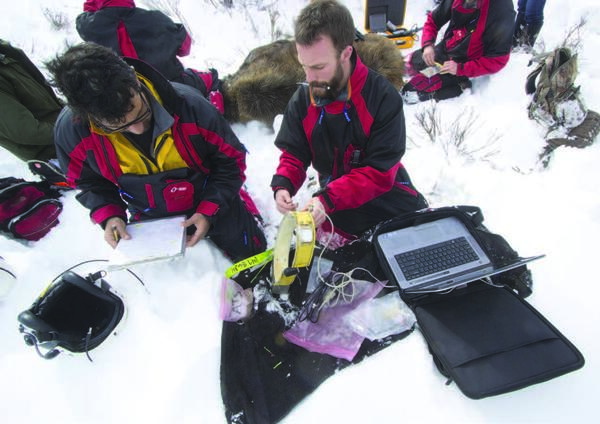
Researchers are downloading location data from a collared moose
Researchers are downloading location data from a collared mooseMatt Kauffman, USGS Research Ecologist and Unit Leader of the Wyoming Cooperative Fish and Wildlife Unit, along with another researcher, is downloading GPS location data from a collar during a moose capture in Wyoming.
Researchers are downloading location data from a collared moose
Researchers are downloading location data from a collared mooseMatt Kauffman, USGS Research Ecologist and Unit Leader of the Wyoming Cooperative Fish and Wildlife Unit, along with another researcher, is downloading GPS location data from a collar during a moose capture in Wyoming.
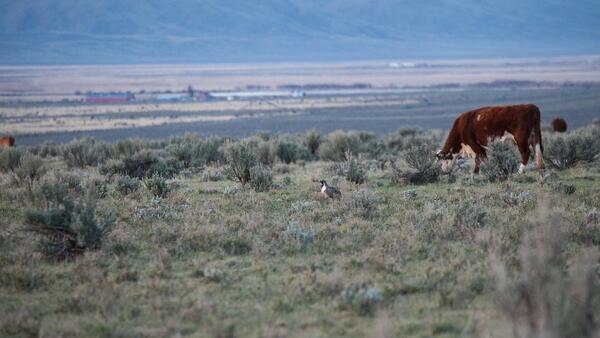
Sage grouse and cow on grazing land
Greater sage-grouse (Centrocercus urophasianus) were once widespread within sagebrush -grassland ecosystems of western North America, but populations have declined since the mid-1960s. . Roughly half of the sage-grouse’s remaining habitat is on federal land, most of it managed by the Bureau of Land Management (BLM) and the U.S. Forest Service (USFS)
Greater sage-grouse (Centrocercus urophasianus) were once widespread within sagebrush -grassland ecosystems of western North America, but populations have declined since the mid-1960s. . Roughly half of the sage-grouse’s remaining habitat is on federal land, most of it managed by the Bureau of Land Management (BLM) and the U.S. Forest Service (USFS)

Researchers learning feather identification
John Veon (left, Arkansas Unit and University of Arkansas) and Jason Carbaugh (right, Arkansas Game and Fish Commission) learning feather identification at the Mississippi Wingbee. Photograph by the U.S. Geological Survey.
John Veon (left, Arkansas Unit and University of Arkansas) and Jason Carbaugh (right, Arkansas Game and Fish Commission) learning feather identification at the Mississippi Wingbee. Photograph by the U.S. Geological Survey.

Researchers tag a pronghorn
New Mexico Department of Game and Fish biologists, Nicole Tatman (right, Big Game Program Manager) and Orrin Duvuvuei (left, Deer Program Manager) tag a pronghorn (Antilocapra americana) during a joint project with the New Mexico Unit.
New Mexico Department of Game and Fish biologists, Nicole Tatman (right, Big Game Program Manager) and Orrin Duvuvuei (left, Deer Program Manager) tag a pronghorn (Antilocapra americana) during a joint project with the New Mexico Unit.

Chris Pullano and Jenna Ruoss holding recently tagged female pallid sturgeon
Chris Pullano and Jenna Ruoss holding recently tagged female pallid sturgeonThe pallid sturgeon is a threatened species in the U.S. that lives mainly in the Missouri and lower Mississippi rivers. While research has provided valuable insights into its biology and ecology in these main rivers, there are still significant gaps in understanding how the sturgeon uses and depends on their tributaries.
Chris Pullano and Jenna Ruoss holding recently tagged female pallid sturgeon
Chris Pullano and Jenna Ruoss holding recently tagged female pallid sturgeonThe pallid sturgeon is a threatened species in the U.S. that lives mainly in the Missouri and lower Mississippi rivers. While research has provided valuable insights into its biology and ecology in these main rivers, there are still significant gaps in understanding how the sturgeon uses and depends on their tributaries.

Denil fishway
USGS researchers at the Montana Fishery Research Unit conducted field experiments in the Big Hole drainage of southwestern Montana to determine the efficacy of Denil fish ladders to pass Arctic grayling and trout at low-head irrigation diversion dams.
USGS researchers at the Montana Fishery Research Unit conducted field experiments in the Big Hole drainage of southwestern Montana to determine the efficacy of Denil fish ladders to pass Arctic grayling and trout at low-head irrigation diversion dams.

Researchers holding freshwater turtles
The Arkansas Cooperative Fish and Wildlife Research Unit, with support from the Arkansas Fish and Game Commission, is leading research to investigate the effects of commercial harvest on turtle populations and demography across the Delta ecoregion. Most turtle species are long-lived, mature at advanced ages, and have slow reproduction.
The Arkansas Cooperative Fish and Wildlife Research Unit, with support from the Arkansas Fish and Game Commission, is leading research to investigate the effects of commercial harvest on turtle populations and demography across the Delta ecoregion. Most turtle species are long-lived, mature at advanced ages, and have slow reproduction.

Westslope cutthroat trout
USGS researchers at the Montana Cooperative Fishery Research Unit, through research efforts and a strong partnership with Yellowstone National Park, the Yellowstone cutthroat trout population has rebounded such that anglers are fishing the lake again, outfitters are booking back-country trips, and grizzly bears are visiting Yellowstone cutthroat trout spawning tribu
USGS researchers at the Montana Cooperative Fishery Research Unit, through research efforts and a strong partnership with Yellowstone National Park, the Yellowstone cutthroat trout population has rebounded such that anglers are fishing the lake again, outfitters are booking back-country trips, and grizzly bears are visiting Yellowstone cutthroat trout spawning tribu