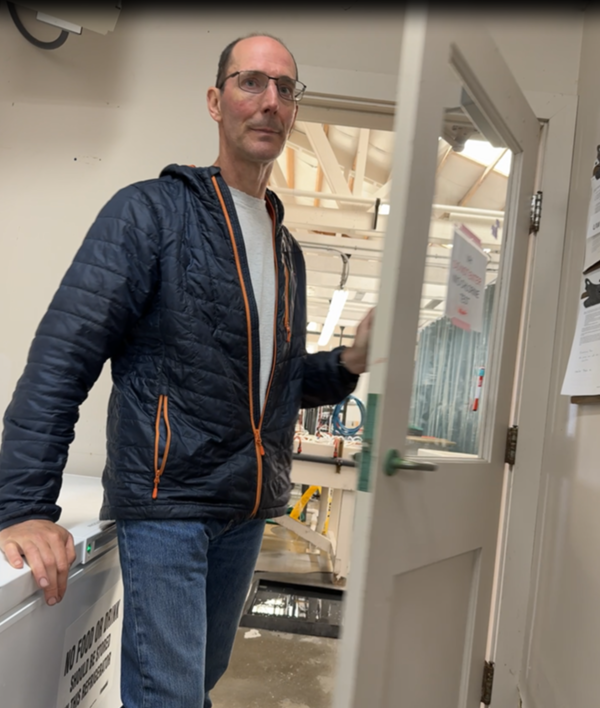
Ric Wilson, a doctorate in geology and USGS research geologist at the Alaska Science Center in Anchorage, Alaska.
Images
Browse images from a wide range of science topics covered by USGS.
Ric Wilson, a doctorate in geology and USGS research geologist at the Alaska Science Center in Anchorage, Alaska.
Map of area where the USGS and USFWS may observe Pacific walrus during marine expeditions on the RV Norseman II starting in summer of 2024. Crosshatching in the map shows the general area where the Norseman II may sail to observe walruses in the summer of 2024, as part of a USGS and USFWS project to study Pacific walrus population dynamics.
A USGS hat sits on a bed of black bear berry vegetation. This photo was taken in Kanuti, Alaska.
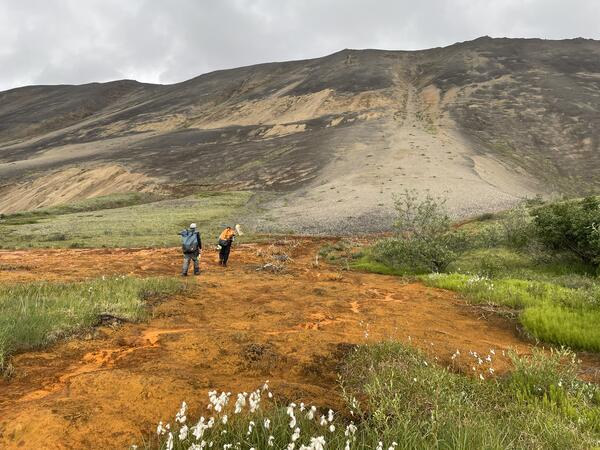
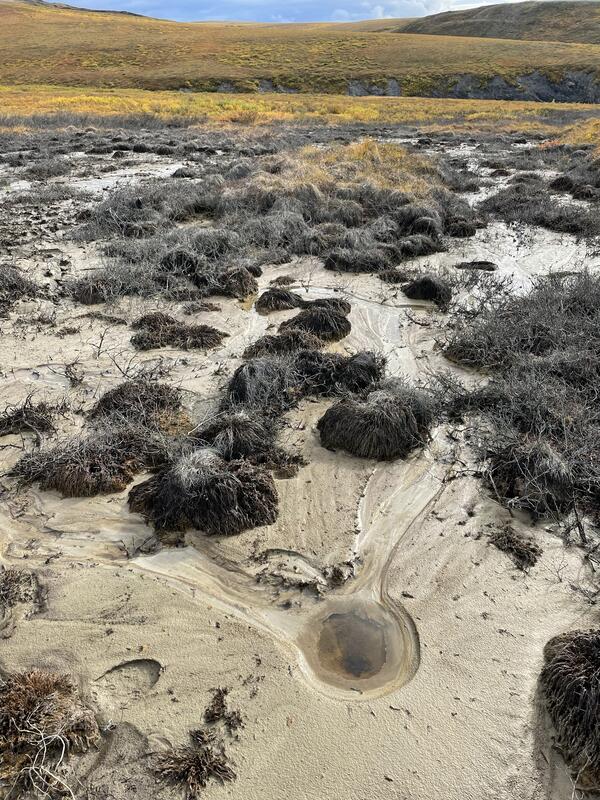
An orange tributary of the Kugururok River, Noatak National Preserve, Alaska
An orange tributary of the Kugururok River, Noatak National Preserve, AlaskaOrange streams are increasingly common in the Brooks Range of northern Alaska. The orange stream color reflects oxidized iron, but also often indicates elevated heavy metal concentrations. Our ongoing study aims to document these occurrences and the timing of their onset.
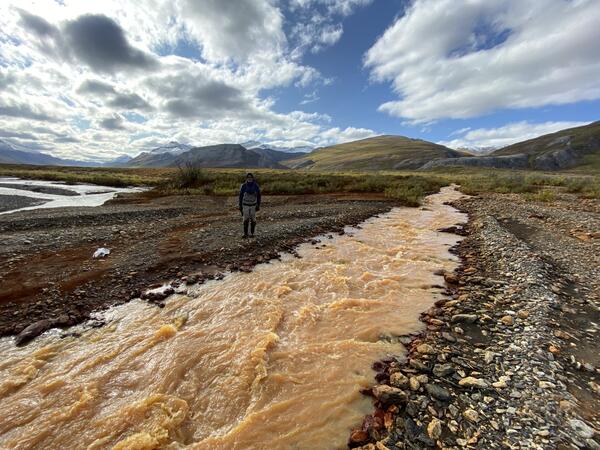
An orange tributary of the Kugururok River, Noatak National Preserve, Alaska
An orange tributary of the Kugururok River, Noatak National Preserve, AlaskaOrange streams are increasingly common in the Brooks Range of northern Alaska. The orange stream color reflects oxidized iron, but also often indicates elevated heavy metal concentrations. Our ongoing study aims to document these occurrences and the timing of their onset.
RV Norseman II ship track for the Pacific walrus research expedition in 2023. In collaboration with the U.S. Fish and Wildlife Service, the USGS conducted a research expedition to study Pacific walrus population dynamics. The ship departed Nome, AK on June 5, 2023, and returned to Nome on July 2, 2023.
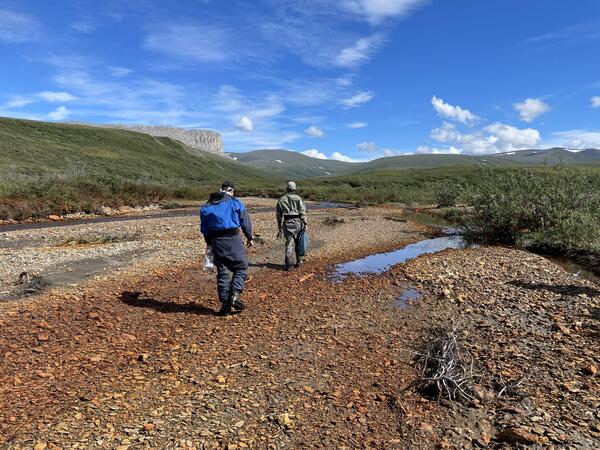
Orange streams are increasingly common in the Brooks Range of northern Alaska. The orange stream color reflects oxidized iron, but also often indicates elevated heavy metal concentrations. Our ongoing study aims to document these occurrences and the timing of their onset.
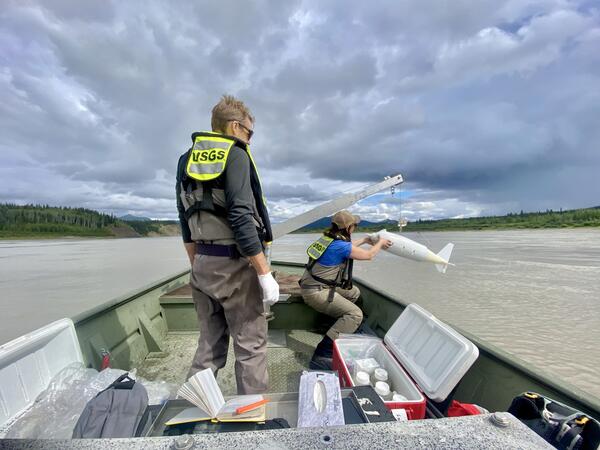
USGS Staff at the Unuk River Streamgage in Southeast Alaska. The Unuk River is the second smallest watershed in the transboundary study of Southeast Alaska, but has three large mining projects in development (Kerr-Sulplherets-Mitchell (KSM), Brucejack, and Eskay Creek)
Adult female Pacific walrus sliding into the water
Adult female Pacific walrus sliding into the waterAn adult female Pacific walrus slides into the water as she assesses her surroundings. The female is 15 years or older based on the length of the tusks. USGS and the U.S.
Adult female Pacific walrus sliding into the water
Adult female Pacific walrus sliding into the waterAn adult female Pacific walrus slides into the water as she assesses her surroundings. The female is 15 years or older based on the length of the tusks. USGS and the U.S.
A large and noisy walrus group amidst an aggregation of groups
A large and noisy walrus group amidst an aggregation of groupsAlarge, active, and noisy walrus group hauled on sea ice in the Chukchi Sea. USGS and the U.S.
A large and noisy walrus group amidst an aggregation of groups
A large and noisy walrus group amidst an aggregation of groupsAlarge, active, and noisy walrus group hauled on sea ice in the Chukchi Sea. USGS and the U.S.
Walrus groups hauled on sea ice as far as the eye can see in the Chukchi Sea. USGS and the U.S.
A dim light shines during the summer Arctic morning in the Chukchi Sea as groups of Pacific walruses rest. USGS and the U.S.
An adult female walrus with a one-year old offspring. USGS and the U.S.
A rainbow emerges from an evening shower in the Chukchi Sea. USGS and the U.S.
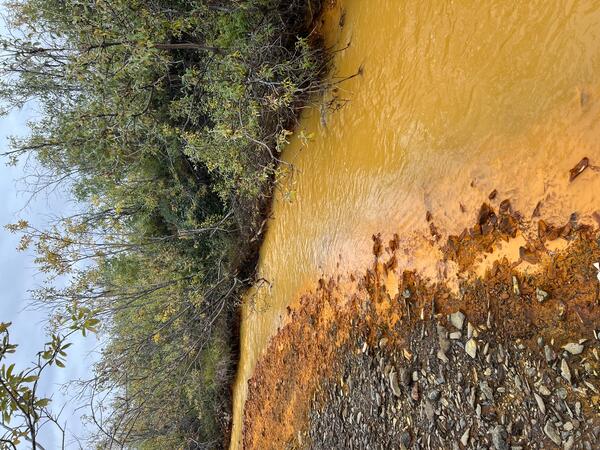
Orange water from a tributary of the Kugururok River
Orange water from a tributary of the Kugururok RiverOrange streams are increasingly common in the Brooks Range of northern Alaska. The orange stream color reflects oxidized iron, but also often indicates elevated heavy metal concentrations. Our ongoing study aims to document these occurrences and the timing of their onset.
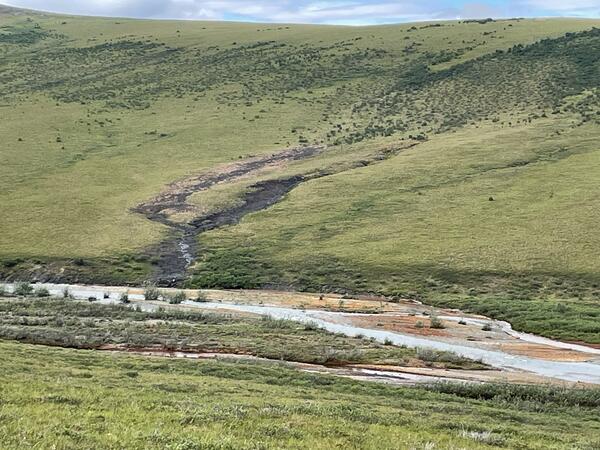
Orange water from a tributary of the Kugururok River
Orange water from a tributary of the Kugururok RiverOrange streams are increasingly common in the Brooks Range of northern Alaska. The orange stream color reflects oxidized iron, but also often indicates elevated heavy metal concentrations. Our ongoing study aims to document these occurrences and the timing of their onset.
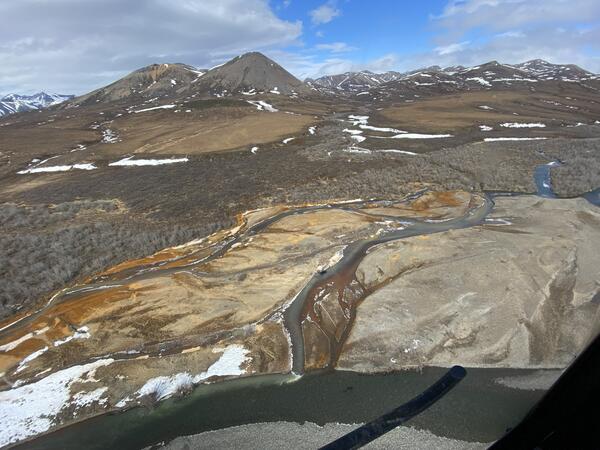
Limited mixing of orange water and the Kugururok River
Limited mixing of orange water and the Kugururok RiverOrange streams are increasingly common in the Brooks Range of northern Alaska. The orange stream color reflects oxidized iron, but also often indicates elevated heavy metal concentrations. Our ongoing study aims to document these occurrences and the timing of their onset.
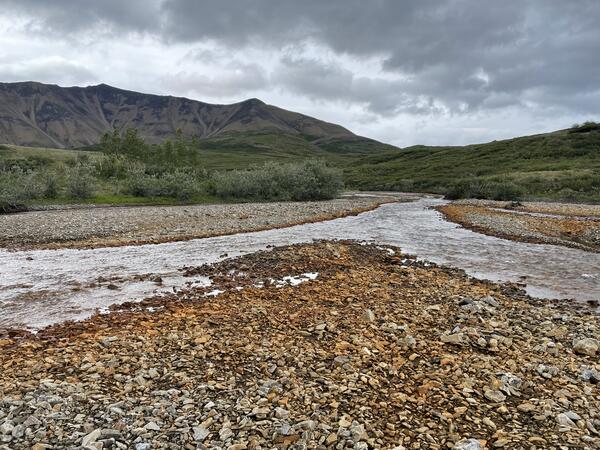
Limited mixing of orange water and the Kugururok River
Limited mixing of orange water and the Kugururok RiverOrange streams are increasingly common in the Brooks Range of northern Alaska. The orange stream color reflects oxidized iron, but also often indicates elevated heavy metal concentrations. Our ongoing study aims to document these occurrences and the timing of their onset.
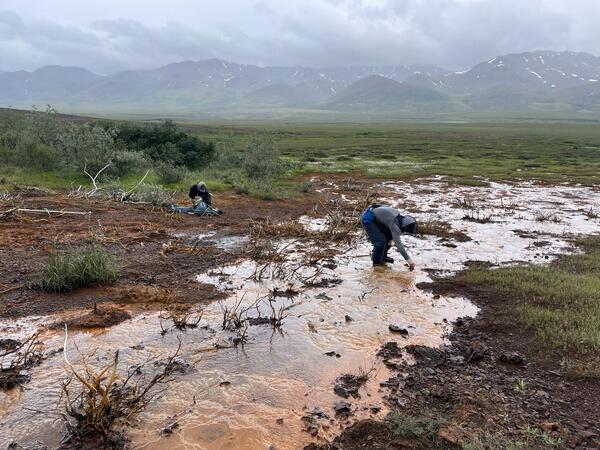
An orange tributary mixing into the pristine Kugururok River
An orange tributary mixing into the pristine Kugururok RiverOrange streams are increasingly common in the Brooks Range of northern Alaska. The orange stream color reflects oxidized iron, but also often indicates elevated heavy metal concentrations. Our ongoing study aims to document these occurrences and the timing of their onset.
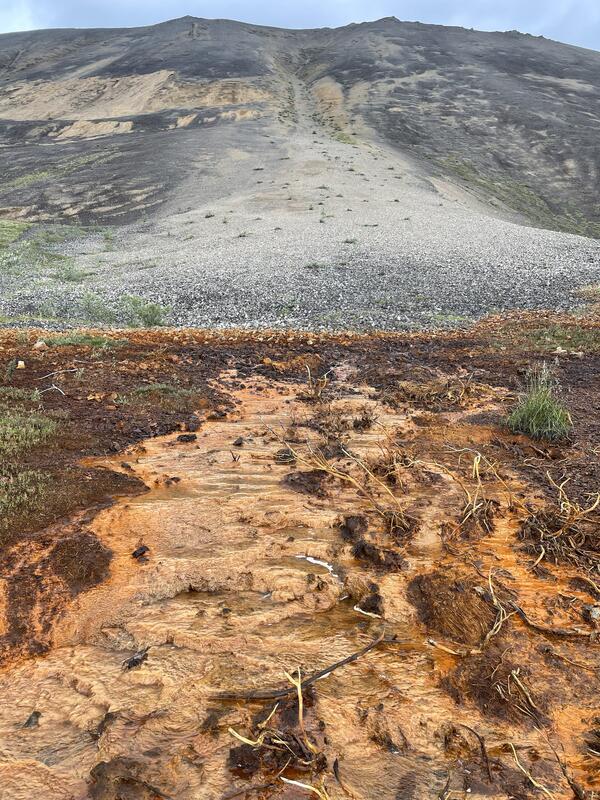
An orange tributary mixing into the pristine Kugururok River
An orange tributary mixing into the pristine Kugururok RiverOrange streams are increasingly common in the Brooks Range of northern Alaska. The orange stream color reflects oxidized iron, but also often indicates elevated heavy metal concentrations. Our ongoing study aims to document these occurrences and the timing of their onset.
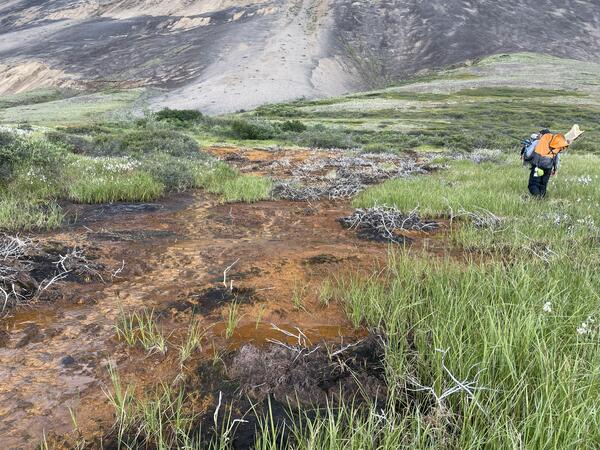
A polar bear walking along the Beaufort Sea coast with storm waves breaking behind it, filmed during fieldwork at Barter Island, Alaska.
THE ALEUTIAN CRADLE OF TSUNAMIS
(Click here to read EOS Feature: Seismic Sources in the Aleutian Cradle of Tsunamis)
Scientists walk between hundreds of spawning sockeye salmon in shallow lake at Izembek National Wildlife Refuge, Alaska
Scientists walk between hundreds of spawning sockeye salmon in shallow lake at Izembek National Wildlife Refuge, AlaskaUSGS Upper Midwest Water Science Center hydrologist Laura Hubbard (right, in yellow coat and PFD) and Jordan Wight (left, Memorial University of Newfoundland, Canada) walk between hundreds of spawning sockeye salmon in shallow lake at Izembek National Wildlife Refuge, Alaska as they filter water for avian influenza virus.
Scientists walk between hundreds of spawning sockeye salmon in shallow lake at Izembek National Wildlife Refuge, Alaska
Scientists walk between hundreds of spawning sockeye salmon in shallow lake at Izembek National Wildlife Refuge, AlaskaUSGS Upper Midwest Water Science Center hydrologist Laura Hubbard (right, in yellow coat and PFD) and Jordan Wight (left, Memorial University of Newfoundland, Canada) walk between hundreds of spawning sockeye salmon in shallow lake at Izembek National Wildlife Refuge, Alaska as they filter water for avian influenza virus.
Two scientists wade in shallow wetland in Izembek National Wildlife Refuge, Alaska
Two scientists wade in shallow wetland in Izembek National Wildlife Refuge, AlaskaUSGS research hydrologist Laura Hubbard and Memorial University of Newfoundland's Jordan Wight wade with an orange inflatable boat in shallow wetland as they filter for infectious avian influenza in Izembek National Wildlife Refuge, Alaska.
Two scientists wade in shallow wetland in Izembek National Wildlife Refuge, Alaska
Two scientists wade in shallow wetland in Izembek National Wildlife Refuge, AlaskaUSGS research hydrologist Laura Hubbard and Memorial University of Newfoundland's Jordan Wight wade with an orange inflatable boat in shallow wetland as they filter for infectious avian influenza in Izembek National Wildlife Refuge, Alaska.