
Aida Farag, PhD (Former Employee)
Science and Products
Energy Resources Life Cycle Integrated Science Team
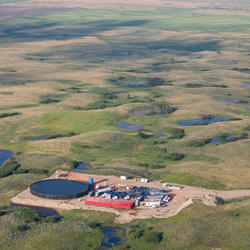
The Energy Resources Life Cycle Integrated Science Team focuses on the potential for environmental contaminant exposures that might originate from energy resource activities including extraction, production, transportation, storage, waste management, and restoration. Perceived health risks to humans and other organisms will be distinguished from actual risks, if any. If actual risks are identified...
Do Trace Metal Concentrations in the Upper Columbia River Affect Early Life Stage White Sturgeon?
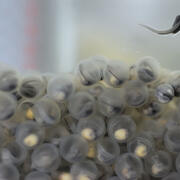
To understand if contaminants are associated with white sturgeon population declines, U.S. Geological Survey scientists reviewed the life history, physiology, and behavior of white sturgeon, along with recent toxicological studies and existing trace metal data for locations in the Columbia River. The analysis indicated that the highest concentrations of copper and other metals in the Columbia...
Framework for Examining Stream Ecosystem Health in Areas of Shale Gas Development—A Multi-Parameter Watershed-Based Case Study in Pennsylvania
In a case study of 25 headwater streams in Pennsylvania, no statistically significant associations were determined between shale gas development and geochemical tracers of produced waters or measures of microbial and macroinvertebrate community composition. Although the results are specific to the region studied, the integrated biological and geochemical framework provides a tool for examining...
Produced water from Marcellus Shale and amphibians
Research biologists at the USGS Eastern Ecological Science Center (EESC) at the Patuxent Research Refuge are conducting a series of scientific studies on the potential effects of wastewater from hydraulic fracturing activities on terrestrial wildlife. Findings will help in assessing proposals for managing recycling and distribution of large volumes of flowback and produced waters generated by...
Science Team about Energy and Plains and Potholes Environments (STEPPE)
Brine Contamination to Plains and Potholes Environments from Energy Development in the Williston Basin
Hydraulic Fracturing and Water Resources: An Assessment of the Potential Effects of Shale Gas Development on Water Resources in the United States
Shale gas is a key source of onshore domestic energy for the United States and production of this resource is increasing rapidly. Development and extraction of shale gas requires hydraulic fracturing, which entails horizontal drilling, perforation of steel casing and cement grout using explosive charges, and expansion of fractures using fluids under high pressure. Concern over potential
Effects of dietary organic selenium on growth, survival, and reproduction in Hyalella azteca and Chironomus dilutus Effects of dietary organic selenium on growth, survival, and reproduction in Hyalella azteca and Chironomus dilutus
Chronic selenium toxicity thresholds are based primarily on dietary organoselenium exposure and subsequent reproductive effects in fish. Available chronic selenium toxicity data suggests that invertebrates are less sensitive than fish, but chronic invertebrate studies are limited. We evaluated yeast-based diets for chronic toxicity studies with Hyalella azteca and Chironomus dilutus...
Biological and chemical data from chloride bioassays with native wetland species in natural and reconstituted Prairie Pothole waters Biological and chemical data from chloride bioassays with native wetland species in natural and reconstituted Prairie Pothole waters
Biological endpoints for three focal test species [Daphnia magna (mortality), Psuedacris maculata (mortality, growth, and development), and Lemna gibba (growth)] in response to exposure to reconstituted or field-collected water under laboratory conditions. Field-collected waters were collected from wetlands within the Prairie Pothole Region (PPR) of the United States. Reconstituted water...
Microbial Community Composition Data from Blacktail Creek near Williston, North Dakota Microbial Community Composition Data from Blacktail Creek near Williston, North Dakota
A large spill of wastewater from oil and gas operations was discovered adjacent to Blacktail Creek near Williston, North Dakota in January 2015. To determine the effects of this spill on streambed microbial communities over time, bed sediment samples were taken from Blacktail Creek upstream, adjacent to, and at several locations downstream from the spill site. Blacktail Creek is a...
Filter Total Items: 53
Effects of dietary selenium on the amphipod Hyalella azteca and the midge Chironomus dilutus Effects of dietary selenium on the amphipod Hyalella azteca and the midge Chironomus dilutus
Chronic selenium (Se) water quality criteria are based primarily on dietary organoselenium exposure and subsequent reproductive effects in fish. Available chronic Se toxicity data suggests that invertebrates are less sensitive than fish, but chronic invertebrate studies are limited. We evaluated yeast-based diets for chronic toxicity studies with Hyalella azteca and Chironomus dilutus...
Authors
John M. Besser, Danielle M. Cleveland, David D. Harper, Rebecca A. Dorman, Aida Farag
Ammonia and aquatic ecosystems – A review of global sources, biogeochemical cycling, and effects on fish Ammonia and aquatic ecosystems – A review of global sources, biogeochemical cycling, and effects on fish
The purpose of this review is to better understand the full life cycle and influence of ammonia from an aquatic biology perspective. While ammonia has toxic properties in water and air, it also plays a central role in the biogeochemical nitrogen (N) cycle and regulates mechanisms of normal and abnormal fish physiology. Additionally, as the second most synthesized chemical on Earth...
Authors
Thea M. Edwards, Holly J. Puglis, Jonathan Lopez Duran, Lillian Bradshaw, Douglas B. Kent, Aida Farag
Guide for benthic invertebrate studies in support of Natural Resource Damage Assessment and Restoration Guide for benthic invertebrate studies in support of Natural Resource Damage Assessment and Restoration
This guide is intended to assist with characterizing injury to freshwater benthic macroinvertebrates (BMIs) in Natural Resource Damage Assessment and Restoration (NRDAR) cases. The contents are narrowly focused on insects, crustaceans, snails, and other invertebrate fauna that are typically considered part of BMI communities and are not intended to address studies of injury to larger...
Authors
David J. Soucek, Aida M. Farag, John M. Besser, Jeffery A. Steevens
Using biological responses to monitor freshwater post-spill conditions over 3 years in Blacktail Creek, North Dakota, USA Using biological responses to monitor freshwater post-spill conditions over 3 years in Blacktail Creek, North Dakota, USA
A pipeline carrying unconventional oil and gas (OG) wastewater spilled approximately 11 million liters of wastewater into Blacktail Creek, North Dakota, USA. Flow of the mix of stream water and wastewater down the channel resulted in storage of contaminants in the hyporheic zone and along the banks, providing a long-term source of wastewater constituents to the stream. A multi-level...
Authors
Aida Farag, David Harper, Isabelle M. Cozzarelli, Douglas B. Kent, Adam Mumford, Denise M. Akob, Travis W. Schaeffer, Luke R. Iwanowicz
By
Ecosystems Mission Area, Contaminant Biology, Environmental Health Program, Toxic Substances Hydrology, Columbia Environmental Research Center, Earth Resources Observation and Science (EROS) Center , Eastern Ecological Science Center, Geology, Energy & Minerals Science Center, Reston Microbiology Laboratory
Potential effects of energy development on environmental resources of the Williston Basin in Montana, North Dakota, and South Dakota—Species of conservation concern Potential effects of energy development on environmental resources of the Williston Basin in Montana, North Dakota, and South Dakota—Species of conservation concern
The ecosystems of the Williston Basin provide direct and indirect benefits to society. These benefits include carbon sequestration, flood control, nutrient rich soils for agricultural productivity, and habitat for wildlife. This chapter’s main focus is on the effects of energy development on species that occupy the ecosystems in the Williston Basin. We compiled a list of documented...
Authors
Max Post van der Burg, Amy J. Symstad, Lawrence D. Igl, David M. Mushet, Diane L. Larson, Glen A. Sargeant, David D. Harper, Aida M. Farag, Brian A. Tangen, Michael J. Anteau
Chloride toxicity to native freshwater species in natural and reconstituted prairie pothole waters Chloride toxicity to native freshwater species in natural and reconstituted prairie pothole waters
Oil and gas extraction in the Prairie Pothole Region (PPR) of the northern USA has resulted in elevated chloride concentrations in ground and surface water due to widespread contamination with highly saline produced water, or brine. The toxicity of chloride is poorly understood in the high hardness waters characteristic of the region. We evaluated the toxicity of chloride to two endemic...
Authors
David Harper, Holly J. Puglis, Bethany K. Kunz, Aida Farag
Science and Products
Energy Resources Life Cycle Integrated Science Team
The Energy Resources Life Cycle Integrated Science Team focuses on the potential for environmental contaminant exposures that might originate from energy resource activities including extraction, production, transportation, storage, waste management, and restoration. Perceived health risks to humans and other organisms will be distinguished from actual risks, if any. If actual risks are identified...
Do Trace Metal Concentrations in the Upper Columbia River Affect Early Life Stage White Sturgeon?
To understand if contaminants are associated with white sturgeon population declines, U.S. Geological Survey scientists reviewed the life history, physiology, and behavior of white sturgeon, along with recent toxicological studies and existing trace metal data for locations in the Columbia River. The analysis indicated that the highest concentrations of copper and other metals in the Columbia...
Framework for Examining Stream Ecosystem Health in Areas of Shale Gas Development—A Multi-Parameter Watershed-Based Case Study in Pennsylvania
In a case study of 25 headwater streams in Pennsylvania, no statistically significant associations were determined between shale gas development and geochemical tracers of produced waters or measures of microbial and macroinvertebrate community composition. Although the results are specific to the region studied, the integrated biological and geochemical framework provides a tool for examining...
Produced water from Marcellus Shale and amphibians
Research biologists at the USGS Eastern Ecological Science Center (EESC) at the Patuxent Research Refuge are conducting a series of scientific studies on the potential effects of wastewater from hydraulic fracturing activities on terrestrial wildlife. Findings will help in assessing proposals for managing recycling and distribution of large volumes of flowback and produced waters generated by...
Science Team about Energy and Plains and Potholes Environments (STEPPE)
Brine Contamination to Plains and Potholes Environments from Energy Development in the Williston Basin
Hydraulic Fracturing and Water Resources: An Assessment of the Potential Effects of Shale Gas Development on Water Resources in the United States
Shale gas is a key source of onshore domestic energy for the United States and production of this resource is increasing rapidly. Development and extraction of shale gas requires hydraulic fracturing, which entails horizontal drilling, perforation of steel casing and cement grout using explosive charges, and expansion of fractures using fluids under high pressure. Concern over potential
Effects of dietary organic selenium on growth, survival, and reproduction in Hyalella azteca and Chironomus dilutus Effects of dietary organic selenium on growth, survival, and reproduction in Hyalella azteca and Chironomus dilutus
Chronic selenium toxicity thresholds are based primarily on dietary organoselenium exposure and subsequent reproductive effects in fish. Available chronic selenium toxicity data suggests that invertebrates are less sensitive than fish, but chronic invertebrate studies are limited. We evaluated yeast-based diets for chronic toxicity studies with Hyalella azteca and Chironomus dilutus...
Biological and chemical data from chloride bioassays with native wetland species in natural and reconstituted Prairie Pothole waters Biological and chemical data from chloride bioassays with native wetland species in natural and reconstituted Prairie Pothole waters
Biological endpoints for three focal test species [Daphnia magna (mortality), Psuedacris maculata (mortality, growth, and development), and Lemna gibba (growth)] in response to exposure to reconstituted or field-collected water under laboratory conditions. Field-collected waters were collected from wetlands within the Prairie Pothole Region (PPR) of the United States. Reconstituted water...
Microbial Community Composition Data from Blacktail Creek near Williston, North Dakota Microbial Community Composition Data from Blacktail Creek near Williston, North Dakota
A large spill of wastewater from oil and gas operations was discovered adjacent to Blacktail Creek near Williston, North Dakota in January 2015. To determine the effects of this spill on streambed microbial communities over time, bed sediment samples were taken from Blacktail Creek upstream, adjacent to, and at several locations downstream from the spill site. Blacktail Creek is a...
Filter Total Items: 53
Effects of dietary selenium on the amphipod Hyalella azteca and the midge Chironomus dilutus Effects of dietary selenium on the amphipod Hyalella azteca and the midge Chironomus dilutus
Chronic selenium (Se) water quality criteria are based primarily on dietary organoselenium exposure and subsequent reproductive effects in fish. Available chronic Se toxicity data suggests that invertebrates are less sensitive than fish, but chronic invertebrate studies are limited. We evaluated yeast-based diets for chronic toxicity studies with Hyalella azteca and Chironomus dilutus...
Authors
John M. Besser, Danielle M. Cleveland, David D. Harper, Rebecca A. Dorman, Aida Farag
Ammonia and aquatic ecosystems – A review of global sources, biogeochemical cycling, and effects on fish Ammonia and aquatic ecosystems – A review of global sources, biogeochemical cycling, and effects on fish
The purpose of this review is to better understand the full life cycle and influence of ammonia from an aquatic biology perspective. While ammonia has toxic properties in water and air, it also plays a central role in the biogeochemical nitrogen (N) cycle and regulates mechanisms of normal and abnormal fish physiology. Additionally, as the second most synthesized chemical on Earth...
Authors
Thea M. Edwards, Holly J. Puglis, Jonathan Lopez Duran, Lillian Bradshaw, Douglas B. Kent, Aida Farag
Guide for benthic invertebrate studies in support of Natural Resource Damage Assessment and Restoration Guide for benthic invertebrate studies in support of Natural Resource Damage Assessment and Restoration
This guide is intended to assist with characterizing injury to freshwater benthic macroinvertebrates (BMIs) in Natural Resource Damage Assessment and Restoration (NRDAR) cases. The contents are narrowly focused on insects, crustaceans, snails, and other invertebrate fauna that are typically considered part of BMI communities and are not intended to address studies of injury to larger...
Authors
David J. Soucek, Aida M. Farag, John M. Besser, Jeffery A. Steevens
Using biological responses to monitor freshwater post-spill conditions over 3 years in Blacktail Creek, North Dakota, USA Using biological responses to monitor freshwater post-spill conditions over 3 years in Blacktail Creek, North Dakota, USA
A pipeline carrying unconventional oil and gas (OG) wastewater spilled approximately 11 million liters of wastewater into Blacktail Creek, North Dakota, USA. Flow of the mix of stream water and wastewater down the channel resulted in storage of contaminants in the hyporheic zone and along the banks, providing a long-term source of wastewater constituents to the stream. A multi-level...
Authors
Aida Farag, David Harper, Isabelle M. Cozzarelli, Douglas B. Kent, Adam Mumford, Denise M. Akob, Travis W. Schaeffer, Luke R. Iwanowicz
By
Ecosystems Mission Area, Contaminant Biology, Environmental Health Program, Toxic Substances Hydrology, Columbia Environmental Research Center, Earth Resources Observation and Science (EROS) Center , Eastern Ecological Science Center, Geology, Energy & Minerals Science Center, Reston Microbiology Laboratory
Potential effects of energy development on environmental resources of the Williston Basin in Montana, North Dakota, and South Dakota—Species of conservation concern Potential effects of energy development on environmental resources of the Williston Basin in Montana, North Dakota, and South Dakota—Species of conservation concern
The ecosystems of the Williston Basin provide direct and indirect benefits to society. These benefits include carbon sequestration, flood control, nutrient rich soils for agricultural productivity, and habitat for wildlife. This chapter’s main focus is on the effects of energy development on species that occupy the ecosystems in the Williston Basin. We compiled a list of documented...
Authors
Max Post van der Burg, Amy J. Symstad, Lawrence D. Igl, David M. Mushet, Diane L. Larson, Glen A. Sargeant, David D. Harper, Aida M. Farag, Brian A. Tangen, Michael J. Anteau
Chloride toxicity to native freshwater species in natural and reconstituted prairie pothole waters Chloride toxicity to native freshwater species in natural and reconstituted prairie pothole waters
Oil and gas extraction in the Prairie Pothole Region (PPR) of the northern USA has resulted in elevated chloride concentrations in ground and surface water due to widespread contamination with highly saline produced water, or brine. The toxicity of chloride is poorly understood in the high hardness waters characteristic of the region. We evaluated the toxicity of chloride to two endemic...
Authors
David Harper, Holly J. Puglis, Bethany K. Kunz, Aida Farag
*Disclaimer: Listing outside positions with professional scientific organizations on this Staff Profile are for informational purposes only and do not constitute an endorsement of those professional scientific organizations or their activities by the USGS, Department of the Interior, or U.S. Government