
Collin Eagles-Smith
I am a Research Ecologist with the USGS Forest and Rangeland Ecosystem Science Center in Corvallis, Oregon. My research focuses on the interactions among ecological processes, contaminant bioaccumulation, and effects on wild populations.
My work specifically focuses on (1) the ecological factors regulating contaminant bioaccumulation and trophic transfer, with an emphasis on food web processes and contaminant cycling, (2) land use practices and ecosystem restoration effects on contaminant cycling through food webs, and (3) the sublethal effects of contaminants on individuals and contaminant-induced impairment to reproduction in the wild. My research is broadly applied across taxa - primarily fish and waterbirds, and habitat types - including lakes, freshwater wetlands, agricultural fields, and estuarine habitats.
Professional Experience
2010-present: Supervisory Research Ecologist, USGS Forest and Rangeland Ecosystem Science Center, Corvallis, OR
2007-2010: Wildlife Biologist, USGS Western Ecological Research Center, Davis, CA
2003-2007: Biologist, U.S. Fish and Wildlife Service, Sacramento, CA
Education and Certifications
Ph.D., Ecology, University of California, Davis, CA (2006)
B.S., Environmental Resource Sciences - Magna Cum Laude, University of California, Davis, CA (2000)
Science and Products
Contaminant Ecology Research Team (FRESC)
New Method Improves Measurement of Bullet Fragments in Culled Varmints
Synthesis of Mercury Distribution and Bioaccumulation Across Western North America
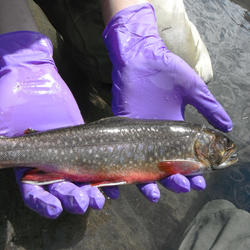
Mercury in Fish from 21 National Parks in the West
Mercury cycling, bioaccumulation, and risk across western North America: a landscape scale synthesis linking long-term datasets
If you are unable to access or download a product, email fresc_outreach@usgs.gov a request, including the full citation, or call (541) 750-1030.
Per- and Polyfluoroalkyl Substances (PFAS) in U.S. Tapwater: Comparison of Public-Supply and Underserved Private-Well Exposures and Associated Health Implications Per- and Polyfluoroalkyl Substances (PFAS) in U.S. Tapwater: Comparison of Public-Supply and Underserved Private-Well Exposures and Associated Health Implications
Total mercury, methylmercury, and isotopic composition in various life stages of boreal chorus frogs (Pseudacris maculata) at two subalpine ponds in the Rocky Mountains, CO, USA, 2015 Total mercury, methylmercury, and isotopic composition in various life stages of boreal chorus frogs (Pseudacris maculata) at two subalpine ponds in the Rocky Mountains, CO, USA, 2015
Mercury and biogeochemical parameters in surface water and sediment from U.S. National Parks, 2014-2015 (ver. 2.0, December 2023) Mercury and biogeochemical parameters in surface water and sediment from U.S. National Parks, 2014-2015 (ver. 2.0, December 2023)
Total mercury and methylmercury in biota from Cottage Grove Reservoir, Coast Fork Willamette River, and additional reservoirs in Oregon (ver. 2.0, February 2024) Total mercury and methylmercury in biota from Cottage Grove Reservoir, Coast Fork Willamette River, and additional reservoirs in Oregon (ver. 2.0, February 2024)
Survival, growth, behavior and mercury concentrations of mayflies exposed to elevated dietary methylmercury and aqueous selenium Survival, growth, behavior and mercury concentrations of mayflies exposed to elevated dietary methylmercury and aqueous selenium
Anticoagulant rodenticide concentrations in blood and tissue of California condors and turkey vultures (ver. 2.0, May 2023) Anticoagulant rodenticide concentrations in blood and tissue of California condors and turkey vultures (ver. 2.0, May 2023)
If you are unable to access or download a product, email fresc_outreach@usgs.gov a request, including the full citation, or call (541) 750-1030.
Global mercury concentrations in biota: Their use as a basis for a global biomonitoring framework Global mercury concentrations in biota: Their use as a basis for a global biomonitoring framework
Wildfire burn severity and stream chemistry influence aquatic invertebrate and riparian avian mercury exposure in forested ecosystems Wildfire burn severity and stream chemistry influence aquatic invertebrate and riparian avian mercury exposure in forested ecosystems
Integrated science strategy for assessing and monitoring water availability and migratory birds for terminal lakes across the Great Basin, United States Integrated science strategy for assessing and monitoring water availability and migratory birds for terminal lakes across the Great Basin, United States
Habitat and dissolved organic carbon modulate variation in the biogeochemical drivers of mercury bioaccumulation in dragonfly larvae at the national scale Habitat and dissolved organic carbon modulate variation in the biogeochemical drivers of mercury bioaccumulation in dragonfly larvae at the national scale
Reservoir stratification modulates the influence of impoundments on fish mercury concentrations along an arid land river system Reservoir stratification modulates the influence of impoundments on fish mercury concentrations along an arid land river system
Broad-scale assessment of methylmercury in adult amphibians Broad-scale assessment of methylmercury in adult amphibians
Non-USGS Publications**
**Disclaimer: The views expressed in Non-USGS publications are those of the author and do not represent the views of the USGS, Department of the Interior, or the U.S. Government.
To request an interview, contact fresc_outreach@usgs.gov or call (541) 750-1030.
Science and Products
Contaminant Ecology Research Team (FRESC)
New Method Improves Measurement of Bullet Fragments in Culled Varmints
Synthesis of Mercury Distribution and Bioaccumulation Across Western North America
Mercury in Fish from 21 National Parks in the West
Mercury cycling, bioaccumulation, and risk across western North America: a landscape scale synthesis linking long-term datasets
If you are unable to access or download a product, email fresc_outreach@usgs.gov a request, including the full citation, or call (541) 750-1030.
Per- and Polyfluoroalkyl Substances (PFAS) in U.S. Tapwater: Comparison of Public-Supply and Underserved Private-Well Exposures and Associated Health Implications Per- and Polyfluoroalkyl Substances (PFAS) in U.S. Tapwater: Comparison of Public-Supply and Underserved Private-Well Exposures and Associated Health Implications
Total mercury, methylmercury, and isotopic composition in various life stages of boreal chorus frogs (Pseudacris maculata) at two subalpine ponds in the Rocky Mountains, CO, USA, 2015 Total mercury, methylmercury, and isotopic composition in various life stages of boreal chorus frogs (Pseudacris maculata) at two subalpine ponds in the Rocky Mountains, CO, USA, 2015
Mercury and biogeochemical parameters in surface water and sediment from U.S. National Parks, 2014-2015 (ver. 2.0, December 2023) Mercury and biogeochemical parameters in surface water and sediment from U.S. National Parks, 2014-2015 (ver. 2.0, December 2023)
Total mercury and methylmercury in biota from Cottage Grove Reservoir, Coast Fork Willamette River, and additional reservoirs in Oregon (ver. 2.0, February 2024) Total mercury and methylmercury in biota from Cottage Grove Reservoir, Coast Fork Willamette River, and additional reservoirs in Oregon (ver. 2.0, February 2024)
Survival, growth, behavior and mercury concentrations of mayflies exposed to elevated dietary methylmercury and aqueous selenium Survival, growth, behavior and mercury concentrations of mayflies exposed to elevated dietary methylmercury and aqueous selenium
Anticoagulant rodenticide concentrations in blood and tissue of California condors and turkey vultures (ver. 2.0, May 2023) Anticoagulant rodenticide concentrations in blood and tissue of California condors and turkey vultures (ver. 2.0, May 2023)
If you are unable to access or download a product, email fresc_outreach@usgs.gov a request, including the full citation, or call (541) 750-1030.
Global mercury concentrations in biota: Their use as a basis for a global biomonitoring framework Global mercury concentrations in biota: Their use as a basis for a global biomonitoring framework
Wildfire burn severity and stream chemistry influence aquatic invertebrate and riparian avian mercury exposure in forested ecosystems Wildfire burn severity and stream chemistry influence aquatic invertebrate and riparian avian mercury exposure in forested ecosystems
Integrated science strategy for assessing and monitoring water availability and migratory birds for terminal lakes across the Great Basin, United States Integrated science strategy for assessing and monitoring water availability and migratory birds for terminal lakes across the Great Basin, United States
Habitat and dissolved organic carbon modulate variation in the biogeochemical drivers of mercury bioaccumulation in dragonfly larvae at the national scale Habitat and dissolved organic carbon modulate variation in the biogeochemical drivers of mercury bioaccumulation in dragonfly larvae at the national scale
Reservoir stratification modulates the influence of impoundments on fish mercury concentrations along an arid land river system Reservoir stratification modulates the influence of impoundments on fish mercury concentrations along an arid land river system
Broad-scale assessment of methylmercury in adult amphibians Broad-scale assessment of methylmercury in adult amphibians
Non-USGS Publications**
**Disclaimer: The views expressed in Non-USGS publications are those of the author and do not represent the views of the USGS, Department of the Interior, or the U.S. Government.
To request an interview, contact fresc_outreach@usgs.gov or call (541) 750-1030.