
Michael Focazio, PhD (Former Employee)
Science and Products
Filter Total Items: 68
Pilot Study Provides Information on Contaminant Exposure from Tap Water at Residential and Workplace Sites in the United States
The U.S. Geological Survey (USGS), in collaboration with National Institutes of Health, U.S. Environmental Protection Agency, and academia, completed a pilot study to provide information on contaminant exposure from tap water at 26 locations including public and private supplies. Public-supply tap water generally met enforceable standards for those compounds with standards. Samples consisted of...
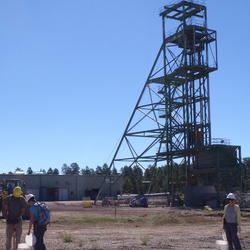
Is Uranium in Water Resources near the Grand Canyon a Health Hazard?
The public is concerned that uranium in natural geologic formations, mine tailings, dusts, water, and other geologic materials can pose a health hazard to humans and wildlife. Our specialized teams of hydrologists, chemists, and geologists working together at a field site in the Grand Canyon region of the United States have shown: Elevated uranium concentrations (above the drinking water standard)...
Can There be Unintended Benefits when Wastewater Treatment Infrastructure is Upgraded?
Science from the U.S. Geological Survey (USGS) and other entities has shown that a mixture of natural and synthetic estrogens and other similar chemicals are discharged from wastewater treatment plants (WWTPs) to streams and rivers.
Can Spills from Swine Lagoons Result in Downstream Health Hazards?
Livestock manure spills have been shown to result from events such as equipment failures, over-application of manure to agricultural fields, runoff from open feedlots, storage overflow, accidents with manure transporting equipment, and severe weather. Our specialized teams of hydrologists, chemists, biologists and geologists, in collaboration with Johns Hopkins Bloomberg School of Public Health...
Are there Health Hazards from Contaminants Released to the Environment by Natural Disasters?
Our specialized teams of hydrologists, chemists, and geologists working together at field sites in Northeastern US after Hurricane Sandy have shown: Metal contaminants were released to the environment after Hurricane Sandy due to some dune restoration activities. In other locations the storm actually decreased contaminant exposures to bottom dwelling aquatic biota. Natural disasters like...
Are Naturally Occurring Algal Toxins in Water Resources a Health Hazard?
A growing number of human gastrointestinal, respiratory, dermatologic, and neurologic effects, as well as dog and livestock illnesses and deaths, in the United States have been linked to exposures to algal blooms in recreational lakes and stock ponds. Some of the blooms contain cyanobacteria, which have the potential to produce cyanotoxins in freshwater systems. However, the connection between...
Filter Total Items: 67
Grand challenges for integrated USGS science — A workshop report Grand challenges for integrated USGS science — A workshop report
Executive Summary The U.S. Geological Survey (USGS) has a long history of advancing the traditional Earth science disciplines and identifying opportunities to integrate USGS science across disciplines to address complex societal problems. The USGS science strategy for 2007–2017 laid out key challenges in disciplinary and interdisciplinary arenas, culminating in a call for increased focus...
Authors
Karen E. Jenni, Martin B. Goldhaber, Julio L. Betancourt, Jill S. Baron, Sky Bristol, Mary Cantrill, Paul E. Exter, Michael J. Focazio, John W. Haines, Lauren E. Hay, Leslie Hsu, Victor F. Labson, Kevin D. Lafferty, K. A. Ludwig, Paul C. D. Milly, Toni L. Morelli, Suzette A. Morman, Nedal T. Nassar, Timothy R. Newman, Andrea C. Ostroff, Jordan S. Read, Sasha C. Reed, Carl D. Shapiro, Richard A. Smith, Ward E. Sanford, Terry L. Sohl, Edward G. Stets, Adam J. Terando, Donald E. Tillitt, Michael A. Tischler, Patricia L. Toccalino, David J. Wald, Mark P. Waldrop, Anne Wein, Jake F. Weltzin, Christian E. Zimmerman
USGS integrated drought science USGS integrated drought science
Project Need and Overview Drought poses a serious threat to the resilience of human communities and ecosystems in the United States (Easterling and others, 2000). Over the past several years, many regions have experienced extreme drought conditions, fueled by prolonged periods of reduced precipitation and exceptionally warm temperatures. Extreme drought has far-reaching impacts on water...
Authors
Andrea C. Ostroff, Clint C. Muhlfeld, Patrick M. Lambert, Nathaniel L. Booth, Shawn L. Carter, Jason M. Stoker, Michael J. Focazio
Regional variability in bed-sediment concentrations of wastewater compounds, hormones and PAHs for portions of coastal New York and New Jersey impacted by hurricane Sandy Regional variability in bed-sediment concentrations of wastewater compounds, hormones and PAHs for portions of coastal New York and New Jersey impacted by hurricane Sandy
Bed sediment samples from 79 coastal New York and New Jersey, USA sites were analyzed for 75 compounds including wastewater associated contaminants, PAHs, and other organic compounds to assess the post-Hurricane Sandy distribution of organic contaminants among six regions. These results provide the first assessment of wastewater compounds, hormones, and PAHs in bed sediment for this...
Authors
Patrick J. Phillips, Cathy A Gibson, Shawn C. Fisher, Irene Fisher, Timothy J. Reilly, Kelly L. Smalling, Kristin M. Romanok, William T. Foreman, Rhiannon C. ReVello, Michael J. Focazio, Daniel K. Jones
Resetting the bar: Establishing baselines for persistent contaminants after Hurricane Sandy in the coastal environments of New Jersey and New York, USA Resetting the bar: Establishing baselines for persistent contaminants after Hurricane Sandy in the coastal environments of New Jersey and New York, USA
In the immediate aftermath of natural disasters, public health officials and other first responders engage in many activities to protect the public and ecosystems in the affected area. These activities include critical tasks designed to minimize adverse consequences resulting from chemical and microbial contaminant exposures, such as acute disease incidence and transmission. However...
Authors
Timothy J. Reilly, Michael J. Focazio, Dale L. Simmons
Contamination with bacterial zoonotic pathogen genes in U.S. streams influenced by varying types of animal agriculture Contamination with bacterial zoonotic pathogen genes in U.S. streams influenced by varying types of animal agriculture
Animal waste, stream water, and streambed sediment from 19 small (
Authors
Sheridan K. Haack, Joseph W. Duris, Dana W. Kolpin, Michael J. Focazio, Michael T. Meyer, Heather E. Johnson, Ryan J. Oster, William T. Foreman
Dairy-impacted wastewater is a source of iodinated disinfection byproducts in the environment Dairy-impacted wastewater is a source of iodinated disinfection byproducts in the environment
Iodinated disinfection byproducts (DBPs) are among the most toxic DBPs, but they are not typically measured in treated water. Iodinated DBPs can be toxic to humans, and they also have the potential to affect aquatic communities. Because of the specific use of iodine and iodine-containing compounds in dairies, such livestock operations can be a potential source of iodinated DBPs in...
Authors
Michelle Hladik, Laura E. Hubbard, Dana W. Kolpin, Michael J. Focazio
Science and Products
Filter Total Items: 68
Pilot Study Provides Information on Contaminant Exposure from Tap Water at Residential and Workplace Sites in the United States
The U.S. Geological Survey (USGS), in collaboration with National Institutes of Health, U.S. Environmental Protection Agency, and academia, completed a pilot study to provide information on contaminant exposure from tap water at 26 locations including public and private supplies. Public-supply tap water generally met enforceable standards for those compounds with standards. Samples consisted of...
Is Uranium in Water Resources near the Grand Canyon a Health Hazard?
The public is concerned that uranium in natural geologic formations, mine tailings, dusts, water, and other geologic materials can pose a health hazard to humans and wildlife. Our specialized teams of hydrologists, chemists, and geologists working together at a field site in the Grand Canyon region of the United States have shown: Elevated uranium concentrations (above the drinking water standard)...
Can There be Unintended Benefits when Wastewater Treatment Infrastructure is Upgraded?
Science from the U.S. Geological Survey (USGS) and other entities has shown that a mixture of natural and synthetic estrogens and other similar chemicals are discharged from wastewater treatment plants (WWTPs) to streams and rivers.
Can Spills from Swine Lagoons Result in Downstream Health Hazards?
Livestock manure spills have been shown to result from events such as equipment failures, over-application of manure to agricultural fields, runoff from open feedlots, storage overflow, accidents with manure transporting equipment, and severe weather. Our specialized teams of hydrologists, chemists, biologists and geologists, in collaboration with Johns Hopkins Bloomberg School of Public Health...
Are there Health Hazards from Contaminants Released to the Environment by Natural Disasters?
Our specialized teams of hydrologists, chemists, and geologists working together at field sites in Northeastern US after Hurricane Sandy have shown: Metal contaminants were released to the environment after Hurricane Sandy due to some dune restoration activities. In other locations the storm actually decreased contaminant exposures to bottom dwelling aquatic biota. Natural disasters like...
Are Naturally Occurring Algal Toxins in Water Resources a Health Hazard?
A growing number of human gastrointestinal, respiratory, dermatologic, and neurologic effects, as well as dog and livestock illnesses and deaths, in the United States have been linked to exposures to algal blooms in recreational lakes and stock ponds. Some of the blooms contain cyanobacteria, which have the potential to produce cyanotoxins in freshwater systems. However, the connection between...
Filter Total Items: 67
Grand challenges for integrated USGS science — A workshop report Grand challenges for integrated USGS science — A workshop report
Executive Summary The U.S. Geological Survey (USGS) has a long history of advancing the traditional Earth science disciplines and identifying opportunities to integrate USGS science across disciplines to address complex societal problems. The USGS science strategy for 2007–2017 laid out key challenges in disciplinary and interdisciplinary arenas, culminating in a call for increased focus...
Authors
Karen E. Jenni, Martin B. Goldhaber, Julio L. Betancourt, Jill S. Baron, Sky Bristol, Mary Cantrill, Paul E. Exter, Michael J. Focazio, John W. Haines, Lauren E. Hay, Leslie Hsu, Victor F. Labson, Kevin D. Lafferty, K. A. Ludwig, Paul C. D. Milly, Toni L. Morelli, Suzette A. Morman, Nedal T. Nassar, Timothy R. Newman, Andrea C. Ostroff, Jordan S. Read, Sasha C. Reed, Carl D. Shapiro, Richard A. Smith, Ward E. Sanford, Terry L. Sohl, Edward G. Stets, Adam J. Terando, Donald E. Tillitt, Michael A. Tischler, Patricia L. Toccalino, David J. Wald, Mark P. Waldrop, Anne Wein, Jake F. Weltzin, Christian E. Zimmerman
USGS integrated drought science USGS integrated drought science
Project Need and Overview Drought poses a serious threat to the resilience of human communities and ecosystems in the United States (Easterling and others, 2000). Over the past several years, many regions have experienced extreme drought conditions, fueled by prolonged periods of reduced precipitation and exceptionally warm temperatures. Extreme drought has far-reaching impacts on water...
Authors
Andrea C. Ostroff, Clint C. Muhlfeld, Patrick M. Lambert, Nathaniel L. Booth, Shawn L. Carter, Jason M. Stoker, Michael J. Focazio
Regional variability in bed-sediment concentrations of wastewater compounds, hormones and PAHs for portions of coastal New York and New Jersey impacted by hurricane Sandy Regional variability in bed-sediment concentrations of wastewater compounds, hormones and PAHs for portions of coastal New York and New Jersey impacted by hurricane Sandy
Bed sediment samples from 79 coastal New York and New Jersey, USA sites were analyzed for 75 compounds including wastewater associated contaminants, PAHs, and other organic compounds to assess the post-Hurricane Sandy distribution of organic contaminants among six regions. These results provide the first assessment of wastewater compounds, hormones, and PAHs in bed sediment for this...
Authors
Patrick J. Phillips, Cathy A Gibson, Shawn C. Fisher, Irene Fisher, Timothy J. Reilly, Kelly L. Smalling, Kristin M. Romanok, William T. Foreman, Rhiannon C. ReVello, Michael J. Focazio, Daniel K. Jones
Resetting the bar: Establishing baselines for persistent contaminants after Hurricane Sandy in the coastal environments of New Jersey and New York, USA Resetting the bar: Establishing baselines for persistent contaminants after Hurricane Sandy in the coastal environments of New Jersey and New York, USA
In the immediate aftermath of natural disasters, public health officials and other first responders engage in many activities to protect the public and ecosystems in the affected area. These activities include critical tasks designed to minimize adverse consequences resulting from chemical and microbial contaminant exposures, such as acute disease incidence and transmission. However...
Authors
Timothy J. Reilly, Michael J. Focazio, Dale L. Simmons
Contamination with bacterial zoonotic pathogen genes in U.S. streams influenced by varying types of animal agriculture Contamination with bacterial zoonotic pathogen genes in U.S. streams influenced by varying types of animal agriculture
Animal waste, stream water, and streambed sediment from 19 small (
Authors
Sheridan K. Haack, Joseph W. Duris, Dana W. Kolpin, Michael J. Focazio, Michael T. Meyer, Heather E. Johnson, Ryan J. Oster, William T. Foreman
Dairy-impacted wastewater is a source of iodinated disinfection byproducts in the environment Dairy-impacted wastewater is a source of iodinated disinfection byproducts in the environment
Iodinated disinfection byproducts (DBPs) are among the most toxic DBPs, but they are not typically measured in treated water. Iodinated DBPs can be toxic to humans, and they also have the potential to affect aquatic communities. Because of the specific use of iodine and iodine-containing compounds in dairies, such livestock operations can be a potential source of iodinated DBPs in...
Authors
Michelle Hladik, Laura E. Hubbard, Dana W. Kolpin, Michael J. Focazio