U.S. flag

An official website of the United States government

Water

The Alaska Science Center conducts research and monitoring on a wide variety of hydrological issues affecting streams, rivers, lakes, groundwater, and glaciers in Alaska. We provide valuable and up-to-date information for water resource planners, engineers, managers, and the public to protect life and property, design and monitor infrastructure, and manage aquatic resources.

Filter Total Items: 13

ASC Water Data Releases

Data products grouped by: Atmospheric, Geomorphology, Model Data, Satellite Derived Data, Streamflow Statistics, Water Level, Water Quality, and Glacier Studies.
ASC Water Data Releases

ASC Water Data Releases

Data products grouped by: Atmospheric, Geomorphology, Model Data, Satellite Derived Data, Streamflow Statistics, Water Level, Water Quality, and Glacier Studies.
Learn More

Hydro-Ecology of Arctic Thawing (HEAT): Hydrology
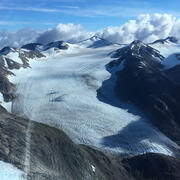
The Arctic is warming at higher rates than much of the rest of the world. For Alaska, this results in changes in hydrology and ecosystems – permafrost is thawing, changing landscapes and releasing nutrients to soils and streams.
Hydro-Ecology of Arctic Thawing (HEAT): Hydrology

Hydro-Ecology of Arctic Thawing (HEAT): Hydrology

The Arctic is warming at higher rates than much of the rest of the world. For Alaska, this results in changes in hydrology and ecosystems – permafrost is thawing, changing landscapes and releasing nutrients to soils and streams.
Learn More

Glaciers and Landscape Change

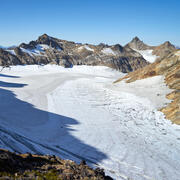
Mountain glaciers are dynamic reservoirs of frozen water, deeply interconnected with their surrounding ecosystems. Glacier change in North America has major societal impacts, including to water resources, natural hazard risk, tourism disruption, fisheries, and global sea level change. Understanding and quantifying precise connections between changing glaciers, the surrounding landscape and climate...
Glaciers and Landscape Change

Glaciers and Landscape Change

Mountain glaciers are dynamic reservoirs of frozen water, deeply interconnected with their surrounding ecosystems. Glacier change in North America has major societal impacts, including to water resources, natural hazard risk, tourism disruption, fisheries, and global sea level change. Understanding and quantifying precise connections between changing glaciers, the surrounding landscape and climate...
Learn More

Lemon Creek Glacier

Lemon Creek Glacier is located in southeast Alaska, at the southernmost tip of the Juneau Icefield. Glacier observations began at this site in 1953 and continue through present, serving as a central site between glaciers in the contiguous USA and those in mainland Alaska.
Lemon Creek Glacier

Lemon Creek Glacier

Lemon Creek Glacier is located in southeast Alaska, at the southernmost tip of the Juneau Icefield. Glacier observations began at this site in 1953 and continue through present, serving as a central site between glaciers in the contiguous USA and those in mainland Alaska.
Learn More

Fish and Aquatic Ecology

Fish and aquatic habitats in Alaska support important commercial, sport, and subsistence fisheries and provide forage fish that support wildlife populations. The USGS Alaska Science Center conducts interdisciplinary research to inform local, state, federal, and international policy makers regarding conservation of fish, aquatic species, and their habitats. We work collaboratively with hydrologists...
Fish and Aquatic Ecology

Fish and Aquatic Ecology

Fish and aquatic habitats in Alaska support important commercial, sport, and subsistence fisheries and provide forage fish that support wildlife populations. The USGS Alaska Science Center conducts interdisciplinary research to inform local, state, federal, and international policy makers regarding conservation of fish, aquatic species, and their habitats. We work collaboratively with hydrologists...
Learn More

Streambed Scour at Bridges in Alaska

Streambed scour is the leading cause of bridge failure in the United States resulting in over 60 percent of all failures. The Alaska Science Center, in cooperation with the Alaska Department of Transportation and Public Facilities and the Alaska Railroad, is researching streambed scour through scour monitoring, hydraulic modeling, and data collection during high flows.
Streambed Scour at Bridges in Alaska

Streambed Scour at Bridges in Alaska

Streambed scour is the leading cause of bridge failure in the United States resulting in over 60 percent of all failures. The Alaska Science Center, in cooperation with the Alaska Department of Transportation and Public Facilities and the Alaska Railroad, is researching streambed scour through scour monitoring, hydraulic modeling, and data collection during high flows.
Learn More

Alaska Streamflow Statistics

The USGS conducts various studies of streamflow statistics for data collected at streamflow-gaging stations. Streamflow statistics for gaged streams and methods for estimating those statistics for ungaged streams are used by water resource planners and managers for designing infrastructure, managing floodplains, and protecting life, property, and aquatic resources. The most recent USGS studies of...
Alaska Streamflow Statistics

Alaska Streamflow Statistics

The USGS conducts various studies of streamflow statistics for data collected at streamflow-gaging stations. Streamflow statistics for gaged streams and methods for estimating those statistics for ungaged streams are used by water resource planners and managers for designing infrastructure, managing floodplains, and protecting life, property, and aquatic resources. The most recent USGS studies of...
Learn More

The Rusting of Arctic Rivers: Freshwater Ecosystems Respond to Rapidly Uptaking Metals

The water quality of streams and rivers in the Arctic is sensitive to rapid climate change and altered disturbance regimes.
The Rusting of Arctic Rivers: Freshwater Ecosystems Respond to Rapidly Uptaking Metals

The Rusting of Arctic Rivers: Freshwater Ecosystems Respond to Rapidly Uptaking Metals

The water quality of streams and rivers in the Arctic is sensitive to rapid climate change and altered disturbance regimes.
Learn More

Hydro-Ecology of Arctic Thawing (HEAT): Ecology
Permafrost thaw is leading to a myriad of changes in physical and chemical conditions throughout the Arctic.
Hydro-Ecology of Arctic Thawing (HEAT): Ecology

Hydro-Ecology of Arctic Thawing (HEAT): Ecology

Permafrost thaw is leading to a myriad of changes in physical and chemical conditions throughout the Arctic.
Learn More

Alaska Science Center’s Commitment to “Gold Standard Science” for Data Products

The mission of the Alaska Science Center is to provide objective and timely data, information, and research findings about the earth and its flora and fauna to Federal, State, and local resource managers and the public to support sound decisions regarding natural resources, natural hazards, and ecosystems in Alaska and circumpolar regions. We are committed to ensuring all Federally funded data...
Alaska Science Center’s Commitment to “Gold Standard Science” for Data Products

Alaska Science Center’s Commitment to “Gold Standard Science” for Data Products

The mission of the Alaska Science Center is to provide objective and timely data, information, and research findings about the earth and its flora and fauna to Federal, State, and local resource managers and the public to support sound decisions regarding natural resources, natural hazards, and ecosystems in Alaska and circumpolar regions. We are committed to ensuring all Federally funded data...
Learn More

USGS Transboundary River Monitoring in Southeast Alaska

The USGS Alaska Science Center operates super gages on the Alsek, Taku, Stikine, Unuk and Salmon Rivers. Discrete water quality, sediment, and biological sampling are also collected at each gage location. Discrete water quality samples are also collected annually at the Canada-Alaska border crossings of the Taku, Stikine, and Unuk Rivers. Water quality data collection began in 2018 on the Unuk...
USGS Transboundary River Monitoring in Southeast Alaska

USGS Transboundary River Monitoring in Southeast Alaska

The USGS Alaska Science Center operates super gages on the Alsek, Taku, Stikine, Unuk and Salmon Rivers. Discrete water quality, sediment, and biological sampling are also collected at each gage location. Discrete water quality samples are also collected annually at the Canada-Alaska border crossings of the Taku, Stikine, and Unuk Rivers. Water quality data collection began in 2018 on the Unuk...
Learn More

Arctic – Boreal Catchment Studies

Catchment hydrology focuses on the movement of water and solutes from landscapes to waterbodies. Our research addresses questions such as: Where is the stream water coming from? How long did it take to get here? What solutes, nutrients, and/or contaminants did the water pick up along the way? Because streams and lakes gather water and solutes, we can learn about the entire watershed by studying...
Arctic – Boreal Catchment Studies

Arctic – Boreal Catchment Studies

Catchment hydrology focuses on the movement of water and solutes from landscapes to waterbodies. Our research addresses questions such as: Where is the stream water coming from? How long did it take to get here? What solutes, nutrients, and/or contaminants did the water pick up along the way? Because streams and lakes gather water and solutes, we can learn about the entire watershed by studying...
Learn More
Was this page helpful?