



Landscape Science
Landscape Science
Landscape Science research focuses on the integration of field studies, remote sensing observations, and modeling to characterize and document landscape changes occurring in terrestrial, aquatic, and coastal ecosystems in Alaska. Our research describes underlying environmental conditions and change which provide the fundamental understanding necessary for predicting future conditions.
Filter Total Items: 6

Ecosystems on the Edge: Landscape and Fire Ecology of Forests, Deserts, and Tundra
Climate changes and interacting disturbances such as wildfires, insect and disease outbreaks, and erosion and flooding can perturb and reorganize ecosystems.

Arctic – Boreal Catchment Studies
Catchment hydrology focuses on the movement of water and solutes from landscapes to waterbodies. Our research addresses questions such as: Where is the stream water coming from? How long did it take to get here? What solutes, nutrients, and/or contaminants did the water pick up along the way? Because streams and lakes gather water and solutes, we can learn about the entire watershed by studying...
Glaciers and Landscape Change
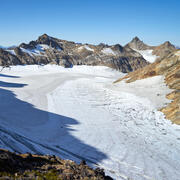
Mountain glaciers are dynamic reservoirs of frozen water, deeply interconnected with their surrounding ecosystems. Glacier change in North America has major societal impacts, including to water resources, natural hazard risk, tourism disruption, fisheries, and global sea level change. Understanding and quantifying precise connections between changing glaciers, the surrounding landscape and climate...
Lemon Creek Glacier
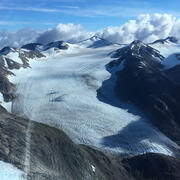
Lemon Creek Glacier is located in southeast Alaska, at the southernmost tip of the Juneau Icefield. Glacier observations began at this site in 1953 and continue through present, serving as a central site between glaciers in the contiguous USA and those in mainland Alaska.
Alaska Science Center’s Commitment to “Gold Standard Science” for Data Products
The mission of the Alaska Science Center is to provide objective and timely data, information, and research findings about the earth and its flora and fauna to Federal, State, and local resource managers and the public to support sound decisions regarding natural resources, natural hazards, and ecosystems in Alaska and circumpolar regions. We are committed to ensuring all Federally funded data...

ASC Ecosystems Data Releases
Alaska Science Center Ecosystems data releases are grouped by topic: Terrestrial Ecosystems, Aquatic Ecosystems, Wildlife Health and Genetics, Environmental Health and eDNA, Habitat and Landscape Change, and Ecosystem Analytics.