



Fish, Streams, and Water Quality
Fish, Streams, and Water Quality
Enhanced Understanding of Factors Affecting Stream Condition Can Improve Restoration Outcomes
The Chesapeake Bay watershed supports important recreational and commercial fisheries, but many are declining due to poor water quality, loss of quality habitat and increased invasive species. The USGS science activities are improving the understanding of how restoration and conservation efforts, along with land-use and climate change, are affecting conditions for fish, wildlife, and people.
Filter Total Items: 162

Key Values of a Century of EESC Science
The USGS Eastern Ecological Science Center (EESC) is rooted in a proud tradition of service to the nation—advancing science that informs the conservation and management of fish, wildlife, and habitats across the eastern United States and beyond. Our mission is clear: deliver reliable, partner-driven science that supports natural resource decisions today, while ensuring these resources remain...
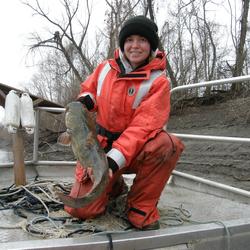
Invasive flathead catfish now top predators in Susquehanna River in Pennsylvania
New study suggests that smallmouth bass and channel catfish are changing what they eat to avoid having to compete with or being eaten by the invader
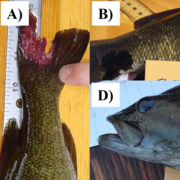
A regional assessment of fish health in the Chesapeake Bay watershed
Fish diseases in freshwater ecosystems pose significant ecological and socioeconomic challenges; yet, monitoring them in wild populations is complex due to interactions between pathogens, hosts, and environmental conditions. External DELT (deformity, erosion, lesion, tumor, and parasite) data (fig. 1) provide a rapid and broad measure of fish health but are a relatively coarse indicator that...
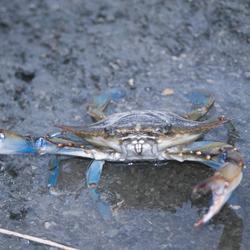
EESC Makes an Impact: Restoring the Chesapeake Bay Watershed
The Chesapeake Bay provides over $100 billion in annual economic value and is home to 18 million people. The USGS, including scientists from the Eastern Ecological Science Center (EESC), works with Federal, State, local, and academic partners to provide research and monitoring and to communicate results to inform management for the Chesapeake and other important landscapes across the Nation.
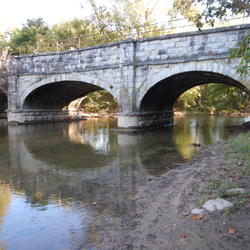
Applying Multiple Tools to Inform Management of Per- and Polyfluoroalkyl Substances (PFAS) in the Potomac River Watershed
The reuse of municipal wastewater provides multiple benefits, including maintaining stream flow, recharging aquifers, and providing public water supply. However, along with the benefits are concerns related to the presence of ‘forever’ chemicals, like per- and polyfluoroalkyl substances (PFAS) in wastewater discharge. Managing PFAS in waterways is challenging because there are many potential PFAS...

Informing Freshwater Management Strategies in the Chesapeake Bay Watershed by Using Observational Data and Expert Knowledge to Identify Influential Stressors
Human activities in the Chesapeake Bay watershed can negatively affect the abundance and diversity of macroinvertebrate communities in freshwater streams, which is a core measure of stream health. For example, urban development and agricultural intensification can degrade habitat and water-quality conditions in streams through sedimentation, nutrient runoff, and changes to instream habitat. A...

Pennsylvania and the Chesapeake Bay Watershed
USGS provides monitoring, analysis, modeling and research on streams and water quality to better understand the fate and transport of nutrients and sediment to the Susquehanna and other rivers, and their tributaries, and eventually to the Chesapeake Bay. Additional research focuses on emerging contaminants and other stressors that effect human and aquatic life in the watershed and estuary.
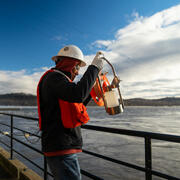
Informing Chesapeake Bay Watershed Management by Monitoring Trends in River Nutrient and Sediment Loads
The USGS has computed nutrient and suspended-sediment loads and trends through water year 2023 in Chesapeake Bay rivers. These monitoring-based estimates help federal, state, and local managers evaluate and plan water-quality restoration strategies.

Population Monitoring and Removal Strategies for Blue Catfish (Ictalurus furcatus) in Chesapeake Bay
USGS is helping with the design of a population survey and developing mathematical models to assess potential activities to manage the population of invasive blue catfish ( Ictalurus furcatus) in the Chesapeake Bay. This research will help managers determine the cost and feasibility of approaches to control this invasive species.

Discovering Connections Across America's Lands and Waters
Through collaboration and coordination, USGS research helps preserve and restore America’s most iconic landscapes. We apply insights across ecosystems to understand how these systems function and change, helping natural resource managers protect our Nation’s natural heritage for generations to come.
USGS Chesapeake Accomplishments and Highlights for 2024
As a home to 18 million people and a destination for countless visitors seeking recreational opportunities, the health of the Chesapeake Bay watershed is of critical importance. The U.S. Geological Survey (USGS) is a leading provider of data-driven insights about the condition of the watershed’s lands, waters, fish, and wildlife. These insights and our collaborative work with partners throughout...

Road salt elevates salinity above background levels in freshwater streams and rivers across the Chesapeake Bay Watershed
The findings of this study show that salinity is elevated above background levels throughout most freshwater streams within the Chesapeake Bay watershed. This information can help prioritize salt management strategies for local streams and rivers.