U.S. flag

An official website of the United States government

Fort Collins Science Center

Welcome to the Fort Collins Science Center (FORT) located in Fort Collins, Colorado, just east of the Rocky Mountains. At FORT we develop and disseminate research-based information and tools needed to understand the nation’s natural resources in support of effective decision making.

News

A Tale of Two Islands and the Future of an Ocean Sentinel Seabird

A Tale of Two Islands and the Future of an Ocean Sentinel Seabird

EcoNews - Vol. 7 | Issue 2

EcoNews - Vol. 7 | Issue 2

Tree rings provide an important multi-century context for the current wildfire crisis

Tree rings provide an important multi-century context for the current wildfire crisis

Publications

Perceptions of parcel-level wildfire risk differ between homeowners and trained assessors in wildland-urban interface communities across the western United States Perceptions of parcel-level wildfire risk differ between homeowners and trained assessors in wildland-urban interface communities across the western United States

Wildfire risk mitigation on private property is central to reducing community wildfire vulnerability. Homeowners have control over many of the key factors that contribute to wildfire risk on their parcels, yet vulnerable conditions persist. One potential explanation is a misalignment between homeowners' and trained assessors' perceptions of parcel-level wildfire risk. Prior research has...
Authors
Kelly Wallace, Grant Webster, Hannah Brenkert-Smith, Patricia A. Champ, Colleen Donovan, Carolyn Wagner, Christopher M. Barth, Josh Kuehn, Suzanne Wittenbrink, James R. Meldrum

Disease, drought, and warming: A triple threat to a declining high-elevation amphibian Disease, drought, and warming: A triple threat to a declining high-elevation amphibian

Managing species in an uncertain future is a reality for natural resource decision makers. Climate change is expected to exacerbate threats such as habitat loss and disease, and cause phenological mismatches, but there is uncertainty in the magnitude of these effects. Amphibians are among the most threatened taxa on earth, and most species in North America are uniquely tied to water...
Authors
Amanda Marie Kissel, L. Mae Lacey, Viorel D. Popescu, Marissa A. Dyck, Larissa L. Bailey, Erin L. Muths

Demographic responses to experimental manipulation of an enclosed population of invasive brown treesnakes (Boiga irregularis) Demographic responses to experimental manipulation of an enclosed population of invasive brown treesnakes (Boiga irregularis)

Understanding how invasive species populations respond to perturbations can give insight into effective management. However, opportunities to test theoretical population responses are rare, as experimental perturbations often run counter to management goals (e.g., suppression). On the island of Guam, a 5-ha outdoor enclosure (with no immigration or emigration) constructed in 2003 serves...
Authors
Amanda Marie Kissel, Robert Reed, Björn Lardner, Gordon H. Rodda, Julie A. Savidge, Amy A. Yackel Adams

Science

The Ecoinformatics and Wildlife Technology (ECOTECH) Research Group

The Ecoinformatics and Wildlife Technology (ECOTECH) team is a multidisciplinary group that unites expertise in biology, ecology, statistics, data science, and technology to deliver integrated scientific, hardware, and software solutions for modernizing natural resource science. ECOTECH leverages longstanding relationships with partners and draws upon intimate knowledge of both user needs and...
The Ecoinformatics and Wildlife Technology (ECOTECH) Research Group

The Ecoinformatics and Wildlife Technology (ECOTECH) Research Group

The Ecoinformatics and Wildlife Technology (ECOTECH) team is a multidisciplinary group that unites expertise in biology, ecology, statistics, data science, and technology to deliver integrated scientific, hardware, and software solutions for modernizing natural resource science. ECOTECH leverages longstanding relationships with partners and draws upon intimate knowledge of both user needs and...
Learn More

Modernized Breeding Bird Survey Portal

The North American Breeding Bird Survey (BBS) Portal is a modern information system that enables volunteer observers and regional coordinators to manage survey routes, enter field data, and coordinate route assignments online. The portal replaces legacy paper-based and outdated digital workflows with a streamlined interface built for the BBS community. Observers can view their assigned routes...
Modernized Breeding Bird Survey Portal

Modernized Breeding Bird Survey Portal
The North American Breeding Bird Survey (BBS) Portal is a modern information system that enables volunteer observers and regional coordinators to manage survey routes, enter field data, and coordinate route assignments online. The portal replaces legacy paper-based and outdated digital workflows with a streamlined interface built for the BBS community. Observers can view their assigned routes...
Learn More

Synthesis of sage-grouse genetic information to support conservation and land management actions

Sage-grouse, iconic birds of the American West, have experienced dramatic reductions and fragmentation of habitat, resulting in significant conservation concern. Genetic information can help inform priorities for protection and habitat restoration as well as strategies for translocations, but may be difficult for resource managers to find, interpret, and use in their decision making. In this work...
Synthesis of sage-grouse genetic information to support conservation and land management actions

Synthesis of sage-grouse genetic information to support conservation and land management actions

Sage-grouse, iconic birds of the American West, have experienced dramatic reductions and fragmentation of habitat, resulting in significant conservation concern. Genetic information can help inform priorities for protection and habitat restoration as well as strategies for translocations, but may be difficult for resource managers to find, interpret, and use in their decision making. In this work...
Learn More

Multimedia

two people in yellow vests lean against an OHV, look up at drone flying above them, grasses and trees in background
USGS researchers test new UAS technology for locating invasive pythons in the Everglades
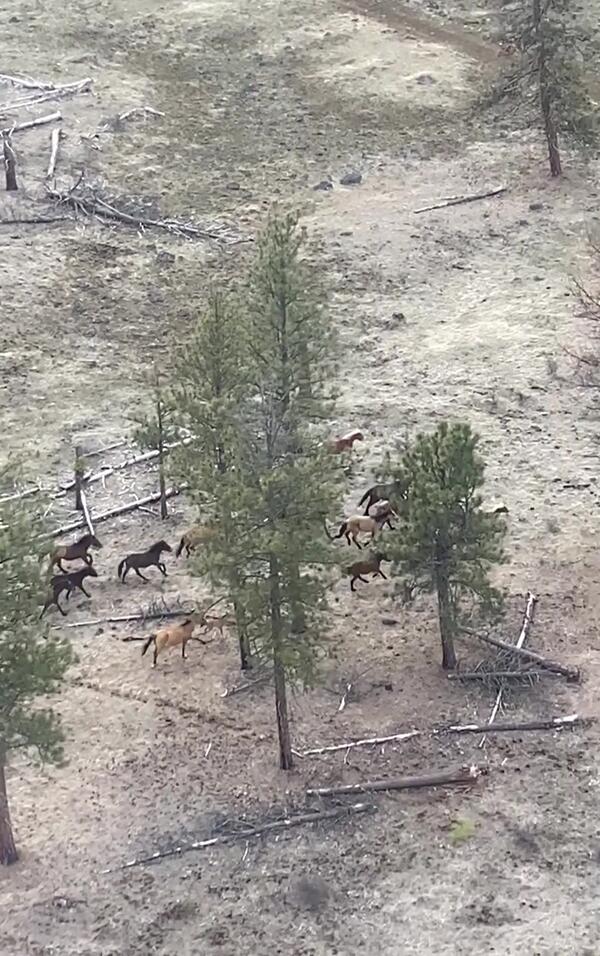
a group of horses running through tall trees and brown grasses a group of horses running through tall trees and brown grasses
Wild horses on the Warm Springs Reservation
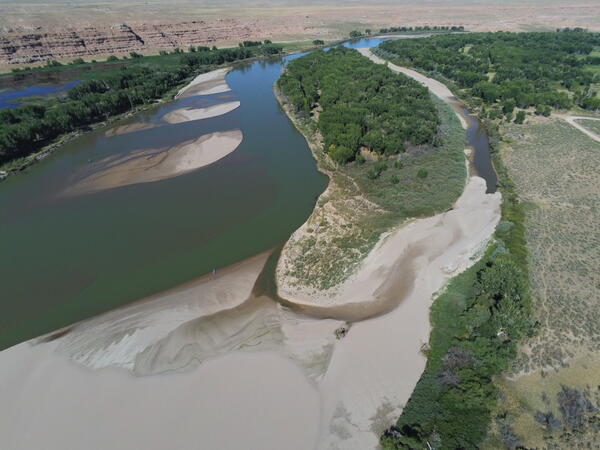
a blue-green river with many sand bars and beaches surrounded by trees and rock formations a blue-green river with many sand bars and beaches surrounded by trees and rock formations
Aerial footage of the Green River in Ouray National Wildlife Refuge
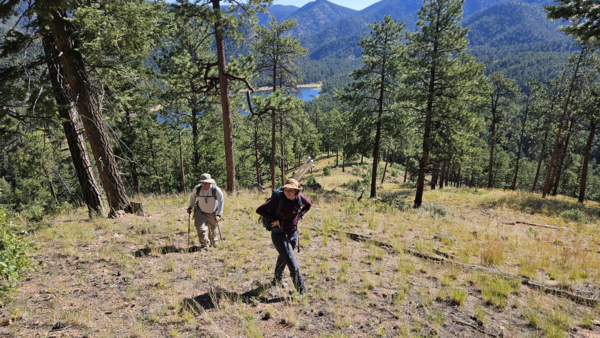
two people walking uphill through a pine forest, with a lake and mountains in the background
New Mexico Landscapes Field Station staff in the Santa Fe Watershed, New Mexico
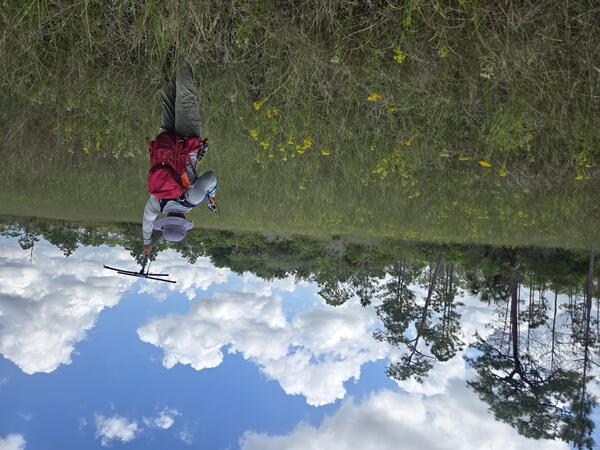
a person with red backpack and purple hat holds up a tracking device in a field with yellow flowers, trees in background
Tracking Burmese pythons in the Florida Everglades
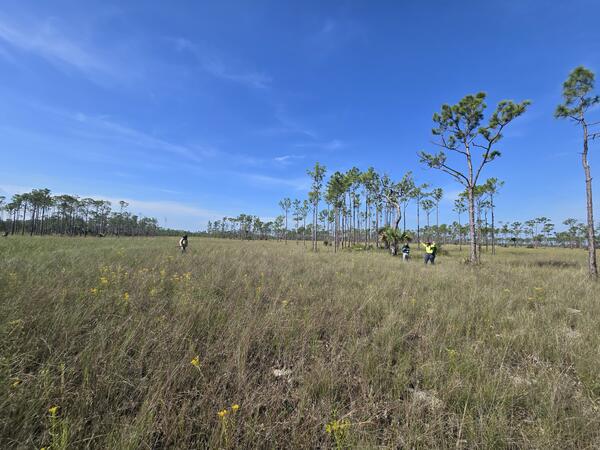
three people stand in a large prairie, with trees sparsely distributed throughout and blue sky above
Researchers search for pythons in Everglades prairie habitat
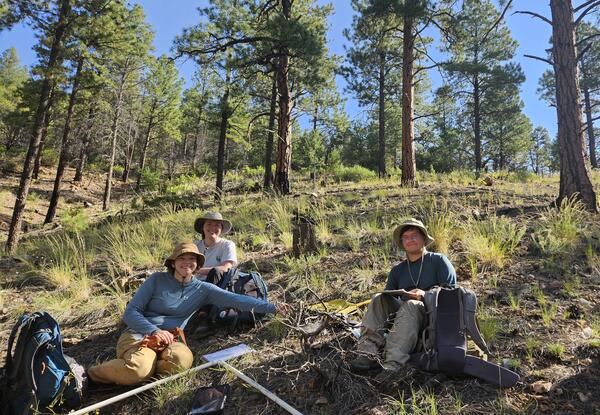
three people in field gear and with field equipment sit on a forest floor, with grasses and pine trees behind them
New Mexico Landscapes Field Station staff in the Santa Fe Watershed, New Mexico
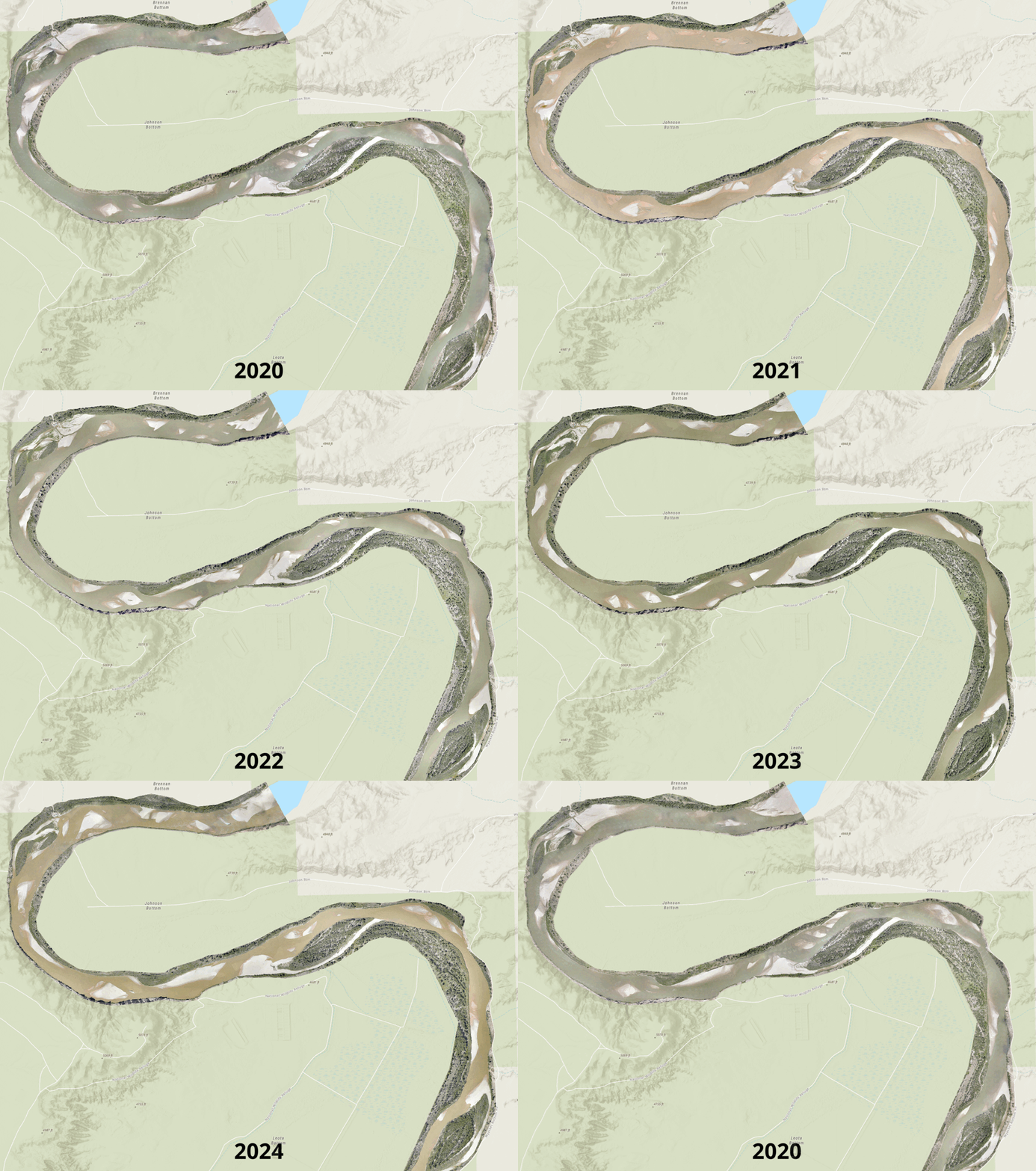
photo montage of yearly riverbed changes across 2020-2024
Channel and vegetation change along a 6-mile reach of the Middle Green River
Was this page helpful?