
New England WSC Products in the Third Quarter of 2025
By New England Water Science Center
September 26, 2025
List of products from the New England Water Science Center released in the third quarter of 2025.
Related
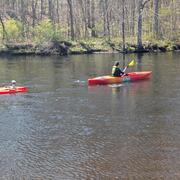
Hydrologic Monitoring Branch
The Hydrologic Monitoring Branch (HMB) provides water data for all six New England states through an expansive network of monitoring locations. The HMB is responsible for a wide range of hydrologic monitoring activities, including collecting and analyzing streamflow, groundwater and coastal water levels, precipitation, and continuous water-quality information, such as water temperature and...
Applied Hydrology Branch
The Applied Hydrology Branch provides hydrologic data, research and tools to water resource managers, stakeholders and policy makers that inform critical water management decisions throughout New England. This branch is divided into the Hydrology and Hydraulics Section, Water Quality Networks Section, Connecticut Water Quality Monitoring Section, and Massachusetts/Rhode Island Water Quality...
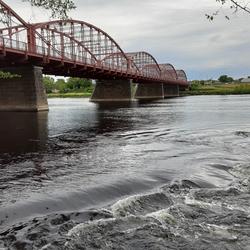
Hydrologic Interpretive Branch
The Hydrologic Interpretive Branch collaborates with stakeholders to design, execute, and publish scientific studies that address issues associated with water resources at local, regional, and national scales. This branch has three sections that focus on watershed and urban hydrology, integrated modeling of hydrologic systems, and the development of new statistical and geospatial tools.
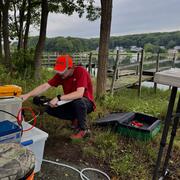
Changes in Nitrogen Contributions from Groundwater to the Niantic River Before and After Sewering
Onsite residential septic systems can be a major nonpoint source of nitrogen contamination. The excess nitrogen entering Connecticut’s Niantic River estuary is associated with high nitrate concentrations in the groundwater of the river’s 28-square-mile watershed, creating unsuitable habitat for the growth and recovery of eelgrass (Zostera marina). In an attempt to improve the river’s water quality...
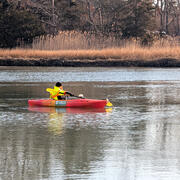
USGS New England Water Science Center Priorities and Programs
A look at what USGS water science centers do and the New England Water Science Center's current areas of focus and research.
Direct Human-Impact Classifications for Selected Groundwater Wells in the Conterminous United States, model archive Direct Human-Impact Classifications for Selected Groundwater Wells in the Conterminous United States, model archive
This data release contains data used to develop and apply a model that estimates the level of direct human-impact on selected groundwater wells in the conterminous United States. An extreme gradient boosting model was developed to estimate the probability of minimal human-impact to water levels in groundwater wells. The model uses human-impact evaluations from regional groundwater...
Low-Flow Statistic Equations and Supplementary Data for Massachusetts Low-Flow Statistic Equations and Supplementary Data for Massachusetts
The U.S. Geological Survey (USGS), in cooperation with the Massachusetts Department of Conservation and Recreation, Office of Water Resources, developed regional regression equations for estimating selected low-flow statistics in Massachusetts. This data release contains the datasets used in the regression analyses for the regional low-flow equations for the mainland area of...
Data for the Estimation of Flood Discharges at Selected Annual Exceedance Probabilities for Unregulated, Rural Streams in Vermont, 2023 Data for the Estimation of Flood Discharges at Selected Annual Exceedance Probabilities for Unregulated, Rural Streams in Vermont, 2023
These data include annual instantaneous maximum discharge record for 156 streams and rivers in Vermont and adjacent areas of New Hampshire, Massachusetts, and New York through the 2023 water year. The data also include flood-frequency estimates for the 50-, 20-, 10-, 4-, 2-, 1-, 0.5-, and 0.2-percent annual exceedance probabilities that were analyzed using the discharge data. These flood...
Datasets for Monitoring of a Passive-ISCO Experiment to Remediate a Chlorinated Ethene Plume, Naval Air Station Pensacola, Florida Datasets for Monitoring of a Passive-ISCO Experiment to Remediate a Chlorinated Ethene Plume, Naval Air Station Pensacola, Florida
Recalcitrant chlorinated ethenes in low-permeability units positioned adjacent to permeable aquifers are problematic because they are a prolonged source of contamination. Passive in situ chemical oxidation (P-ISCO) is a remediation method where the slow release of permanganate can oxidize chlorinated ethenes into less harmful chemicals. The success of P-ISCO is dependent on the...
MODFLOW-2005 Groundwater Flow Model Used to Simulate Wastewater-Return-Flow Scenarios in Falmouth, Massachusetts MODFLOW-2005 Groundwater Flow Model Used to Simulate Wastewater-Return-Flow Scenarios in Falmouth, Massachusetts
The U.S. Geological Survey (USGS), in cooperation with the Town of Falmouth, used an existing groundwater flow model to simulate responses of the freshwater hydrologic system in Falmouth, Massachusetts to proposed wastewater-return-flow scenarios. The existing model is a steady-state, three-dimensional MODFLOW-2005 model of the Sagamore flow lens of the Cape Cod aquifer documented by...
Concentrations of Per- and Polyfluoroalkyl Substances (PFAS) and Other Chemical Constituents for Groundwater and Surface-Water Samples on Cape Cod, Massachusetts, 2019-2024 Concentrations of Per- and Polyfluoroalkyl Substances (PFAS) and Other Chemical Constituents for Groundwater and Surface-Water Samples on Cape Cod, Massachusetts, 2019-2024
Groundwater, surface-water, and associated quality assurance samples were collected across western Cape Cod, Massachusetts and analyzed for per- and polyfluoroalkyl substances (PFAS) from September 2019 through November 2024. Water-quality properties measured at the time of sample collection included pH, specific conductance, temperature, and dissolved oxygen. Samples were also analyzed...
Data for an Erosion and Flood Vulnerability Assessment of Streams and Stream Crossings at Acadia National Park, Maine Data for an Erosion and Flood Vulnerability Assessment of Streams and Stream Crossings at Acadia National Park, Maine
The U.S. Geological Survey (USGS), in cooperation with the National Park Service (NPS), has compiled Geographic Information Systems (GIS) datasets to assess the vulnerability of streams and stream crossings to erosion and flooding within Acadia National Park, Maine. Erosion vulnerability of streams is estimated using remotely measured geomorphic and hydrologic variables associated with...
Linking stream-reach nitrogen loads and groundwater “reachsheds” to inform wastewater-nitrogen management actions, Cape Cod, Massachusetts Linking stream-reach nitrogen loads and groundwater “reachsheds” to inform wastewater-nitrogen management actions, Cape Cod, Massachusetts
Study RegionCape Cod, Massachusetts, U.S.A.Study FocusAnthropogenic nitrogen (N) is a key factor in degrading groundwater and surface-water quality, particularly in coastal New England where onsite wastewater systems are prevalent. This study evaluated whether direct N-load measurements in streams on Cape Cod, Massachusetts, coupled with flow-path information from groundwater-flow models...
Authors
Timothy D. McCobb, Denis LeBlanc, Jeffrey Barbaro, Marcel Belaval
Methods for estimating selected low-flow statistics at gaged and ungaged stream sites in Massachusetts Methods for estimating selected low-flow statistics at gaged and ungaged stream sites in Massachusetts
The U.S. Geological Survey, in cooperation with the Massachusetts Department of Conservation and Recreation, Office of Water Resources, computed selected at-site streamflow statistics at U.S. Geological Survey streamgages in and near Massachusetts and developed regional regression equations for estimating selected streamflows at ungaged stream sites in Massachusetts. Two sets of regional...
Authors
Gardner C. Bent, Elizabeth Ahearn, Jennifer Fair
Simulated Hydrologic Responses to Proposed Wastewater-Return-Flow Scenarios in Falmouth, Massachusetts Simulated Hydrologic Responses to Proposed Wastewater-Return-Flow Scenarios in Falmouth, Massachusetts
The Cape Cod aquifer is the sole source of drinking water for communities on Cape Cod, Massachusetts, including the Town of Falmouth, where the aquifer is currently threatened by contamination from septic-system-derived nitrogen. To address this problem, the Town is proposing to sewer areas of Falmouth, treat the wastewater at the Town’s Main Wastewater Treatment Facility (a nitrogen...
Authors
Kendall Goldstein, Timothy D. McCobb
Water-resources inventory and assessment at Katahdin Woods and Waters National Monument Water-resources inventory and assessment at Katahdin Woods and Waters National Monument
The U.S. Geological Survey, in cooperation with the National Park Service, prepared a water-resources inventory and assessment for Katahdin Woods and Waters National Monument (KAWW). This compilation includes published and publicly accessible hydrologic data and resource assessments of streams, rivers, ponds, lakes, wetlands, vernal pools, and groundwater in and near KAWW. It also...
Authors
Amanda Tudor
Launching into societal benefits from the Surface Water and Ocean Topography (SWOT) mission Launching into societal benefits from the Surface Water and Ocean Topography (SWOT) mission
The 10th Surface Water and Ocean Topography (SWOT) Applications Meeting, held one year after the satellite's launch, highlighted significant milestones in mission progress and showcased the innovative work of SWOT Early Adopters (EA) using mission data products. Over 100 participants from diverse sectors convened to discuss operational applications leveraging SWOT's unprecedented water...
Authors
Margaret Srinivasan, Vardis Tsontos, Matthew Bonnema, Santiago Pena-Luque, Alexandre de Amorim-Teixiera, Alexandre Abdalla Araujo, Edward Beighley, Charon Birkett, Curtis Chen, Louise Croneborg-Jones, Cedric David, Shailen Desai, Alain Dib, Bradley Doorn, Robert W. Dudley, Bareerah Fatima, Luciana Fenoglio, Renato Prata de Moraes Frasson, Chandana Gangodagamage, Stephanie Granger, Isabel Houghton, Gregg Jacobs, Indu Jayaluxmi, Pierre-Yves Le Traon, Cassandra Nickles, Nicolas Picot, Guy Schumann, Babette Tchonang, Paula Torre Zaffaroni, Peter Van Oevelen, Jinbo Wang, Jerry Wegiel
Development of regression equations to estimate flow durations, low-flow frequencies, and mean flows at ungaged stream sites in Connecticut using data through water year 2022 Development of regression equations to estimate flow durations, low-flow frequencies, and mean flows at ungaged stream sites in Connecticut using data through water year 2022
To aid Federal and State regulatory agencies in the effective management of water resources, the U.S. Geological Survey, in cooperation with the Connecticut Department of Energy and Environmental Protection and the Connecticut Department of Transportation, updated flow statistics for 118 streamgages and developed 47 regression equations to estimate selected flow duration, low flow, and...
Authors
Elizabeth Ahearn, Gardner C. Bent
Occurrence and tissue distribution of per- and polyfluoroalkyl substances (PFAS) in fishes from waterbodies with point and non-point sources in Massachusetts, USA Occurrence and tissue distribution of per- and polyfluoroalkyl substances (PFAS) in fishes from waterbodies with point and non-point sources in Massachusetts, USA
Per- and polyfluoroalkyl substances (PFAS) are persistent environmental contaminants with known bioaccumulative and toxic effects in aquatic ecosystems. This study assessed site-specific differences in PFAS contamination in fish from Ashumet Pond, Sudbury River, and Great Herring Pond (reference site) in Massachusetts. Fish from Ashumet Pond exhibited the highest PFAS concentrations...
Authors
Heather Walsh, Vicki S. Blazer, Emma Lord, Stephen Hurley, Denis LeBlanc
Land application of drill waste: A scope analysis Land application of drill waste: A scope analysis
Drilling fluid waste land application, a process where drilling wastes are spread and tilled into the land surface, has become common in some petroleum-producing states, however, the potential benefits and risks of this practice are not well studied. Drilling fluids can be water- or oil-based and can have high concentrations of total soluble salts and total petroleum hydrocarbons...
Authors
Matthew S. Varonka, Melissa Lombard, Todd Preston, Timothy Bartos, Jason Masoner, Isabelle Cozzarelli
Land Application of Drilling Fluids in Oklahoma: Data Viewer Land Application of Drilling Fluids in Oklahoma: Data Viewer
This ArcGIS Online Dashboard provides an interactive platform to view drilling waste land application data in Oklahoma.
Related
Hydrologic Monitoring Branch
The Hydrologic Monitoring Branch (HMB) provides water data for all six New England states through an expansive network of monitoring locations. The HMB is responsible for a wide range of hydrologic monitoring activities, including collecting and analyzing streamflow, groundwater and coastal water levels, precipitation, and continuous water-quality information, such as water temperature and...
Applied Hydrology Branch
The Applied Hydrology Branch provides hydrologic data, research and tools to water resource managers, stakeholders and policy makers that inform critical water management decisions throughout New England. This branch is divided into the Hydrology and Hydraulics Section, Water Quality Networks Section, Connecticut Water Quality Monitoring Section, and Massachusetts/Rhode Island Water Quality...
Hydrologic Interpretive Branch
The Hydrologic Interpretive Branch collaborates with stakeholders to design, execute, and publish scientific studies that address issues associated with water resources at local, regional, and national scales. This branch has three sections that focus on watershed and urban hydrology, integrated modeling of hydrologic systems, and the development of new statistical and geospatial tools.
Changes in Nitrogen Contributions from Groundwater to the Niantic River Before and After Sewering
Onsite residential septic systems can be a major nonpoint source of nitrogen contamination. The excess nitrogen entering Connecticut’s Niantic River estuary is associated with high nitrate concentrations in the groundwater of the river’s 28-square-mile watershed, creating unsuitable habitat for the growth and recovery of eelgrass (Zostera marina). In an attempt to improve the river’s water quality...
USGS New England Water Science Center Priorities and Programs
A look at what USGS water science centers do and the New England Water Science Center's current areas of focus and research.
Direct Human-Impact Classifications for Selected Groundwater Wells in the Conterminous United States, model archive Direct Human-Impact Classifications for Selected Groundwater Wells in the Conterminous United States, model archive
This data release contains data used to develop and apply a model that estimates the level of direct human-impact on selected groundwater wells in the conterminous United States. An extreme gradient boosting model was developed to estimate the probability of minimal human-impact to water levels in groundwater wells. The model uses human-impact evaluations from regional groundwater...
Low-Flow Statistic Equations and Supplementary Data for Massachusetts Low-Flow Statistic Equations and Supplementary Data for Massachusetts
The U.S. Geological Survey (USGS), in cooperation with the Massachusetts Department of Conservation and Recreation, Office of Water Resources, developed regional regression equations for estimating selected low-flow statistics in Massachusetts. This data release contains the datasets used in the regression analyses for the regional low-flow equations for the mainland area of...
Data for the Estimation of Flood Discharges at Selected Annual Exceedance Probabilities for Unregulated, Rural Streams in Vermont, 2023 Data for the Estimation of Flood Discharges at Selected Annual Exceedance Probabilities for Unregulated, Rural Streams in Vermont, 2023
These data include annual instantaneous maximum discharge record for 156 streams and rivers in Vermont and adjacent areas of New Hampshire, Massachusetts, and New York through the 2023 water year. The data also include flood-frequency estimates for the 50-, 20-, 10-, 4-, 2-, 1-, 0.5-, and 0.2-percent annual exceedance probabilities that were analyzed using the discharge data. These flood...
Datasets for Monitoring of a Passive-ISCO Experiment to Remediate a Chlorinated Ethene Plume, Naval Air Station Pensacola, Florida Datasets for Monitoring of a Passive-ISCO Experiment to Remediate a Chlorinated Ethene Plume, Naval Air Station Pensacola, Florida
Recalcitrant chlorinated ethenes in low-permeability units positioned adjacent to permeable aquifers are problematic because they are a prolonged source of contamination. Passive in situ chemical oxidation (P-ISCO) is a remediation method where the slow release of permanganate can oxidize chlorinated ethenes into less harmful chemicals. The success of P-ISCO is dependent on the...
MODFLOW-2005 Groundwater Flow Model Used to Simulate Wastewater-Return-Flow Scenarios in Falmouth, Massachusetts MODFLOW-2005 Groundwater Flow Model Used to Simulate Wastewater-Return-Flow Scenarios in Falmouth, Massachusetts
The U.S. Geological Survey (USGS), in cooperation with the Town of Falmouth, used an existing groundwater flow model to simulate responses of the freshwater hydrologic system in Falmouth, Massachusetts to proposed wastewater-return-flow scenarios. The existing model is a steady-state, three-dimensional MODFLOW-2005 model of the Sagamore flow lens of the Cape Cod aquifer documented by...
Concentrations of Per- and Polyfluoroalkyl Substances (PFAS) and Other Chemical Constituents for Groundwater and Surface-Water Samples on Cape Cod, Massachusetts, 2019-2024 Concentrations of Per- and Polyfluoroalkyl Substances (PFAS) and Other Chemical Constituents for Groundwater and Surface-Water Samples on Cape Cod, Massachusetts, 2019-2024
Groundwater, surface-water, and associated quality assurance samples were collected across western Cape Cod, Massachusetts and analyzed for per- and polyfluoroalkyl substances (PFAS) from September 2019 through November 2024. Water-quality properties measured at the time of sample collection included pH, specific conductance, temperature, and dissolved oxygen. Samples were also analyzed...
Data for an Erosion and Flood Vulnerability Assessment of Streams and Stream Crossings at Acadia National Park, Maine Data for an Erosion and Flood Vulnerability Assessment of Streams and Stream Crossings at Acadia National Park, Maine
The U.S. Geological Survey (USGS), in cooperation with the National Park Service (NPS), has compiled Geographic Information Systems (GIS) datasets to assess the vulnerability of streams and stream crossings to erosion and flooding within Acadia National Park, Maine. Erosion vulnerability of streams is estimated using remotely measured geomorphic and hydrologic variables associated with...
Linking stream-reach nitrogen loads and groundwater “reachsheds” to inform wastewater-nitrogen management actions, Cape Cod, Massachusetts Linking stream-reach nitrogen loads and groundwater “reachsheds” to inform wastewater-nitrogen management actions, Cape Cod, Massachusetts
Study RegionCape Cod, Massachusetts, U.S.A.Study FocusAnthropogenic nitrogen (N) is a key factor in degrading groundwater and surface-water quality, particularly in coastal New England where onsite wastewater systems are prevalent. This study evaluated whether direct N-load measurements in streams on Cape Cod, Massachusetts, coupled with flow-path information from groundwater-flow models...
Authors
Timothy D. McCobb, Denis LeBlanc, Jeffrey Barbaro, Marcel Belaval
Methods for estimating selected low-flow statistics at gaged and ungaged stream sites in Massachusetts Methods for estimating selected low-flow statistics at gaged and ungaged stream sites in Massachusetts
The U.S. Geological Survey, in cooperation with the Massachusetts Department of Conservation and Recreation, Office of Water Resources, computed selected at-site streamflow statistics at U.S. Geological Survey streamgages in and near Massachusetts and developed regional regression equations for estimating selected streamflows at ungaged stream sites in Massachusetts. Two sets of regional...
Authors
Gardner C. Bent, Elizabeth Ahearn, Jennifer Fair
Simulated Hydrologic Responses to Proposed Wastewater-Return-Flow Scenarios in Falmouth, Massachusetts Simulated Hydrologic Responses to Proposed Wastewater-Return-Flow Scenarios in Falmouth, Massachusetts
The Cape Cod aquifer is the sole source of drinking water for communities on Cape Cod, Massachusetts, including the Town of Falmouth, where the aquifer is currently threatened by contamination from septic-system-derived nitrogen. To address this problem, the Town is proposing to sewer areas of Falmouth, treat the wastewater at the Town’s Main Wastewater Treatment Facility (a nitrogen...
Authors
Kendall Goldstein, Timothy D. McCobb
Water-resources inventory and assessment at Katahdin Woods and Waters National Monument Water-resources inventory and assessment at Katahdin Woods and Waters National Monument
The U.S. Geological Survey, in cooperation with the National Park Service, prepared a water-resources inventory and assessment for Katahdin Woods and Waters National Monument (KAWW). This compilation includes published and publicly accessible hydrologic data and resource assessments of streams, rivers, ponds, lakes, wetlands, vernal pools, and groundwater in and near KAWW. It also...
Authors
Amanda Tudor
Launching into societal benefits from the Surface Water and Ocean Topography (SWOT) mission Launching into societal benefits from the Surface Water and Ocean Topography (SWOT) mission
The 10th Surface Water and Ocean Topography (SWOT) Applications Meeting, held one year after the satellite's launch, highlighted significant milestones in mission progress and showcased the innovative work of SWOT Early Adopters (EA) using mission data products. Over 100 participants from diverse sectors convened to discuss operational applications leveraging SWOT's unprecedented water...
Authors
Margaret Srinivasan, Vardis Tsontos, Matthew Bonnema, Santiago Pena-Luque, Alexandre de Amorim-Teixiera, Alexandre Abdalla Araujo, Edward Beighley, Charon Birkett, Curtis Chen, Louise Croneborg-Jones, Cedric David, Shailen Desai, Alain Dib, Bradley Doorn, Robert W. Dudley, Bareerah Fatima, Luciana Fenoglio, Renato Prata de Moraes Frasson, Chandana Gangodagamage, Stephanie Granger, Isabel Houghton, Gregg Jacobs, Indu Jayaluxmi, Pierre-Yves Le Traon, Cassandra Nickles, Nicolas Picot, Guy Schumann, Babette Tchonang, Paula Torre Zaffaroni, Peter Van Oevelen, Jinbo Wang, Jerry Wegiel
Development of regression equations to estimate flow durations, low-flow frequencies, and mean flows at ungaged stream sites in Connecticut using data through water year 2022 Development of regression equations to estimate flow durations, low-flow frequencies, and mean flows at ungaged stream sites in Connecticut using data through water year 2022
To aid Federal and State regulatory agencies in the effective management of water resources, the U.S. Geological Survey, in cooperation with the Connecticut Department of Energy and Environmental Protection and the Connecticut Department of Transportation, updated flow statistics for 118 streamgages and developed 47 regression equations to estimate selected flow duration, low flow, and...
Authors
Elizabeth Ahearn, Gardner C. Bent
Occurrence and tissue distribution of per- and polyfluoroalkyl substances (PFAS) in fishes from waterbodies with point and non-point sources in Massachusetts, USA Occurrence and tissue distribution of per- and polyfluoroalkyl substances (PFAS) in fishes from waterbodies with point and non-point sources in Massachusetts, USA
Per- and polyfluoroalkyl substances (PFAS) are persistent environmental contaminants with known bioaccumulative and toxic effects in aquatic ecosystems. This study assessed site-specific differences in PFAS contamination in fish from Ashumet Pond, Sudbury River, and Great Herring Pond (reference site) in Massachusetts. Fish from Ashumet Pond exhibited the highest PFAS concentrations...
Authors
Heather Walsh, Vicki S. Blazer, Emma Lord, Stephen Hurley, Denis LeBlanc
Land application of drill waste: A scope analysis Land application of drill waste: A scope analysis
Drilling fluid waste land application, a process where drilling wastes are spread and tilled into the land surface, has become common in some petroleum-producing states, however, the potential benefits and risks of this practice are not well studied. Drilling fluids can be water- or oil-based and can have high concentrations of total soluble salts and total petroleum hydrocarbons...
Authors
Matthew S. Varonka, Melissa Lombard, Todd Preston, Timothy Bartos, Jason Masoner, Isabelle Cozzarelli
Land Application of Drilling Fluids in Oklahoma: Data Viewer Land Application of Drilling Fluids in Oklahoma: Data Viewer
This ArcGIS Online Dashboard provides an interactive platform to view drilling waste land application data in Oklahoma.