



Water Quality and Emerging Contaminants
Water Quality and Emerging Contaminants
The NJWSC collects water-quality data and conducts assessments and research on the quality of rivers, lakes, groundwater, and aquatic ecosystems to understand the status and trends in water-quality conditions of this resource.

Filter Total Items: 83

Coastal Plain Chloride Network
Chloride levels in groundwater are measured in selected wells on a 5‑year cycle to provide early warning of saltwater intrusion and to delineate the 250 mg/L line of equal chloride concentration within the principal aquifers of the New Jersey Coastal Plain.

Long-term Water Monitoring Networks in New Jersey
The accurate, long-term monitoring networks of New Jersey Water Science Center provide valuable data in real-time and historical perspective to compare that data to. The longer a monitoring location is in operation, the more valuable it becomes, since more statistical comparisons can be performed. Our field technicians continuously make field measurements and maintain these networks.

The New Jersey Water Quality Networks
The water quality of New Jersey's water bodies is monitored by the USGS New Jersey Water Science Center to characterize waters, identify trends over time, identify emerging problems, determine whether pollution control programs are working, help direct pollution control efforts to where they are most needed, and respond to emergencies such as floods and spills.
Biological Studies in New Jersey Waters
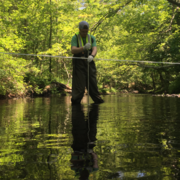
Biological microbes such as Fecal Indicator Bacteria (FIB)—including Escherichia coli (E. coli)—along with pathogens like Cryptosporidium, and microbial signatures used in Microbial Source Tracking (MST), are receiving heightened attention from the public, environmental agencies, and water-resource managers. These indicators help identify potential contamination sources, assess recreational water...
Harmful Algal Blooms Studies in New Jersey Waters
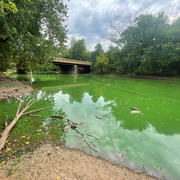
Harmful Algal Blooms (HABs) in lakes, ponds, and rivers adversely affect water resources worldwide. Under the right conditions, cyanobacteria can produce cyanotoxins that can pose health risks to both animals and humans which makes them a major environmental and public health concern. More studies to examine the occurrence and persistence of HABs and their potential transport are needed to better...

Estimating Daily Upstream Location of the Freshwater-Saltwater Interface in New Jersey
Frequently, water withdrawals for public supply are made from the freshwater reaches of rivers and streams across New Jersey. Overall, there is a lack of scientific information describing the movement of saltwater upstream into the tributaries discharging into Delaware Bay. This project is collected water-quality data along two selected tributaries in New Jersey to Delaware Bay to develop a...
Cryptosporidium Synoptic Study of the Raritan River Basin
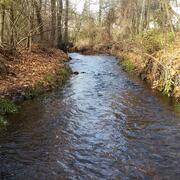
The USGS New Jersey Water Science Center is partnering with New Jersey American Water (NJAW) on a project in the Raritan River Basin Study area to investigate the potential sources of Cryptosporidium in the Raritan River Basin.
Per and Polyfluoroalkyl Substances (PFAS) in New Jersey Waters
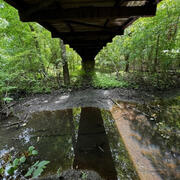
Scientists from the New Jersey Water Science Center are working with drinking-water purveyors to assess the occurrence and distribution of per- and polyfluoroalkyl substances (PFAS) in New Jersey surface waters. These studies will enhance current water-quality assessments in NJ watersheds by characterizing PFAS occurrence in surface water at select locations that have the potential to directly...

Microbial Source Tracking in the Lower Passaic River Basin Study Area, New Jersey
The USGS NJWSC is collaborating with the Passaic Valley Sewerage Commission (PVSC) on an Urban Waters Federal Partnership project in the Lower Passaic River basin to investigate the occurrence and potential sources of E. coli fecal indicator bacteria.

USGS National Water Quality Network
Understanding the quality of U.S. streams, rivers, and groundwater requires consistent data collection and analysis over decades for proper context of current conditions. The USGS collects nationally standardized data and information as part of the National Water Quality Network (NWQN). The NQWN is made up of sites across the Nation where USGS scientists regularly measure water-quality conditions.
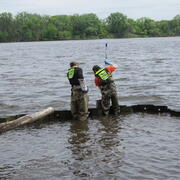
Novel Bacterial Monitoring of Urbanized Waterways in the Lower Delaware River and Passaic River Basins.
As part of the Urban Water Federal Partnership, the U.S. Geological Survey (USGS) New Jersey Water Science Center (NJWSC) is currently assessing the use of innovative, near real-time bacteria monitoring technology to provide rapid results on bacteria concentrations to water regulators. Traditional methods of collecting and quantifying fecal indicator bacteria (FIB) is labor intensive, expensive...

New Jersey Subbasin Paired Air & Stream Water Temperature Networks
The temperature, water quality, and channel connectivity along headwater stream networks often show highly dynamic spatiotemporal patterns that are tied to localized hydrogeologic and landcover controls. Groundwater exchanges exert a spatially discontinuous influence on streams that reflect, in part, the preferential nature of groundwater discharge as controlled by recharge, topography, and...