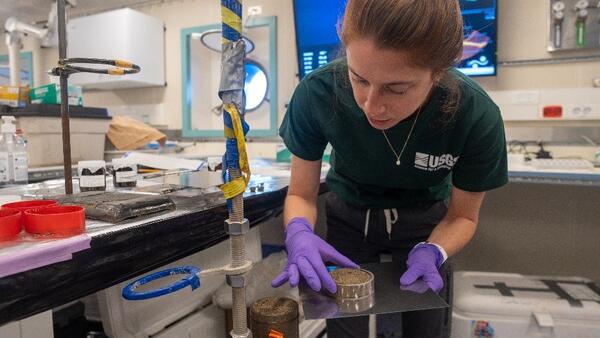
Hope Ianiri processing marine surface sediments aboard a research vessel
Hope Ianiri processing marine surface sediments aboard a research vesselUSGS Research Chemist Hope Ianiri processing marine surface sediments aboard a research vessel.
An official website of the United States government
Here's how you know
Official websites use .gov
A .gov website belongs to an official government organization in the United States.
Secure .gov websites use HTTPS
A lock () or https:// means you’ve safely connected to the .gov website. Share sensitive information only on official, secure websites.
Pacific Coastal and Marine Science Center images.
USGS Research Chemist Hope Ianiri processing marine surface sediments aboard a research vessel.
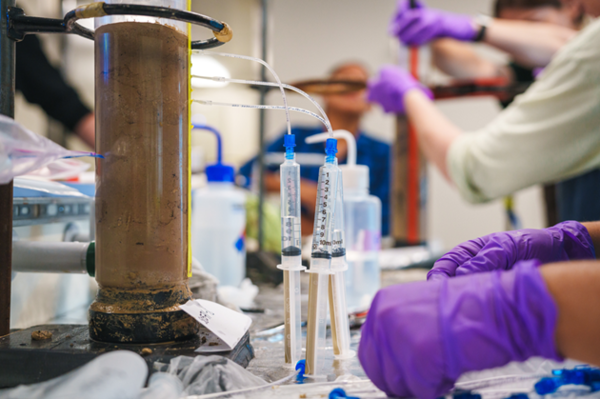
Close-up photo of USGS Research Chemist Hope Ianiri extracting pore water from a surface marine sediment sample.
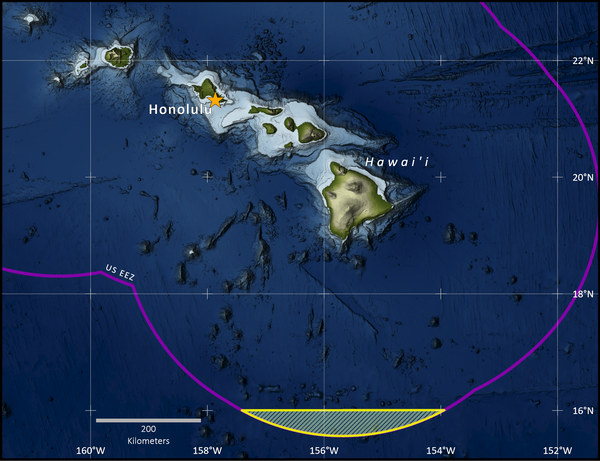
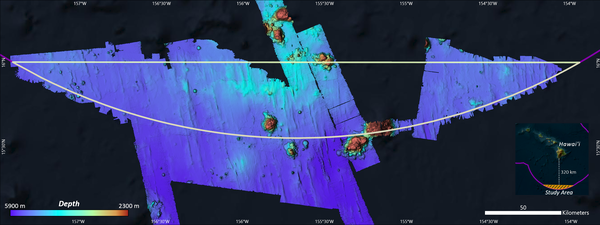
Map showing study area (outlined in yellow) of the Hawaii Abyssal Nodules and Associated Ecosystems Expedition.
Bathymetric map showing study area for the Hawaiʻi Abyssal Nodules and Associated Ecosystems Expedition.
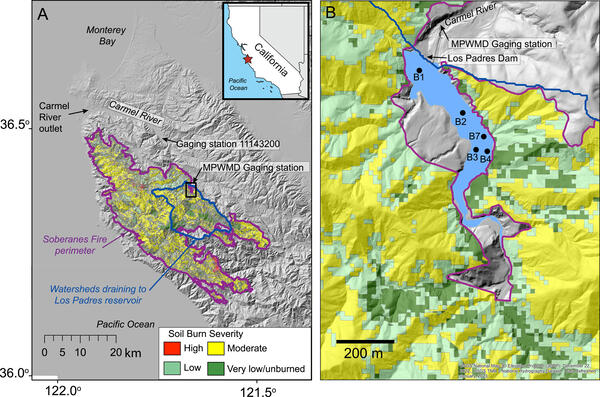
Location map of the general study area, Upper Carmel River, central California coast, from the study Post-Fire Sediment Yield From a Central California Watershed: Field Measurements and Validation of the WEPP Model.
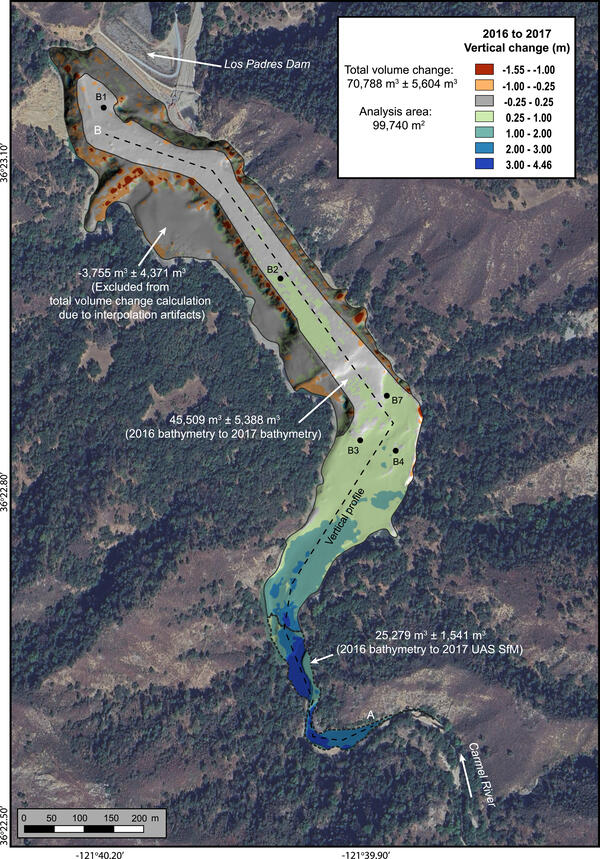
Results of geomorphic change detection analysis of sediment volume differences between 2016 and 2017, Upper Carmel River, from the study Post-Fire Sediment Yield From a Central California Watershed: Field Measurements and Validation of the WEPP Model.
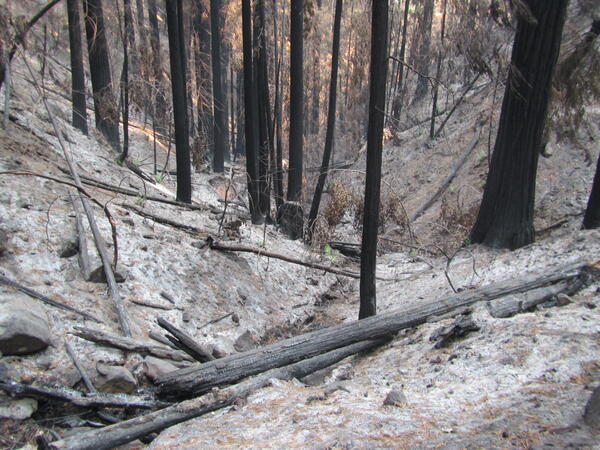
Burned hillslopes shedding sediment at the site of the 2020 CZU Lightning Complex Fire in California.
Boulders deposited by post-fire debris flow at the site of the 2020 Dolan Fire in California.
Post-fire debris flow depositing ash and sediment on a steep hillside, 2021 Dixie Fire in northern CA.
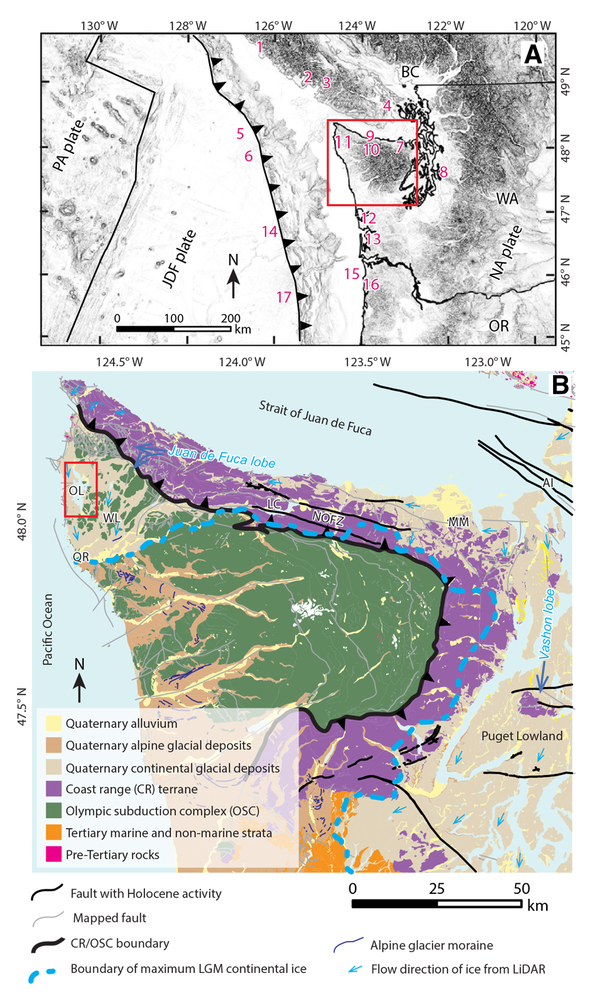
Map showing North Cascadia regional tectonic setting, from the study Post-glacial stratigraphy and late Holocene record of great Cascadia earthquakes in Ozette Lake, Washington, USA.
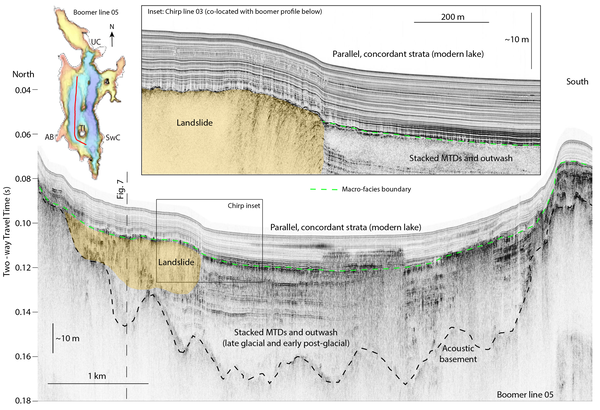
Representative boomer and co-located chirp profiles that extend along axis of southwestern distal basin of Ozette Lake, from the study Post-glacial stratigraphy and late Holocene record of great Cascadia earthquakes in Oze
Underwater footage of seafloor massive sulfides, taken from a remotely operated vehicle.
Underwater footage of marine phosphorites on seafloor, taken from a remotely operated vehicle.
Underwater footage of ferromanganese crust on seafloor, taken from a remotely operated vehicle.
Underwater footage of manganese nodules on seafloor, taken from a remotely operated vehicle.
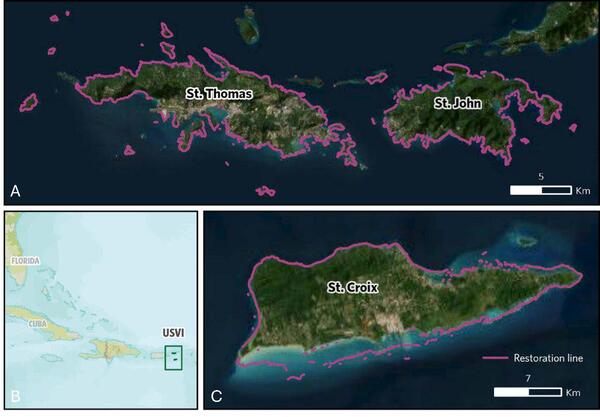
Study area for US Virgin Islands, from the study Quantifying the Coastal Hazard Risk Reduction Benefits of Coral Reef Restoration in the U.S. Virgin Islands.
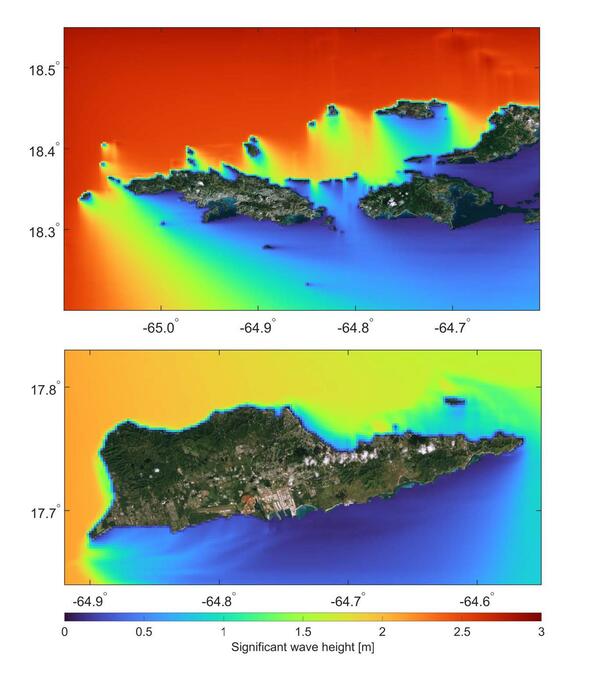
Maps showing output example for SWAN model for St Thomas and St Coix, US Virgin Islands, from the study Quantifying the Coastal Hazard Risk Reduction Benefits of Coral Reef Restoration in the U.S. Virgin Islands.
Overview map of the San Francisco Bay area with location and type of new samples reported in the study Reversal in estuarine sand supply driven by Holocene sea level rise: A model for sand transport in large structural estuaries, San Francisco Bay, California, USA.
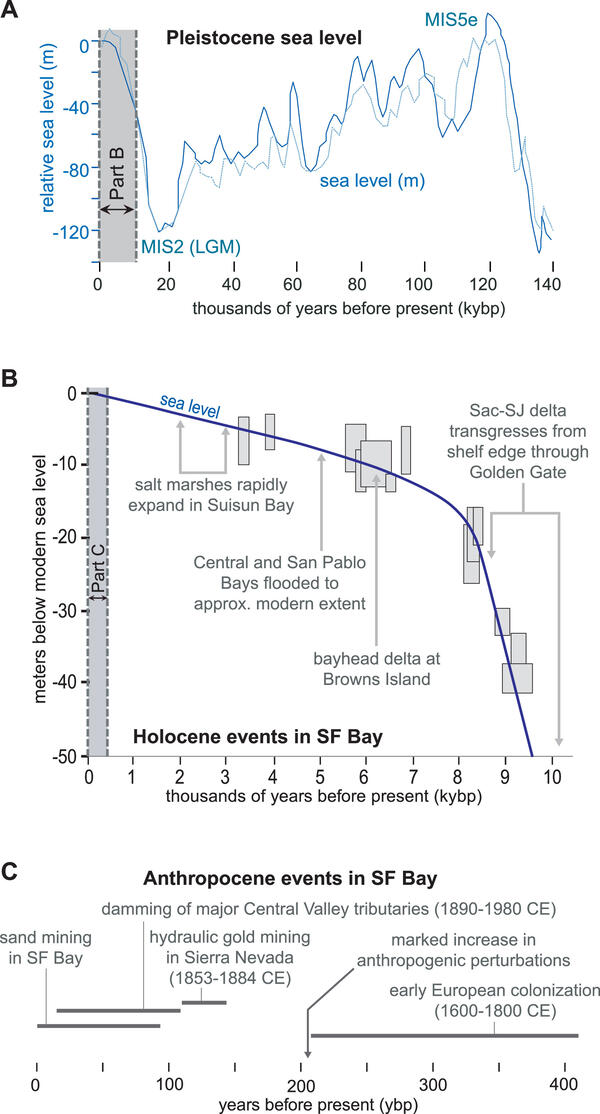
Pleistocene to Holocene chronology of the San Francisco (San Francisco) Bay region highlighting sea level fluctuations and anthropogenic events.
Scientists deploying a chirp sub-bottom profiler in Prince William Sound, Alaska, as part of the USGS Coastal and Marine Geohazards of the U.S. West Coast and Alaska project.
Research Vessel Alaskan Gyre in Prince William Sound conducting Chirp and Sparker geophysical surveys to look for submarine landslide deposits, which are a major tsunami hazard in the fjord regions and also provide a record of large earthquake recurrence.