U.S. Geological Survey Gas Hydrates Project
The USGS Gas Hydrates Project has been making contributions to advance understanding of US and international gas hydrates science for at least three decades. The research group working on gas hydrates at the USGS is among the largest in the US and has expertise in all the major geoscience disciplines, as well as in the physics and chemistry of gas hydrates, the geotechnical properties of hydrate-bearing sediments, and the biogeochemistry of marine and permafrost gas hydrate systems. The group includes field-based scientists, numerical modelers, laboratory scientists, and supporting technical personnel for marine, permafrost, and laboratory operations. Much of the research is carried out in collaboration with other federal agencies (especially the U.S. Department of Energy) or academic partners, and there are frequently opportunities to collaborate on international programs that jointly serve the Project's mission and the goals of the international partners.
Gas Hydrates Research
The USGS Gas Hydrates Project focuses on the study of natural gas hydrates in deepwater marine systems and permafrost areas.
The USGS Gas Hydrates Project focuses on the study of natural gas hydrates in deepwater marine systems and permafrost areas. The primary goals are:
- Evaluate methane hydrates as a potential energy source
- Investigate the interaction between methane hydrate destabilization and climate change at short and long time scales
- Study the spatial and temporal connections between submarine slope failures and gas hydrate dynamics
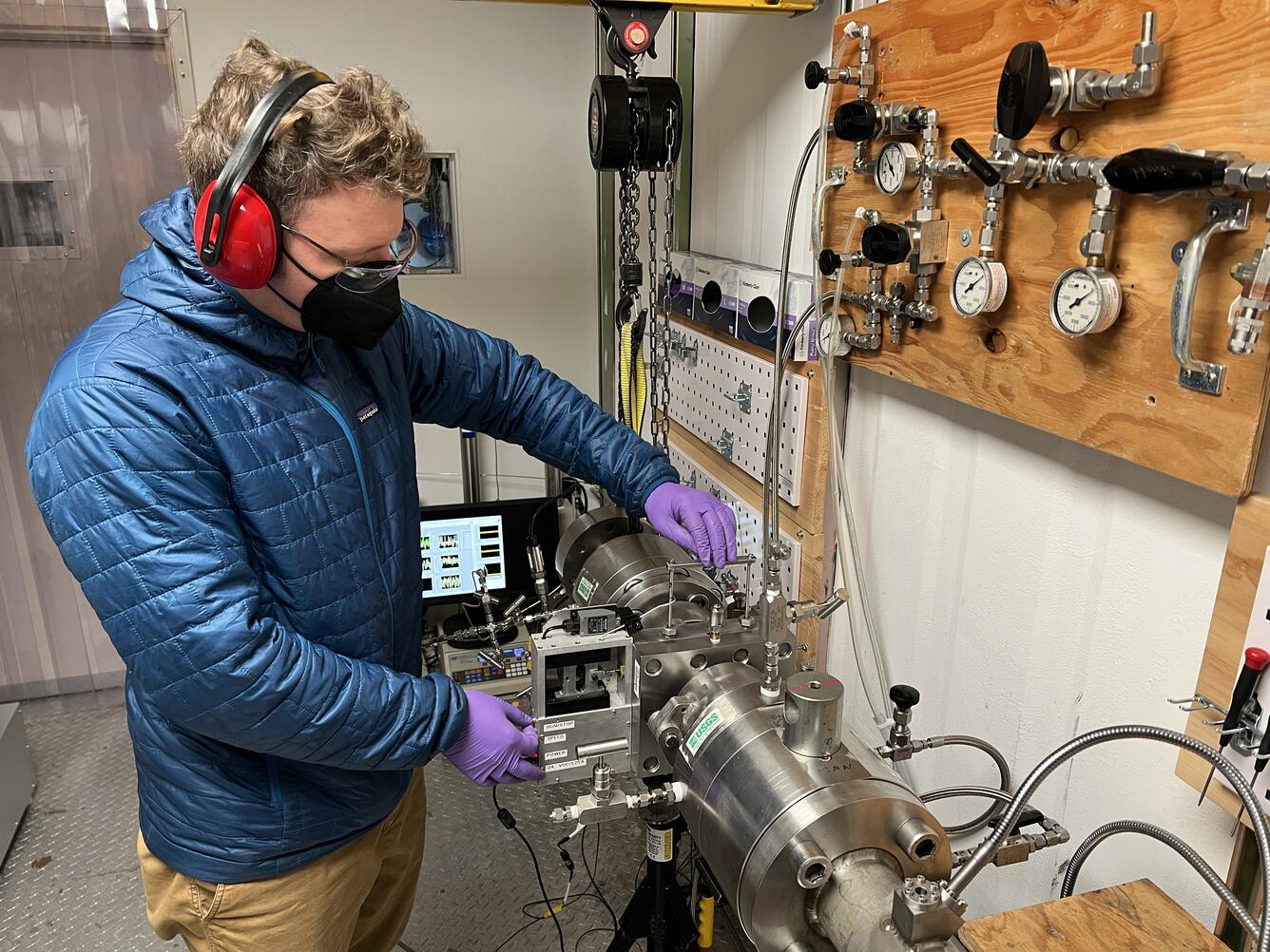
The Gas Hydrate Project conducts multidisciplinary field studies, participates in national and international deep drilling expeditions, and maintains several laboratories focused on hydrate-bearing sediments.
Scientific research associated with the Gas Hydrates Project.
The Mid-Atlantic Resource Imaging Experiment (MATRIX)
Delineating the U.S. Extended Continental Shelf
USGS Law of the Sea
IMMeRSS-- Interagency Mission for Methane Research on Seafloor Seeps
Gas Hydrates- Atlantic Margin Methane Seeps
Gas Hydrates- Submarine Slope Destabilization
Environmental Compliance
Gas Hydrates-Environment Interactions
Gas Hydrates- Energy
Gas Hydrates - Primer
Data Releases associated with the Gas Hydrates Project
Dataset of diatom controls on the compressibility and permeability of fine-grained sediment collected offshore of South Korea during the Second Ulleung Basin Gas Hydrate Expedition, UBGH2 Dataset of diatom controls on the compressibility and permeability of fine-grained sediment collected offshore of South Korea during the Second Ulleung Basin Gas Hydrate Expedition, UBGH2
Dataset of diatom controls on the sedimentation behavior of fine-grained sediment collected offshore of South Korea during the Second Ulleung Basin Gas Hydrate Expedition, UBGH2 Dataset of diatom controls on the sedimentation behavior of fine-grained sediment collected offshore of South Korea during the Second Ulleung Basin Gas Hydrate Expedition, UBGH2
Water column physical and chemical properties of Cenote Bang, a component of the Ox Bel Ha cave network within the subterranean estuary coastal aquifer of the Yucatan Peninsula, from December 2013 to January 2016 Water column physical and chemical properties of Cenote Bang, a component of the Ox Bel Ha cave network within the subterranean estuary coastal aquifer of the Yucatan Peninsula, from December 2013 to January 2016
Comparison of methane concentration and stable carbon isotope data for natural samples analyzed by discrete sample introduction module - cavity ring down spectroscopy (DSIM-CRDS) and traditional methods Comparison of methane concentration and stable carbon isotope data for natural samples analyzed by discrete sample introduction module - cavity ring down spectroscopy (DSIM-CRDS) and traditional methods
Split-beam Echo Sounder and Navigation Data Collected Using a Simrad EK80 Wide Band Tranceiver and ES38-10 Transducer During the Mid-Atlantic Resource Imaging Experiment (MATRIX), USGS Field Activity 2018-002-FA. Split-beam Echo Sounder and Navigation Data Collected Using a Simrad EK80 Wide Band Tranceiver and ES38-10 Transducer During the Mid-Atlantic Resource Imaging Experiment (MATRIX), USGS Field Activity 2018-002-FA.
Multichannel Seismic-Reflection and Navigation Data Collected Using Sercel GI Guns and Geometrics GeoEel Digital Streamers During the Mid-Atlantic Resource Imaging Experiment (MATRIX), USGS Field Activity 2018-002-FA Multichannel Seismic-Reflection and Navigation Data Collected Using Sercel GI Guns and Geometrics GeoEel Digital Streamers During the Mid-Atlantic Resource Imaging Experiment (MATRIX), USGS Field Activity 2018-002-FA
Dependence of sedimentation behavior on pore-fluid chemistry for sediment collected offshore South Korea during the Second Ulleung Basin Gas Hydrate Expedition, UBGH2 Dependence of sedimentation behavior on pore-fluid chemistry for sediment collected offshore South Korea during the Second Ulleung Basin Gas Hydrate Expedition, UBGH2
Marine Geophysical Data Collected to Support Methane Seep Research Along the U.S. Atlantic Continental Shelf Break and Upper Continental Slope Between the Baltimore and Keller Canyons During U.S. Geological Survey Field Activities 2017-001-FA and 2017-002 Marine Geophysical Data Collected to Support Methane Seep Research Along the U.S. Atlantic Continental Shelf Break and Upper Continental Slope Between the Baltimore and Keller Canyons During U.S. Geological Survey Field Activities 2017-001-FA and 2017-002
Thermal Data and Navigation for T-3 (Fletcher's) Ice Island Arctic Ocean Heat Flow Studies, 1963-73 (ver. 1.1 December 2022) Thermal Data and Navigation for T-3 (Fletcher's) Ice Island Arctic Ocean Heat Flow Studies, 1963-73 (ver. 1.1 December 2022)
Post-expedition report for USGS T-3 Ice Island heat flow measurements in the High Arctic Ocean, 1963-1973 Post-expedition report for USGS T-3 Ice Island heat flow measurements in the High Arctic Ocean, 1963-1973
Pressure Core Characterization Tool Measurements of Compressibility, Permeability, and Shear Strength of Fine-Grained Sediment Collected from Area C, Krishna-Godavari Basin, during India's National Gas Hydrate Program Expedition NGHP-02 Pressure Core Characterization Tool Measurements of Compressibility, Permeability, and Shear Strength of Fine-Grained Sediment Collected from Area C, Krishna-Godavari Basin, during India's National Gas Hydrate Program Expedition NGHP-02
Two-dimensional micromodel study of pore-throat clogging by pure fine-grained sediments and natural sediments from the 2015 National Gas Hydrate Program Expedition 2 (NGHP-02), offshore India Two-dimensional micromodel study of pore-throat clogging by pure fine-grained sediments and natural sediments from the 2015 National Gas Hydrate Program Expedition 2 (NGHP-02), offshore India
Mulitmedia items associated with the Gas Hydrates Project
Publications associated with the Gas Hydrates Project
Gas Hydrates on Alaskan Marine Margins
Gas hydrate distributions on the marine margins of the U.S. state of Alaska are more poorly known than those on other U.S. margins, where bottom simulating reflections have been systematically mapped on marine seismic data to support modern, quantitative assessments of gas-in-place in gas hydrates.
Categorizing active marine acoustic sources based on their potential to affect marine animals Categorizing active marine acoustic sources based on their potential to affect marine animals
Diatom influence on the production characteristics of hydrate-bearing sediments: Examples from Ulleung Basin, offshore South Korea Diatom influence on the production characteristics of hydrate-bearing sediments: Examples from Ulleung Basin, offshore South Korea
Comprehensive pressure core analysis for hydrate-bearing sediments from Gulf of Mexico Green Canyon Block 955, including assessments of geomechanical viscous behavior and nuclear magnetic resonance permeability Comprehensive pressure core analysis for hydrate-bearing sediments from Gulf of Mexico Green Canyon Block 955, including assessments of geomechanical viscous behavior and nuclear magnetic resonance permeability
Integrated geochemical approach to determine the source of methane in gas hydrate from Green Canyon Block 955 in the Gulf of Mexico Integrated geochemical approach to determine the source of methane in gas hydrate from Green Canyon Block 955 in the Gulf of Mexico
Permeability of methane hydrate-bearing sandy silts in the deep-water Gulf of Mexico (Green Canyon Block 955) Permeability of methane hydrate-bearing sandy silts in the deep-water Gulf of Mexico (Green Canyon Block 955)
Compression behavior of hydrate-bearing sediments Compression behavior of hydrate-bearing sediments
Barkley Canyon gas hydrates: A synthesis based on two decades of seafloor observation and remote sensing Barkley Canyon gas hydrates: A synthesis based on two decades of seafloor observation and remote sensing
Comparison of sediment composition by smear slides to quantitative shipboard data: A case study on the utility of smear slide percent estimates, IODP Expedition 353, northern Indian Ocean Comparison of sediment composition by smear slides to quantitative shipboard data: A case study on the utility of smear slide percent estimates, IODP Expedition 353, northern Indian Ocean
Primary deposition and early diagenetic effects on the high saturation accumulation of gas hydrate in a silt dominated reservoir in the Gulf of Mexico Primary deposition and early diagenetic effects on the high saturation accumulation of gas hydrate in a silt dominated reservoir in the Gulf of Mexico
U.S. Atlantic margin gas hydrates U.S. Atlantic margin gas hydrates
Gas hydrates on Alaskan marine margins Gas hydrates on Alaskan marine margins
Geonarratives associated with the Gas Hydrates Project
News stories associated with the Gas Hydrates project.
USGS scientists contribute to new gas hydrates monograph USGS scientists contribute to new gas hydrates monograph
Gas Hydrates FAQs
What are gas hydrates? What are gas hydrates?
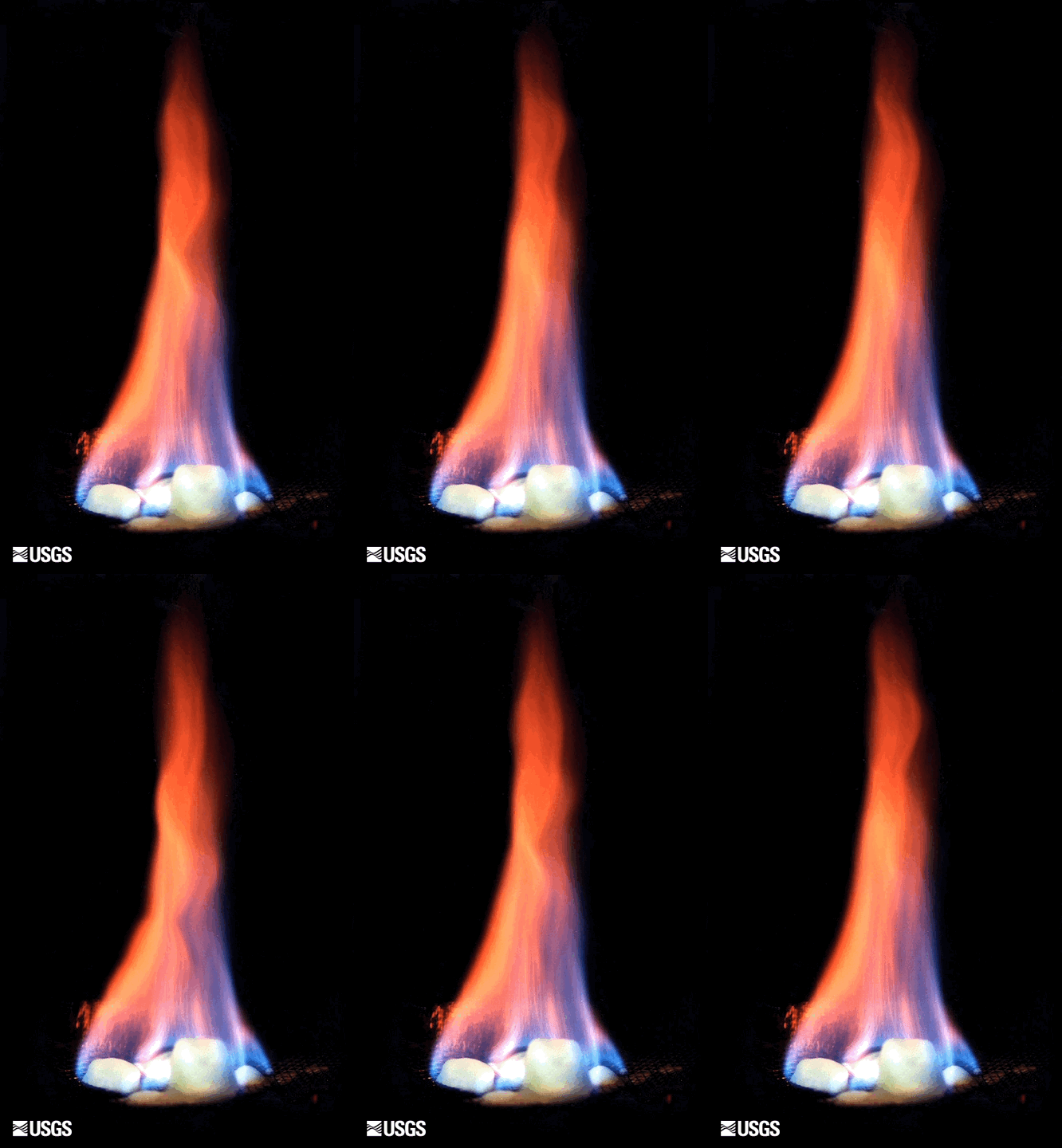
Gas hydrates are a crystalline solid formed of water and gas. It looks and acts much like ice, but it contains huge amounts of methane; it is known to occur on every continent; and it exists in huge quantities in marine sediments in a layer several hundred meters thick directly below the sea floor and in association with permafrost in the Arctic. It is not stable at normal sea-level pressures and...
The USGS Gas Hydrates Project has been making contributions to advance understanding of US and international gas hydrates science for at least three decades. The research group working on gas hydrates at the USGS is among the largest in the US and has expertise in all the major geoscience disciplines, as well as in the physics and chemistry of gas hydrates, the geotechnical properties of hydrate-bearing sediments, and the biogeochemistry of marine and permafrost gas hydrate systems. The group includes field-based scientists, numerical modelers, laboratory scientists, and supporting technical personnel for marine, permafrost, and laboratory operations. Much of the research is carried out in collaboration with other federal agencies (especially the U.S. Department of Energy) or academic partners, and there are frequently opportunities to collaborate on international programs that jointly serve the Project's mission and the goals of the international partners.
Gas Hydrates Research
The USGS Gas Hydrates Project focuses on the study of natural gas hydrates in deepwater marine systems and permafrost areas.
The USGS Gas Hydrates Project focuses on the study of natural gas hydrates in deepwater marine systems and permafrost areas. The primary goals are:
- Evaluate methane hydrates as a potential energy source
- Investigate the interaction between methane hydrate destabilization and climate change at short and long time scales
- Study the spatial and temporal connections between submarine slope failures and gas hydrate dynamics
The Gas Hydrate Project conducts multidisciplinary field studies, participates in national and international deep drilling expeditions, and maintains several laboratories focused on hydrate-bearing sediments.
Scientific research associated with the Gas Hydrates Project.
The Mid-Atlantic Resource Imaging Experiment (MATRIX)
Delineating the U.S. Extended Continental Shelf
USGS Law of the Sea
IMMeRSS-- Interagency Mission for Methane Research on Seafloor Seeps
Gas Hydrates- Atlantic Margin Methane Seeps
Gas Hydrates- Submarine Slope Destabilization
Environmental Compliance
Gas Hydrates-Environment Interactions
Gas Hydrates- Energy
Gas Hydrates - Primer
Data Releases associated with the Gas Hydrates Project
Dataset of diatom controls on the compressibility and permeability of fine-grained sediment collected offshore of South Korea during the Second Ulleung Basin Gas Hydrate Expedition, UBGH2 Dataset of diatom controls on the compressibility and permeability of fine-grained sediment collected offshore of South Korea during the Second Ulleung Basin Gas Hydrate Expedition, UBGH2
Dataset of diatom controls on the sedimentation behavior of fine-grained sediment collected offshore of South Korea during the Second Ulleung Basin Gas Hydrate Expedition, UBGH2 Dataset of diatom controls on the sedimentation behavior of fine-grained sediment collected offshore of South Korea during the Second Ulleung Basin Gas Hydrate Expedition, UBGH2
Water column physical and chemical properties of Cenote Bang, a component of the Ox Bel Ha cave network within the subterranean estuary coastal aquifer of the Yucatan Peninsula, from December 2013 to January 2016 Water column physical and chemical properties of Cenote Bang, a component of the Ox Bel Ha cave network within the subterranean estuary coastal aquifer of the Yucatan Peninsula, from December 2013 to January 2016
Comparison of methane concentration and stable carbon isotope data for natural samples analyzed by discrete sample introduction module - cavity ring down spectroscopy (DSIM-CRDS) and traditional methods Comparison of methane concentration and stable carbon isotope data for natural samples analyzed by discrete sample introduction module - cavity ring down spectroscopy (DSIM-CRDS) and traditional methods
Split-beam Echo Sounder and Navigation Data Collected Using a Simrad EK80 Wide Band Tranceiver and ES38-10 Transducer During the Mid-Atlantic Resource Imaging Experiment (MATRIX), USGS Field Activity 2018-002-FA. Split-beam Echo Sounder and Navigation Data Collected Using a Simrad EK80 Wide Band Tranceiver and ES38-10 Transducer During the Mid-Atlantic Resource Imaging Experiment (MATRIX), USGS Field Activity 2018-002-FA.
Multichannel Seismic-Reflection and Navigation Data Collected Using Sercel GI Guns and Geometrics GeoEel Digital Streamers During the Mid-Atlantic Resource Imaging Experiment (MATRIX), USGS Field Activity 2018-002-FA Multichannel Seismic-Reflection and Navigation Data Collected Using Sercel GI Guns and Geometrics GeoEel Digital Streamers During the Mid-Atlantic Resource Imaging Experiment (MATRIX), USGS Field Activity 2018-002-FA
Dependence of sedimentation behavior on pore-fluid chemistry for sediment collected offshore South Korea during the Second Ulleung Basin Gas Hydrate Expedition, UBGH2 Dependence of sedimentation behavior on pore-fluid chemistry for sediment collected offshore South Korea during the Second Ulleung Basin Gas Hydrate Expedition, UBGH2
Marine Geophysical Data Collected to Support Methane Seep Research Along the U.S. Atlantic Continental Shelf Break and Upper Continental Slope Between the Baltimore and Keller Canyons During U.S. Geological Survey Field Activities 2017-001-FA and 2017-002 Marine Geophysical Data Collected to Support Methane Seep Research Along the U.S. Atlantic Continental Shelf Break and Upper Continental Slope Between the Baltimore and Keller Canyons During U.S. Geological Survey Field Activities 2017-001-FA and 2017-002
Thermal Data and Navigation for T-3 (Fletcher's) Ice Island Arctic Ocean Heat Flow Studies, 1963-73 (ver. 1.1 December 2022) Thermal Data and Navigation for T-3 (Fletcher's) Ice Island Arctic Ocean Heat Flow Studies, 1963-73 (ver. 1.1 December 2022)
Post-expedition report for USGS T-3 Ice Island heat flow measurements in the High Arctic Ocean, 1963-1973 Post-expedition report for USGS T-3 Ice Island heat flow measurements in the High Arctic Ocean, 1963-1973
Pressure Core Characterization Tool Measurements of Compressibility, Permeability, and Shear Strength of Fine-Grained Sediment Collected from Area C, Krishna-Godavari Basin, during India's National Gas Hydrate Program Expedition NGHP-02 Pressure Core Characterization Tool Measurements of Compressibility, Permeability, and Shear Strength of Fine-Grained Sediment Collected from Area C, Krishna-Godavari Basin, during India's National Gas Hydrate Program Expedition NGHP-02
Two-dimensional micromodel study of pore-throat clogging by pure fine-grained sediments and natural sediments from the 2015 National Gas Hydrate Program Expedition 2 (NGHP-02), offshore India Two-dimensional micromodel study of pore-throat clogging by pure fine-grained sediments and natural sediments from the 2015 National Gas Hydrate Program Expedition 2 (NGHP-02), offshore India
Mulitmedia items associated with the Gas Hydrates Project
Publications associated with the Gas Hydrates Project
Gas Hydrates on Alaskan Marine Margins
Gas hydrate distributions on the marine margins of the U.S. state of Alaska are more poorly known than those on other U.S. margins, where bottom simulating reflections have been systematically mapped on marine seismic data to support modern, quantitative assessments of gas-in-place in gas hydrates.
Categorizing active marine acoustic sources based on their potential to affect marine animals Categorizing active marine acoustic sources based on their potential to affect marine animals
Diatom influence on the production characteristics of hydrate-bearing sediments: Examples from Ulleung Basin, offshore South Korea Diatom influence on the production characteristics of hydrate-bearing sediments: Examples from Ulleung Basin, offshore South Korea
Comprehensive pressure core analysis for hydrate-bearing sediments from Gulf of Mexico Green Canyon Block 955, including assessments of geomechanical viscous behavior and nuclear magnetic resonance permeability Comprehensive pressure core analysis for hydrate-bearing sediments from Gulf of Mexico Green Canyon Block 955, including assessments of geomechanical viscous behavior and nuclear magnetic resonance permeability
Integrated geochemical approach to determine the source of methane in gas hydrate from Green Canyon Block 955 in the Gulf of Mexico Integrated geochemical approach to determine the source of methane in gas hydrate from Green Canyon Block 955 in the Gulf of Mexico
Permeability of methane hydrate-bearing sandy silts in the deep-water Gulf of Mexico (Green Canyon Block 955) Permeability of methane hydrate-bearing sandy silts in the deep-water Gulf of Mexico (Green Canyon Block 955)
Compression behavior of hydrate-bearing sediments Compression behavior of hydrate-bearing sediments
Barkley Canyon gas hydrates: A synthesis based on two decades of seafloor observation and remote sensing Barkley Canyon gas hydrates: A synthesis based on two decades of seafloor observation and remote sensing
Comparison of sediment composition by smear slides to quantitative shipboard data: A case study on the utility of smear slide percent estimates, IODP Expedition 353, northern Indian Ocean Comparison of sediment composition by smear slides to quantitative shipboard data: A case study on the utility of smear slide percent estimates, IODP Expedition 353, northern Indian Ocean
Primary deposition and early diagenetic effects on the high saturation accumulation of gas hydrate in a silt dominated reservoir in the Gulf of Mexico Primary deposition and early diagenetic effects on the high saturation accumulation of gas hydrate in a silt dominated reservoir in the Gulf of Mexico
U.S. Atlantic margin gas hydrates U.S. Atlantic margin gas hydrates
Gas hydrates on Alaskan marine margins Gas hydrates on Alaskan marine margins
Geonarratives associated with the Gas Hydrates Project
News stories associated with the Gas Hydrates project.
USGS scientists contribute to new gas hydrates monograph USGS scientists contribute to new gas hydrates monograph
Gas Hydrates FAQs
What are gas hydrates? What are gas hydrates?
Gas hydrates are a crystalline solid formed of water and gas. It looks and acts much like ice, but it contains huge amounts of methane; it is known to occur on every continent; and it exists in huge quantities in marine sediments in a layer several hundred meters thick directly below the sea floor and in association with permafrost in the Arctic. It is not stable at normal sea-level pressures and...