



Right lateral offset of Browns Valley Rd. centerline, on a secondary fault strand.
Images
Images
Filter Total Items: 9448

2014 South Napa CA M6 Earthquake - August 24
Right lateral offset of Browns Valley Rd. centerline, on a secondary fault strand.

2014 South Napa CA M6 Earthquake - August 24
Small displacement ground cracks along main rupture near Cuttings Wharf Rd., south of Hwy. 12, taken the day of the earthquake. Displacement in this area grew to ~20 cm right-lateral by Monday, 8/25, due to afterslip.
Small displacement ground cracks along main rupture near Cuttings Wharf Rd., south of Hwy. 12, taken the day of the earthquake. Displacement in this area grew to ~20 cm right-lateral by Monday, 8/25, due to afterslip.

2014 South Napa CA M6 Earthquake - August 24
Right-lateral displacement of centerline on Redwood Rd of 2.4 cm along a secondary rupture strand, near the north end of the fault rupture.
Right-lateral displacement of centerline on Redwood Rd of 2.4 cm along a secondary rupture strand, near the north end of the fault rupture.

2014 South Napa CA M6 Earthquake - August 24
Driveway buckling across secondary fault strand at Browns Valley Rd.
Driveway buckling across secondary fault strand at Browns Valley Rd.

2014 South Napa CA M6 Earthquake - August 24
Damaged unreinforced masonry building on Main St. in Napa Downtown.
Damaged unreinforced masonry building on Main St. in Napa Downtown.

2014 South Napa CA M6 Earthquake - August 24
Continuous "mole-track" running parallel to the strike of the fault indicates some E-W compression in addition to right-lateral faulting. Photo taken near Buhman Rd.
Continuous "mole-track" running parallel to the strike of the fault indicates some E-W compression in addition to right-lateral faulting. Photo taken near Buhman Rd.

2014 South Napa CA M6 Earthquake - August 24
Pavement buckling and tented sidewalk resulting from ~14 cm of compression on Sandybrook Ln., north end of main rupture.
Pavement buckling and tented sidewalk resulting from ~14 cm of compression on Sandybrook Ln., north end of main rupture.

Cliff along Bull Run in Manassas National Battlefield Park, Virginia
Cliff along Bull Run in Manassas National Battlefield Park, VirginiaEast-facing cliff approximately 30 meters downstream from Farm Ford along Bull Run in Manassas National Battlefield Park, Virginia.
Cliff along Bull Run in Manassas National Battlefield Park, Virginia
Cliff along Bull Run in Manassas National Battlefield Park, VirginiaEast-facing cliff approximately 30 meters downstream from Farm Ford along Bull Run in Manassas National Battlefield Park, Virginia.
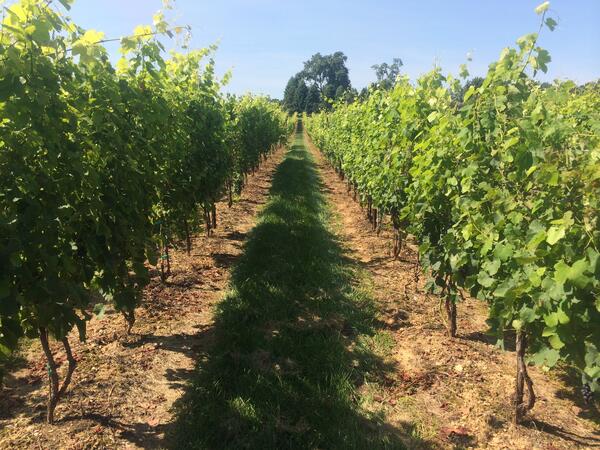
Syrah Grapes on the Vine
Wine-making grapes, like these Syrah (or Shiraz) grapes, require different growing conditions than grapes meant for eating. Cultivating wine grapes involves trying to concentrate sugars and encourage thicker skins, because these are what give wine its flavor. To do that, one of the most important factors to look for is the drainage of the soils.
Wine-making grapes, like these Syrah (or Shiraz) grapes, require different growing conditions than grapes meant for eating. Cultivating wine grapes involves trying to concentrate sugars and encourage thicker skins, because these are what give wine its flavor. To do that, one of the most important factors to look for is the drainage of the soils.

Pruning in Vineyards
To allow the grapevine to concentrate its resources more effectively, sometimes certain grapes are removed in a pruning process. This allows the remaining grapes to receive more of the plant’s energy and resources.
To allow the grapevine to concentrate its resources more effectively, sometimes certain grapes are removed in a pruning process. This allows the remaining grapes to receive more of the plant’s energy and resources.

Sunlight and Shading for Vineyards
Growing wine grapes is a delicate balance between beneficial and excessive shading. Some shade is good to prevent heat-induced stress, but too much shading can lead to negative impacts.
Growing wine grapes is a delicate balance between beneficial and excessive shading. Some shade is good to prevent heat-induced stress, but too much shading can lead to negative impacts.

Filtration with Diatomaceous Earth
Geology plays a significant role in the wine and beer making process. Not only do the types of soils in which the hops and grapes are grown impact their flavor, but sometimes geology can also play a more direct role. Beer and wine are usually filtered before aging, and one of the more popular filtration materials is a mineral known as diatomite.
Geology plays a significant role in the wine and beer making process. Not only do the types of soils in which the hops and grapes are grown impact their flavor, but sometimes geology can also play a more direct role. Beer and wine are usually filtered before aging, and one of the more popular filtration materials is a mineral known as diatomite.
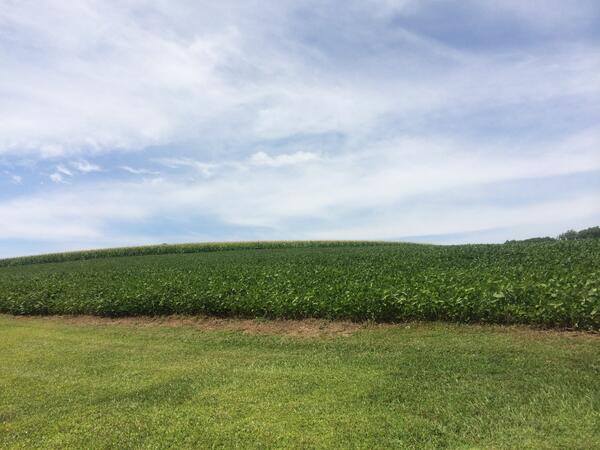
Maryland Soybean Farm
A soybean farm in northern Maryland. Corn can be seen growing in the background.
A soybean farm in northern Maryland. Corn can be seen growing in the background.
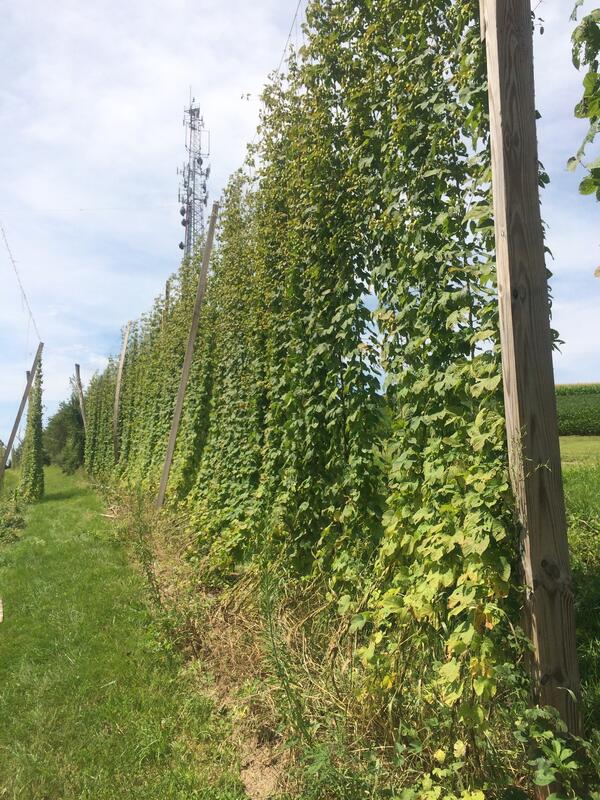
Cascade Hops on the Vine
Hops are a species of vine, whose flowers are used in the beer-brewing process. It provides flavor to beer, and has several varieties. This variety is called Cascade.
Hops are a species of vine, whose flowers are used in the beer-brewing process. It provides flavor to beer, and has several varieties. This variety is called Cascade.
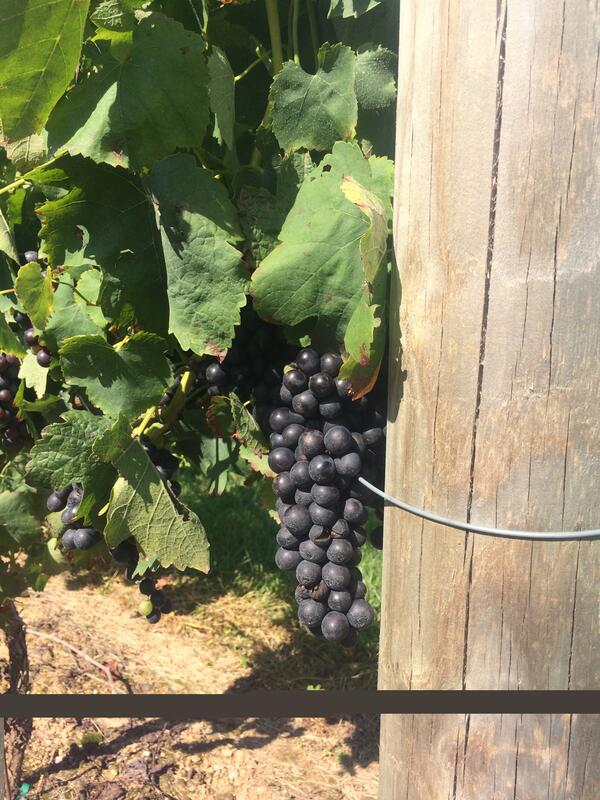
Syrah Grapes on the Vine
Wine-making grapes, like these Syrah (or Shiraz) grapes, require different growing conditions than grapes meant for eating. Cultivating wine grapes involves trying to concentrate sugars and encourage thicker skins, because these are what give wine its flavor. To do that, one of the most important factors to look for is the drainage of the soils.
Wine-making grapes, like these Syrah (or Shiraz) grapes, require different growing conditions than grapes meant for eating. Cultivating wine grapes involves trying to concentrate sugars and encourage thicker skins, because these are what give wine its flavor. To do that, one of the most important factors to look for is the drainage of the soils.

Sunlight and Shading for Vineyards
Growing wine grapes is a delicate balance between beneficial and excessive shading. Some shade is good to prevent heat-induced stress, but too much shading can lead to negative impacts.
Growing wine grapes is a delicate balance between beneficial and excessive shading. Some shade is good to prevent heat-induced stress, but too much shading can lead to negative impacts.
Cascade Hops on the Vine
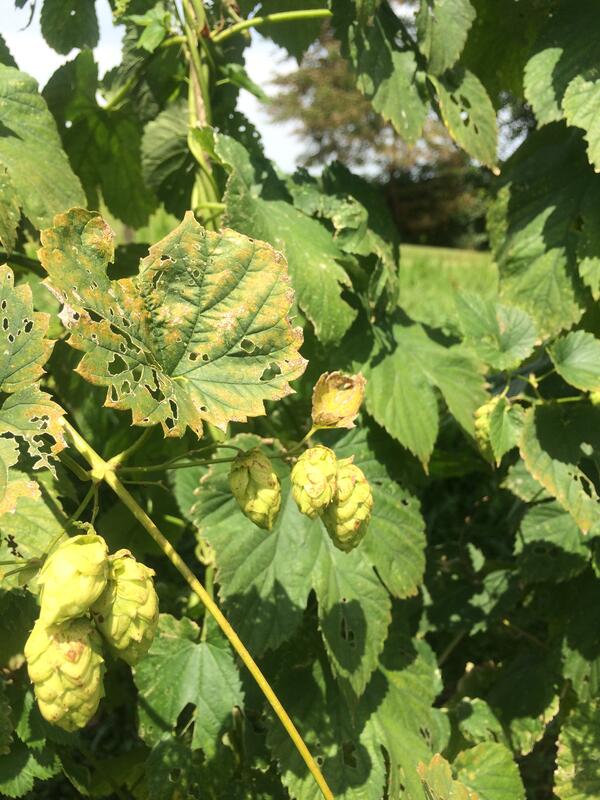
Hops are a species of vine, whose flowers are used in the beer-brewing process. It provides flavor to beer, and has several varieties. This variety is called Cascade.
Hops are a species of vine, whose flowers are used in the beer-brewing process. It provides flavor to beer, and has several varieties. This variety is called Cascade.
Syrah Grapes on the Vine
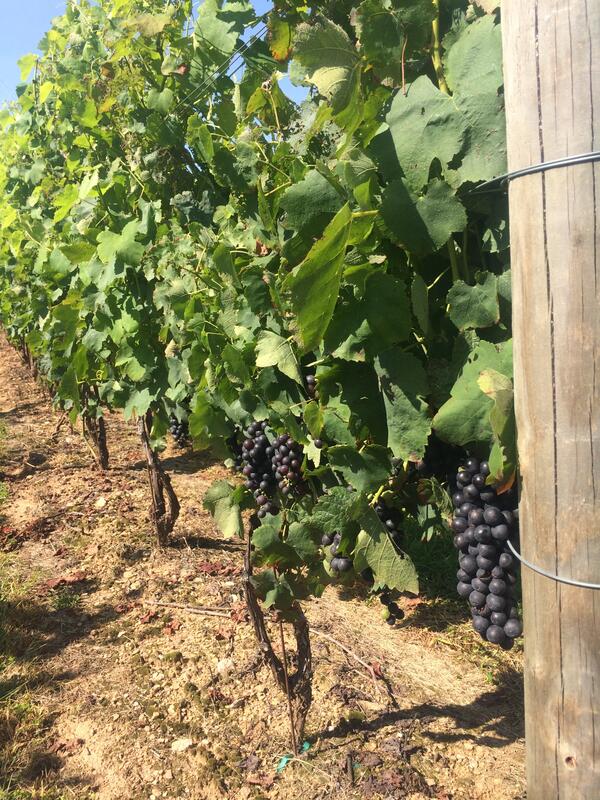
Wine-making grapes, like these Syrah (or Shiraz) grapes, require different growing conditions than grapes meant for eating. Cultivating wine grapes involves trying to concentrate sugars and encourage thicker skins, because these are what give wine its flavor. To do that, one of the most important factors to look for is the drainage of the soils.
Wine-making grapes, like these Syrah (or Shiraz) grapes, require different growing conditions than grapes meant for eating. Cultivating wine grapes involves trying to concentrate sugars and encourage thicker skins, because these are what give wine its flavor. To do that, one of the most important factors to look for is the drainage of the soils.
Cascade Hops on the Vine
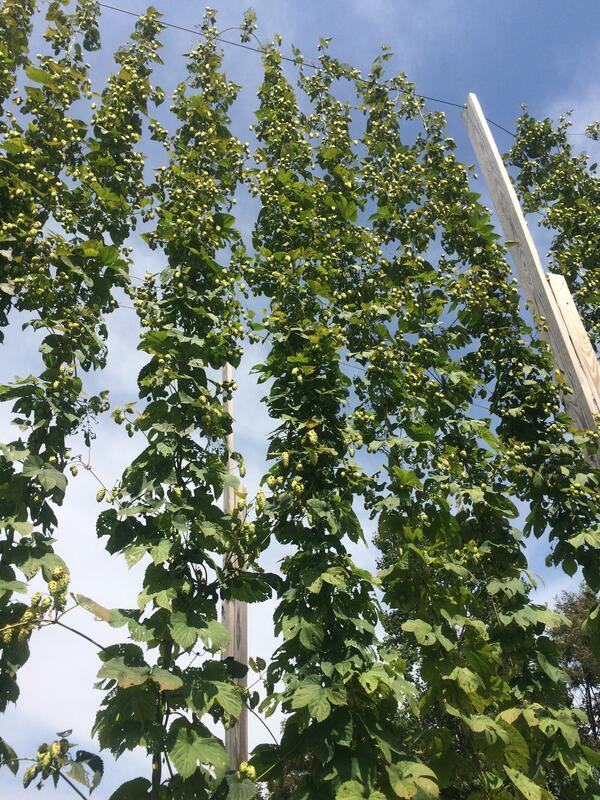
Hops are a species of vine, whose flowers are used in the beer-brewing process. It provides flavor to beer, and has several varieties. This variety is called Cascade.
Hops are a species of vine, whose flowers are used in the beer-brewing process. It provides flavor to beer, and has several varieties. This variety is called Cascade.

Loose Simcoe Hops
Once harvested, hops are usually dried before adding to the brewing process. This variety is called Simcoe hops.
Once harvested, hops are usually dried before adding to the brewing process. This variety is called Simcoe hops.

Maryland Soybean Farm
A soybean farm in northern Maryland. Corn can be seen growing in the background.
A soybean farm in northern Maryland. Corn can be seen growing in the background.