



Browse All Research Projects
Browse All Research Projects
Research projects.
Filter Total Items: 38
Early Life History of Bighead, Silver, Black, and Grass Carps
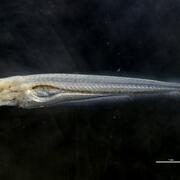
Grass, bighead, black, and silver carps spawn in turbulent rivers, their eggs develop and hatch while drifting downriver. The larvae have a short period of development in the drift, and then they must swim from the mainstem of the river and find appropriate low- or no-flow nursery areas. Rivers which are not long enough, turbulent enough, or without nursery areas in the correct locations are not...

Modeling and Ecology in Action: Informing Invasive Species Management
The modeling team is at the forefront of developing and applying advanced quantitative methods to better understand and manage invasive species.

Molecular Section: eDNA Research
Environmental DNA (eDNA) research at CERC focuses on the development and utility of eDNA tools as well as interpretation of eDNA data in real-world management applications. We work with academic, state, federal and international partners in developing standards and best practices for eDNA technology and exploring the factors that affect eDNA detection in the field. Our lab's eDNA research covers...

Agricultural Pesticides Could Be Impacting the Natural Beauty at Sequoia National Park Through Atmospheric Deposition
High up in the remote alpine and subalpine lakes of Sequoia and Kings Canyon National Park (SEKI), the crystal-clear lakes appear to be greening with an overpopulation of periphyton. Periphyton is a mixture of various water microbes such as algae, cyanobacteria, and others. Scientists at the USGS Columbia Environmental Research Center and the University of Missouri are working with National Park...

Black Carp Biology, Assessment, and Control
Black Carp ( Mylopharyngodon piceus) is the largest of the four non-indigenous carp species, reaching sizes well in excess of 100 pounds. Scientists at the Columbia Environmental Research Center, in cooperation with federal and state partners, are studying the biology, ecology, and behavior of black carp and developing tools to monitor, assess, and control this non-indigenous species.

6PPD Research at Columbia Environmental Research Center
CERC scientists are evaluating the exposure and effects of 6PPD.

A National Assessment of Pesticide, PFAS, Microplastic, and Antibiotic Resistance Gene Exposures in White-Tailed Deer
Research has documented exposures and consequential environmental health effects of pesticides, PFAS, microplastics, and antibiotic resistance genes in environmental biota. Little is known, however, regarding such effects in white-tailed deer ( Odocoileus virginianus).
Linking Mussel Habitat Conditions to Restoration Outcomes and Ecosystem Services
Supported by: Great Lakes Restoration Initiative (GLRI) and U.S. Geological Survey Species Management Program, Ecosystems Mission Area

Smart Phone Application for DOI Oil Spill Responders
Semiquantitative analysis of hydrocarbons in the field is a major challenge for oil spill responders. This data imperative for sample collection and rapid decision making.

Comprehensive Research on PFAS Exposomics and Risk Assessment
The Columbia Environmental Research Center (CERC) conducts cutting-edge research on per- and polyfluoroalkyl substances (PFAS) through the lens of the One Health Paradigm, emphasizing the interconnectedness of human, animal, and environmental health.

CERC Eco-flume
The CERC Eco-flume is a continuous-loop, racetrack style flume. It is housed in a 1,350 square-foot laboratory at CERC and will be used to study transport phenomena and biophysical processes in river environments.

Southeast Region Fluorochemical Network (SERFN)
Fluorochemicals are a class of structurally diverse synthetic compounds that contain a carbon-fluorine backbone.