Native sunflowers in a Kansas Conservation Reserve Program (CRP) field
Native sunflowers in a Kansas Conservation Reserve Program (CRP) fieldNative sunflowers in a Kansas Conservation Reserve Program (CRP) field


Official websites use .gov
A .gov website belongs to an official government organization in the United States.

Secure .gov websites use HTTPS
A lock () or https:// means you’ve safely connected to the .gov website. Share sensitive information only on official, secure websites.

Here, you'll find images related to research going on at the Fort Collins Science Center. Our team of scientists are working on multiple areas of environmental interest, ranging from land conservation effectiveness to invasive reptiles.

Native sunflowers in a Kansas Conservation Reserve Program (CRP) field
Native sunflowers in a Kansas Conservation Reserve Program (CRP) field

Blue Vane trap in Conservation Reserve Program (CRP) field
Blue Vane trap in Conservation Reserve Program (CRP) field

This map shows the distribution of select Conservation Reserve Program (CRP) fields for on-site assessments.
This map shows the distribution of select Conservation Reserve Program (CRP) fields for on-site assessments.

Pictured are members of the Wildfire Research (WiRe) Team, a nonprofit organization that works with wildfire practitioners to help communities adapt to wildfires. (Public domain.)
Pictured are members of the Wildfire Research (WiRe) Team, a nonprofit organization that works with wildfire practitioners to help communities adapt to wildfires. (Public domain.)

This photo was taken just after wildfire mitigation efforts. The WiRe (Wildfire Research Team) conducts research on these mitigation efforts and other components of wildfires and communities. More can be learned on their website.
This photo was taken just after wildfire mitigation efforts. The WiRe (Wildfire Research Team) conducts research on these mitigation efforts and other components of wildfires and communities. More can be learned on their website.

This photo was taken just before wildfire mitigation efforts. The WiRe (Wildfire Research Team) conducts research on these mitigation efforts and other components of wildfires and communities. More can be learned on their website.
This photo was taken just before wildfire mitigation efforts. The WiRe (Wildfire Research Team) conducts research on these mitigation efforts and other components of wildfires and communities. More can be learned on their website.

A little brown bat (Myotis lucifugus) with white-nose syndrome hibernating in a Virginia cave during late spring of 2016.
A little brown bat (Myotis lucifugus) with white-nose syndrome hibernating in a Virginia cave during late spring of 2016.

A walleye otolith from the Upper Colorado River Basin. Researchers can analyze isotopes in these structures to obtain information on individual origin and recent residency.
A walleye otolith from the Upper Colorado River Basin. Researchers can analyze isotopes in these structures to obtain information on individual origin and recent residency.

Pinus edulis on a rocky outcrop near Colorado National Monument. Photo by Andreas Wion (USGS).
Pinus edulis on a rocky outcrop near Colorado National Monument. Photo by Andreas Wion (USGS).

The Colorado River in Grand Canyon taken from Grand Canyon Village, Arizona.
The Colorado River in Grand Canyon taken from Grand Canyon Village, Arizona.

Cheatgrass (Bromus tectorum) invasion of sagebrush habitats after a fire in northwestern Nevada, U.S.A.
Cheatgrass (Bromus tectorum) invasion of sagebrush habitats after a fire in northwestern Nevada, U.S.A.
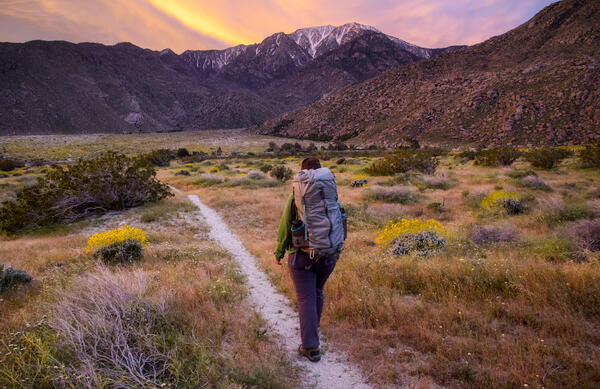
A hiker with a backpack walks along a trail towards mountains as the sun begins to rise
A hiker with a backpack walks along a trail towards mountains as the sun begins to rise

The Molecular Ecology Lab at the Fort Collins Science Center
The Molecular Ecology Lab at the Fort Collins Science Center

A view of the highway going over Loveland Pass in Colorado.
A view of the highway going over Loveland Pass in Colorado.

Sarah Moy conducts radio telemetry on Argentine black-and-white tegus (Tupinambis merianae) in the Florida Everglades. USGS photo.
Sarah Moy conducts radio telemetry on Argentine black-and-white tegus (Tupinambis merianae) in the Florida Everglades. USGS photo.

Dissected guano pellet showing antennae, eyes, and body fragments of midges.
Dissected guano pellet showing antennae, eyes, and body fragments of midges.

The South Platte River at the 52 Bridge. Photo by Laura Perry, USGS.
The South Platte River at the 52 Bridge. Photo by Laura Perry, USGS.

Tree rings dating to the mid-1500s from a ponderosa pine log collected near Taos, NM.
Tree rings dating to the mid-1500s from a ponderosa pine log collected near Taos, NM.

A landscape view of the "Devil's Backbone" near Loveland, CO.
A landscape view of the "Devil's Backbone" near Loveland, CO.

A sunset in western Loveland, Colorado.
A sunset in western Loveland, Colorado.

Erika Lozano, Marcie Cruz, and Emma Hanslowe (L-R), prepare an Argentine black-and-white tegu (Tupinambis merianae) for surgery as part of a study on cold-weather behavior on the lizards.
Erika Lozano, Marcie Cruz, and Emma Hanslowe (L-R), prepare an Argentine black-and-white tegu (Tupinambis merianae) for surgery as part of a study on cold-weather behavior on the lizards.