



We worked on more than 500 individual properties from eight focal areas spread across Nebraska. In total, we conducted more than 110,000 point-surveys that identified in excess of 11,000 cars. We also interviewed more than 7,000 users of publicly accessible lands in Nebraska.
Images
We are cultivating and sharing the creativity, vision, and innovative perspectives that can be found among our graduate student, staff, faculty, and friends.
Filter Total Items: 379
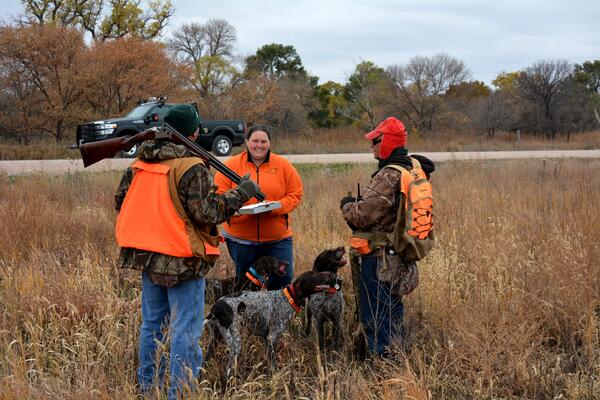
A pheasant hunter being interviewed
We worked on more than 500 individual properties from eight focal areas spread across Nebraska. In total, we conducted more than 110,000 point-surveys that identified in excess of 11,000 cars. We also interviewed more than 7,000 users of publicly accessible lands in Nebraska.
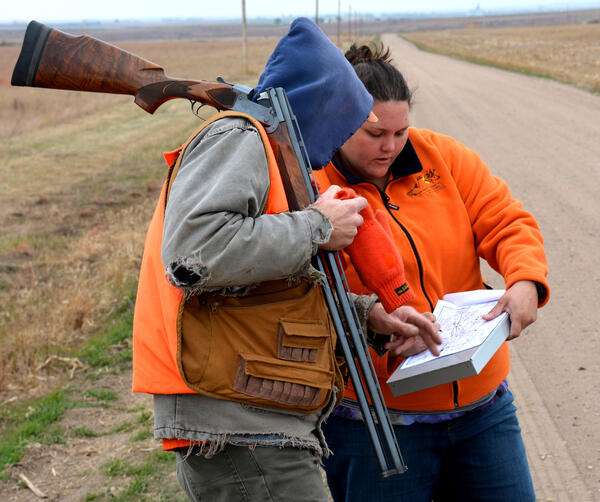
A pheasant hunter being interviewed
We are currently analyzing the data to understand how users of publicly accessible lands distribute on the landscape in the hopes of helping managers identify effective strategies for providing opportunities for outdoor enthusiasts in Nebraska. The retention and recruitment of hunters is of increasing concern to wildlife management agencies nationwide.
We are currently analyzing the data to understand how users of publicly accessible lands distribute on the landscape in the hopes of helping managers identify effective strategies for providing opportunities for outdoor enthusiasts in Nebraska. The retention and recruitment of hunters is of increasing concern to wildlife management agencies nationwide.

Two researchers are tagging a pronghorn fawn
Two researchers are tagging a pronghorn fawn. The team is researching fawn survival and adult females in declining pronghorn populations.
Two researchers are tagging a pronghorn fawn. The team is researching fawn survival and adult females in declining pronghorn populations.

A researcher is holding a steelhead
A wildly popular steelhead fishery significantly contributes to local economies in rural Idaho. A researcher recently completed a set of analyses that will help managers estimate harvest impacts and guide harvest regulations.
A wildly popular steelhead fishery significantly contributes to local economies in rural Idaho. A researcher recently completed a set of analyses that will help managers estimate harvest impacts and guide harvest regulations.

Bass eating fish
Bass eating a fish. Standard sampling of data and processes has advanced science and industry.
Bass eating a fish. Standard sampling of data and processes has advanced science and industry.

Freshwater fish (yellow perch, bluegill sunfish, pumpkinseed sunfish, largemouth bass) in a net
Freshwater fish (yellow perch, bluegill sunfish, pumpkinseed sunfish, largemouth bass) in a netFreshwater fish (yellow perch, bluegill sunfish, pumpkinseed sunfish, largemouth bass) in a net. Healthy fish populations require suitable habitat. We have studied the habitat requirements of many fish species to provide information to managers how they can best manage in-stream flow and habitat to favor production of the fish(es) of interest.
Freshwater fish (yellow perch, bluegill sunfish, pumpkinseed sunfish, largemouth bass) in a net
Freshwater fish (yellow perch, bluegill sunfish, pumpkinseed sunfish, largemouth bass) in a netFreshwater fish (yellow perch, bluegill sunfish, pumpkinseed sunfish, largemouth bass) in a net. Healthy fish populations require suitable habitat. We have studied the habitat requirements of many fish species to provide information to managers how they can best manage in-stream flow and habitat to favor production of the fish(es) of interest.

Chad Teal is working in the fish lab
Wild capture fisheries depend on healthy populations of the target fish species. Non-native species can outcompete and reduce biomass of desirable fish and shellfish species. The Arizona Cooperative Fish and Wildlife Research Unit lab has tested means to identify the most damaging nonnative species and remove nonnative species from waters. We have
Wild capture fisheries depend on healthy populations of the target fish species. Non-native species can outcompete and reduce biomass of desirable fish and shellfish species. The Arizona Cooperative Fish and Wildlife Research Unit lab has tested means to identify the most damaging nonnative species and remove nonnative species from waters. We have

Researcher is holding a largemouth bass
Researcher is holding a largemouth bass.
Researcher is holding a largemouth bass.

Mapping Deep Fork River, Oklahoma
The Paddlefish (Polyodon spathula) has been extirpated from portions of its native range due to anthropogenic habitat degradation and fragmentation, most notably the impoundment of rivers.
The Paddlefish (Polyodon spathula) has been extirpated from portions of its native range due to anthropogenic habitat degradation and fragmentation, most notably the impoundment of rivers.

Researchers in a boat in Apache Lake, Arizona
Wild capture fisheries depend on healthy populations of the target fish species. Non-native species can outcompete and reduce biomass of desirable fish and shellfish species. The Arizona Cooperative Fish and Wildlife Research Unit lab has tested means to identify the most damaging nonnative species and remove nonnative species from waters. We
Wild capture fisheries depend on healthy populations of the target fish species. Non-native species can outcompete and reduce biomass of desirable fish and shellfish species. The Arizona Cooperative Fish and Wildlife Research Unit lab has tested means to identify the most damaging nonnative species and remove nonnative species from waters. We

Researcher surveying for wolves in Idaho
Researcher surveying for gray wolves in Idaho. Gray wolves play a significant role in local economies by attracting tourists and maintaining health ecosystems, which benefits hunting, fishing, and outdoor enthusiasts.
Researcher surveying for gray wolves in Idaho. Gray wolves play a significant role in local economies by attracting tourists and maintaining health ecosystems, which benefits hunting, fishing, and outdoor enthusiasts.

Gray wolf pups
Gray wolves play a significant role in local economies by attracting tourists and maintaining health ecosystems, which benefits hunting, fishing, and outdoor enthusiasts. Gray wolves also have spiritual and cultural significance for many people. As a keystone species, wolves are vital for maintaining healthy ecosystems.
Gray wolves play a significant role in local economies by attracting tourists and maintaining health ecosystems, which benefits hunting, fishing, and outdoor enthusiasts. Gray wolves also have spiritual and cultural significance for many people. As a keystone species, wolves are vital for maintaining healthy ecosystems.

Researcher surveying for wolves in Idaho
Researcher surveying for wolves in Idaho. Gray wolves play a significant role in local economies by attracting tourists and maintaining health ecosystems, which benefits hunting, fishing, and outdoor enthusiasts.
Researcher surveying for wolves in Idaho. Gray wolves play a significant role in local economies by attracting tourists and maintaining health ecosystems, which benefits hunting, fishing, and outdoor enthusiasts.

Graduate student looking a water quality
Graduate student is looking at the water quality of his experimental aquaria which are being used to test varying levels of estradiol treatments to feminize XY-male red shiner.
Graduate student is looking at the water quality of his experimental aquaria which are being used to test varying levels of estradiol treatments to feminize XY-male red shiner.

Fisheries graduate researcher is holding a male red shiner
Fisheries graduate researcher is holding a male red shinerGraduate student is holding a male red shiner that will be used in testing various genetic sex identification markers to ensure a YY eradication strategy could be effective that may control or eliminate this invasive fish population.
Fisheries graduate researcher is holding a male red shiner
Fisheries graduate researcher is holding a male red shinerGraduate student is holding a male red shiner that will be used in testing various genetic sex identification markers to ensure a YY eradication strategy could be effective that may control or eliminate this invasive fish population.

Graduate students using electrofishing from a raft to capture common carp
Graduate students using electrofishing from a raft to capture common carpFisheries researchers are using electrofishing techniques from a raft to capture common carp broodstock from Cutler Reservoir. Progeny from these individuals are being used to investigate YY production methods for this species.
Graduate students using electrofishing from a raft to capture common carp
Graduate students using electrofishing from a raft to capture common carpFisheries researchers are using electrofishing techniques from a raft to capture common carp broodstock from Cutler Reservoir. Progeny from these individuals are being used to investigate YY production methods for this species.

Discover Ecosystems
America’s diverse ecosystems are an asset to current and future generations by supporting economically and recreationally important fish, wildlife, and lands. Healthy ecosystems support people and nature, fostering prosperity and enjoyment for all.
America’s diverse ecosystems are an asset to current and future generations by supporting economically and recreationally important fish, wildlife, and lands. Healthy ecosystems support people and nature, fostering prosperity and enjoyment for all.

Discover Ecosystems
America’s diverse ecosystems are an asset to current and future generations by supporting economically and recreationally important fish, wildlife, and lands. Healthy ecosystems support people and nature, fostering prosperity and enjoyment for all.
By
Ecosystems Mission Area, Biological Threats and Invasive Species Research Program, Climate Adaptation Science Centers, Cooperative Research Units, Ecosystems Land Change Science Program, Environmental Health Program, Land Management Research Program, Species Management Research Program, Communications and Publishing
America’s diverse ecosystems are an asset to current and future generations by supporting economically and recreationally important fish, wildlife, and lands. Healthy ecosystems support people and nature, fostering prosperity and enjoyment for all.
By
Ecosystems Mission Area, Biological Threats and Invasive Species Research Program, Climate Adaptation Science Centers, Cooperative Research Units, Ecosystems Land Change Science Program, Environmental Health Program, Land Management Research Program, Species Management Research Program, Communications and Publishing

Walleye
The Wisconsin Cooperative Fishery Research Unit (WICFRU) continues to work with the Wisconsin and Michigan Departments of Natural Resources (DNR) to better understand walleye spawning behavior and post-spawning dispersal of walleyes in Green Bay.
The Wisconsin Cooperative Fishery Research Unit (WICFRU) continues to work with the Wisconsin and Michigan Departments of Natural Resources (DNR) to better understand walleye spawning behavior and post-spawning dispersal of walleyes in Green Bay.

Smallmouth bass
In a collaborative effort with the Wisconsin and Michigan Departments of Natural Resources, USGS scientists at the Wisconsin Cooperative Fishery Research Unit (WICFRU) are using telemetry to better define appropriate management boundaries for smallmouth bass populations in Green Bay.
In a collaborative effort with the Wisconsin and Michigan Departments of Natural Resources, USGS scientists at the Wisconsin Cooperative Fishery Research Unit (WICFRU) are using telemetry to better define appropriate management boundaries for smallmouth bass populations in Green Bay.

Black crappie
Black crappies and other panfish support important harvest-oriented fisheries throughout North America. USGS scientists at the Wisconsin Cooperative Fishery Research Unit are working closely with the Wisconsin Department of Natural Resources to determine how changes in panfish harvest regulations affect where anglers choose to fish.
Black crappies and other panfish support important harvest-oriented fisheries throughout North America. USGS scientists at the Wisconsin Cooperative Fishery Research Unit are working closely with the Wisconsin Department of Natural Resources to determine how changes in panfish harvest regulations affect where anglers choose to fish.