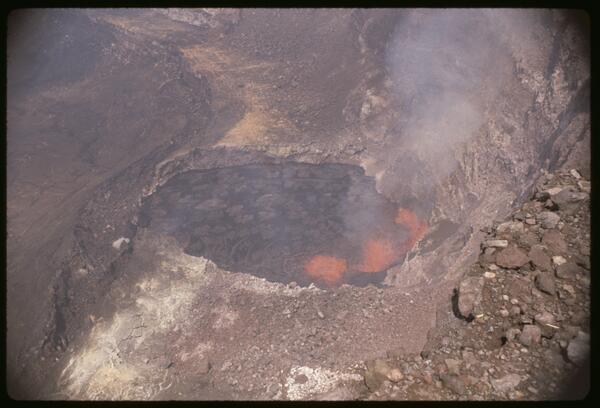
The 1961 fissure eruption near Nāpau Crater was a short-lived but notable event on Kīlauea’s East Rift Zone, occurring in late September. Over two days, lava erupted from vents along a 13-mile stretch, producing 13 small flows and lava fountains that reached heights of up to 400 feet, with the largest flows occurring near Pāhoa.
Images
Images related to natural hazards.
The 1961 fissure eruption near Nāpau Crater was a short-lived but notable event on Kīlauea’s East Rift Zone, occurring in late September. Over two days, lava erupted from vents along a 13-mile stretch, producing 13 small flows and lava fountains that reached heights of up to 400 feet, with the largest flows occurring near Pāhoa.
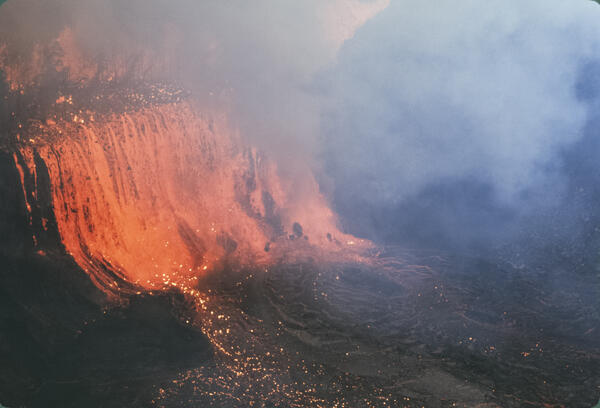
The July 1961 eruption at Halemaʻumaʻu was the third summit eruption of that year, continuing the pattern of vigorous volcanic activity at Kīlauea. This event featured sustained lava fountaining and further infilling of the crater, building upon the changes initiated by the February and March eruptions.
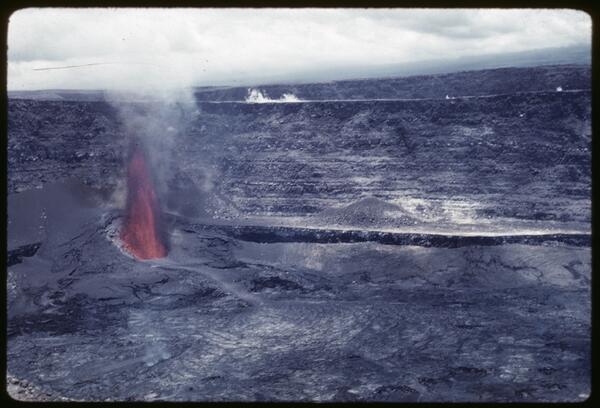
The March 1961 eruption at Halemaʻumaʻu was the second of three summit eruptions at Kīlauea that year, marked by renewed lava activity within the northeast collapse pit formed in February. This phase featured vigorous lava fountaining, crater floor uplift, and the gradual infilling of the pit, reflecting continued magma supply and dynamic summit processes.
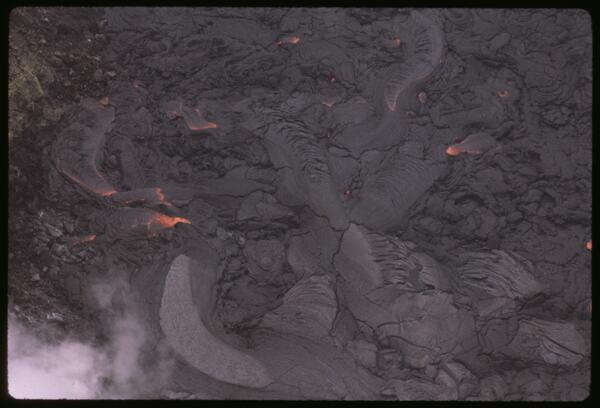
The February 1961 summit eruption of Kīlauea marked the beginning of a year of intense volcanic activity, characterized by three distinct summit eruptive phases.
Aftermath of the 1960 Chilean tsunami in Hilo, Hawaii, where the tsunami caused 61 deaths.
‘A‘ā flow has just reached the barrier built between KUKi‘i and Kapoho
‘A‘ā flow has just reached the barrier built between KUKi‘i and Kapoho‘A‘ā flow has just reached the barrier built between KUKi‘i and Kapoho.
‘A‘ā flow has just reached the barrier built between KUKi‘i and Kapoho
‘A‘ā flow has just reached the barrier built between KUKi‘i and Kapoho‘A‘ā flow has just reached the barrier built between KUKi‘i and Kapoho.
The leaves of these papaya plants were abraded and sheared off by f...
The leaves of these papaya plants were abraded and sheared off by f...The high front of an advancing ‘A‘ā flow forms the ridge between the papaya orchard and the fountain. The defoliation had occurred by January 16, 1960.
The leaves of these papaya plants were abraded and sheared off by f...
The leaves of these papaya plants were abraded and sheared off by f...The high front of an advancing ‘A‘ā flow forms the ridge between the papaya orchard and the fountain. The defoliation had occurred by January 16, 1960.
House belonging to Hongo family set fire by advancing ‘A‘ā in the f...
House belonging to Hongo family set fire by advancing ‘A‘ā in the f...House belonging to the Hongo family set fire by advancing ‘A‘ā in the foreground, 1800 January 16, 1960. Note fountain behind tree near right edge of view.
House belonging to Hongo family set fire by advancing ‘A‘ā in the f...
House belonging to Hongo family set fire by advancing ‘A‘ā in the f...House belonging to the Hongo family set fire by advancing ‘A‘ā in the foreground, 1800 January 16, 1960. Note fountain behind tree near right edge of view.
Fountain and cone at vent B as seen from Pu‘u Kea, just SW of Kapoh...
Fountain and cone at vent B as seen from Pu‘u Kea, just SW of Kapoh...A river of ‘A‘ā is pouring from the far side of the cone and moving to the right, hemmed in by the scarp along the Koa‘e fault, visible between the fountain and the right edge of the photo.
Fountain and cone at vent B as seen from Pu‘u Kea, just SW of Kapoh...
Fountain and cone at vent B as seen from Pu‘u Kea, just SW of Kapoh...A river of ‘A‘ā is pouring from the far side of the cone and moving to the right, hemmed in by the scarp along the Koa‘e fault, visible between the fountain and the right edge of the photo.
Opening stages of KAPOHO eruption, Jan 14, 1960. Violent steam emis...
Opening stages of KAPOHO eruption, Jan 14, 1960. Violent steam emis...Incandescent lava particles can be seen above the fountain between the light and dark steam clouds. Photo looking uprift toward area of vent C, taken at 1000 January 14 by D.H. Richter. Left-hand lava fountain may be vent B.
Opening stages of KAPOHO eruption, Jan 14, 1960. Violent steam emis...
Opening stages of KAPOHO eruption, Jan 14, 1960. Violent steam emis...Incandescent lava particles can be seen above the fountain between the light and dark steam clouds. Photo looking uprift toward area of vent C, taken at 1000 January 14 by D.H. Richter. Left-hand lava fountain may be vent B.
Displacement of Kapoho fault scarp, Kīlauea, Hawai‘i, caused by mag...
Displacement of Kapoho fault scarp, Kīlauea, Hawai‘i, caused by mag...View westward along the Kapoho fault scarp in the village of Kapoho following a swarm of earthquakes in the area. The ground cracking was caused by subsidence of a graben (down-dropped block) that spanned the community.
Displacement of Kapoho fault scarp, Kīlauea, Hawai‘i, caused by mag...
Displacement of Kapoho fault scarp, Kīlauea, Hawai‘i, caused by mag...View westward along the Kapoho fault scarp in the village of Kapoho following a swarm of earthquakes in the area. The ground cracking was caused by subsidence of a graben (down-dropped block) that spanned the community.
Ground fractures through Kapoho Village, Hawai‘i, caused by magma m...
Ground fractures through Kapoho Village, Hawai‘i, caused by magma m...Fractures along the Kapoho fault hours after an earthquake swarm began in the area early on January 13, 1960. Residents in and near Kapoho village reported feeling the earthquakes, and HVO scientists on the scene described "the ground beneath our feet in almost constant motion" and hearing "low-pitched booming sounds" accompanying the largest earthquakes.
Ground fractures through Kapoho Village, Hawai‘i, caused by magma m...
Ground fractures through Kapoho Village, Hawai‘i, caused by magma m...Fractures along the Kapoho fault hours after an earthquake swarm began in the area early on January 13, 1960. Residents in and near Kapoho village reported feeling the earthquakes, and HVO scientists on the scene described "the ground beneath our feet in almost constant motion" and hearing "low-pitched booming sounds" accompanying the largest earthquakes.
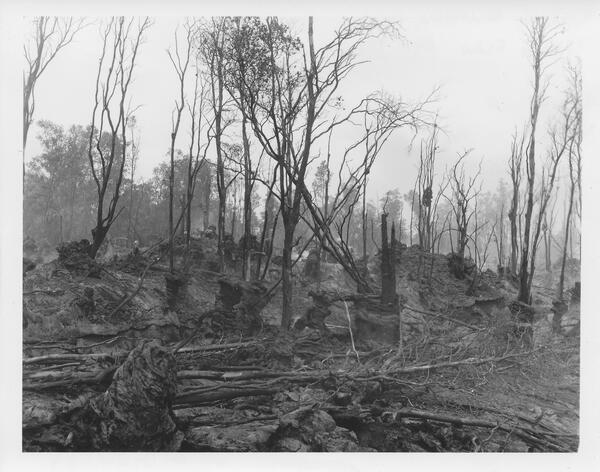
Coconut palms were stripped by heavy tephra fall during the Kapoho ...
Coconut palms were stripped by heavy tephra fall during the Kapoho ...Coconut palms were stripped by heavy tephra fall during the Kapoho eruption. These lie north of the fissure with volcanic bomb craters indenting the tephra on the flank of the new cone, Pu‘u Laimana.
Coconut palms were stripped by heavy tephra fall during the Kapoho ...
Coconut palms were stripped by heavy tephra fall during the Kapoho ...Coconut palms were stripped by heavy tephra fall during the Kapoho eruption. These lie north of the fissure with volcanic bomb craters indenting the tephra on the flank of the new cone, Pu‘u Laimana.
Earthquake damage from 1959 Hebgen Lake event in Yellowstone Plateau
Earthquake damage from 1959 Hebgen Lake event in Yellowstone PlateauThis house fell into Hebgen Lake during the 1959 earthquake and floated along the shore until it came to rest here. The owner of the house, then-70-year-old Mrs. Grace Miller, escaped only after kicking out her front door and leaping a 5-foot-wide ground crack as her house dropped into the lake.
Earthquake damage from 1959 Hebgen Lake event in Yellowstone Plateau
Earthquake damage from 1959 Hebgen Lake event in Yellowstone PlateauThis house fell into Hebgen Lake during the 1959 earthquake and floated along the shore until it came to rest here. The owner of the house, then-70-year-old Mrs. Grace Miller, escaped only after kicking out her front door and leaping a 5-foot-wide ground crack as her house dropped into the lake.
Lava fountain in early morning, Kīlauea Iki, Kīlauea, Hawai‘i
Lava fountain in early morning, Kīlauea Iki, Kīlauea, Hawai‘iGreat quantities of lava pour from the base of a 480-m-tall (1,575 ft) fountain about 65 minutes after the start of episode 16. Lava discharge at this time was about 1.3 million cubic meters per hour (1.7 million cubic yards), which sent lava over the entire lake by 4:05 a.m.
Lava fountain in early morning, Kīlauea Iki, Kīlauea, Hawai‘i
Lava fountain in early morning, Kīlauea Iki, Kīlauea, Hawai‘iGreat quantities of lava pour from the base of a 480-m-tall (1,575 ft) fountain about 65 minutes after the start of episode 16. Lava discharge at this time was about 1.3 million cubic meters per hour (1.7 million cubic yards), which sent lava over the entire lake by 4:05 a.m.
Lava drains back into vent after final episode of lava fountaining,...
Lava drains back into vent after final episode of lava fountaining,...Lava drains back into the vent about 70 minutes after the 16th episode ended. This episode covered the entire lava lake with new lava; only part of the smaller west crater is visible in this view of the vent area. As the lava poured into the vent, large sections of the dark lake crust were pulled apart by the differential movement of the molten lava below.
Lava drains back into vent after final episode of lava fountaining,...
Lava drains back into vent after final episode of lava fountaining,...Lava drains back into the vent about 70 minutes after the 16th episode ended. This episode covered the entire lava lake with new lava; only part of the smaller west crater is visible in this view of the vent area. As the lava poured into the vent, large sections of the dark lake crust were pulled apart by the differential movement of the molten lava below.
Lava fountain erupts from the base of Pu‘u Pua‘i cone
Lava fountain erupts from the base of Pu‘u Pua‘i conePhoto taken at 7:00am from Byron Ledge.
Lava fountain erupts from the base of Pu‘u Pua‘i cone
Lava fountain erupts from the base of Pu‘u Pua‘i conePhoto taken at 7:00am from Byron Ledge.
A glowing pit crater from the air on Mar. 21, 1955.
A glowing pit crater from the air on Mar. 21, 1955.By March 20th activity near the Nii farm on Kalapana road had ended. As magma drained from the area an explosion opened a new pit crater directly across the road from the home of Mr. Nii. This was the first time that HVO scientists had opportunity to document the formation of pit crater.
A glowing pit crater from the air on Mar. 21, 1955.
A glowing pit crater from the air on Mar. 21, 1955.By March 20th activity near the Nii farm on Kalapana road had ended. As magma drained from the area an explosion opened a new pit crater directly across the road from the home of Mr. Nii. This was the first time that HVO scientists had opportunity to document the formation of pit crater.
Iilewa Fountain #1 from the air looking north on Mar. 21, 1955.
Iilewa Fountain #1 from the air looking north on Mar. 21, 1955.On March 16th, a small fountain opened near Iilewa Crater, west of the Pahoa-Kalapana Road. By March 20th fountains near Iilewa had increased shooting to heights of 700 feet sending lava flows downslope toward Iwasaki Camp.
Iilewa Fountain #1 from the air looking north on Mar. 21, 1955.
Iilewa Fountain #1 from the air looking north on Mar. 21, 1955.On March 16th, a small fountain opened near Iilewa Crater, west of the Pahoa-Kalapana Road. By March 20th fountains near Iilewa had increased shooting to heights of 700 feet sending lava flows downslope toward Iwasaki Camp.
Spatter cone and lava on Pahoa-Kalapana road. Mar. 14, 1955.
Spatter cone and lava on Pahoa-Kalapana road. Mar. 14, 1955.This image shows the spatter cone 16 hours after lava first appeared in the fissure. The cone ultimately grew to a height of 75 feet and became a popular tourist attraction.
Spatter cone and lava on Pahoa-Kalapana road. Mar. 14, 1955.
Spatter cone and lava on Pahoa-Kalapana road. Mar. 14, 1955.This image shows the spatter cone 16 hours after lava first appeared in the fissure. The cone ultimately grew to a height of 75 feet and became a popular tourist attraction.
On March 4th fountains up slope coalesced into a large 'a'? flow which was named the Kii Flow.