



Although large streamgage structures are no longer necessary, the USGS still uses some of them to contain modern streamgage equipment.
Images
Explore water-related photography, imagery, and illustrations.
Filter Total Items: 2609

USGS Streamgage in Menard, Texas
Although large streamgage structures are no longer necessary, the USGS still uses some of them to contain modern streamgage equipment.
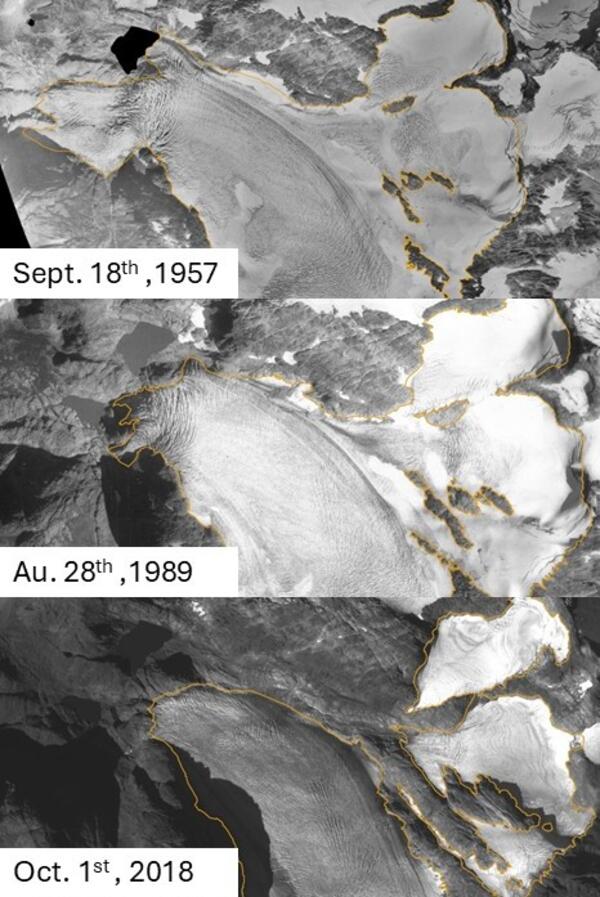
Lemon Creek Glacier - glacier disconnection
Time series imagery (1957, 1989, 2018) shows the progressive disconnection of tributary branches from Lemon Creek Glacier. In each panel, the glacier extent is outlined in orange. Over time, thinning and retreat isolate formerly connected accumulation areas, reducing ice flux into the main trunk.
Time series imagery (1957, 1989, 2018) shows the progressive disconnection of tributary branches from Lemon Creek Glacier. In each panel, the glacier extent is outlined in orange. Over time, thinning and retreat isolate formerly connected accumulation areas, reducing ice flux into the main trunk.

Artesian Well Investigations
Artesian well investigations in South Dakota (circa-July 1957).
Artesian well investigations in South Dakota (circa-July 1957).

Artesian Well Investigations
Artesian well investigations in South Dakota (circa 1956-62).
Artesian well investigations in South Dakota (circa 1956-62).

USGS station 081090 Brazos River near Bryan, Texas
USGS station 081090 Brazos River near Bryan, TexasU.S. Geological Survey streamflow-gaging station 08109000 Brazos River near Bryan, Texas, looking upstream from left bank, February 5, 1954.
SIR 2009–5174
USGS station 081090 Brazos River near Bryan, Texas
USGS station 081090 Brazos River near Bryan, TexasU.S. Geological Survey streamflow-gaging station 08109000 Brazos River near Bryan, Texas, looking upstream from left bank, February 5, 1954.
SIR 2009–5174

USGS station 08110500 Navasota Riv. near Easterly, Tex.
USGS station 08110500 Navasota Riv. near Easterly, Tex.U.S. Geological Survey streamflow-gaging station 08110500 Navasota River near Easterly, Texas, looking downstream from left bank, December 5, 1941.
SIR 2009–5174
USGS station 08110500 Navasota Riv. near Easterly, Tex.
USGS station 08110500 Navasota Riv. near Easterly, Tex.U.S. Geological Survey streamflow-gaging station 08110500 Navasota River near Easterly, Texas, looking downstream from left bank, December 5, 1941.
SIR 2009–5174

USGS station 08110500 Navasota Riv. near Easterly, Tex.
USGS station 08110500 Navasota Riv. near Easterly, Tex.U.S. Geological Survey streamflow-gaging station 08110500 Navasota River near Easterly, Texas, looking upstream, June 7, 1934.
SIR 2009–5174
USGS station 08110500 Navasota Riv. near Easterly, Tex.
USGS station 08110500 Navasota Riv. near Easterly, Tex.U.S. Geological Survey streamflow-gaging station 08110500 Navasota River near Easterly, Texas, looking upstream, June 7, 1934.
SIR 2009–5174

Lees Ferry on the Colorado River, Arizona, 1923
September 21, 1923, 9:00 a.m. --- Colorado River at Lees Ferry. From right bank on line with Klohr's house and gage house. Old "Dugway" or inclined gage shows to left of gage house. Gage height 11.05', discharge 27,000 cfs. Lens 16, time =1/25, camera supported. Photo by G.C. Stevens of the USGS. Source: 1921-1937 Surface Water Records File, Colorado R.
September 21, 1923, 9:00 a.m. --- Colorado River at Lees Ferry. From right bank on line with Klohr's house and gage house. Old "Dugway" or inclined gage shows to left of gage house. Gage height 11.05', discharge 27,000 cfs. Lens 16, time =1/25, camera supported. Photo by G.C. Stevens of the USGS. Source: 1921-1937 Surface Water Records File, Colorado R.
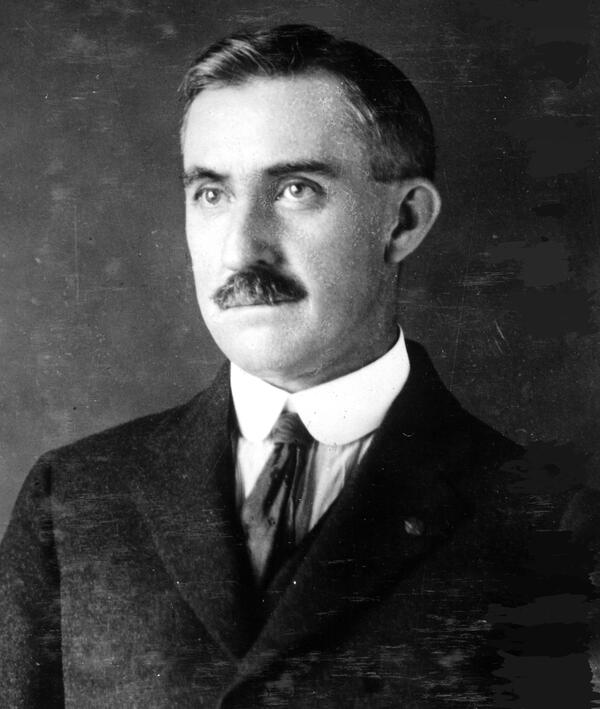
Oscar Edward Meinzer, First Chief, USGS Groundwater Resources. Circa 1916.
Oscar Edward Meinzer, First Chief, USGS Groundwater Resources. Circa 1916.Oscar Edward Meinzer, First Chief, Groundwater Resources. He was an early or first scientist to recognize the elasticity of soils, and artesian wells, and its importance, to measuring water resources. circa 1916.
Oscar Edward Meinzer, First Chief, USGS Groundwater Resources. Circa 1916.
Oscar Edward Meinzer, First Chief, USGS Groundwater Resources. Circa 1916.Oscar Edward Meinzer, First Chief, Groundwater Resources. He was an early or first scientist to recognize the elasticity of soils, and artesian wells, and its importance, to measuring water resources. circa 1916.

Streamgaging cableway, Embudo, New Mexico
Hydrographer taking a cableway streamflow measurement at the first USGS streamgage at Embudo, New Mexico, established in 1889.
Hydrographer taking a cableway streamflow measurement at the first USGS streamgage at Embudo, New Mexico, established in 1889.

Embudo Student Hydrographers
Embudo Student Hydrographers

USGS personnel at the Embudo Station, New Mexico
USGS prersonnel at the Embudo Station, New Mexico. Embudo was selected as the site of the first USGS streamgaging station in 1889 because of the need for systematic water resource assessments of western states as it not only offered a favorable climate and easy rail access, but qualified for congressional funding tapped specifically for the “arid West.”
USGS prersonnel at the Embudo Station, New Mexico. Embudo was selected as the site of the first USGS streamgaging station in 1889 because of the need for systematic water resource assessments of western states as it not only offered a favorable climate and easy rail access, but qualified for congressional funding tapped specifically for the “arid West.”

USGS staff verify measurments taken on the San Saba River in Texas
USGS staff verify measurments taken on the San Saba River in TexasUSGS staff checking the streamgage equipment on the San Saba River in Texas.
USGS staff verify measurments taken on the San Saba River in Texas
USGS staff verify measurments taken on the San Saba River in TexasUSGS staff checking the streamgage equipment on the San Saba River in Texas.

A hydrologic technician measures streamflow in the St. Joe River at Red Ives Ranger Station in northern Idaho.
A hydrologic technician measures streamflow in the St. Joe River at Red Ives Ranger Station in northern Idaho.A hydrologic technician from the USGS Idaho Water Science Center measures streamflow in the St. Joe River at Red Ives Ranger Station in northern Idaho. The USGS is collecting data at hundreds of sites on rivers and streams in six western states to document the 2015 drought.
A hydrologic technician measures streamflow in the St. Joe River at Red Ives Ranger Station in northern Idaho.
A hydrologic technician measures streamflow in the St. Joe River at Red Ives Ranger Station in northern Idaho.A hydrologic technician from the USGS Idaho Water Science Center measures streamflow in the St. Joe River at Red Ives Ranger Station in northern Idaho. The USGS is collecting data at hundreds of sites on rivers and streams in six western states to document the 2015 drought.

USGS Scientist at Work
Brent Knights and Jon Vallazza conduct a river productivity study aboard the E.D. Cope, Upper Mississippi River System.
Brent Knights and Jon Vallazza conduct a river productivity study aboard the E.D. Cope, Upper Mississippi River System.

Geo-locating a Well
GPS unit on well head at a private drinking water well.
GPS unit on well head at a private drinking water well.

Determining Alkalinity of a Sample in the Field
Alk titration in the field as part of NAWQA studies.
Alk titration in the field as part of NAWQA studies.

Spiny Dogfish Catch
USGS employee Lisa Gee holds a spiny dogfish that she caught while hook and line sampling.
USGS employee Lisa Gee holds a spiny dogfish that she caught while hook and line sampling.

Potomac River
Stream flowing into the Potomac River in Whites Ferry, Virginia.
Stream flowing into the Potomac River in Whites Ferry, Virginia.

Grand Forks Flooding
2009 Red River flooding in Grand Forks, North Dakota
2009 Red River flooding in Grand Forks, North Dakota

What's in My Water?
This cyanobacteria has radiating filaments and basal heterocysts. Green is DNA stain.
This cyanobacteria has radiating filaments and basal heterocysts. Green is DNA stain.