



On October 17, 1989, at 5:04 pm a magnitude M6.9 earthquake struck near Loma Prieta, California. It was a tragic reminder of the destructive power of earthquakes. However, it was also a watershed moment in seismic research. 30 years later, we revisit the earthquake through the eyes of the scientists who experienced it. And studied it. These are their stories.
Videos
Explore a diverse collection of engaging videos showcasing the latest research, discoveries, and educational content from the U.S. Geological Survey. Dive into the fascinating world of geology, hydrology, ecology, and natural hazards as we bring science to life. Stay informed and inspired by our visual storytelling that highlights the vital work of USGS scientists and their impact on the planet.
Filter Total Items: 2905

October 17, 1989 (Part 2)
On October 17, 1989, at 5:04 pm a magnitude M6.9 earthquake struck near Loma Prieta, California. It was a tragic reminder of the destructive power of earthquakes. However, it was also a watershed moment in seismic research. 30 years later, we revisit the earthquake through the eyes of the scientists who experienced it. And studied it. These are their stories.

October 17, 1989 (Part 3)
On October 17, 1989, at 5:04 pm a magnitude M6.9 earthquake struck near Loma Prieta, California. It was a tragic reminder of the destructive power of earthquakes. However, it was also a watershed moment in seismic research. 30 years later, we revisit the earthquake through the eyes of the scientists who experienced it. And studied it.
On October 17, 1989, at 5:04 pm a magnitude M6.9 earthquake struck near Loma Prieta, California. It was a tragic reminder of the destructive power of earthquakes. However, it was also a watershed moment in seismic research. 30 years later, we revisit the earthquake through the eyes of the scientists who experienced it. And studied it.

October 17, 1989 (Part 4)
On October 17, 1989, at 5:04 pm a magnitude M6.9 earthquake struck near Loma Prieta, California. It was a tragic reminder of the destructive power of earthquakes. However, it was also a watershed moment in seismic research. 30 years later, we revisit the earthquake through the eyes of the scientists who experienced it. And studied it. These are their stories.
On October 17, 1989, at 5:04 pm a magnitude M6.9 earthquake struck near Loma Prieta, California. It was a tragic reminder of the destructive power of earthquakes. However, it was also a watershed moment in seismic research. 30 years later, we revisit the earthquake through the eyes of the scientists who experienced it. And studied it. These are their stories.

PubTalk 10/2019 — Remembering Loma Prieta Earthquake 30 Years Later
PubTalk 10/2019 — Remembering Loma Prieta Earthquake 30 Years LaterRemembering the Loma Prieta Earthquake 30 Years Late: Looking back to see how far we've come.
By: Tom Holzer, David Schwartz, Jessica Murray, and Annemarie Baltay
PubTalk 10/2019 — Remembering Loma Prieta Earthquake 30 Years Later
PubTalk 10/2019 — Remembering Loma Prieta Earthquake 30 Years LaterRemembering the Loma Prieta Earthquake 30 Years Late: Looking back to see how far we've come.
By: Tom Holzer, David Schwartz, Jessica Murray, and Annemarie Baltay

Yellowstone Volcano Observatory Monthly Update: October 1, 2019
Yellowstone Volcano Observatory Monthly Update: October 1, 2019Mike Poland, Scientist-in-Charge of the Yellowstone Volcano Observatory, describes activity at Yellowstone during the month of September 2019.
Yellowstone Volcano Observatory Monthly Update: October 1, 2019
Yellowstone Volcano Observatory Monthly Update: October 1, 2019Mike Poland, Scientist-in-Charge of the Yellowstone Volcano Observatory, describes activity at Yellowstone during the month of September 2019.

Prototype Earthquake Early Warning System (Interview)
Prototype Earthquake Early Warning System (Interview)Retired seismologist David Oppenheimer reflects on the first prototype earthquake early warning system used during the 1989 Loma Prieta earthquake. Scientists deployed an analog system to notify first responders of impending earthquake activity as they worked on rescue efforts at the Cypress Viaduct collapse in Oakland, CA.
Prototype Earthquake Early Warning System (Interview)
Prototype Earthquake Early Warning System (Interview)Retired seismologist David Oppenheimer reflects on the first prototype earthquake early warning system used during the 1989 Loma Prieta earthquake. Scientists deployed an analog system to notify first responders of impending earthquake activity as they worked on rescue efforts at the Cypress Viaduct collapse in Oakland, CA.

Water appears in Halemaʻumaʻu - Kīlauea Volcano
USGS Hawaiian Volcano Observatory scientists Matt Patrick and Jim Kauahikaua talk about the water that appeared at the bottom of Halemaʻumaʻu, a crater at the summit of Kīlauea Volcano, in July 2019 and continues to rise today. They address why it appeared, how it’s monitored, and its potential hazards.
USGS Hawaiian Volcano Observatory scientists Matt Patrick and Jim Kauahikaua talk about the water that appeared at the bottom of Halemaʻumaʻu, a crater at the summit of Kīlauea Volcano, in July 2019 and continues to rise today. They address why it appeared, how it’s monitored, and its potential hazards.

PubTalk 09/2019 — Bats in the West
Title: Bats in the West: Discoveries, Questions, and Future Research
By Gabriel A. Reyes, USGS Biologist
Title: Bats in the West: Discoveries, Questions, and Future Research
By Gabriel A. Reyes, USGS Biologist

Sea-Level Rise, El Niño, and Storm Effects on Coastal Tidal Marshes
Sea-Level Rise, El Niño, and Storm Effects on Coastal Tidal MarshesTidal marshes exist as a transitional environment between the land and sea, and provides habitat to fish and wildlife, protects human developments from coastal flooding, and stores carbon at high density, among other important ecosystem services.
Sea-Level Rise, El Niño, and Storm Effects on Coastal Tidal Marshes
Sea-Level Rise, El Niño, and Storm Effects on Coastal Tidal MarshesTidal marshes exist as a transitional environment between the land and sea, and provides habitat to fish and wildlife, protects human developments from coastal flooding, and stores carbon at high density, among other important ecosystem services.

Timelapse view of the Kīlauea summit water pond
This timelapse video covers about 30 minutes of activity at the water pond in Halema‘uma‘u at the summit of Kīlauea. Water appears to be flowing into the pond from several locations, including the southern boundary (right side in this image). A small amount of material is also seen floating on the surface at the eastern end of the pond (top of image).
This timelapse video covers about 30 minutes of activity at the water pond in Halema‘uma‘u at the summit of Kīlauea. Water appears to be flowing into the pond from several locations, including the southern boundary (right side in this image). A small amount of material is also seen floating on the surface at the eastern end of the pond (top of image).

Video of circulation in the Halema‘uma‘u water pond
Video of circulation in the Halema‘uma‘u water pondThis time-lapse video shows circulation in the water pond in Halema‘uma‘u over a period of about 25 minutes. There appears to be an influx of water along the southern (right) shoreline. A broader eastward flow of water (toward top of image) is evident. The video is shown twice. USGS video.
Video of circulation in the Halema‘uma‘u water pond
Video of circulation in the Halema‘uma‘u water pondThis time-lapse video shows circulation in the water pond in Halema‘uma‘u over a period of about 25 minutes. There appears to be an influx of water along the southern (right) shoreline. A broader eastward flow of water (toward top of image) is evident. The video is shown twice. USGS video.

Two views of the Halema‘uma‘u water pond
Views of the water pond in Halema‘uma‘u on Friday, September 6, and Monday, September 9 are shown in this video. Ripples are evident on the pond, presumably due to wind moving over the water surface. No significant changes in the pond were observed over the weekend, and the water level continues to slowly rise. USGS video by M. Patrick.
Views of the water pond in Halema‘uma‘u on Friday, September 6, and Monday, September 9 are shown in this video. Ripples are evident on the pond, presumably due to wind moving over the water surface. No significant changes in the pond were observed over the weekend, and the water level continues to slowly rise. USGS video by M. Patrick.
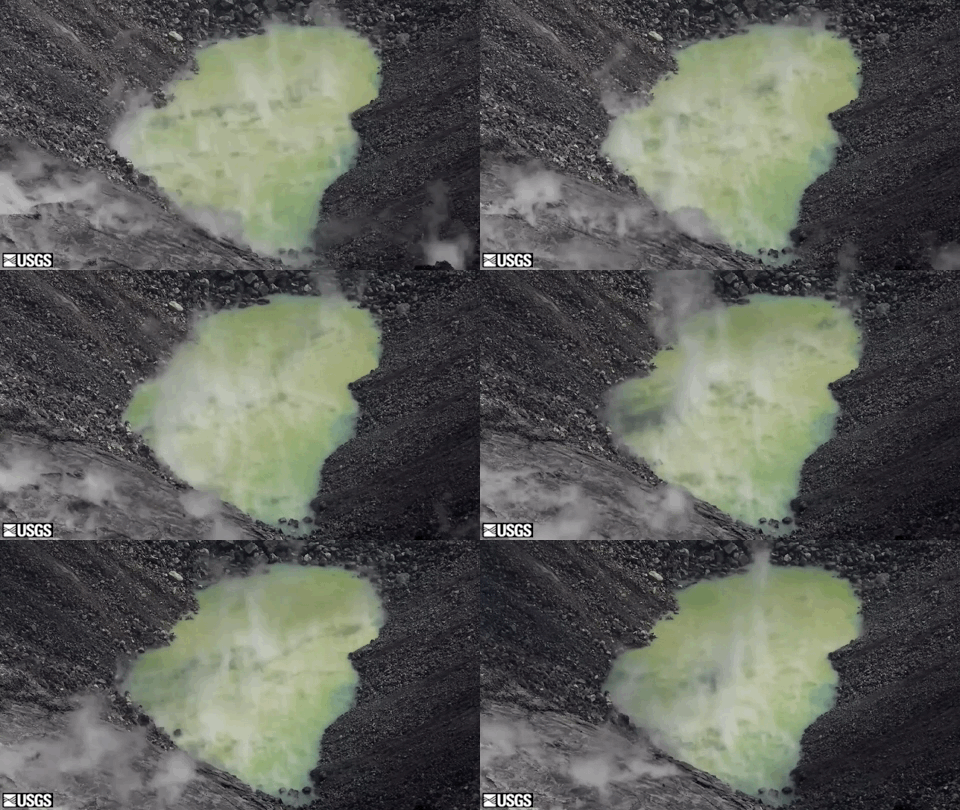
Changing activity on the surface of the Halema‘uma‘u water pond
Changing activity on the surface of the Halema‘uma‘u water pondShown at 30x speed, this video highlights changing activity on the surface of the water pond. Steam wafting above the pond shifts in the wind, and circulation of the water is evident in areas of sharp color boundaries. USGS video by M. Patrick, 09-17-2019.
Changing activity on the surface of the Halema‘uma‘u water pond
Changing activity on the surface of the Halema‘uma‘u water pondShown at 30x speed, this video highlights changing activity on the surface of the water pond. Steam wafting above the pond shifts in the wind, and circulation of the water is evident in areas of sharp color boundaries. USGS video by M. Patrick, 09-17-2019.

Image of the Week - Unplanted Acres in South Dakota
Image of the Week - Unplanted Acres in South DakotaAbnormally high spring rainfall and subsequent flooding in the Midwest had a season-long impact on cropland production. In these Landsat images of South Dakota growing vegetation is shown as green and unplanted areas appear pink. The difference between 2018 and 2019 is striking.
Image of the Week - Unplanted Acres in South Dakota
Image of the Week - Unplanted Acres in South DakotaAbnormally high spring rainfall and subsequent flooding in the Midwest had a season-long impact on cropland production. In these Landsat images of South Dakota growing vegetation is shown as green and unplanted areas appear pink. The difference between 2018 and 2019 is striking.

ADCP Training Time Lapse
This video was taken during the SW1321 training course, Streamflow Measurements Using ADCPs. On this field day, students from all over the USGS used their newfound knowledge to collect ADCP data in Windham, Maine.
This video was taken during the SW1321 training course, Streamflow Measurements Using ADCPs. On this field day, students from all over the USGS used their newfound knowledge to collect ADCP data in Windham, Maine.

Image of the Week - Melting in Greenland
In July, satellite imagery from Landsat 8 captured a major melting event in Greenland.
In July, satellite imagery from Landsat 8 captured a major melting event in Greenland.

USA National Phenology Network — Partner to Advance Science Decisions
USA National Phenology Network — Partner to Advance Science DecisionsPhenology – the timing of life cycle events in plants and animals and their relationship to climate - is a key component of life on earth. This video introduces the USA National Phenology Network (www.usanpn.org) - a USGS funded, national network that exists to collect, store, and share information about phenology.
USA National Phenology Network — Partner to Advance Science Decisions
USA National Phenology Network — Partner to Advance Science DecisionsPhenology – the timing of life cycle events in plants and animals and their relationship to climate - is a key component of life on earth. This video introduces the USA National Phenology Network (www.usanpn.org) - a USGS funded, national network that exists to collect, store, and share information about phenology.

USA National Phenology Network — Partner to Advance Science Decisions
USA National Phenology Network — Partner to Advance Science DecisionsPhenology – the timing of life cycle events in plants and animals and their relationship to climate - is a key component of life on earth. This video introduces the USA National Phenology Network (www.usanpn.org) - a USGS funded, national network that exists to collect, store, and share information about phenology.
USA National Phenology Network — Partner to Advance Science Decisions
USA National Phenology Network — Partner to Advance Science DecisionsPhenology – the timing of life cycle events in plants and animals and their relationship to climate - is a key component of life on earth. This video introduces the USA National Phenology Network (www.usanpn.org) - a USGS funded, national network that exists to collect, store, and share information about phenology.

Yellowstone Volcano Observatory Monthly Update: September 3, 2019
Yellowstone Volcano Observatory Monthly Update: September 3, 2019Mike Poland, Scientist-in-Charge of the Yellowstone Volcano Observatory, describes activity at Yellowstone during the month of August 2019.
Yellowstone Volcano Observatory Monthly Update: September 3, 2019
Yellowstone Volcano Observatory Monthly Update: September 3, 2019Mike Poland, Scientist-in-Charge of the Yellowstone Volcano Observatory, describes activity at Yellowstone during the month of August 2019.

All Aboard for the Cape Cod Bay Research Cruise
Setting sail from Woods Hole, MA to Cape Cod Bay aboard the R/V Warren Jr. USGS scientific staff will define the geologic framework of Cape Cod Bay to aid the state of Massachusetts in management and assessment of resources and hazards.
Setting sail from Woods Hole, MA to Cape Cod Bay aboard the R/V Warren Jr. USGS scientific staff will define the geologic framework of Cape Cod Bay to aid the state of Massachusetts in management and assessment of resources and hazards.

Powell150 1869-2019: John Wesley Powell's Legacy of USGS Exploration
Powell150 1869-2019: John Wesley Powell's Legacy of USGS ExplorationIn 2019, the USGS Youth & Education in Science (YES) team marked the 150th anniversary of the first John Wesley Powell expedition down ~1000 miles of the Green & Colorado rivers with a national-scale educational project known as "Powell150." Educational resources about the science along the rivers and a social media campaign around the theme of exploration w
Powell150 1869-2019: John Wesley Powell's Legacy of USGS Exploration
Powell150 1869-2019: John Wesley Powell's Legacy of USGS ExplorationIn 2019, the USGS Youth & Education in Science (YES) team marked the 150th anniversary of the first John Wesley Powell expedition down ~1000 miles of the Green & Colorado rivers with a national-scale educational project known as "Powell150." Educational resources about the science along the rivers and a social media campaign around the theme of exploration w