U.S. flag

An official website of the United States government

Multimedia

The USGS Volcano Observatories host videos, photos, web camera views, and sometimes podcasts to share visual and audio information about volcanic eruptions and volcanic processes. 

Images

Red, incandescent lava flows cover a large portion of a crater floor
Episode 43 of the ongoing Halema‘uma‘u eruption at Kīlauea summit

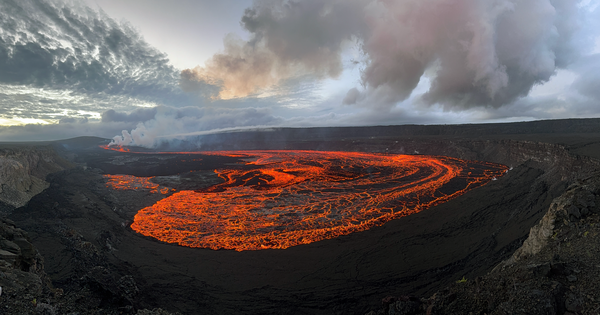
Episode 43 of the ongoing Halema‘uma‘u eruption at Kīlauea summit ended at 6:21 p.m. HST on March 10. About 15 minutes after the end of the episode, USGS scientists serviced a webcam near Keanakāko‘i on the southeast caldera rim. Active lava flows continued to slowly advance along the crater floor, and stand out here in the low lighting.
Episode 43 of the ongoing Halema‘uma‘u eruption at Kīlauea summit ended at 6:21 p.m. HST on March 10. About 15 minutes after the end of the episode, USGS scientists serviced a webcam near Keanakāko‘i on the southeast caldera rim. Active lava flows continued to slowly advance along the crater floor, and stand out here in the low lighting.

Lava fountains erupting in a crater
Episode 43 of the ongoing Kīlauea summit eruption

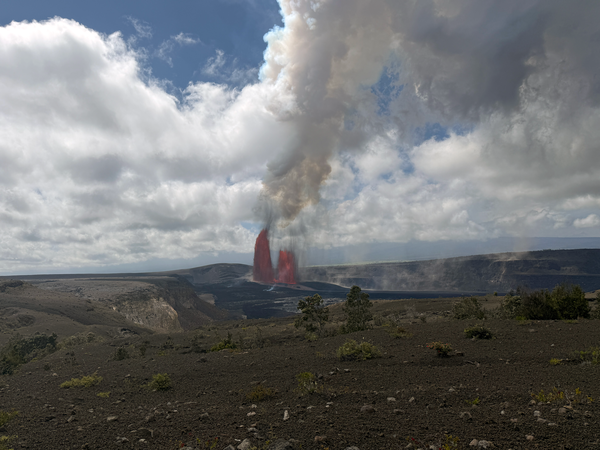
On March 10, 2026, lava fountains erupted from two main vents within Halema‘uma‘u crater. During the ongoing episodic Kīlauea summit eruption, which began on December 23, 2024. There have been 43 episodes so far. USGS photo taken by L. DeSmither from Keanakāko‘i.

On March 10, 2026, lava fountains erupted from two main vents within Halema‘uma‘u crater. During the ongoing episodic Kīlauea summit eruption, which began on December 23, 2024. There have been 43 episodes so far. USGS photo taken by L. DeSmither from Keanakāko‘i.

An incandescent red lava flow covers a large area of a crater floor
Episode 43 of the Kīlauea summit eruption

Episode 43, which began at 9:17 a.m. HST on March 10, erupted for just over 9 hours before pausing again at 6:21 p.m. This panoramic view of episode 43 lava flows on Halema‘uma‘u crater floor was taken a few minutes after the fountaining stopped. USGS photo taken by L. DeSmither near Keanakāko‘i on the southeast rim of the caldera.

Episode 43, which began at 9:17 a.m. HST on March 10, erupted for just over 9 hours before pausing again at 6:21 p.m. This panoramic view of episode 43 lava flows on Halema‘uma‘u crater floor was taken a few minutes after the fountaining stopped. USGS photo taken by L. DeSmither near Keanakāko‘i on the southeast rim of the caldera.

Large white plume of volcanic gas and steam rising from lava fountains in a crater
Episode 43 of the Kīlauea summit eruption

Episode 43 of the ongoing Kīlauea summit eruption occurred on March 10. Lava fountains from the north and south vents on the western side of Halema‘uma‘u crater floor produced a large eruption plume of volcanic gases and rock fragments (tephra).

Episode 43 of the ongoing Kīlauea summit eruption occurred on March 10. Lava fountains from the north and south vents on the western side of Halema‘uma‘u crater floor produced a large eruption plume of volcanic gases and rock fragments (tephra).

Two lava fountains erupt from vents on crater floor as scientist monitors in the foreground
Episode 43 of the Kīlauea summit eruption

A USGS scientist performs maintenance on an eruption monitoring camera during episode 43 of the ongoing Kīlauea summit eruption. Work within this area, which is closed to the public, is done with permission from Hawai‘i Volcanoes National Park. USGS photo taken by L. DeSmither on March 10, 2026. 

A USGS scientist performs maintenance on an eruption monitoring camera during episode 43 of the ongoing Kīlauea summit eruption. Work within this area, which is closed to the public, is done with permission from Hawai‘i Volcanoes National Park. USGS photo taken by L. DeSmither on March 10, 2026. 

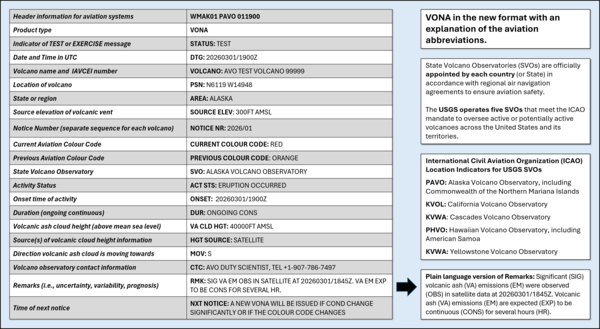
Gray and white striped table showing fields for the changes to the VONA format.
Example Volcano Observatory Notice for Aviation (VONA) in the 2026 ICAO‑aligned format.

Released in March 2026, the updated Volcano Observatory Notice for Aviation (VONA) format uses standardized aviation terminology to describe volcanic activity and potential ash hazards for pilots and aviation authorities. The updated VONA follows recommended practices from the International Civil Aviation Organization.

Released in March 2026, the updated Volcano Observatory Notice for Aviation (VONA) format uses standardized aviation terminology to describe volcanic activity and potential ash hazards for pilots and aviation authorities. The updated VONA follows recommended practices from the International Civil Aviation Organization.

Videos

Thumbnail image of a man standing outside holding up his hands and speaking in front of a forest Thumbnail image of a man standing outside holding up his hands and speaking in front of a forest
Measuring Moving Mountains (Yellowstone monthly update - February 2026)

Meet a friend of ours. This friend has been monitoring changes of the ground surface in Yellowstone for decades and is so good that it can detect movement of just a few millimeters in magnitude (just a fraction of an inch). The friend? A continuous GPS station!

Meet a friend of ours. This friend has been monitoring changes of the ground surface in Yellowstone for decades and is so good that it can detect movement of just a few millimeters in magnitude (just a fraction of an inch). The friend? A continuous GPS station!

Thumbnail image of a man speaking in front of a photo of a colorful hot spring Thumbnail image of a man speaking in front of a photo of a colorful hot spring
Top 5 Yellowstone geological stories of 2025 (Yellowstone monthly update - January 2026)

Happy New Year! Let's go back and take a look at the top five geologic stories for Yellowstone in 2025.

Number five: Rumors. It was a year of internet rumors, mostly related to animals fleeing the park, and none of which were true.

Thumbnail image of a man speaking in front of a desolate Yellowstone thermal basin Thumbnail image of a man speaking in front of a desolate Yellowstone thermal basin
Hawaii versus Yellowstone (Yellowstone monthly update - December 2025)

Just last week, Kīlauea put on another dramatic display of lava fountaining and flows within the caldera, during its 37th episode of this most recent eruption. It doesn't seem like Hawaii and Yellowstone have a lot in common, but actually, those two magmatic systems have a common cause.

Just last week, Kīlauea put on another dramatic display of lava fountaining and flows within the caldera, during its 37th episode of this most recent eruption. It doesn't seem like Hawaii and Yellowstone have a lot in common, but actually, those two magmatic systems have a common cause.

Thumbnail image of a man gesturing towards trees in the background Thumbnail image of a man gesturing towards trees in the background
Emergency fix at a Yellowstone monitoring site (Yellowstone Monthly Update October 2025)

The Yellowstone caldera is vast – 45 miles across by 30 miles wide. You could fit over 60 islands of Manhattan in this area. There are deep canyons, like the one on the Yellowstone River, that reveal a complex geologic history. And, forested landscapes and features remind us that this special place is ever-changing.

The Yellowstone caldera is vast – 45 miles across by 30 miles wide. You could fit over 60 islands of Manhattan in this area. There are deep canyons, like the one on the Yellowstone River, that reveal a complex geologic history. And, forested landscapes and features remind us that this special place is ever-changing.

Thumbnail image of a man with his arms in the air in a meadow with cliffs in the background Thumbnail image of a man with his arms in the air in a meadow with cliffs in the background
Lava flows in Yellowstone! (Yellowstone Monthly Update September 2025)

Picture a Yellowstone eruption. What comes to mind? It’s a huge explosion, right? Like the one that formed the caldera about 631,000 years ago. But the most common form of eruption in Yellowstone isn’t a huge explosion, it’s a lava flow.

Picture a Yellowstone eruption. What comes to mind? It’s a huge explosion, right? Like the one that formed the caldera about 631,000 years ago. But the most common form of eruption in Yellowstone isn’t a huge explosion, it’s a lava flow.

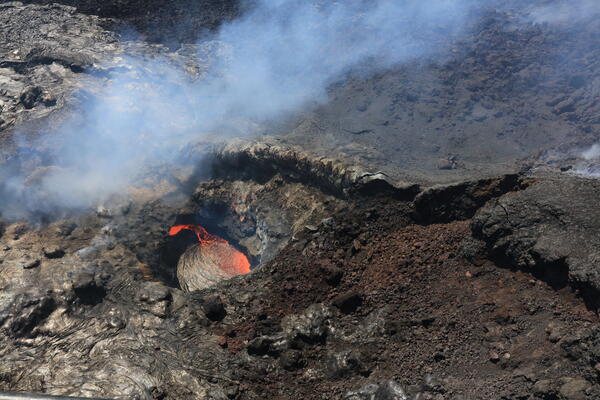
Color photograph of lava pond in volcanic vent Color photograph of lava pond in volcanic vent
August 5, 2025 — Lava flowing in the north vent

During a USGS Hawaiian Volcano Observatory helicopter overflight on the morning of August 5, geologists observed a lava pond within the north vent of the ongoing Kīlauea summit eruption. The pond was feeding a subterranean lava tube contained within the east side of the vent cone, toward the floor of Halema‘uma‘u crater.

During a USGS Hawaiian Volcano Observatory helicopter overflight on the morning of August 5, geologists observed a lava pond within the north vent of the ongoing Kīlauea summit eruption. The pond was feeding a subterranean lava tube contained within the east side of the vent cone, toward the floor of Halema‘uma‘u crater.

Audio

Kīlauea's Summit Vent Churns and Pops as Rocks Fall Into the Lava L...
Kīlauea's Summit Vent Churns and Pops as Rocks Fall Into Lava Lake
Lava lake activity from inside Halema`uma`u Crater
Kīlauea's Summit Vent Churns and Pops as Rocks Fall Into the Lava L...
Kīlauea's Summit Vent Churns and Pops as Rocks Fall Into Lava Lake
Lava lake activity from inside Halema`uma`u Crater

Sounds of lava lake activity within Kilauea Volcano's summit vent inside Halema`uma`u Crater on the afternoon of February 14, 2011. The continuous "crashing wave" noise is the sound of churning lava as gases are released from the lake surface, which is in nearly constant motion.

Sounds of lava lake activity within Kilauea Volcano's summit vent inside Halema`uma`u Crater on the afternoon of February 14, 2011. The continuous "crashing wave" noise is the sound of churning lava as gases are released from the lake surface, which is in nearly constant motion.

CoreFacts
CoreFacts Album Artwork
How far did the ash from Mount St. Helens travel?
CoreFacts
CoreFacts Album Artwork
How far did the ash from Mount St. Helens travel?

Welcome to CoreFacts, where we're always short on time and big on science. I'm Brian Campbell. Today's question is …

How far did the ash from Mount St. Helens travel?

Welcome to CoreFacts, where we're always short on time and big on science. I'm Brian Campbell. Today's question is …

How far did the ash from Mount St. Helens travel?

USGS CoreCast
USGS CoreCast Series
Dramatic Developments at Kilauea Volcano
USGS CoreCast
USGS CoreCast Series
Dramatic Developments at Kilauea Volcano

Kilauea Volcano in Hawaii has experienced its first explosive eruption in more than 80 years and is now spewing noxious gas at 10 times the normal rate. John Eichelberger, head of the USGS Volcano Hazards Program, fills us in on the situation.

Kilauea Volcano in Hawaii has experienced its first explosive eruption in more than 80 years and is now spewing noxious gas at 10 times the normal rate. John Eichelberger, head of the USGS Volcano Hazards Program, fills us in on the situation.

Webcams

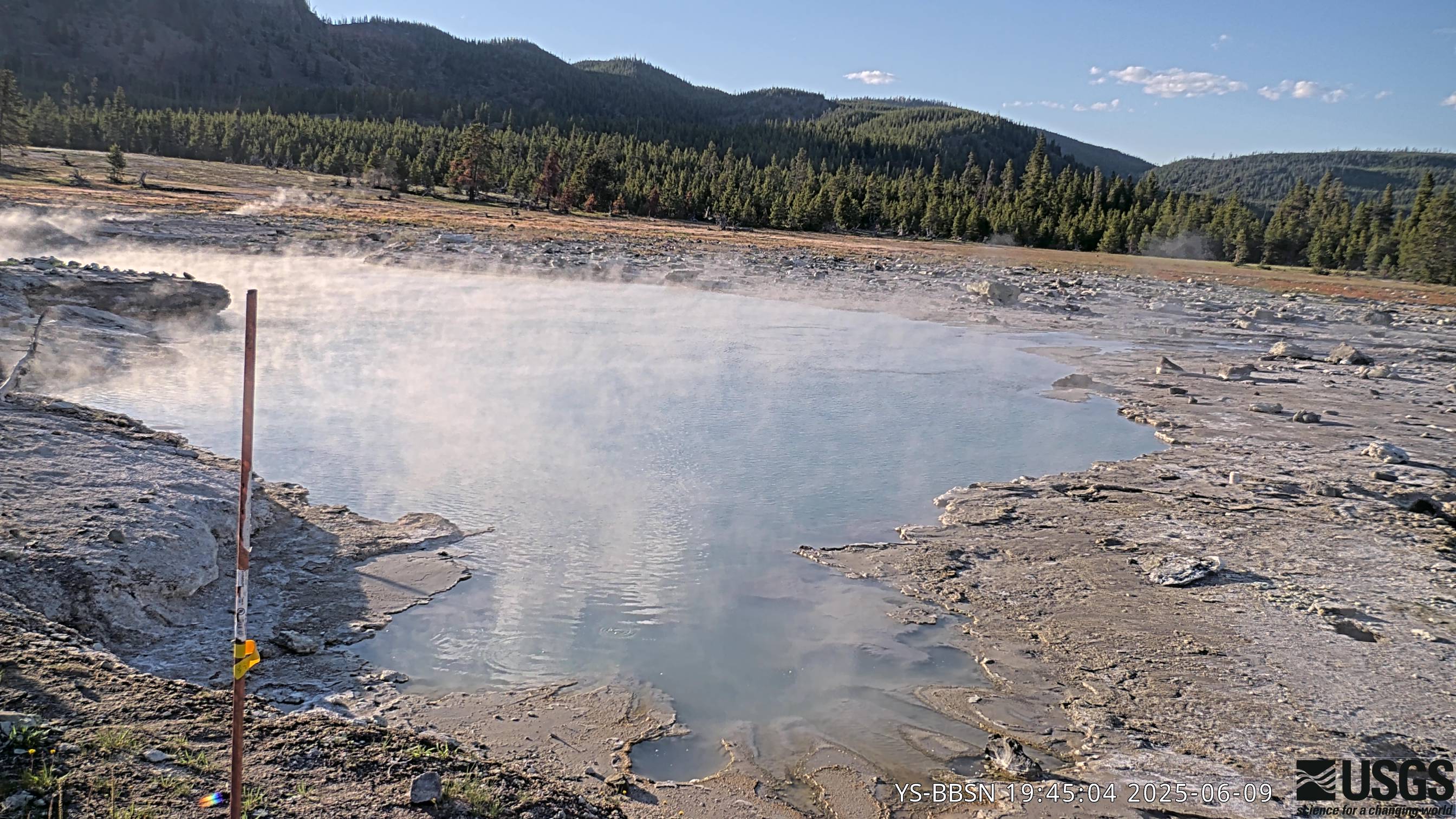
Looking at hot spring with high cliffs in the background
Biscuit Basin webcam

The camera view is north-northwest from the Biscuit Basin boardwalk looking at Black Diamond Pool, which is in the foreground (the tilted viewing angle is due to the slope of the boardwalk).

The camera view is north-northwest from the Biscuit Basin boardwalk looking at Black Diamond Pool, which is in the foreground (the tilted viewing angle is due to the slope of the boardwalk).

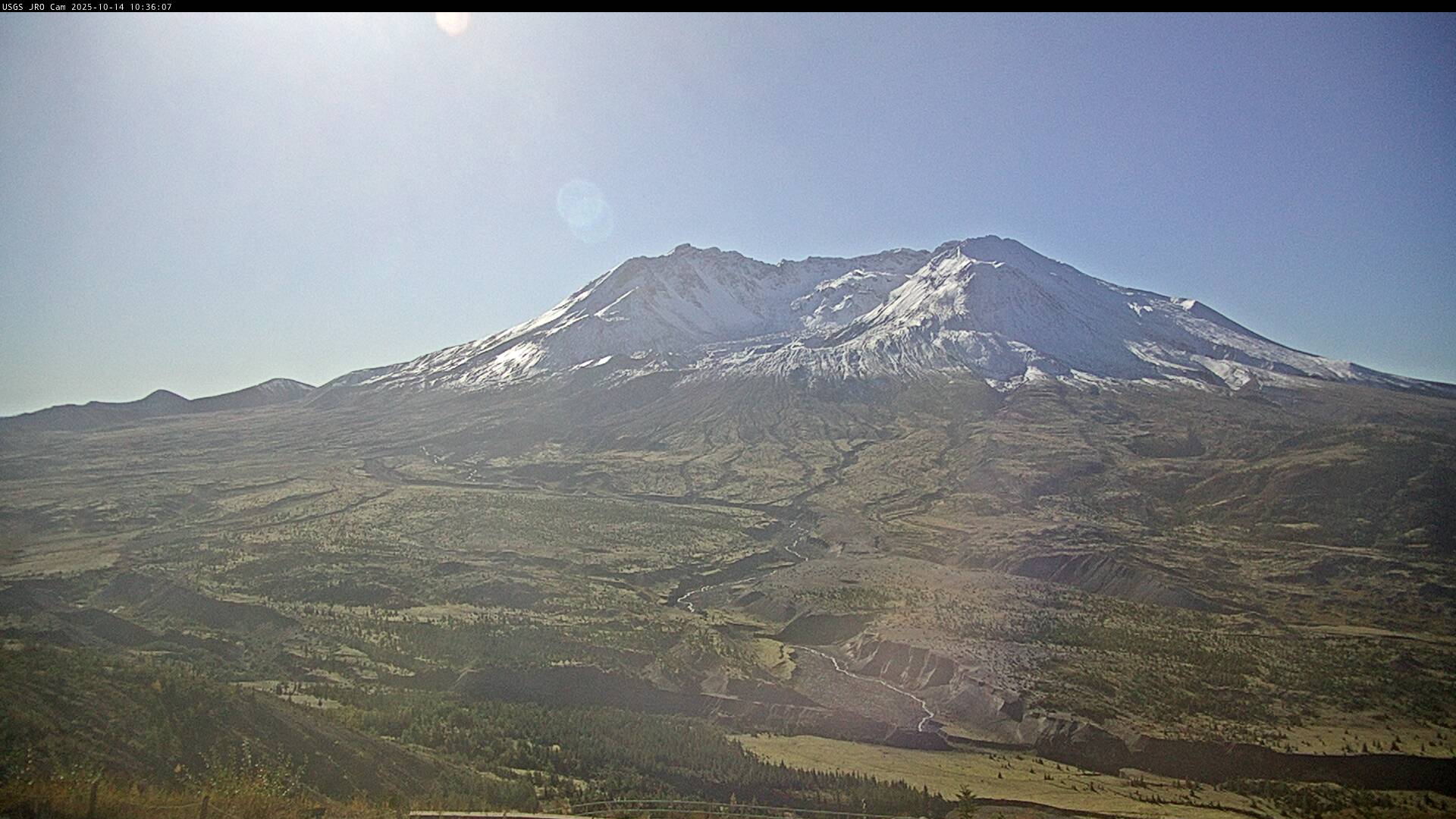
Image of Mount St. Helens looking south from north of the volcano
Johnston Ridge Observatory, Mount St. Helens

This static image is from a USGS Cascades Volcano Observatory research camera located at the Johnston Ridge Observatory, north of Mount St. Helens.  The view is to the south.  This camera is intended to assist the USGS with situational awareness. At times, clouds, rain, and snow obscure visibility.

This static image is from a USGS Cascades Volcano Observatory research camera located at the Johnston Ridge Observatory, north of Mount St. Helens.  The view is to the south.  This camera is intended to assist the USGS with situational awareness. At times, clouds, rain, and snow obscure visibility.

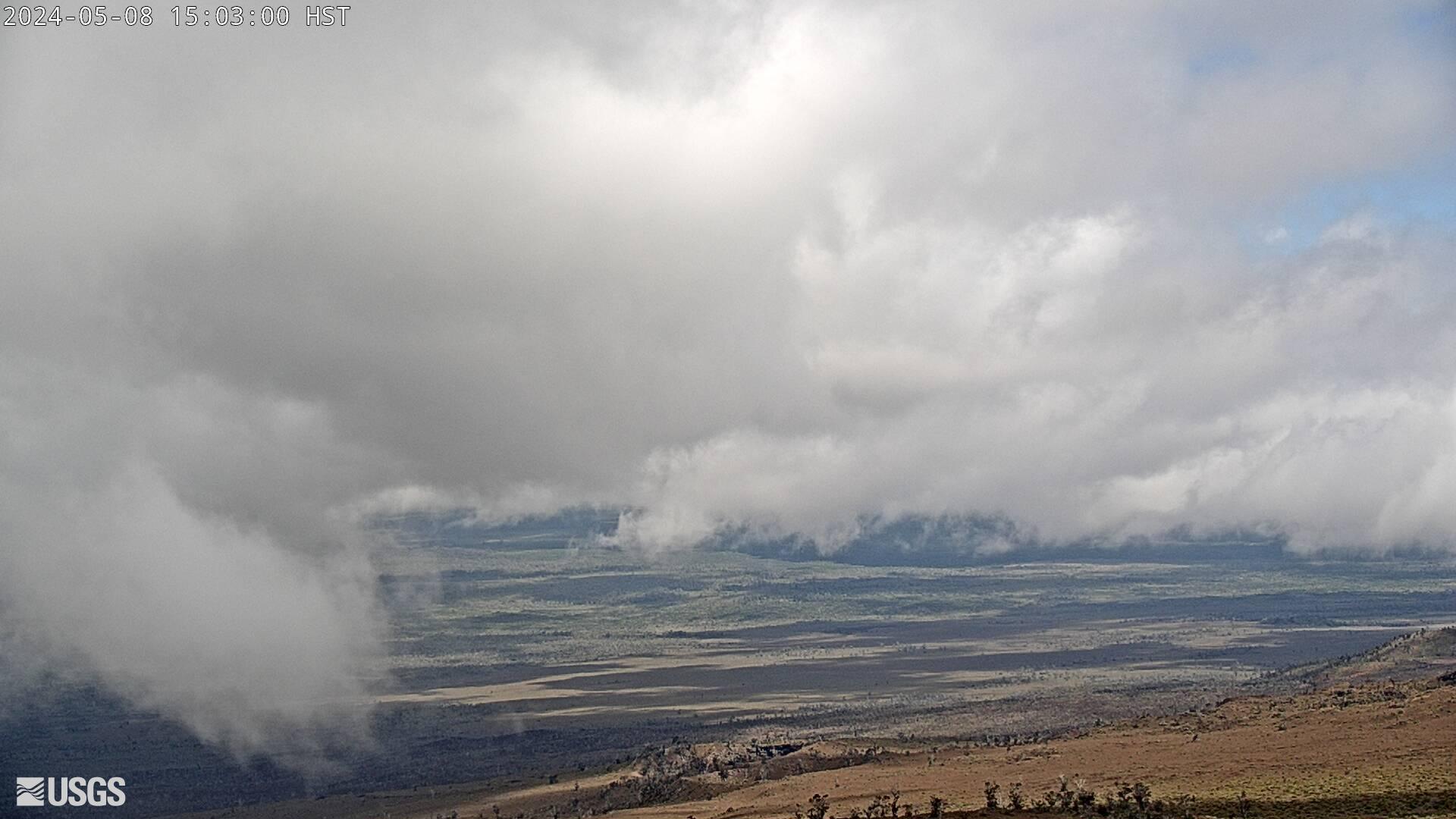
Webcam image view of volcano flank
[HLcam] Live Image of Mauna Loa's northwest flank from Hualālai volcano
[HLcam] Live Image of Mauna Loa's northwest flank from Hualālai volcano
[HLcam] Live Image of Mauna Loa's northwest flank from Hualālai volcano

Live view of the northwest flank of Mauna Loa; the view is from the southeast flank of Hualālai [HLcam]. This camera is a pan-tilt-zoom model and the view may change depending on activity.

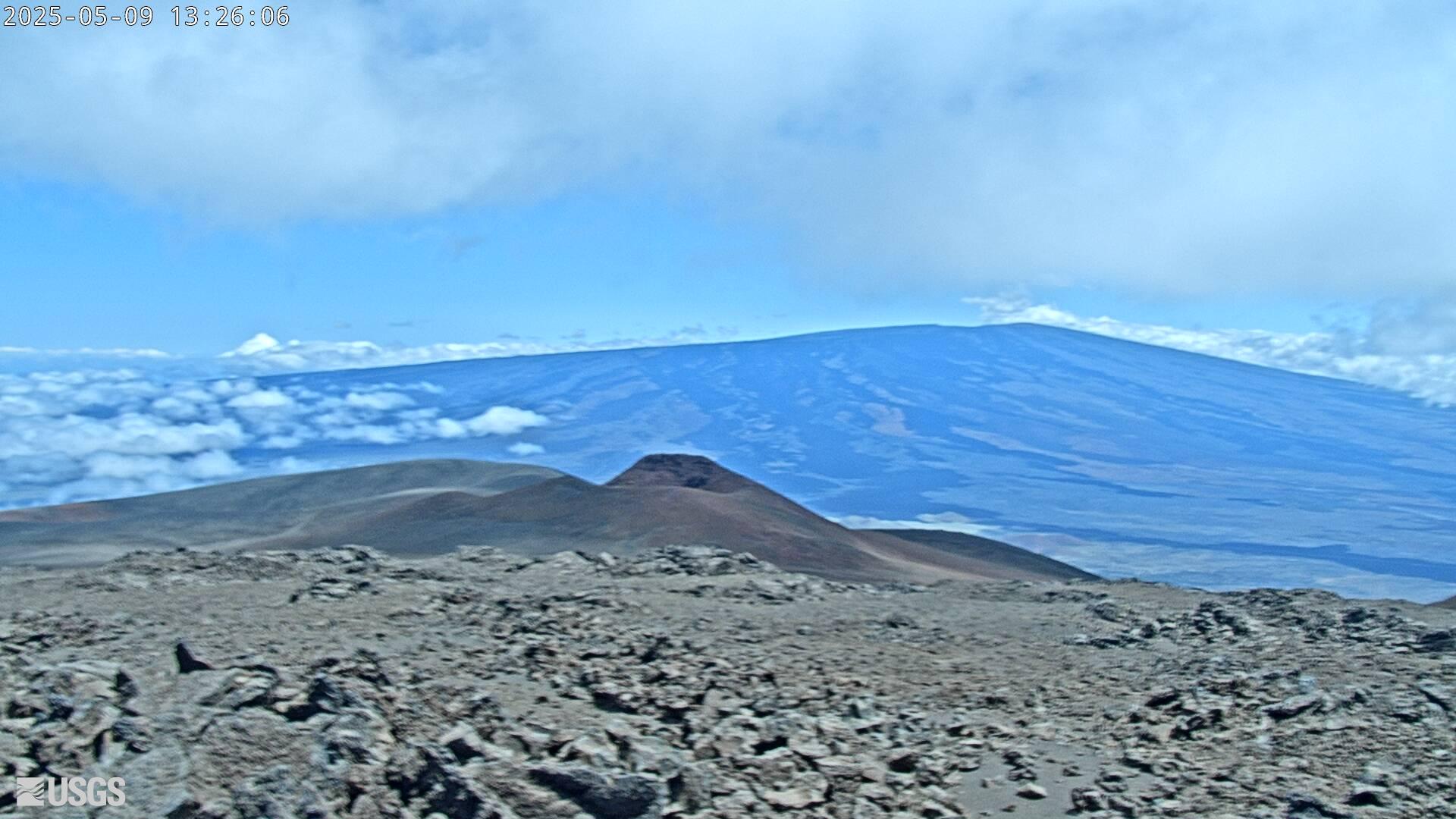
Live webcam view of lava erupting from Mauna Loa volcano
[MK2cam] Mauna Loa's Summit and Northeast Rift Zone from Mauna Kea
[MK2cam] Mauna Loa's Summit and Northeast Rift Zone from Mauna Kea
[MK2cam] Mauna Loa's Summit and Northeast Rift Zone from Mauna Kea

Live Image of Mauna Loa's Summit and Northeast Rift Zone from Mauna Kea [MK2cam]. This camera is a pan-tilt-zoom model and the view may change depending on activity.

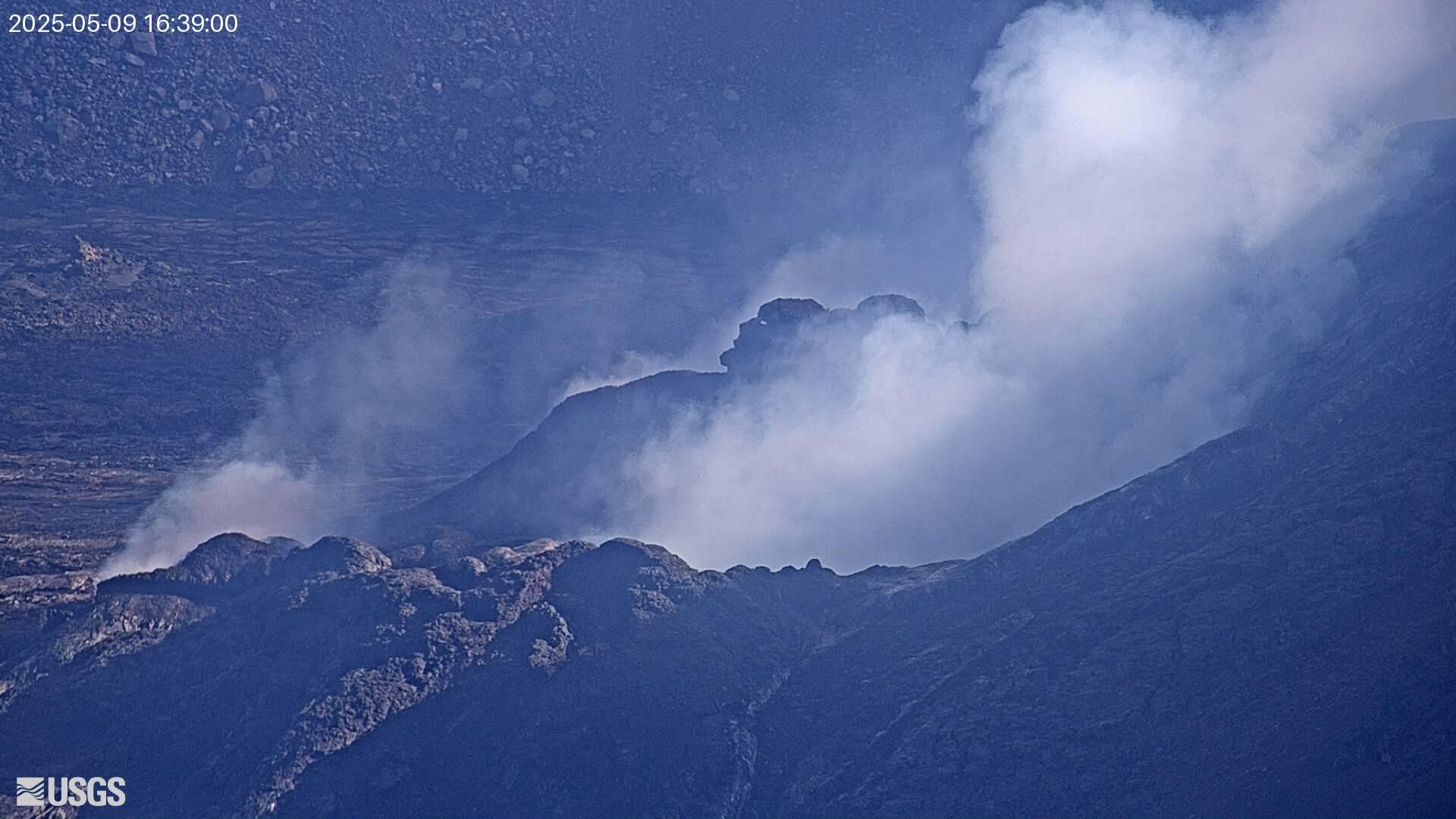
Webcam image view of volcanic vent in summit crater
[V1cam] Kīlauea volcano, Hawaii (west Halemaʻumaʻu crater)
[V1cam] Kīlauea volcano, Hawaii (west Halemaʻumaʻu crater)
[V1cam] Kīlauea volcano, Hawaii (west Halemaʻumaʻu crater)

Live view of Halemaʻumaʻu crater within Kaluapele (Kīlauea caldera), from the northwest rim of the crater [V1cam]. This camera is a pan-tilt-zoom model and the view may change depending on activity.

Disclaimer

Live view of Halemaʻumaʻu crater within Kaluapele (Kīlauea caldera), from the northwest rim of the crater [V1cam]. This camera is a pan-tilt-zoom model and the view may change depending on activity.

Disclaimer

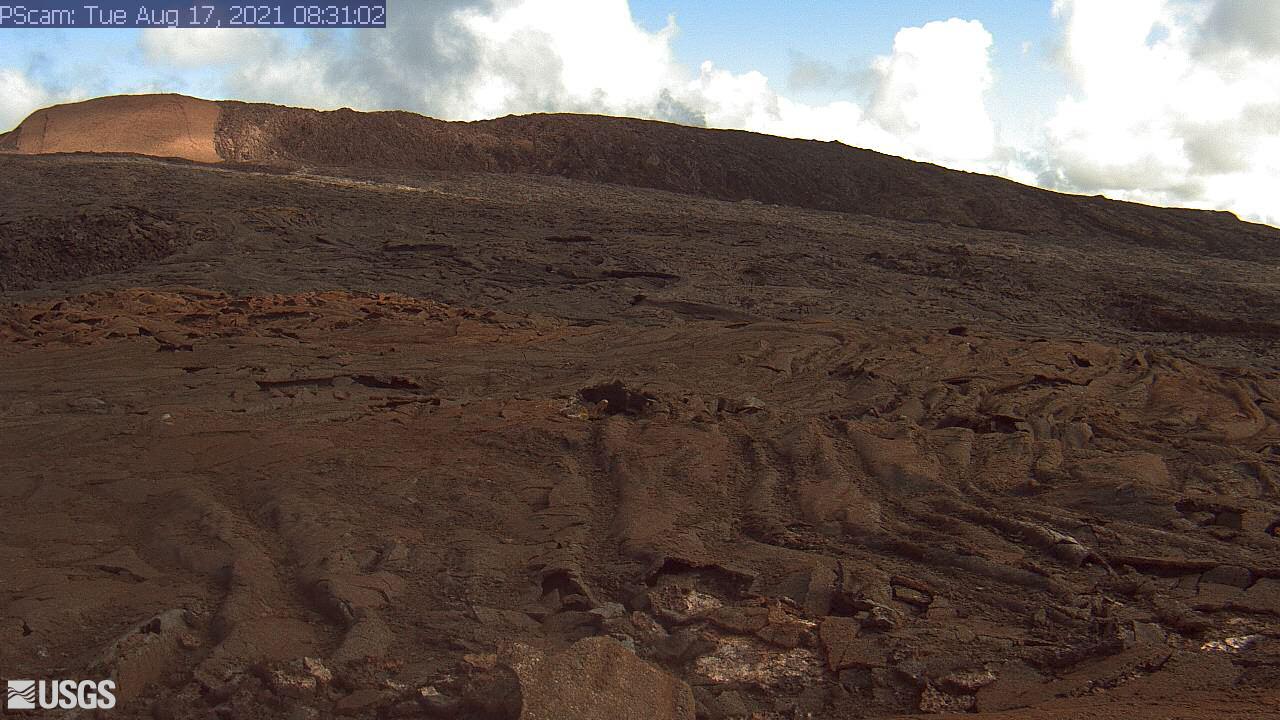
This image is from a temporary research camera positioned just south of Puʻu ʻŌʻō, looking north at the southern flank of Puʻ
[PScam] Puʻu ʻŌʻō South Flank from the South Rim
[PScam] Puʻu ʻŌʻō South Flank from the South Rim
[PScam] Puʻu ʻŌʻō South Flank from the South Rim

This image is from a temporary research camera positioned just south of Puʻu ʻŌʻō, looking north at the southern flank of Puʻu ʻŌʻō's cone.


Disclaimer

Was this page helpful?