Unveiling Earthquake History at Skilak Lake, Alaska
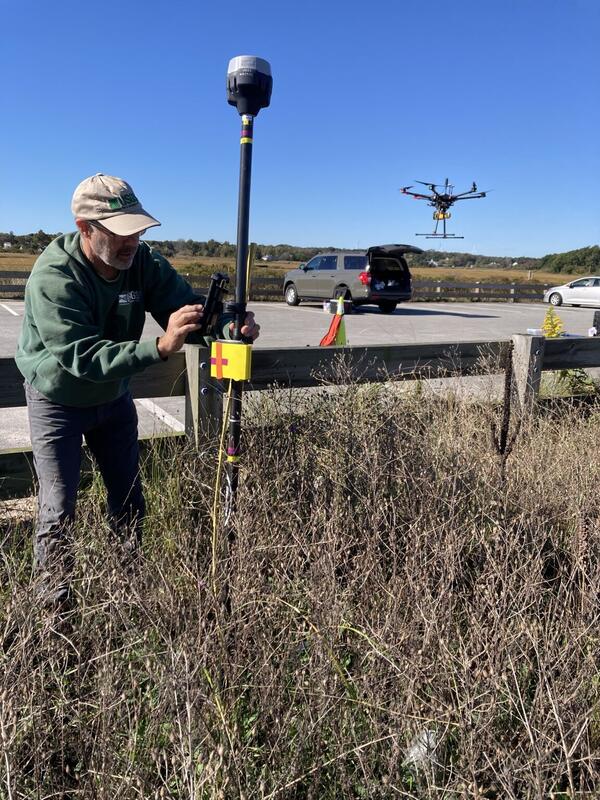
Unveiling Earthquake History at Skilak Lake, AlaskaHannah Brewer (WHOI), Peter Haeussler (USGS), and Tim Kane (WHOI) preparing the OBS float rig at the Upper Skilak Campground parking lot.
An official website of the United States government
Here's how you know
Official websites use .gov
A .gov website belongs to an official government organization in the United States.
Secure .gov websites use HTTPS
A lock () or https:// means you’ve safely connected to the .gov website. Share sensitive information only on official, secure websites.
Coastal and Marine Hazards and Resources Program images.
Hannah Brewer (WHOI), Peter Haeussler (USGS), and Tim Kane (WHOI) preparing the OBS float rig at the Upper Skilak Campground parking lot.
Peter Haeussler (USGS), Brian Andrews (USGS), Hannah Brewer (WHOI), and Tim Kane (WHOI) prepare to launch the OBS float rig at the Upper Skilak Campground Boat Ramp. R/V Lutris (background) was used to tow the rig to the deployment sites.
Study region with GTSM-ERA5 output locations marked as black circles and tide gauge locations marked as blue squares. Gray labels denote NOAA designated tide gauge station IDs. Information on tide gauges, including ID number, latitude, longitude, and the date when observations start, are listed in the table to the right of the map.
Component contributions to extreme water levels. Panel (a) shows GTSM-ERA5 stations (in black) with highlighted “multi-POT” node locations marked in red and numbered to correspond with panel (c).
Cover image for the geonarrative "Paleoclimate: Lessons from the past, roadmap for the future". In this interactive geonarrative, viewers can explore the different applications of USGS paleoclimate research.
Map showing location of radar network for the Advanced Quantitative Precipitation Information system in the San Francisco Bay Area.
Scan of coral core, showing yearly growth rates and the density of the coral, which can in turn be used to determine the calcification, or constructive process responsible for reef growth.
The newly developed USGS Coral Core Archive, housed at the Santa Cruz and St. Petersburg Coastal and Marine Science Centers, contains approximately 500 coral reef cores from U.S. jurisdictions worldwide.
Photo of coral carbonate standards, arranged from high to low density. To convert CT values to real-world densities and quantify the uncertainty in reconstructed density as a result of offsets, a set of carbonate standards are included in every CT scan that represent a range of coral species with different densities.
Coral sample in aluminum tube being prepared for scanning. The use of a secondary aluminum filter reduces beam hardening artifacts (rings) while also avoiding attenuating the x-ray beam.
Animation of a computed tomography scan of a coral core.
Example of the relationship between CT intensities and measured density of the coral standards used to calibrate data. The measured density of the coral standards are compared to the mean intensities of each standard. Linear regressions calculated from the standard values are then used to calibrate data.
Orbicella spp. coral sample with no packing material. Center of image is darker than edges. Transect across image shows intensity values lower in the center creating a cupping effect.
Animation of a computed tomography scan of a coral core.
Bare-earth lidar image of the Nisqually River Delta. Lidar has been used to study and restore the delta, where levees have been removed to reconnect tidal lands.
Two images are provided of the Rocky Creek landslide that resulted in closure of California State Highway 1. The images above show views of the Rocky Creek landslide, California before (Feb. 23, 2024) and after (April 6, 2024) the slope failure. Images show oblique perspectives of the landscape topography colored by the actual colors from the photographs.
An image is provided of the Dolan Point landslide of Big Sur, California during Feb. 23 and April 6, 2024. Images show oblique perspectives of the landscape topography colored by the actual colors from the photographs. All 3-dimensional landscape data derived by USGS photogrammetry techniques.
Three images are provided of Mud Creek landslide of Big Sur, California during Feb. 23 and April 6, 2024. The first two images show different oblique perspectives of the landscape topography colored by the actual colors from the photographs. The third image shows shaded relief topography of the landscape during Feb.
Three images are provided of Paul’s landslide of Big Sur, California during Feb. 23 and April 6, 2024. The first two images show different oblique perspectives of the landscape topography colored by the actual colors from the photographs. The third image shows shaded relief topography of the landscape during Feb.