Water is a shared resource between people and wildlife
Water is a shared resource between people and wildlifeIllustration showing that drinking water is shared by both humans and wildlife, illustration created by Kathy Lee


Official websites use .gov
A .gov website belongs to an official government organization in the United States.

Secure .gov websites use HTTPS
A lock () or https:// means you’ve safely connected to the .gov website. Share sensitive information only on official, secure websites.

All items in this gallery are considered public domain unless otherwise noted.
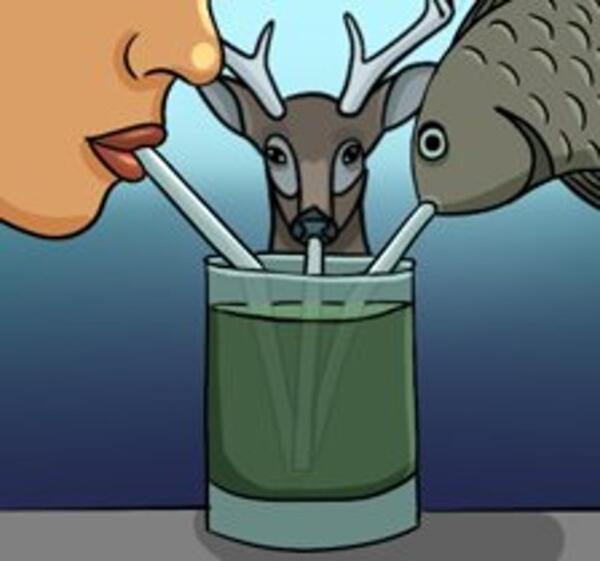
Illustration showing that drinking water is shared by both humans and wildlife, illustration created by Kathy Lee
Illustration showing that drinking water is shared by both humans and wildlife, illustration created by Kathy Lee

Scientist istalling a swallow nest box near Ashumet Pond, Cape Cod Massachusetts as part of a study on the fate and effects of PFAS chemicals.
Scientist istalling a swallow nest box near Ashumet Pond, Cape Cod Massachusetts as part of a study on the fate and effects of PFAS chemicals.

Joe Adams (USGS National Uncrewed Systems Office) pilots and Keith Grabner (USGS Columbia Environmental Research Center) acts as visual observer as a drone equipped with EPA particulate and gas samplers (right) hovers in the plume of a spring prescribed burn at the Konza Prairie Biological Station, Tallgrass Prairie National Preserve, Kansas.
Joe Adams (USGS National Uncrewed Systems Office) pilots and Keith Grabner (USGS Columbia Environmental Research Center) acts as visual observer as a drone equipped with EPA particulate and gas samplers (right) hovers in the plume of a spring prescribed burn at the Konza Prairie Biological Station, Tallgrass Prairie National Preserve, Kansas.

U.S. Geological Survey scientists holding a Colorado pikeminnow during a sampling trip in the Upper Colorado River Basin.
U.S. Geological Survey scientists holding a Colorado pikeminnow during a sampling trip in the Upper Colorado River Basin.

United States map showing modeling results (red) of the probability of arsenic concentrations greater than 5 micrograms per liter. Map of sink and faucet superimposed upon it.
United States map showing modeling results (red) of the probability of arsenic concentrations greater than 5 micrograms per liter. Map of sink and faucet superimposed upon it.

USGS scientists Jason Sorenson and Andrea Tokranov (out of the image) collecting lake-bottom sediments from Ashumet Pond on Cape Cod, Massachusetts for use in laboratory experiments on the fate of PFAS at groundwater/surface-water boundaries. The sediments are collected by pushing a tube into the lake bottom and transferring the sediment and pore water in
USGS scientists Jason Sorenson and Andrea Tokranov (out of the image) collecting lake-bottom sediments from Ashumet Pond on Cape Cod, Massachusetts for use in laboratory experiments on the fate of PFAS at groundwater/surface-water boundaries. The sediments are collected by pushing a tube into the lake bottom and transferring the sediment and pore water in

Releases of oil and gas wastewaters can have complex effects on stream-water quality and downstream organisms, due to sediment-water interactions and groundwater/surface water exchange.
Releases of oil and gas wastewaters can have complex effects on stream-water quality and downstream organisms, due to sediment-water interactions and groundwater/surface water exchange.

Microscopic appearance of normal and melanistic skin in fish from Chesapeake Bay watershed.
Microscopic appearance of normal and melanistic skin in fish from Chesapeake Bay watershed.

Map of the migratory pathway of glaucous gulls from Alaska to Russia and down Pacific US coastline
Map of the migratory pathway of glaucous gulls from Alaska to Russia and down Pacific US coastline

White barn in a rural setting in North Dakota.
White barn in a rural setting in North Dakota.

A well pump in rural North Dakota.
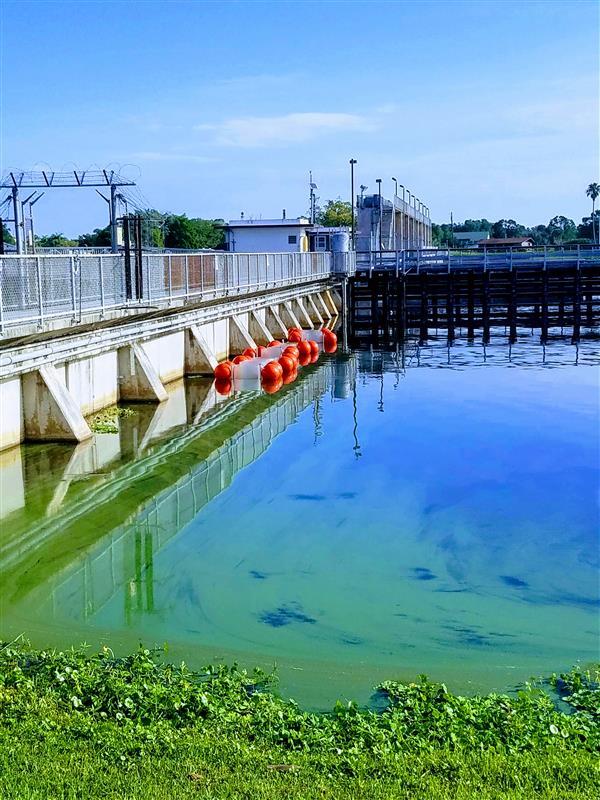
Photographic image taken at Franklin Lock and Dam, Caloosahatchee River, Florida
Photographic image taken at Franklin Lock and Dam, Caloosahatchee River, Florida

Photographic image of two USGS scientists on a boat collecting water samples for HABS research at the Franklin Lock and Dam, Caloosahatchee River, Florida.
Photographic image of two USGS scientists on a boat collecting water samples for HABS research at the Franklin Lock and Dam, Caloosahatchee River, Florida.

Visitors at Winnewissa Falls in Pipestone National Monument
Visitors at Winnewissa Falls in Pipestone National Monument

Researchers instruct volunteers on how to collect dragonfly larvae in Glacier NP as a part of the Dragonfly Mercury Project.
Researchers instruct volunteers on how to collect dragonfly larvae in Glacier NP as a part of the Dragonfly Mercury Project.

Benthic macroinvertebrate taxa collected from Straight Run, Tioga County, Pennsyvania, USA.
Benthic macroinvertebrate taxa collected from Straight Run, Tioga County, Pennsyvania, USA.
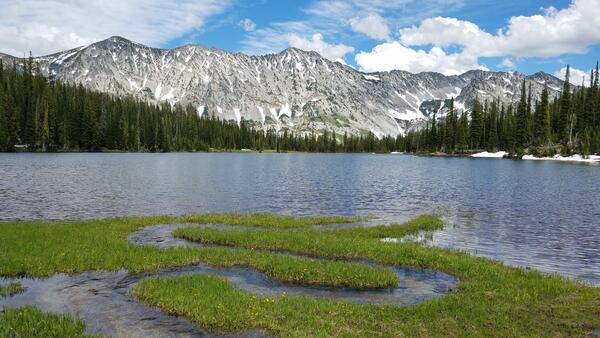
Beautiful photo of mountains and water taken at Wildhorse Creek, Idaho. Photo Credit: Austin Baldwin
Beautiful photo of mountains and water taken at Wildhorse Creek, Idaho. Photo Credit: Austin Baldwin

This image is a cropped rendition of two aerial images that demonstrate satellite-derived cyanobacteria concentrations in surface waters from an area in Florida.
This image is a cropped rendition of two aerial images that demonstrate satellite-derived cyanobacteria concentrations in surface waters from an area in Florida.

Lab Instrumentation used for target analyses at the OGRL at the KS WSC. Image is of part of the Instrument Laboratory.
Lab Instrumentation used for target analyses at the OGRL at the KS WSC. Image is of part of the Instrument Laboratory.

Picture of a woman fly fishing at Black Bay National Wildlife Refuge in Virginia. Credit: U.S. Fish and Wildlife Service.
Picture of a woman fly fishing at Black Bay National Wildlife Refuge in Virginia. Credit: U.S. Fish and Wildlife Service.

A three year study was conducted in seasonal wetlands to determine if a deep and shallow water pool resulted in a reduction of methylmercury in caged fish and surface water.
A three year study was conducted in seasonal wetlands to determine if a deep and shallow water pool resulted in a reduction of methylmercury in caged fish and surface water.