
Ecologically-Driven Exposure Pathways Science Team
The Team Determines Factors That Influence Fish and Wildlife Exposure
to toxicants such as mercury in the environment
Scientists Can Sample Tissues and Blood in Small Birds Without Harm
to understand factors such as maternal transfer of contaminants to offspring
The Team Studies Factors that Influence Exposure Risk in Mammals
such as foraging and fasting behavior in elephant seals
Factors that Influence Pathogen Transmission are Identified
Advanced Techniques are used to Understand Contaminant Sources
The Ecologically-Driven Exposure Pathways Integrated Science Team identifies how ecological pathways and physiological processes within a single organism can alter exposure and toxicity of contaminants and pathogens and seek to understand outcomes at different scales from individuals to populations and ecosystems.
Contaminant and pathogen exposure alone does not necessarily result in adverse health outcomes in fish, wildlife, or humans. There are numerous pathways and processes that can alter the toxicity of naturally occurring and human-made contaminants in the environment.
The team uses their broad scientific expertise in hydrology, geochemistry, biology, and ecotoxicology to understand the complexities associated with the movement of toxicants and pathogens through the environment and within individual organisms. That information is used to determine how, where, and when exposure occurs and if exposure results in health risks to wildlife and humans.
Current Science Questions and Activities
-
What are the various ecological factors, such as habitats and foraging strategies, that influence the pathways of contaminant exposure, health risks to fish and wildlife?
-
What are the pathways of antimicrobial resistance in the environment?
-
What are the major intrinsic and extrinsic drivers of mercury exposure and risk to humans, fish, and wildlife at a global scale?
Media
Sources/Usage: Some content may have restrictions. View Media DetailsThe Dragonfly Mercury Project Data Dashboard (usgs.gov) facilitates data exploration of the Dragonfly Mercury Project (DMP). Since 2014, the Dragonfly Mercury Project (DMP) has measured mercury concentrations in dragonfly larvae from U.S. National Parks and Protected Places across the country to assess potential environmental health risks due to mercury. -
What are the internal physiological determinants such as metababolism, transfer of mercury to offspring, changes in body mass, and molting that influence exposure and health risks in fish and wildlife?
-
How do the internal factors differ among species and life stages?
-
What are the Influences of landscape alterations, perturbations, and restoration on pathways and movement of contaminants through ecosystems and bioaccumulation into the food web of aquatic biota?
-
Do multiple types and chemical mixtures have additive, synergistic, or antagonistic effects that influence the health of fish and wildlife?
-
What are the internal and external drivers and regulators of human exposure to mercury?
- What is the risk of pathogen exposure and transmission among wildlife, livestock, and humans?
-
What are the key environmental factors that control the viability of avian influenza virus shed by wild birds and what are the key environmental pathways of exposure and transmission of the virus?
-
What is the role of soil, water, and vegetation in disease transmission such as Chronic Wasting Disease?
-
How do invasive species influence the timing of contaminant uptake and bioaccumulation in fish and wildlife?
USGS science related to this science team’s activities.
New Method Can Measure Naturally Occurring Element Exposure in Hummingbirds Without Harm
Body Symmetry in Forster's Terns Related to Mercury Exposure
Efficacy of Eggshell Analyses as a Nonlethal Method to Estimate Mercury Exposure in Bird Embryos
New Method Improves Measurement of Bullet Fragments in Culled Varmints
Low Levels of Contaminants Found in Great Lakes Tree Swallow Nestlings
Frequent Fliers—Web-Based Tool Aids in Understanding the Role of Wild Birds in Transmission of Avian Influenza
Organic Contaminant Levels and the Reproductive Success of Ospreys in Chesapeake Bay
Synthesis of Mercury Distribution and Bioaccumulation Across Western North America
Low Levels of Contaminants Found in Great Lakes Tree Swallow Eggs
Winter Eagle Deaths at Great Salt Lake due to West Nile Virus
Human Influenza Virus Infects Sea Otters
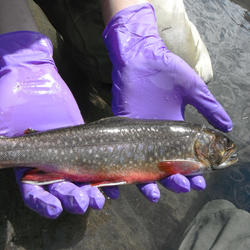
Mercury in Fish from 21 National Parks in the West
The following are the data releases from this science team’s research activities.
Data describing habitat use and availability for wild waterfowl in California, USA Data describing habitat use and availability for wild waterfowl in California, USA
Hydrological, Chemical, and Biological Characterization of the Snake River and Associated Tributaries and Irrigation Drains from River Mile 448 to 346, 2022 Hydrological, Chemical, and Biological Characterization of the Snake River and Associated Tributaries and Irrigation Drains from River Mile 448 to 346, 2022
Pesticide residues in passive samplers and bee tissue from Conservation Reserve Program fields across an agricultural gradient in eastern Iowa, USA, 2019 (ver 2.0, October 2023) Pesticide residues in passive samplers and bee tissue from Conservation Reserve Program fields across an agricultural gradient in eastern Iowa, USA, 2019 (ver 2.0, October 2023)
Total mercury and methylmercury in biota from Cottage Grove Reservoir, Coast Fork Willamette River, and additional reservoirs in Oregon (ver. 2.0, February 2024) Total mercury and methylmercury in biota from Cottage Grove Reservoir, Coast Fork Willamette River, and additional reservoirs in Oregon (ver. 2.0, February 2024)
Data describing infection status and movement ecology of North American waterfowl Data describing infection status and movement ecology of North American waterfowl
Data measuring avian influenza infection, mercury concentration, and body condition in wild waterfowl Data measuring avian influenza infection, mercury concentration, and body condition in wild waterfowl
Mercury concentrations, isotopic composition, biomass, and taxonomy of stream and riparian organisms in the vicinity of Yellow Pine, Idaho, 2015-2016. Mercury concentrations, isotopic composition, biomass, and taxonomy of stream and riparian organisms in the vicinity of Yellow Pine, Idaho, 2015-2016.
Assessment of mercury sources in Alaskan lake food webs (version 1.1, September 2023) Assessment of mercury sources in Alaskan lake food webs (version 1.1, September 2023)
Egg Morphometric Data Obtained for White-faced Ibis Nesting in Bear River Migratory Bird Refuge, Great Salt Lake, Utah (2010-2012) Egg Morphometric Data Obtained for White-faced Ibis Nesting in Bear River Migratory Bird Refuge, Great Salt Lake, Utah (2010-2012)
Isotopic Examination of Mercury Methylation and Demethylation Rates in Yellowstone National Park Thermal Features Isotopic Examination of Mercury Methylation and Demethylation Rates in Yellowstone National Park Thermal Features
Yellowstone Thermal Feature Mercury and Methylmercury Characterization Yellowstone Thermal Feature Mercury and Methylmercury Characterization
Mercury in fishes from Clear Lake, California, 2019 and 2020 (ver. 2.0, February 2022) Mercury in fishes from Clear Lake, California, 2019 and 2020 (ver. 2.0, February 2022)
Below are publications associated with this science team.
Viral pathogen detection in U.S. game-farm mallard (Anas platyrhynchos) flags spillover risk to wild birds Viral pathogen detection in U.S. game-farm mallard (Anas platyrhynchos) flags spillover risk to wild birds
Chronic wasting disease alters the movement behavior and habitat use of mule deer during clinical stages of infection Chronic wasting disease alters the movement behavior and habitat use of mule deer during clinical stages of infection
Geographic drivers of mercury entry into aquatic food webs revealed by mercury stable isotopes in dragonfly larvae Geographic drivers of mercury entry into aquatic food webs revealed by mercury stable isotopes in dragonfly larvae
Global mercury concentrations in biota: Their use as a basis for a global biomonitoring framework Global mercury concentrations in biota: Their use as a basis for a global biomonitoring framework
Methylmercury effects on birds: A review, meta-analysis, and development of toxicity reference values for injury assessment based on tissue residues and diet Methylmercury effects on birds: A review, meta-analysis, and development of toxicity reference values for injury assessment based on tissue residues and diet
Eggshell membrane thickness and its contribution to total eggshell thickness for 13 waterbird species Eggshell membrane thickness and its contribution to total eggshell thickness for 13 waterbird species
A conceptual site model of contaminant transport pathways from the Bremerton Naval Complex to Sinclair Inlet, Washington, 2011–21 A conceptual site model of contaminant transport pathways from the Bremerton Naval Complex to Sinclair Inlet, Washington, 2011–21
Potential use of poultry farms by wild waterfowl in California's Central Valley varies across space, times of day, and species: implications for influenza transmission risk Potential use of poultry farms by wild waterfowl in California's Central Valley varies across space, times of day, and species: implications for influenza transmission risk
Foraging behavior and age affect maternal transfer of mercury to northern elephant seal pups Foraging behavior and age affect maternal transfer of mercury to northern elephant seal pups
Wildfire burn severity and stream chemistry influence aquatic invertebrate and riparian avian mercury exposure in forested ecosystems Wildfire burn severity and stream chemistry influence aquatic invertebrate and riparian avian mercury exposure in forested ecosystems
Exposure to and biomarker responses from legacy and emerging contaminants along three drainages in the Milwaukee Estuary, Wisconsin, USA Exposure to and biomarker responses from legacy and emerging contaminants along three drainages in the Milwaukee Estuary, Wisconsin, USA
Eggshell thickness and egg morphometrics in five songbird species from the Central Valley, California Eggshell thickness and egg morphometrics in five songbird species from the Central Valley, California
The Ecologically-Driven Exposure Pathways Integrated Science Team identifies how ecological pathways and physiological processes within a single organism can alter exposure and toxicity of contaminants and pathogens and seek to understand outcomes at different scales from individuals to populations and ecosystems.
Contaminant and pathogen exposure alone does not necessarily result in adverse health outcomes in fish, wildlife, or humans. There are numerous pathways and processes that can alter the toxicity of naturally occurring and human-made contaminants in the environment.
The team uses their broad scientific expertise in hydrology, geochemistry, biology, and ecotoxicology to understand the complexities associated with the movement of toxicants and pathogens through the environment and within individual organisms. That information is used to determine how, where, and when exposure occurs and if exposure results in health risks to wildlife and humans.
Current Science Questions and Activities
-
What are the various ecological factors, such as habitats and foraging strategies, that influence the pathways of contaminant exposure, health risks to fish and wildlife?
-
What are the pathways of antimicrobial resistance in the environment?
-
What are the major intrinsic and extrinsic drivers of mercury exposure and risk to humans, fish, and wildlife at a global scale?
Media
Sources/Usage: Some content may have restrictions. View Media DetailsThe Dragonfly Mercury Project Data Dashboard (usgs.gov) facilitates data exploration of the Dragonfly Mercury Project (DMP). Since 2014, the Dragonfly Mercury Project (DMP) has measured mercury concentrations in dragonfly larvae from U.S. National Parks and Protected Places across the country to assess potential environmental health risks due to mercury. -
What are the internal physiological determinants such as metababolism, transfer of mercury to offspring, changes in body mass, and molting that influence exposure and health risks in fish and wildlife?
-
How do the internal factors differ among species and life stages?
-
What are the Influences of landscape alterations, perturbations, and restoration on pathways and movement of contaminants through ecosystems and bioaccumulation into the food web of aquatic biota?
-
Do multiple types and chemical mixtures have additive, synergistic, or antagonistic effects that influence the health of fish and wildlife?
-
What are the internal and external drivers and regulators of human exposure to mercury?
- What is the risk of pathogen exposure and transmission among wildlife, livestock, and humans?
-
What are the key environmental factors that control the viability of avian influenza virus shed by wild birds and what are the key environmental pathways of exposure and transmission of the virus?
-
What is the role of soil, water, and vegetation in disease transmission such as Chronic Wasting Disease?
-
How do invasive species influence the timing of contaminant uptake and bioaccumulation in fish and wildlife?
USGS science related to this science team’s activities.
New Method Can Measure Naturally Occurring Element Exposure in Hummingbirds Without Harm
Body Symmetry in Forster's Terns Related to Mercury Exposure
Efficacy of Eggshell Analyses as a Nonlethal Method to Estimate Mercury Exposure in Bird Embryos
New Method Improves Measurement of Bullet Fragments in Culled Varmints
Low Levels of Contaminants Found in Great Lakes Tree Swallow Nestlings
Frequent Fliers—Web-Based Tool Aids in Understanding the Role of Wild Birds in Transmission of Avian Influenza
Organic Contaminant Levels and the Reproductive Success of Ospreys in Chesapeake Bay
Synthesis of Mercury Distribution and Bioaccumulation Across Western North America
Low Levels of Contaminants Found in Great Lakes Tree Swallow Eggs
Winter Eagle Deaths at Great Salt Lake due to West Nile Virus
Human Influenza Virus Infects Sea Otters
Mercury in Fish from 21 National Parks in the West
The following are the data releases from this science team’s research activities.
Data describing habitat use and availability for wild waterfowl in California, USA Data describing habitat use and availability for wild waterfowl in California, USA
Hydrological, Chemical, and Biological Characterization of the Snake River and Associated Tributaries and Irrigation Drains from River Mile 448 to 346, 2022 Hydrological, Chemical, and Biological Characterization of the Snake River and Associated Tributaries and Irrigation Drains from River Mile 448 to 346, 2022
Pesticide residues in passive samplers and bee tissue from Conservation Reserve Program fields across an agricultural gradient in eastern Iowa, USA, 2019 (ver 2.0, October 2023) Pesticide residues in passive samplers and bee tissue from Conservation Reserve Program fields across an agricultural gradient in eastern Iowa, USA, 2019 (ver 2.0, October 2023)
Total mercury and methylmercury in biota from Cottage Grove Reservoir, Coast Fork Willamette River, and additional reservoirs in Oregon (ver. 2.0, February 2024) Total mercury and methylmercury in biota from Cottage Grove Reservoir, Coast Fork Willamette River, and additional reservoirs in Oregon (ver. 2.0, February 2024)
Data describing infection status and movement ecology of North American waterfowl Data describing infection status and movement ecology of North American waterfowl
Data measuring avian influenza infection, mercury concentration, and body condition in wild waterfowl Data measuring avian influenza infection, mercury concentration, and body condition in wild waterfowl
Mercury concentrations, isotopic composition, biomass, and taxonomy of stream and riparian organisms in the vicinity of Yellow Pine, Idaho, 2015-2016. Mercury concentrations, isotopic composition, biomass, and taxonomy of stream and riparian organisms in the vicinity of Yellow Pine, Idaho, 2015-2016.
Assessment of mercury sources in Alaskan lake food webs (version 1.1, September 2023) Assessment of mercury sources in Alaskan lake food webs (version 1.1, September 2023)
Egg Morphometric Data Obtained for White-faced Ibis Nesting in Bear River Migratory Bird Refuge, Great Salt Lake, Utah (2010-2012) Egg Morphometric Data Obtained for White-faced Ibis Nesting in Bear River Migratory Bird Refuge, Great Salt Lake, Utah (2010-2012)
Isotopic Examination of Mercury Methylation and Demethylation Rates in Yellowstone National Park Thermal Features Isotopic Examination of Mercury Methylation and Demethylation Rates in Yellowstone National Park Thermal Features
Yellowstone Thermal Feature Mercury and Methylmercury Characterization Yellowstone Thermal Feature Mercury and Methylmercury Characterization
Mercury in fishes from Clear Lake, California, 2019 and 2020 (ver. 2.0, February 2022) Mercury in fishes from Clear Lake, California, 2019 and 2020 (ver. 2.0, February 2022)
Below are publications associated with this science team.