



To understand information needs and respond to the many challenges in bird conservation, USGS scientists participate in Flyway committees, on Joint Venture boards and working groups, in professional organizations, and in other conservation partnerships. These activities connect USGS scientists to conservation partners with whom they work to address substantial challenges. More than one hundred USGS scientists are dedicated to the scientific study of birds.
USGS Bird Science Today
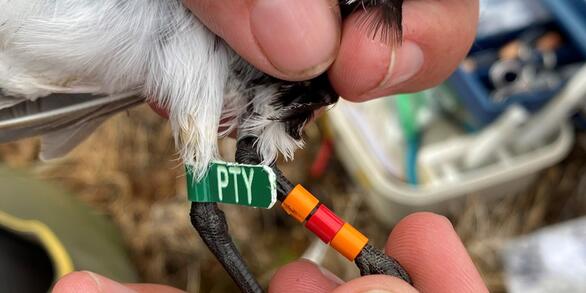
Read about the history of USGS bird research and the ways our science informs real-world decisions from sustaining hunting traditions to protecting at-risk bird species.
6 Birds USGS is Tracking
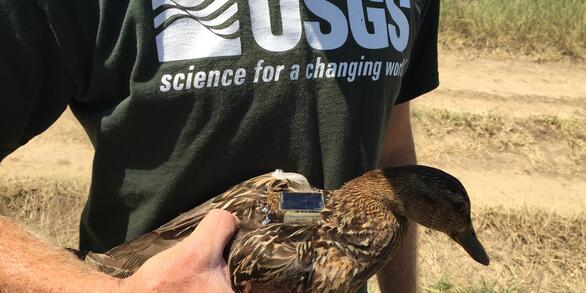
Using lightweight GPS transmitters and classic tools like bird bands, we track migratory birds in near real-time to study their flight paths and behaviors.
USGS Migratory Bird Science

This report highlights the 2021 scope of USGS work supporting migratory bird conservation and management, with contributions from 90 scientists.
Bird Research

Interaction of land use and wet/dry cycles on invertebrate populations of northern prairie wetlands: implications for waterbird habitat conservation

Inventory, mapping, estimation, and monitoring of least tern and piping plover habitats on the upper Missouri River using satellite imagery

Migration and winter ecology of the Aransas-Wood Buffalo Population of whooping cranes

Improving monitoring techniques for nests of interior least terns and piping plovers

Population demographics of least terns and piping plovers in Colorado

Breeding ecology and demographics of least terns and piping plovers at the Central Platte River, Nebraska

Metapopulation dynamics of piping plovers in the Northern Great Plains

Demographic response of least terns and piping plovers to the 2011 Missouri River Flood

Development of survey methods for spring-migrating waterfowl in the Rainwater Basin

Investigating roadside bias in point-count surveys of grassland passerines

Ecology and management of midcontinent sandhill cranes

The effects of management practices on grassland birds

Breeding bird use of grasslands enrolled in the Conservation Reserve Program in the northern Great Plains

Distribution and habitat use of waterbirds

Developing techniques to census and monitor American white pelicans and other colonial waterbirds at Chase Lake National Wildlife Refuge in North Dakota

Demographic analysis of waterfowl populations

An evaluation of waterfowl breeding ecology in the context of their predator community in eastern South Dakota

Support to Fish and Wildlife Service and Prairie Pothole Joint Venture for monitoring and management of migratory bird populations

Studying Immune Responses in the American Kestrel (Falco sparverius)

Joint Ecosystem Modeling: Cape Sable Seaside Sparrow Marl Prairie Indicator

Joint Ecosystem Modeling: EverSnail
To understand information needs and respond to the many challenges in bird conservation, USGS scientists participate in Flyway committees, on Joint Venture boards and working groups, in professional organizations, and in other conservation partnerships. These activities connect USGS scientists to conservation partners with whom they work to address substantial challenges. More than one hundred USGS scientists are dedicated to the scientific study of birds.
USGS Bird Science Today
Read about the history of USGS bird research and the ways our science informs real-world decisions from sustaining hunting traditions to protecting at-risk bird species.
6 Birds USGS is Tracking
Using lightweight GPS transmitters and classic tools like bird bands, we track migratory birds in near real-time to study their flight paths and behaviors.
USGS Migratory Bird Science
This report highlights the 2021 scope of USGS work supporting migratory bird conservation and management, with contributions from 90 scientists.
Bird Research
Interaction of land use and wet/dry cycles on invertebrate populations of northern prairie wetlands: implications for waterbird habitat conservation
Inventory, mapping, estimation, and monitoring of least tern and piping plover habitats on the upper Missouri River using satellite imagery
Migration and winter ecology of the Aransas-Wood Buffalo Population of whooping cranes
Improving monitoring techniques for nests of interior least terns and piping plovers
Population demographics of least terns and piping plovers in Colorado
Breeding ecology and demographics of least terns and piping plovers at the Central Platte River, Nebraska
Metapopulation dynamics of piping plovers in the Northern Great Plains
Demographic response of least terns and piping plovers to the 2011 Missouri River Flood
Development of survey methods for spring-migrating waterfowl in the Rainwater Basin
Investigating roadside bias in point-count surveys of grassland passerines
Ecology and management of midcontinent sandhill cranes
The effects of management practices on grassland birds
Breeding bird use of grasslands enrolled in the Conservation Reserve Program in the northern Great Plains
Distribution and habitat use of waterbirds
Developing techniques to census and monitor American white pelicans and other colonial waterbirds at Chase Lake National Wildlife Refuge in North Dakota
Demographic analysis of waterfowl populations
An evaluation of waterfowl breeding ecology in the context of their predator community in eastern South Dakota
Support to Fish and Wildlife Service and Prairie Pothole Joint Venture for monitoring and management of migratory bird populations
Studying Immune Responses in the American Kestrel (Falco sparverius)
Joint Ecosystem Modeling: Cape Sable Seaside Sparrow Marl Prairie Indicator