



Before landing on the surface of the moon in 1969, astronauts Neil Armstrong and Buzz Aldrin needed a training ground that matched their destination's cratered surface.
Threats from Space
Not all natural hazards that affect Earth come from here. Sometimes things from space can have a huge effect on our planet. From geomagnetic storms to meteor impacts, the USGS has a long history of mapping celestial bodies, investigating planetary anomalies, and monitoring the Earth’s geomagnetic and atmospheric conditions.
Planetary Defense
Planetary Defense

At the USGS Astrogeology Science Center, we conduct research on Planetary Defense, including predicting potential meteor impactors and studying how to deflect or divert them Effects include short-term effects such as blast damage, but also long-term effects such as climate and social impacts.
Geomagnetism Program
Geomagnetism Program
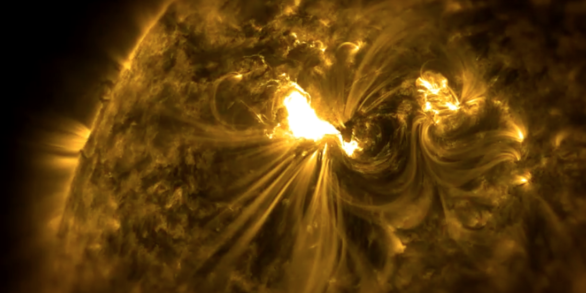
The USGS Geomagnetism Program monitors the Earth's magnetic field, with a key focus on space-weather hazard science. Geomagnetic research projects support the pursuit of a fundamental understanding of geomagnetic storms and related phenomena, while developing products to assist with situational awareness here on Earth.
Although USGS may not be seen as a space research agency, we do study a variety of threats from space. Whether it is geomagnetic storms, meteor impacts, or satellite research, the USGS has a long history of exploring what comes from above.
Here are a few examples of projects that have us looking up.
Media

Space, it turns out, can be a messy place. Sixty years of space flight and satellite activity have left a cosmic junkyard circling the planet. From spent boosters to the detritus of defunct satellites, collisions, and explosions, there are countless potential cataclysms waiting to happen for future launches as space debris travels at relative velocities approaching 18,000 miles per hour.
Sources/Usage: Public Domain. View Media Details
Media

Magnetic storms are potentially hazardous to the activities and technological infrastructure of modern civilization. This reality was dramatically demonstrated during a magnetic storm in 1989 when surface geoelectric fields were coupled onto the Hydro-Québec electric power grid in Canada. Protective relays were tripped, the grid collapsed, and about 9 million people were temporarily left without electricity.
Sources/Usage: Public Domain. View Media Details
Media

When meteors reach the earth, they can cause mass destruction quickly and have lasting impacts on ecosystems and geologic characteristics. USGS predicts potential impactors and studies how to deflect or divert them, as well as the potential effects of an impact.
Sources/Usage: Public Domain. View Media Details
Science

Terrestrial Analogs for Research and Geologic Exploration Training (TARGET)
The U. S. Geological Survey (USGS) Astrogeology Science Center (ASC) recently established the Terrestrial Analogs for Research and Geologic Exploration Training (TARGET) program. This service-oriented program is built around the recognition that the Earth is a fundamental training ground for human and robotic planetary exploration, and that ASC is in a unique position in northern Arizona with...

Terrestrial Analog Sample Collections
The Astrogeology Terrestrial Analog Sample Collections include three individual sample collections: the Meteor Crater Sample Collection, the Flynn Creek Crater Sample Collection, and the Shoemaker Sample Collection (embed links to individual pages; add buttons to click to go to individual pages). Click Related Science tab above to navigate to the individual collections pages.

Keeping the Lights On in North America
Realtime geoelectric maps during a magnetic storm can assist utility companies with their operations and can help power-grid managers to make decisions that may minimize the impact to their systems.

Meteor Crater Sample Collection
Meteor Crater is a 180 m deep, 1.2 km diameter bowl-shaped impact crater in Northern Arizona, and has long been a terrestrial analog site for planetary exploration. During the 1960’s, Eugene Shoemaker trained NASA astronauts at the crater to prepare for the Apollo missions to the Moon. The Meteor Crater Sample Collection consists of geologic samples from the Meteor Crater ejecta blanket. USGS...
Flynn Creek Crater Sample Collection
Flynn Creek crater is a 3.8 km diameter, 360-million-year-old impact structure located in north central Tennessee, and is an invaluable terrestrial analog for the study of impact cratering dynamics. The Flynn Creek Crater Sample Collection consists of over two thousand boxes of drill core from 18 drill holes in the crater’s central uplift, floor, and rim. USGS Astrogeology curates and provides...
Multimedia

Image of the Week - Moon Craters in Arizona
Before landing on the surface of the moon in 1969, astronauts Neil Armstrong and Buzz Aldrin needed a training ground that matched their destination's cratered surface.


Hazards: Geomagnetic Storms
Space weather can have important consequences for our lives, such as interference with radio communication, GPS systems, electric power grids, the operation and orientation of satellites, oil and gas drilling, and even air travel as high altitude pilots and astronauts can be subjected to enhanced levels of radiation.
By
Space weather can have important consequences for our lives, such as interference with radio communication, GPS systems, electric power grids, the operation and orientation of satellites, oil and gas drilling, and even air travel as high altitude pilots and astronauts can be subjected to enhanced levels of radiation.
By

Geomagnetism Monitoring Operations
Learn more about the USGS Geomagnetism operations.

Geomagnetism Research
Research projects within the USGS Geomagnetism Program are targeted for societal relevance, especially for space-weather hazard science.

Could magnetic reversals be caused by meteorite or comet impacts? Could magnetic reversals be caused by meteorite or comet impacts?
Although extremely unlikely, it might be possible for a reversal of the Earth's magnetic field to be triggered by a meteorite or comet impact, or even for it to be caused by something more "gentle," such as the melting of the polar ice caps. Self-contained dynamic systems like Earth’s dynamo can have reversals without any outside influence. Reversals of Earth's magnetic field can simply happen...

I think I found a meteorite. How can I tell for sure? I think I found a meteorite. How can I tell for sure?
Meteorites are fragments of rock or metal that fall to Earth from space. They are very rare, but many people find unusual rocks or pieces of metal and wonder if they might have found a meteorite. The USGS doesn't verify meteorites, but they have several properties that help distinguish them from other rocks: Density: Meteorites are usually quite heavy for their size, since they contain metallic...

How can I tell if I have found an impact crater? How can I tell if I have found an impact crater?
There are many natural processes other than impacts that can create circular features and depressions on the surface of the Earth. Examples include glaciation, volcanism, sinkholes, atolls, salt domes, intrusions, and hydrothermal explosions (to name just a few). Prehistoric mines and quarries are also sometimes mistaken for impact craters. Although the USGS has been involved in impact crater...
Not all natural hazards that affect Earth come from here. Sometimes things from space can have a huge effect on our planet. From geomagnetic storms to meteor impacts, the USGS has a long history of mapping celestial bodies, investigating planetary anomalies, and monitoring the Earth’s geomagnetic and atmospheric conditions.
Planetary Defense
Planetary Defense
At the USGS Astrogeology Science Center, we conduct research on Planetary Defense, including predicting potential meteor impactors and studying how to deflect or divert them Effects include short-term effects such as blast damage, but also long-term effects such as climate and social impacts.
Geomagnetism Program
Geomagnetism Program
The USGS Geomagnetism Program monitors the Earth's magnetic field, with a key focus on space-weather hazard science. Geomagnetic research projects support the pursuit of a fundamental understanding of geomagnetic storms and related phenomena, while developing products to assist with situational awareness here on Earth.
Although USGS may not be seen as a space research agency, we do study a variety of threats from space. Whether it is geomagnetic storms, meteor impacts, or satellite research, the USGS has a long history of exploring what comes from above.
Here are a few examples of projects that have us looking up.
Media
Space, it turns out, can be a messy place. Sixty years of space flight and satellite activity have left a cosmic junkyard circling the planet. From spent boosters to the detritus of defunct satellites, collisions, and explosions, there are countless potential cataclysms waiting to happen for future launches as space debris travels at relative velocities approaching 18,000 miles per hour.
Sources/Usage: Public Domain. View Media Details
Media
Magnetic storms are potentially hazardous to the activities and technological infrastructure of modern civilization. This reality was dramatically demonstrated during a magnetic storm in 1989 when surface geoelectric fields were coupled onto the Hydro-Québec electric power grid in Canada. Protective relays were tripped, the grid collapsed, and about 9 million people were temporarily left without electricity.
Sources/Usage: Public Domain. View Media Details
Media
When meteors reach the earth, they can cause mass destruction quickly and have lasting impacts on ecosystems and geologic characteristics. USGS predicts potential impactors and studies how to deflect or divert them, as well as the potential effects of an impact.
Sources/Usage: Public Domain. View Media Details
Science
Terrestrial Analogs for Research and Geologic Exploration Training (TARGET)
The U. S. Geological Survey (USGS) Astrogeology Science Center (ASC) recently established the Terrestrial Analogs for Research and Geologic Exploration Training (TARGET) program. This service-oriented program is built around the recognition that the Earth is a fundamental training ground for human and robotic planetary exploration, and that ASC is in a unique position in northern Arizona with...
Terrestrial Analog Sample Collections
The Astrogeology Terrestrial Analog Sample Collections include three individual sample collections: the Meteor Crater Sample Collection, the Flynn Creek Crater Sample Collection, and the Shoemaker Sample Collection (embed links to individual pages; add buttons to click to go to individual pages). Click Related Science tab above to navigate to the individual collections pages.
Keeping the Lights On in North America
Realtime geoelectric maps during a magnetic storm can assist utility companies with their operations and can help power-grid managers to make decisions that may minimize the impact to their systems.
Meteor Crater Sample Collection
Meteor Crater is a 180 m deep, 1.2 km diameter bowl-shaped impact crater in Northern Arizona, and has long been a terrestrial analog site for planetary exploration. During the 1960’s, Eugene Shoemaker trained NASA astronauts at the crater to prepare for the Apollo missions to the Moon. The Meteor Crater Sample Collection consists of geologic samples from the Meteor Crater ejecta blanket. USGS...
Flynn Creek Crater Sample Collection
Flynn Creek crater is a 3.8 km diameter, 360-million-year-old impact structure located in north central Tennessee, and is an invaluable terrestrial analog for the study of impact cratering dynamics. The Flynn Creek Crater Sample Collection consists of over two thousand boxes of drill core from 18 drill holes in the crater’s central uplift, floor, and rim. USGS Astrogeology curates and provides...
Multimedia
Image of the Week - Moon Craters in Arizona
Before landing on the surface of the moon in 1969, astronauts Neil Armstrong and Buzz Aldrin needed a training ground that matched their destination's cratered surface.
Before landing on the surface of the moon in 1969, astronauts Neil Armstrong and Buzz Aldrin needed a training ground that matched their destination's cratered surface.
Hazards: Geomagnetic Storms
Space weather can have important consequences for our lives, such as interference with radio communication, GPS systems, electric power grids, the operation and orientation of satellites, oil and gas drilling, and even air travel as high altitude pilots and astronauts can be subjected to enhanced levels of radiation.
By
Space weather can have important consequences for our lives, such as interference with radio communication, GPS systems, electric power grids, the operation and orientation of satellites, oil and gas drilling, and even air travel as high altitude pilots and astronauts can be subjected to enhanced levels of radiation.
By
Geomagnetism Monitoring Operations
Learn more about the USGS Geomagnetism operations.
Geomagnetism Research
Research projects within the USGS Geomagnetism Program are targeted for societal relevance, especially for space-weather hazard science.
Could magnetic reversals be caused by meteorite or comet impacts? Could magnetic reversals be caused by meteorite or comet impacts?
Although extremely unlikely, it might be possible for a reversal of the Earth's magnetic field to be triggered by a meteorite or comet impact, or even for it to be caused by something more "gentle," such as the melting of the polar ice caps. Self-contained dynamic systems like Earth’s dynamo can have reversals without any outside influence. Reversals of Earth's magnetic field can simply happen...
I think I found a meteorite. How can I tell for sure? I think I found a meteorite. How can I tell for sure?
Meteorites are fragments of rock or metal that fall to Earth from space. They are very rare, but many people find unusual rocks or pieces of metal and wonder if they might have found a meteorite. The USGS doesn't verify meteorites, but they have several properties that help distinguish them from other rocks: Density: Meteorites are usually quite heavy for their size, since they contain metallic...
How can I tell if I have found an impact crater? How can I tell if I have found an impact crater?
There are many natural processes other than impacts that can create circular features and depressions on the surface of the Earth. Examples include glaciation, volcanism, sinkholes, atolls, salt domes, intrusions, and hydrothermal explosions (to name just a few). Prehistoric mines and quarries are also sometimes mistaken for impact craters. Although the USGS has been involved in impact crater...