



In this webinar, Mike Runge talks about the linkages between normative methods of decision analysis (i.e., structured decision making) and the RAD framework. First, what does SDM contribute to RAD?
Abigail J. Lynch, Ph.D.
Abigail (Abby) J. Lynch is a Research Fish Biologist with the USGS National Climate Adaptation Science Center. Abby conducts science and science syntheses on the impacts of global change to inland fishes at local, national, and global scales. Her work aims to inform conservation and sustainable use and to help fishers, managers, and other practitioners adapt to change.
Collaborative Networks
Collaborative Networks
Abby leads the National CASC's aquatics program and co-leads the CASC Fish Research Team. She is adjunct/affiliate faculty at Michigan State University, North Carolina State University, the University of Florida, and the University of Missouri.
She serves as the coordinator for the international 'InFish' research network, a steward for the Fish and Climate Change Database (FiCli) and the U.S. Inland Creel & Angler Survey Catalog (CreelCat), an Associate Editor for Fisheries Management and Ecology, and an Editorial Board member for Sustainability Science.
Abby received her Ph.D. in Fisheries and Wildlife from Michigan State University on climate impacts to Great Lakes Lake Whitefish, M.S. in marine science on Atlantic Menhaden population genetics at the Virginia Institute of Marine Science, College of William & Mary, and B.S. in biology and B.A. in English literature from the University of Virginia. She also served as a Knauss Marine Policy Fellow with the U.S. Fish & Wildlife Service's Fisheries Program.
Science and Products
Filter Total Items: 41
Incorporating the RAD (Resist-Accept-Direct) Framework into Resource Management Planning: Structured Decision Making & RAD
In this webinar, Mike Runge talks about the linkages between normative methods of decision analysis (i.e., structured decision making) and the RAD framework. It is part of the webinar series: " Incorporating the RAD (Resist-Accept-Direct) Framework into Resource Management Planning".
Incorporating the RAD (Resist-Accept-Direct) Framework into Resource Management Planning: RAD and Adaptive Management Webinar
In this webinar, RAD (Resist-Accept-Direct) practitioners from federal and university institutions place adaptive management within the resist–accept–direct (RAD) framework to assist informed risk taking for transforming ecosystems. It is part of the webinar series: " Incorporating the RAD (Resist-Accept-Direct) Framework into Resource Management Planning".
Incorporating the RAD (Resist-Accept-Direct) Framework into Resource Management Planning: Social Science Perspectives on RAD
In this "RAD Perspectives" webinar, RAD (Resist-Accept-Direct) practitioners from the National Park Service, U.S. Forest Service, and the U.S. Geological Survey will highlight findings and implications at the forefront of RAD research. It is part of the webinar series: " Incorporating the RAD (Resist-Accept-Direct) Framework into Resource Management Planning".
Incorporating the RAD (Resist-Accept-Direct) Framework into Resource Management Planning: RAD Perspectives
In this "RAD Perspectives" webinar, RAD (Resist-Accept-Direct) practitioners from the National Park Service, Great Lakes Indian Fish & Wildlife Commission (GLIFWC), Minnesota Department of Natural Resources, and the U.S. Fish and Wildlife Service discuss what RAD is and how they use this framework to inform their management planning efforts to reach their resource management goals. It is part of...

RAD in the Wild
The Resist-Accept-Direct (RAD) framework is a tool that helps resource managers make informed strategies for responding to socio-ecological changes, including climate change.

The Resist-Accept-Direct (RAD) Framework
The Resist-Accept-Direct (RAD) framework is a tool that helps resource managers make informed strategies for responding to socio-ecological changes, including invasive species, disease, land use change, and climate change.

CASC Fish Research
The CASC Fish Research Program is a dynamic group of federal researchers and early-career scientists working together to explore the impacts of climate and other stressors on fish and aquatic systems to inform conservation and climate adaptation.

Science to Action Fellowship Science to Action Fellowship
The Science to Action Fellowship program supports graduate students in developing a product that puts science into action, directly applying scientific research related to climate change impacts on fish, wildlife, or ecosystems to decision making about natural resources.

Webinar: The RAD (Resist-Accept-Direct) Climate Adaptation Framework
Join this webinar to learn more about the Resist-Accept-Direct (RAD) framework, a decision-making tool that helps resource managers make informed strategies for responding to ecological changes resulting from climate change!

Informing Mekong River Basin Resiliency and Climate Adaptation
CASC experts are often requested to provide technical assistance to other Federal agencies, including the U.S. Department of State, as well as national and international partners. The U.S. Consulate in Thailand solicited leadership and guidance from the CASCs to help develop community-supported recommendations for increasing resiliency for fishing communities in the Mekong River Basin...

Diverse Knowledge Systems (DKS) for Climate Adaptation Fellowship
The Diverse Knowledge Systems for Climate Adaptation Fellowship supports graduate students for one year as they use their diverse experiences, viewpoints, value systems, and cultural knowledge to strengthen their climate adaptation efforts. There are many ways of exploring and understanding the natural world. Tribal Nations and Indigenous peoples have cultural identities developed...

“Climate-Smart” Fisheries and Aquaculture to Support Resilient Aquatic Ecosystems in Vietnam
The Vietnamese government has committed to climate mitigation and adaptation. Implementation of Vietnam's Nationally Determined Contribution (NDC) to adaptation involves a greater focus on the Mekong River Delta, which is poised to be impacted by sea level rise. Saline intrusion from sea level rise and droughts can affect aquatic ecosystems and the services they provide, including...
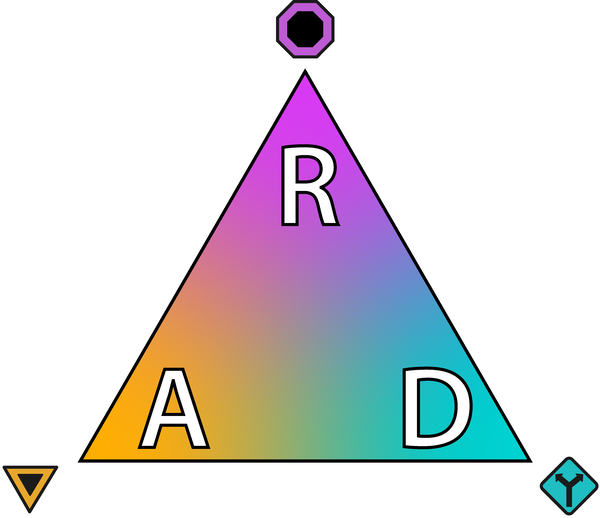
Structured Decision Making and RAD
In this webinar, Mike Runge talks about the linkages between normative methods of decision analysis (i.e., structured decision making) and the RAD framework. First, what does SDM contribute to RAD?
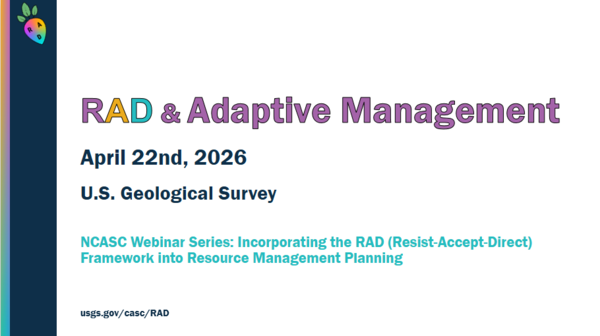
RAD and Adaptive Management Webinar
RAD and Adaptive Management Webinar, part of the NCASC Webinar Series: Incorporating the RAD (Resist-Accept-Direct) Framework into Resource Management Planning.
RAD and Adaptive Management Webinar, part of the NCASC Webinar Series: Incorporating the RAD (Resist-Accept-Direct) Framework into Resource Management Planning.
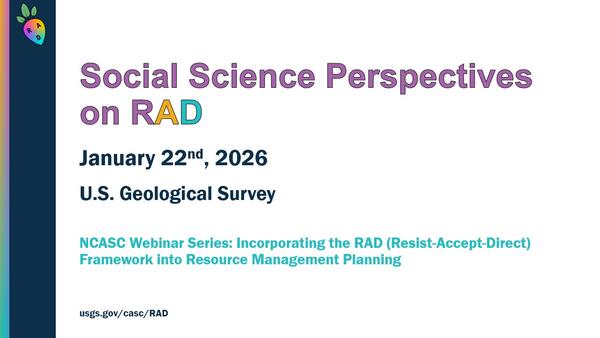
Social Science Perspectives on RAD Webinar
RAD is intended to help managers intentionally expand their thinking beyond traditional conservation approaches. Recent interdisciplinary and cross-agency research has integrated the social sciences to explore how and why managers are making RAD decisions.
RAD is intended to help managers intentionally expand their thinking beyond traditional conservation approaches. Recent interdisciplinary and cross-agency research has integrated the social sciences to explore how and why managers are making RAD decisions.
RAD Perspectives
In this "RAD Perspectives" webinar, RAD (Resist-Accept-Direct) practitioners from the National Park Service, Great Lakes Indian Fish & Wildlife Commission (GLIFWC), Minnesota Department of Natural Resources, and the U.S.
In this "RAD Perspectives" webinar, RAD (Resist-Accept-Direct) practitioners from the National Park Service, Great Lakes Indian Fish & Wildlife Commission (GLIFWC), Minnesota Department of Natural Resources, and the U.S.

The RAD Framework (AD)
A video narrated by National CASC Fish Biologist Abby Lynch explaining the Resist-Accept-Direct Framework, a decision-making tool that helps resource managers make informed strategies for responding to ecological changes resulting from climate change_._ The video is a narrated slide show with animations and photos guiding the viewer through the framework.
A video narrated by National CASC Fish Biologist Abby Lynch explaining the Resist-Accept-Direct Framework, a decision-making tool that helps resource managers make informed strategies for responding to ecological changes resulting from climate change_._ The video is a narrated slide show with animations and photos guiding the viewer through the framework.

RAD Framework for Ecosystem Management amid Climate Breakdown (Audio Described)
RAD Framework for Ecosystem Management amid Climate Breakdown (Audio Described)The Resist-Accept-Direct (RAD) framework is a decision-making tool that helps resource managers make informed strategies for responding to ecological changes resulting from climate change.
RAD Framework for Ecosystem Management amid Climate Breakdown (Audio Described)
RAD Framework for Ecosystem Management amid Climate Breakdown (Audio Described)The Resist-Accept-Direct (RAD) framework is a decision-making tool that helps resource managers make informed strategies for responding to ecological changes resulting from climate change.
RAD Framework for Ecosystem Management amid Climate Breakdown
RAD Framework for Ecosystem Management amid Climate BreakdownThe Resist-Accept-Direct (RAD) framework is a decision-making tool that helps resource managers make informed strategies for responding to ecological changes resulting from climate change.
RAD Framework for Ecosystem Management amid Climate Breakdown
RAD Framework for Ecosystem Management amid Climate BreakdownThe Resist-Accept-Direct (RAD) framework is a decision-making tool that helps resource managers make informed strategies for responding to ecological changes resulting from climate change.

Artisanal Fishing in Lao PDR
Artisanal Fishing in Lao PDR
Artisanal Fishing in Lao PDR

Fisherman on the Mekong River, Lao PDR
Fisherman on the Mekong River, Lao PDR
Fisherman on the Mekong River, Lao PDR

Science and Products
Filter Total Items: 41
Incorporating the RAD (Resist-Accept-Direct) Framework into Resource Management Planning: Structured Decision Making & RAD
In this webinar, Mike Runge talks about the linkages between normative methods of decision analysis (i.e., structured decision making) and the RAD framework. It is part of the webinar series: " Incorporating the RAD (Resist-Accept-Direct) Framework into Resource Management Planning".
Incorporating the RAD (Resist-Accept-Direct) Framework into Resource Management Planning: RAD and Adaptive Management Webinar
In this webinar, RAD (Resist-Accept-Direct) practitioners from federal and university institutions place adaptive management within the resist–accept–direct (RAD) framework to assist informed risk taking for transforming ecosystems. It is part of the webinar series: " Incorporating the RAD (Resist-Accept-Direct) Framework into Resource Management Planning".
Incorporating the RAD (Resist-Accept-Direct) Framework into Resource Management Planning: Social Science Perspectives on RAD
In this "RAD Perspectives" webinar, RAD (Resist-Accept-Direct) practitioners from the National Park Service, U.S. Forest Service, and the U.S. Geological Survey will highlight findings and implications at the forefront of RAD research. It is part of the webinar series: " Incorporating the RAD (Resist-Accept-Direct) Framework into Resource Management Planning".
Incorporating the RAD (Resist-Accept-Direct) Framework into Resource Management Planning: RAD Perspectives
In this "RAD Perspectives" webinar, RAD (Resist-Accept-Direct) practitioners from the National Park Service, Great Lakes Indian Fish & Wildlife Commission (GLIFWC), Minnesota Department of Natural Resources, and the U.S. Fish and Wildlife Service discuss what RAD is and how they use this framework to inform their management planning efforts to reach their resource management goals. It is part of...
RAD in the Wild
The Resist-Accept-Direct (RAD) framework is a tool that helps resource managers make informed strategies for responding to socio-ecological changes, including climate change.
The Resist-Accept-Direct (RAD) Framework
The Resist-Accept-Direct (RAD) framework is a tool that helps resource managers make informed strategies for responding to socio-ecological changes, including invasive species, disease, land use change, and climate change.
CASC Fish Research
The CASC Fish Research Program is a dynamic group of federal researchers and early-career scientists working together to explore the impacts of climate and other stressors on fish and aquatic systems to inform conservation and climate adaptation.
Science to Action Fellowship Science to Action Fellowship
The Science to Action Fellowship program supports graduate students in developing a product that puts science into action, directly applying scientific research related to climate change impacts on fish, wildlife, or ecosystems to decision making about natural resources.
Webinar: The RAD (Resist-Accept-Direct) Climate Adaptation Framework
Join this webinar to learn more about the Resist-Accept-Direct (RAD) framework, a decision-making tool that helps resource managers make informed strategies for responding to ecological changes resulting from climate change!
Informing Mekong River Basin Resiliency and Climate Adaptation
CASC experts are often requested to provide technical assistance to other Federal agencies, including the U.S. Department of State, as well as national and international partners. The U.S. Consulate in Thailand solicited leadership and guidance from the CASCs to help develop community-supported recommendations for increasing resiliency for fishing communities in the Mekong River Basin...
Diverse Knowledge Systems (DKS) for Climate Adaptation Fellowship
The Diverse Knowledge Systems for Climate Adaptation Fellowship supports graduate students for one year as they use their diverse experiences, viewpoints, value systems, and cultural knowledge to strengthen their climate adaptation efforts. There are many ways of exploring and understanding the natural world. Tribal Nations and Indigenous peoples have cultural identities developed...
“Climate-Smart” Fisheries and Aquaculture to Support Resilient Aquatic Ecosystems in Vietnam
The Vietnamese government has committed to climate mitigation and adaptation. Implementation of Vietnam's Nationally Determined Contribution (NDC) to adaptation involves a greater focus on the Mekong River Delta, which is poised to be impacted by sea level rise. Saline intrusion from sea level rise and droughts can affect aquatic ecosystems and the services they provide, including...
Structured Decision Making and RAD
In this webinar, Mike Runge talks about the linkages between normative methods of decision analysis (i.e., structured decision making) and the RAD framework. First, what does SDM contribute to RAD?
In this webinar, Mike Runge talks about the linkages between normative methods of decision analysis (i.e., structured decision making) and the RAD framework. First, what does SDM contribute to RAD?
RAD and Adaptive Management Webinar
RAD and Adaptive Management Webinar, part of the NCASC Webinar Series: Incorporating the RAD (Resist-Accept-Direct) Framework into Resource Management Planning.
RAD and Adaptive Management Webinar, part of the NCASC Webinar Series: Incorporating the RAD (Resist-Accept-Direct) Framework into Resource Management Planning.
Social Science Perspectives on RAD Webinar
RAD is intended to help managers intentionally expand their thinking beyond traditional conservation approaches. Recent interdisciplinary and cross-agency research has integrated the social sciences to explore how and why managers are making RAD decisions.
RAD is intended to help managers intentionally expand their thinking beyond traditional conservation approaches. Recent interdisciplinary and cross-agency research has integrated the social sciences to explore how and why managers are making RAD decisions.
RAD Perspectives
In this "RAD Perspectives" webinar, RAD (Resist-Accept-Direct) practitioners from the National Park Service, Great Lakes Indian Fish & Wildlife Commission (GLIFWC), Minnesota Department of Natural Resources, and the U.S.
In this "RAD Perspectives" webinar, RAD (Resist-Accept-Direct) practitioners from the National Park Service, Great Lakes Indian Fish & Wildlife Commission (GLIFWC), Minnesota Department of Natural Resources, and the U.S.
The RAD Framework (AD)
A video narrated by National CASC Fish Biologist Abby Lynch explaining the Resist-Accept-Direct Framework, a decision-making tool that helps resource managers make informed strategies for responding to ecological changes resulting from climate change_._ The video is a narrated slide show with animations and photos guiding the viewer through the framework.
A video narrated by National CASC Fish Biologist Abby Lynch explaining the Resist-Accept-Direct Framework, a decision-making tool that helps resource managers make informed strategies for responding to ecological changes resulting from climate change_._ The video is a narrated slide show with animations and photos guiding the viewer through the framework.
RAD Framework for Ecosystem Management amid Climate Breakdown (Audio Described)
RAD Framework for Ecosystem Management amid Climate Breakdown (Audio Described)The Resist-Accept-Direct (RAD) framework is a decision-making tool that helps resource managers make informed strategies for responding to ecological changes resulting from climate change.
RAD Framework for Ecosystem Management amid Climate Breakdown (Audio Described)
RAD Framework for Ecosystem Management amid Climate Breakdown (Audio Described)The Resist-Accept-Direct (RAD) framework is a decision-making tool that helps resource managers make informed strategies for responding to ecological changes resulting from climate change.
RAD Framework for Ecosystem Management amid Climate Breakdown
RAD Framework for Ecosystem Management amid Climate BreakdownThe Resist-Accept-Direct (RAD) framework is a decision-making tool that helps resource managers make informed strategies for responding to ecological changes resulting from climate change.
RAD Framework for Ecosystem Management amid Climate Breakdown
RAD Framework for Ecosystem Management amid Climate BreakdownThe Resist-Accept-Direct (RAD) framework is a decision-making tool that helps resource managers make informed strategies for responding to ecological changes resulting from climate change.
Artisanal Fishing in Lao PDR
Artisanal Fishing in Lao PDR
Artisanal Fishing in Lao PDR
Fisherman on the Mekong River, Lao PDR
Fisherman on the Mekong River, Lao PDR
Fisherman on the Mekong River, Lao PDR
*Disclaimer: Listing outside positions with professional scientific organizations on this Staff Profile are for informational purposes only and do not constitute an endorsement of those professional scientific organizations or their activities by the USGS, Department of the Interior, or U.S. Government