
Kate Campbell
Kate Campbell is a research biogeochemist specializing in microbial and abiotic metal redox cycling, mineralogy, and modeling in natural and mine-influenced waters.
Kate Campbell started her career with the USGS with the volunteer for science program as a high school student interested in the water quality of Boulder Creek, CO. After majoring in chemistry in college, she pursued a Ph.D. at Catech studying the biogeochemistry of arsenic redox transformations in reservoir sediments. She returned to the USGS as a National Research Council postdoctoral fellow in 2007 in Menlo Park, CA, researching uranium bioremediation in shallow contaminated aquifers. Currently, she is a research chemist in Denver, CO. Her research projects include understanding the biogeochemistry and mineralogy of metals and metalloids in mine-impacted waters, particularly in acid rock drainage and uranium-contaminated water. She also studies microbial kinetics of iron, arsenic, and antimony oxidation in acid mine drainage, and how to incorporate microbial kinetics in reactive transport models for field-scale application as a tool for site managers.
Education and Certifications
Ph.D. – California Institute of Technology, Environmental Science and Engineering, Pasadena, CA, 2006
M.S. – California Institute of Technology, Environmental Science and Engineering, Pasadena, CA, 2003
B.S. – Georgetown University, Chemistry major (summa cum laude), Japanese language minor, Washington, D.C., 2001
Science and Products
Life Cycle of Critical Minerals: A Balanced Approach to Meeting Our Nation's Resource Demands
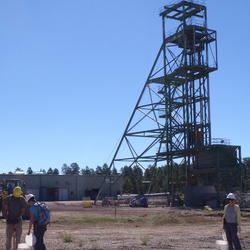
Minerals Resources Life Cycle Integrated Science Team
Processes Controlling Fate and Transport of Metals Associated with Legacy Mining
Macro and Micro Analytical Methods Development
Geochemical, mineralogical, and grain-size data for deep cores from the Cache Creek Settling Basin and streambed sediments from the Sacramento River watershed Geochemical, mineralogical, and grain-size data for deep cores from the Cache Creek Settling Basin and streambed sediments from the Sacramento River watershed
Geochemical and Mineralogical Data from Legacy Mine Land Sites in Central Colorado, 2019 - 2020 Geochemical and Mineralogical Data from Legacy Mine Land Sites in Central Colorado, 2019 - 2020
Geochemical data for groundwater and surface water from the Waste Rock Dam area, Sulphur Bank Mercury Mine, Lake County, California Geochemical data for groundwater and surface water from the Waste Rock Dam area, Sulphur Bank Mercury Mine, Lake County, California
Data acquired in laboratory experiments conducted with a model freshwater invertebrate to characterize dietary bioavailability of uranium Data acquired in laboratory experiments conducted with a model freshwater invertebrate to characterize dietary bioavailability of uranium
Water chemistry, stable isotopes, and trace metals in sediment, water and biota in Torch Lake and Gratiot Lake, Keweenaw Peninsula, Michigan, USA, July and October 2021 Water chemistry, stable isotopes, and trace metals in sediment, water and biota in Torch Lake and Gratiot Lake, Keweenaw Peninsula, Michigan, USA, July and October 2021
Geochemical Analyses of Water, Mine tailings, Fluvial Suspended Sediments, Fluvial Bed Sediments, and Fluvial Flood Deposit Sediments from the Big River and Meramec River Drainage Basins, Missouri Geochemical Analyses of Water, Mine tailings, Fluvial Suspended Sediments, Fluvial Bed Sediments, and Fluvial Flood Deposit Sediments from the Big River and Meramec River Drainage Basins, Missouri
Earth Mapping Resources Initiative protocols—Sampling hard-rock mine waste and perpetual mine water sources Earth Mapping Resources Initiative protocols—Sampling hard-rock mine waste and perpetual mine water sources
Dietary bioavailability of uranium to a model freshwater invertebrate Dietary bioavailability of uranium to a model freshwater invertebrate
Metal-rich lacustrine sediments from legacy mining perpetuate copper exposure to aquatic-riparian food webs Metal-rich lacustrine sediments from legacy mining perpetuate copper exposure to aquatic-riparian food webs
A multidisciplinary approach that considers occurrence, geochemistry, bioavailability, and toxicity to prioritize critical minerals for environmental research A multidisciplinary approach that considers occurrence, geochemistry, bioavailability, and toxicity to prioritize critical minerals for environmental research
Balancing natural resource use and extraction of uranium and other elements in the Grand Canyon region Balancing natural resource use and extraction of uranium and other elements in the Grand Canyon region
Annual review 2023: Critical minerals Annual review 2023: Critical minerals
Non-USGS Publications**
**Disclaimer: The views expressed in Non-USGS publications are those of the author and do not represent the views of the USGS, Department of the Interior, or the U.S. Government.
Science and Products
Life Cycle of Critical Minerals: A Balanced Approach to Meeting Our Nation's Resource Demands
Minerals Resources Life Cycle Integrated Science Team
Processes Controlling Fate and Transport of Metals Associated with Legacy Mining
Macro and Micro Analytical Methods Development
Geochemical, mineralogical, and grain-size data for deep cores from the Cache Creek Settling Basin and streambed sediments from the Sacramento River watershed Geochemical, mineralogical, and grain-size data for deep cores from the Cache Creek Settling Basin and streambed sediments from the Sacramento River watershed
Geochemical and Mineralogical Data from Legacy Mine Land Sites in Central Colorado, 2019 - 2020 Geochemical and Mineralogical Data from Legacy Mine Land Sites in Central Colorado, 2019 - 2020
Geochemical data for groundwater and surface water from the Waste Rock Dam area, Sulphur Bank Mercury Mine, Lake County, California Geochemical data for groundwater and surface water from the Waste Rock Dam area, Sulphur Bank Mercury Mine, Lake County, California
Data acquired in laboratory experiments conducted with a model freshwater invertebrate to characterize dietary bioavailability of uranium Data acquired in laboratory experiments conducted with a model freshwater invertebrate to characterize dietary bioavailability of uranium
Water chemistry, stable isotopes, and trace metals in sediment, water and biota in Torch Lake and Gratiot Lake, Keweenaw Peninsula, Michigan, USA, July and October 2021 Water chemistry, stable isotopes, and trace metals in sediment, water and biota in Torch Lake and Gratiot Lake, Keweenaw Peninsula, Michigan, USA, July and October 2021
Geochemical Analyses of Water, Mine tailings, Fluvial Suspended Sediments, Fluvial Bed Sediments, and Fluvial Flood Deposit Sediments from the Big River and Meramec River Drainage Basins, Missouri Geochemical Analyses of Water, Mine tailings, Fluvial Suspended Sediments, Fluvial Bed Sediments, and Fluvial Flood Deposit Sediments from the Big River and Meramec River Drainage Basins, Missouri
Earth Mapping Resources Initiative protocols—Sampling hard-rock mine waste and perpetual mine water sources Earth Mapping Resources Initiative protocols—Sampling hard-rock mine waste and perpetual mine water sources
Dietary bioavailability of uranium to a model freshwater invertebrate Dietary bioavailability of uranium to a model freshwater invertebrate
Metal-rich lacustrine sediments from legacy mining perpetuate copper exposure to aquatic-riparian food webs Metal-rich lacustrine sediments from legacy mining perpetuate copper exposure to aquatic-riparian food webs
A multidisciplinary approach that considers occurrence, geochemistry, bioavailability, and toxicity to prioritize critical minerals for environmental research A multidisciplinary approach that considers occurrence, geochemistry, bioavailability, and toxicity to prioritize critical minerals for environmental research
Balancing natural resource use and extraction of uranium and other elements in the Grand Canyon region Balancing natural resource use and extraction of uranium and other elements in the Grand Canyon region
Annual review 2023: Critical minerals Annual review 2023: Critical minerals
Non-USGS Publications**
**Disclaimer: The views expressed in Non-USGS publications are those of the author and do not represent the views of the USGS, Department of the Interior, or the U.S. Government.