U.S. flag

An official website of the United States government

Images

Images intro.
Filter Total Items: 373
Photographs of liver and ceca from a dead wild turkey.
Photographs from Wild Turkeys (Meleagris gallopavo) found dead in WI

Photographs from Wild Turkeys (Meleagris gallopavo) found dead in Wisconsin, USA.  (A) The liver contains many multifocal to coalescing bullseye-shaped foci of necrosis (arrows). The ventriculus (*) is labeled for orientation. (B) The paired ceca (*) are ectatic with thickened walls.

Photographs from Wild Turkeys (Meleagris gallopavo) found dead in Wisconsin, USA.  (A) The liver contains many multifocal to coalescing bullseye-shaped foci of necrosis (arrows). The ventriculus (*) is labeled for orientation. (B) The paired ceca (*) are ectatic with thickened walls.

Photomicrographs from Wild Turkeys liver and cecum.
Photomicrographs from Wild Turkeys (Meleagris gallopavo) found dead

Photomicrographs from Wild Turkeys (Meleagris gallopavo) found dead in Wisconsin, USA.  (A) In the liver, hepatocytes were replaced by macrophages, lymphocytes, and plasma cells (lower left) with occasional multinucleated giant cells (arrows). H&E stain.  (B) The cecum contains a fibrinonecrotic membrane effacing the mucosa (arrow).

Photomicrographs from Wild Turkeys (Meleagris gallopavo) found dead in Wisconsin, USA.  (A) In the liver, hepatocytes were replaced by macrophages, lymphocytes, and plasma cells (lower left) with occasional multinucleated giant cells (arrows). H&E stain.  (B) The cecum contains a fibrinonecrotic membrane effacing the mucosa (arrow).

Woman holding large block of ice while standing on frozen lake.
Lauren Privette
Lauren Privette
Lauren Privette

Lauren Privette holds a large ice block from a frozen lake at Treehaven education center in northern Wisconsin.

Lauren Privette holds a large ice block from a frozen lake at Treehaven education center in northern Wisconsin.

Woman in full protective gear holding a bag with sample bottles.
Wisconsin Sample Collection

Field team member Laura Hubbard shows off a sample in the field after pickup from the wastewater facility.

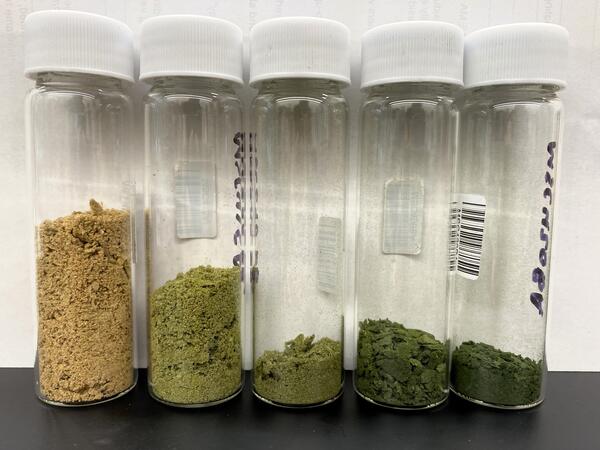
Five clear glass bottles contain samples of dry plankton, ranging in color from brown to dark green
Plankton samples collected from different monthly collections in Lake Mendota, Wisconsin

Five clear glass bottles contain samples of dry plankton, ranging in color from brown to dark green. Plankton samples were collected from different monthly collections in Lake Mendota, Wisconsin. The color gradient highlights how plankton communities can rapidly change over the course of spring to summer.

Five clear glass bottles contain samples of dry plankton, ranging in color from brown to dark green. Plankton samples were collected from different monthly collections in Lake Mendota, Wisconsin. The color gradient highlights how plankton communities can rapidly change over the course of spring to summer.

Two people discussing design of bioswale at Green Tech Station on Milwaukee's North Side
Discussing the design of a bioswale at the Green Tech Station on the north side of Milwaukee, Wisconsin

Justin Hegarty (Reflo Sustainable Water Solutions) and Dr. Tony Parolari (Marquette University) discussing the design of a bioswale at the Green Tech Station on Milwaukee’s north side.

Rat snake museum specimen

This rat snake is a preserved museum specimen with snake fungal disease that was collected in Tennessee in 1973. The photo was taken at the USGS National Wildlife Health Center in 2017 as part of a study.

This rat snake is a preserved museum specimen with snake fungal disease that was collected in Tennessee in 1973. The photo was taken at the USGS National Wildlife Health Center in 2017 as part of a study.

Entrance of USDA Forest Products Lab building in Madison, Wisconsin
Upper Midwest Water Science Center Forest Products Lab Wisconsin

Entrance to the USDA Forest Products Laboratory building in Madison, Wisconsin, home of the Upper Midwest Water Science Center Wisconsin office and the Mercury Research Laboratory.

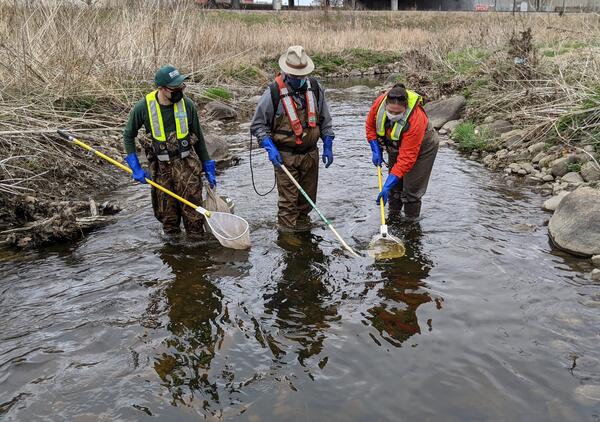
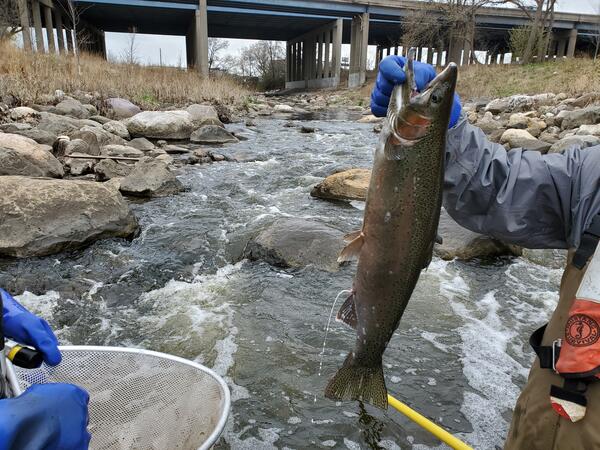
A milting rainbow trout held up by scientist after being caught through electrofishing
A milting rainbow trout caught in Underwood Creek at Wauwatosa, Wisconsin

USGS scientist holding a milting rainbow trout caught as part of an assessment of fish passage in Underwood Creek at Wauwatosa, Wisconsin, just downstream of I-41/US 45. https://waterdata.usgs.gov/monitoring-location/04087088/

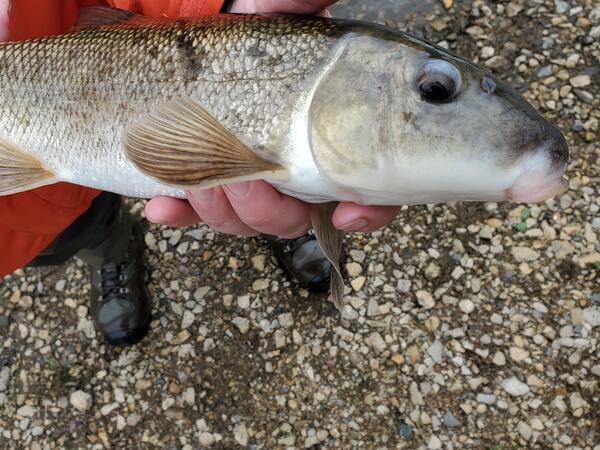
Breeding male central stoneroller fish with bumps on its head held in hands of scientist
Breeding male central stoneroller fish

USGS scientist holding a male central stoneroller caught in Underwood Creek at Wauwatosa, Wisconsin. https://waterdata.usgs.gov/monitoring-location/04087088/. This fish is native to Wisconsin; the tubercles (bumps) on its head indicate that it is spawning.

USGS scientist holding a male central stoneroller caught in Underwood Creek at Wauwatosa, Wisconsin. https://waterdata.usgs.gov/monitoring-location/04087088/. This fish is native to Wisconsin; the tubercles (bumps) on its head indicate that it is spawning.

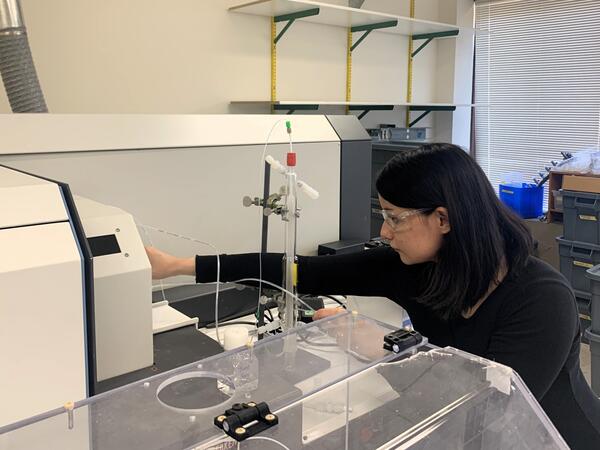
Scientist preparing laboratory machine for analysis
Scientist preparing a multicollector inductively coupled plasma mass spectrometer for analysis in laboratory
Photomicrographs from a big brown bat nasal cavity and hair follicle.
Photomicrographs from a big brown bat (Eptesicus fuscus) from Wisconsi

Photomicrographs from a big brown bat (Eptesicus fuscus) from Wisconsin, USA. H&E stain. (A) Low magnification of a cross section through the nares showing nasal cavity (*), oral mucosa (arrowhead), and haired skin (arrow). (B) Higher magnification showing a normal hair follicle (arrow) surrounded by sebaceous glands.

Photomicrographs from a big brown bat (Eptesicus fuscus) from Wisconsin, USA. H&E stain. (A) Low magnification of a cross section through the nares showing nasal cavity (*), oral mucosa (arrowhead), and haired skin (arrow). (B) Higher magnification showing a normal hair follicle (arrow) surrounded by sebaceous glands.

Helicopter towing large hoop, hovering over snowy ground with person in orange for scale
Helicopter with geophysical survey equipment loop deployed below for airborne electromagnetic survey, Northeastern Wisconsin, January 2021

Photo of helicopter with geophysical equipment loop deployed below it via slingload. Technician for scale. In January 2021 a helicopter carried an airborne electromagnetic induction sensor over parts of northeastern Wisconsin as part of a USGS study to map the aquifers in the region.

Was this page helpful?