



Island in the Sacramento-San Joaquin Delta
Images
California Water Science Center Images
Filter Total Items: 336
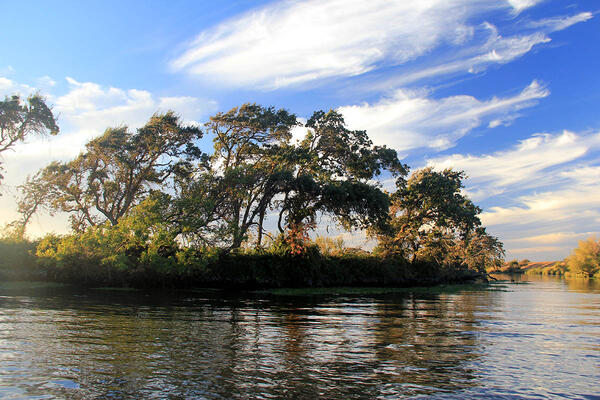
Island in the Sacramento-San Joaquin Delta
Island in the Sacramento-San Joaquin Delta
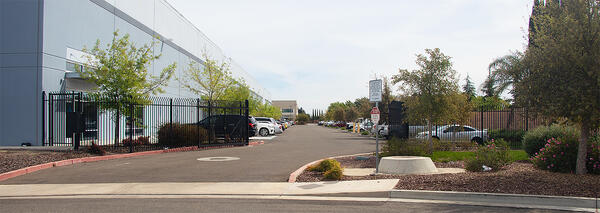
West Sacramento Projects Office
This is a photograph of the outside of USGS California Water Science Center West Sacramento Projects Office.
This is a photograph of the outside of USGS California Water Science Center West Sacramento Projects Office.
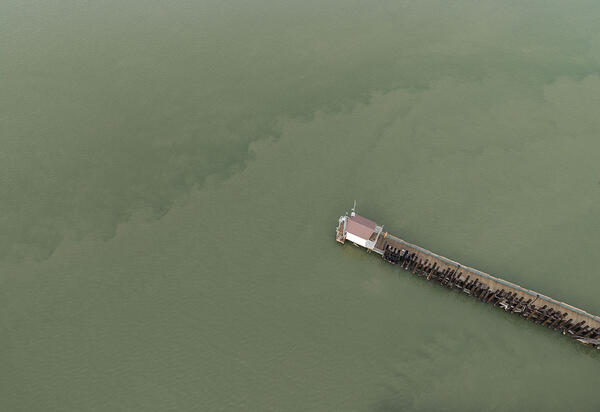
A drone view of Martinez Harbor, Contra Costa County.
A drone view of Martinez Harbor, Contra Costa County.A drone view of where scientists with the U.S. Geological Survey gathered shellfish samples collected at Martinez Harbor, Contra Costa County.
A drone view of Martinez Harbor, Contra Costa County.
A drone view of Martinez Harbor, Contra Costa County.A drone view of where scientists with the U.S. Geological Survey gathered shellfish samples collected at Martinez Harbor, Contra Costa County.
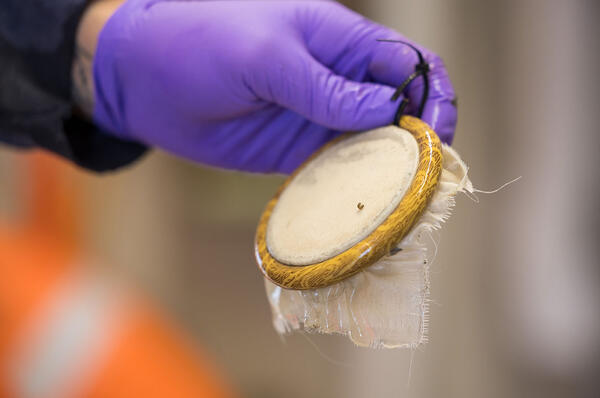
Shrimp are tested for levels of toxins found in Harmful Algal Blooms (HABs).
Shrimp are tested for levels of toxins found in Harmful Algal Blooms (HABs).Scientists with the U.S. Geological Survey and Restore the Delta gather shellfish samples collected at Martinez Harbor, Contra Costa County. The shrimp are tested for levels of toxins found in Harmful Algal Blooms (HABs).
Shrimp are tested for levels of toxins found in Harmful Algal Blooms (HABs).
Shrimp are tested for levels of toxins found in Harmful Algal Blooms (HABs).Scientists with the U.S. Geological Survey and Restore the Delta gather shellfish samples collected at Martinez Harbor, Contra Costa County. The shrimp are tested for levels of toxins found in Harmful Algal Blooms (HABs).
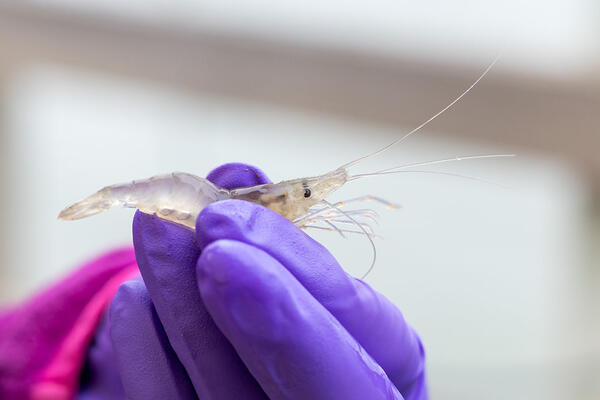
Shrimp being tested for toxins found in harmful algal blooms.
Shrimp being tested for toxins found in harmful algal blooms.Scientists with the U.S. Geological Survey and Restore the Delta gather shellfish samples collected at Martinez Harbor, Contra Costa County. The shrimp are tested for levels of toxins found in Harmful Algal Blooms (HABs). P. macrodactylus shrimp is an invasive shrimp found in the region and commonly caught in the USGS traps.
Shrimp being tested for toxins found in harmful algal blooms.
Shrimp being tested for toxins found in harmful algal blooms.Scientists with the U.S. Geological Survey and Restore the Delta gather shellfish samples collected at Martinez Harbor, Contra Costa County. The shrimp are tested for levels of toxins found in Harmful Algal Blooms (HABs). P. macrodactylus shrimp is an invasive shrimp found in the region and commonly caught in the USGS traps.
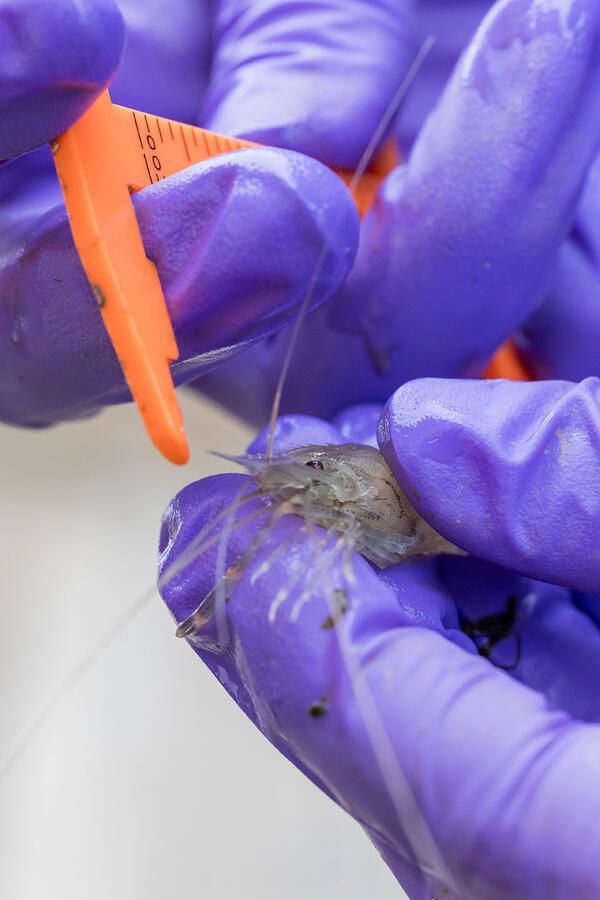
Calipers being used to measure shrimp collected from Martinez Harbor, Contra Costa County, California
Calipers being used to measure shrimp collected from Martinez Harbor, Contra Costa County, CaliforniaScientists with the U.S. Geological Survey and Restore the Delta measure shellfish samples collected at Martinez Harbor, Contra Costa County. All shellfish are collected, species identified, and individuals measured with calipers. The shrimp are then tested for levels of toxins found in Harmful Algal Blooms (HABs).
Calipers being used to measure shrimp collected from Martinez Harbor, Contra Costa County, California
Calipers being used to measure shrimp collected from Martinez Harbor, Contra Costa County, CaliforniaScientists with the U.S. Geological Survey and Restore the Delta measure shellfish samples collected at Martinez Harbor, Contra Costa County. All shellfish are collected, species identified, and individuals measured with calipers. The shrimp are then tested for levels of toxins found in Harmful Algal Blooms (HABs).
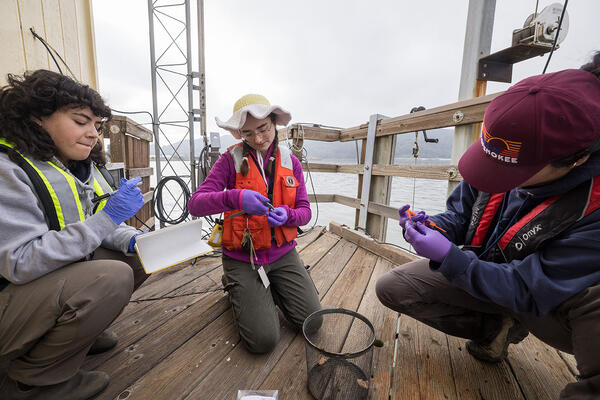
Gathering and measuring shellfish samples collected at Martinez Harbor, Contra Costa County, California
Gathering and measuring shellfish samples collected at Martinez Harbor, Contra Costa County, CaliforniaZoë Siman-Tov (left), a Hydrologic Technician with the U.S. Geological Survey, and Amelia Ayers (center), a Physical Scientist with USGS, gather and measure shellfish samples collected at Martinez Harbor, Contra Costa County. The shellfish trap is baited and deployed for two days in the water before being retrieved.
Gathering and measuring shellfish samples collected at Martinez Harbor, Contra Costa County, California
Gathering and measuring shellfish samples collected at Martinez Harbor, Contra Costa County, CaliforniaZoë Siman-Tov (left), a Hydrologic Technician with the U.S. Geological Survey, and Amelia Ayers (center), a Physical Scientist with USGS, gather and measure shellfish samples collected at Martinez Harbor, Contra Costa County. The shellfish trap is baited and deployed for two days in the water before being retrieved.
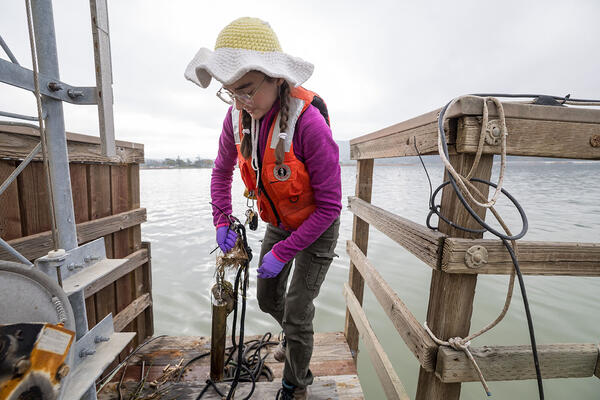
Scientist packs up gear used to gather shellfish samples
Scientist packs up gear used to gather shellfish samplesAmelia Ayers, a Physical Scientist with the U.S. Geological Survey, packs up the equipment used to gather shellfish samples collected at Martinez Harbor, Contra Costa County, California. The shellfish trap and composite samplers are attached to a rope with a heavy weight and deployed in the water. It is retrieved once or twice a month depending on the season.
Scientist packs up gear used to gather shellfish samples
Scientist packs up gear used to gather shellfish samplesAmelia Ayers, a Physical Scientist with the U.S. Geological Survey, packs up the equipment used to gather shellfish samples collected at Martinez Harbor, Contra Costa County, California. The shellfish trap and composite samplers are attached to a rope with a heavy weight and deployed in the water. It is retrieved once or twice a month depending on the season.
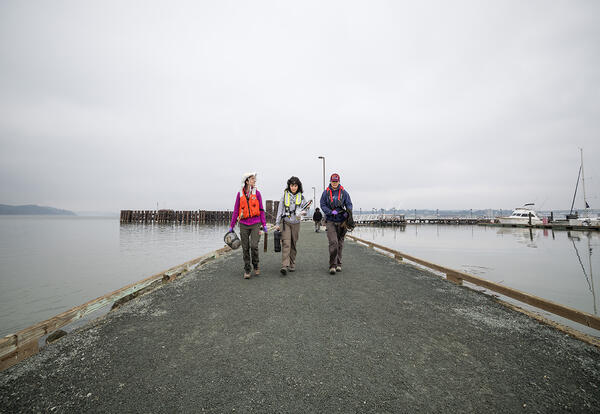
USGS research team arrives at sampling site
Amelia Ayers, Zoë Siman‑Tov, of the USGS and Lexi Yokomizo of Restore the Delta arrive at Martinez Harbor in Contra Costa County, California to sample shellfish and test them for toxins found in Harmful Algal Blooms (HABs).
Amelia Ayers, Zoë Siman‑Tov, of the USGS and Lexi Yokomizo of Restore the Delta arrive at Martinez Harbor in Contra Costa County, California to sample shellfish and test them for toxins found in Harmful Algal Blooms (HABs).
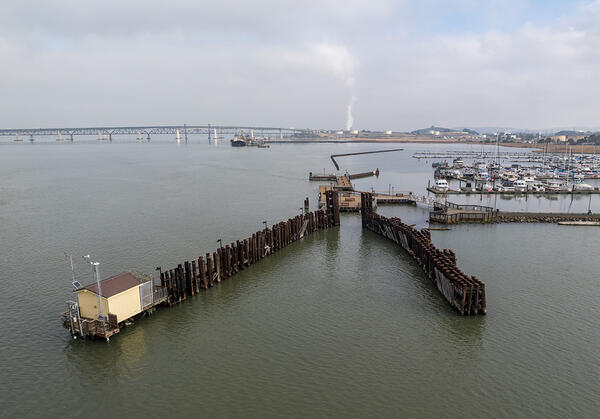
A drone view of where scientists gathered shellfish samples at Martinez Harbor, Contra Costa County.
A drone view of where scientists gathered shellfish samples at Martinez Harbor, Contra Costa County.A drone view of where scientists with the U.S. Geological Survey gathered shellfish samples collected at Martinez Harbor, Contra Costa County.
A drone view of where scientists gathered shellfish samples at Martinez Harbor, Contra Costa County.
A drone view of where scientists gathered shellfish samples at Martinez Harbor, Contra Costa County.A drone view of where scientists with the U.S. Geological Survey gathered shellfish samples collected at Martinez Harbor, Contra Costa County.
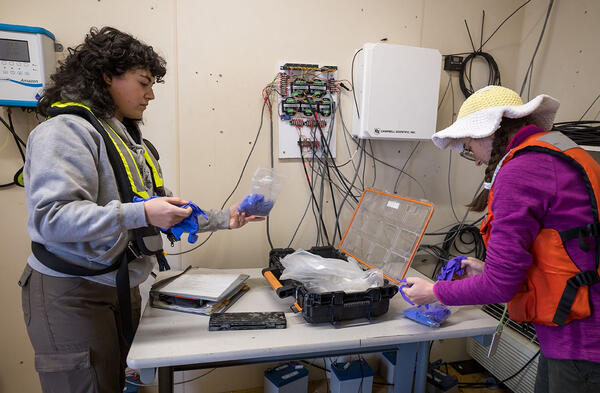
USGS scientists collecting shellfish samples
Zoë Siman-Tov (left) and Amelia Ayers, both with the U.S. Geological Survey, analyze shellfish samples collected at Martinez Harbor, Contra Costa County, CA. Shellfish (shrimp, crab, or crayfish) caught in the traps are analyzed for toxins found in Harmful Algal Blooms (HABs).
Zoë Siman-Tov (left) and Amelia Ayers, both with the U.S. Geological Survey, analyze shellfish samples collected at Martinez Harbor, Contra Costa County, CA. Shellfish (shrimp, crab, or crayfish) caught in the traps are analyzed for toxins found in Harmful Algal Blooms (HABs).
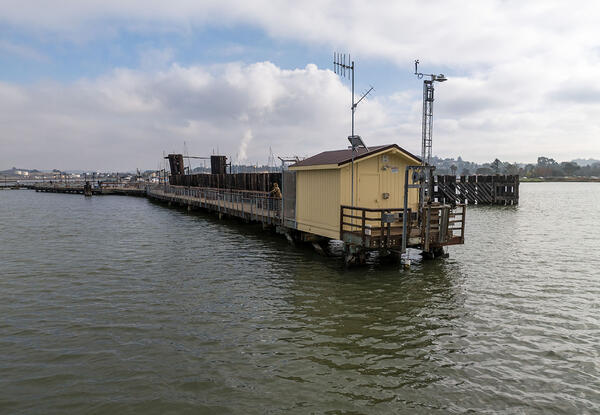
Drone view of where scientists gathered shellfish samples at Martinez Harbor, Contra Costa County.
Drone view of where scientists gathered shellfish samples at Martinez Harbor, Contra Costa County.A drone view of where scientists with the U.S. Geological Survey and Restore the Delta gathered shellfish samples collected at Martinez Harbor, Contra Costa County. The shrimp are tested for levels of toxins found in Harmful Algal Blooms (HABs).
Drone view of where scientists gathered shellfish samples at Martinez Harbor, Contra Costa County.
Drone view of where scientists gathered shellfish samples at Martinez Harbor, Contra Costa County.A drone view of where scientists with the U.S. Geological Survey and Restore the Delta gathered shellfish samples collected at Martinez Harbor, Contra Costa County. The shrimp are tested for levels of toxins found in Harmful Algal Blooms (HABs).
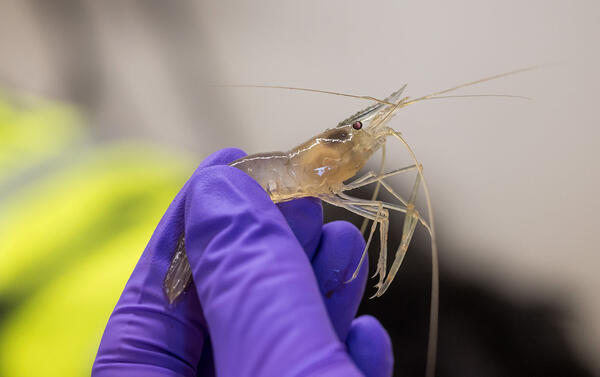
Shrimp are tested for levels of toxins found in Harmful Algal Blooms (HABs).
Shrimp are tested for levels of toxins found in Harmful Algal Blooms (HABs).Scientists with the U.S. Geological Survey and Restore the Delta gather shellfish samples collected at Martinez Harbor, Contra Costa County. The shrimp are tested for levels of toxins found in Harmful Algal Blooms (HABs).
Shrimp are tested for levels of toxins found in Harmful Algal Blooms (HABs).
Shrimp are tested for levels of toxins found in Harmful Algal Blooms (HABs).Scientists with the U.S. Geological Survey and Restore the Delta gather shellfish samples collected at Martinez Harbor, Contra Costa County. The shrimp are tested for levels of toxins found in Harmful Algal Blooms (HABs).
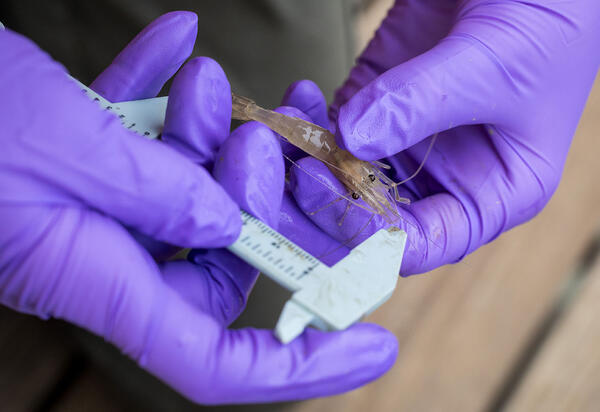
Calipers being used to measure shrimp
Scientists with the U.S. Geological Survey and Restore the Delta measure shellfish samples collected at Martinez Harbor, Contra Costa County. All shellfish are collected, species identified, and individuals measured with calipers. These specimens will all be sent to a laboratory to test their tissue for toxins caused by Harmful Algal Blooms.
Scientists with the U.S. Geological Survey and Restore the Delta measure shellfish samples collected at Martinez Harbor, Contra Costa County. All shellfish are collected, species identified, and individuals measured with calipers. These specimens will all be sent to a laboratory to test their tissue for toxins caused by Harmful Algal Blooms.
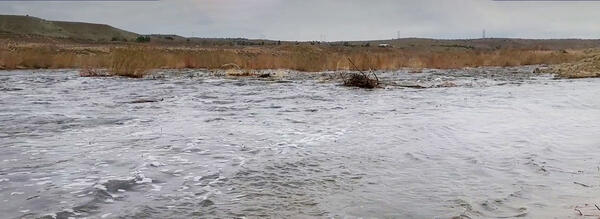
Mojave River during high flow
This picture shows the Mojave River in southern California during a high flow stage.
This picture shows the Mojave River in southern California during a high flow stage.
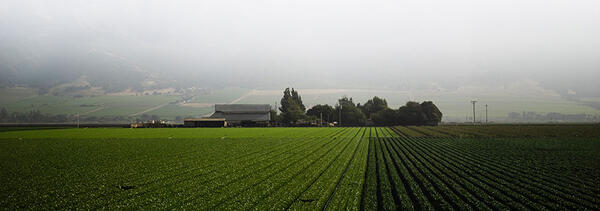
CVHM2 Banner
A field in California's Central Valley. This is being used to represent the Central Valley Hydrologic Model, version 2.
A field in California's Central Valley. This is being used to represent the Central Valley Hydrologic Model, version 2.
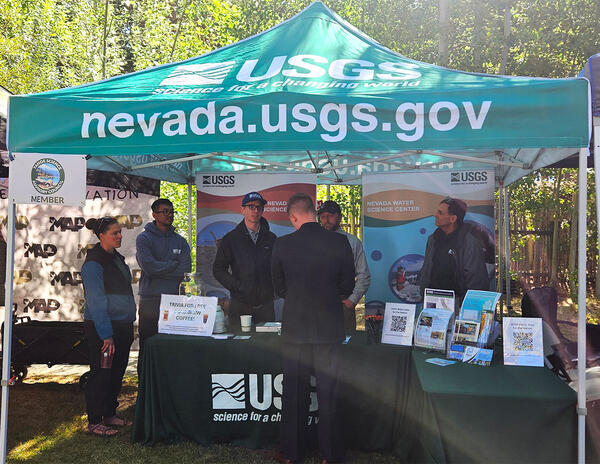
USGS booth at 2025 Tahoe Summit.
USGS booth at 2025 Tahoe Summit. Pictured from left, Sara Doyle (NV WSC), Zach Hood (NV WSC), David Smith (NV WSC), Ed Parvin (CAWSC) and Mark Dickman (CAWSC). Photograph by Ramon Naranjo (NV WSC) on 8/6/25.
USGS booth at 2025 Tahoe Summit. Pictured from left, Sara Doyle (NV WSC), Zach Hood (NV WSC), David Smith (NV WSC), Ed Parvin (CAWSC) and Mark Dickman (CAWSC). Photograph by Ramon Naranjo (NV WSC) on 8/6/25.
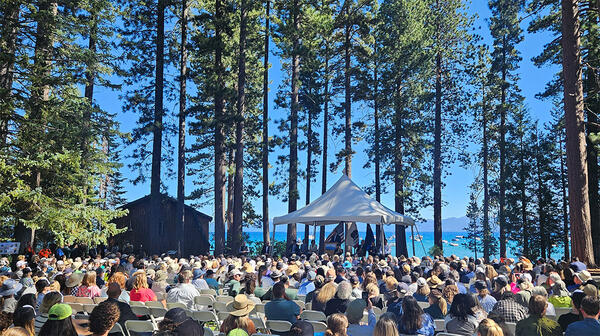
Crowd gathered at 2025 Tahoe Summit
Crown gathered at 2025 Tahoe Summit. The Lake Tahoe Summit is an annual event that brings local, federal, and state leaders together to discuss ways to protect Lake Tahoe and strengthen the partnership underlying the Lake Tahoe Environmental Improvement Program.
Crown gathered at 2025 Tahoe Summit. The Lake Tahoe Summit is an annual event that brings local, federal, and state leaders together to discuss ways to protect Lake Tahoe and strengthen the partnership underlying the Lake Tahoe Environmental Improvement Program.
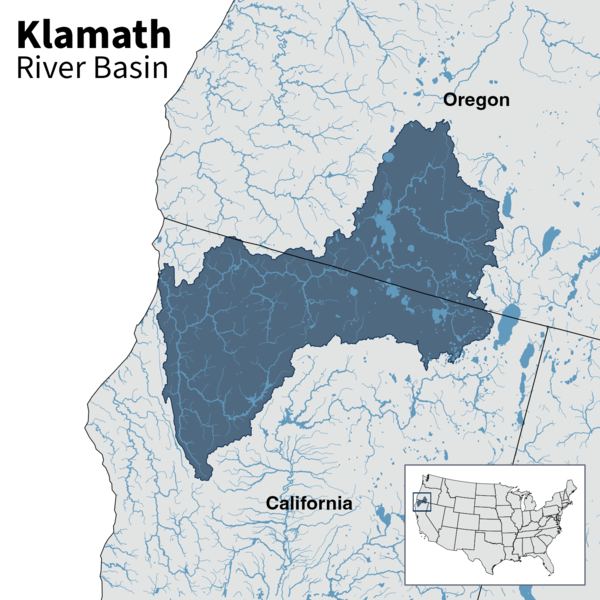
Klamath Basin
Klamath River Basin straddles northern California and southern Oregon. The Klamath River empties into the Pacific Ocean just below the Oregon/California border.
Klamath River Basin straddles northern California and southern Oregon. The Klamath River empties into the Pacific Ocean just below the Oregon/California border.
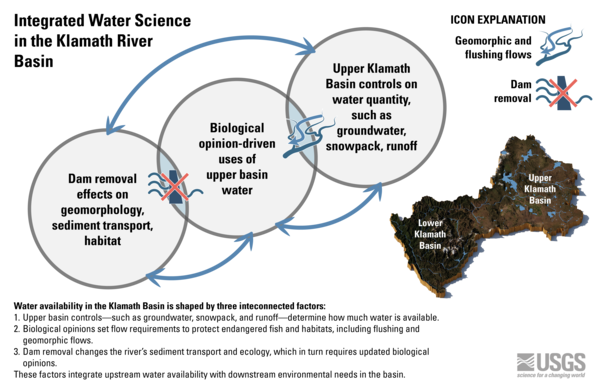
Integrated Water Science in the Klamath River Basin, Diagram
Integrated Water Science in the Klamath River Basin, DiagramWater availability in the Klamath Basin is shaped by three interconnected factors, like overlapping circles in a Venn diagram. First, upper basin controls—such as groundwater, snowpack, and runoff—determine how much water is available. Second, biological opinions set flow requirements to protect endangered fish and habitats, including flushing and geomorphic flows.
Integrated Water Science in the Klamath River Basin, Diagram
Integrated Water Science in the Klamath River Basin, DiagramWater availability in the Klamath Basin is shaped by three interconnected factors, like overlapping circles in a Venn diagram. First, upper basin controls—such as groundwater, snowpack, and runoff—determine how much water is available. Second, biological opinions set flow requirements to protect endangered fish and habitats, including flushing and geomorphic flows.
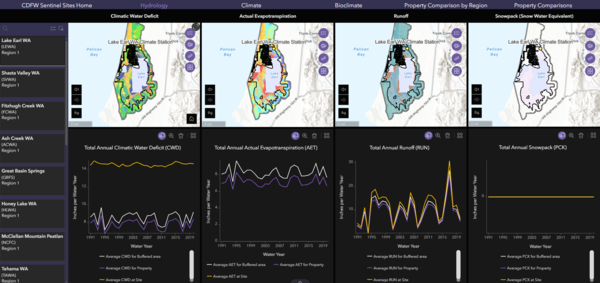
CDFW climate hydrology explorer
This is a screenshot showing the hydrology for Lake Earl WA inside the CDFW climate hydrology explorer web tool.
This is a screenshot showing the hydrology for Lake Earl WA inside the CDFW climate hydrology explorer web tool.