U.S. flag

An official website of the United States government

California Water Science Center

The U.S. Geological Survey, California Water Science Center provides reliable, impartial, foundational data and scientific analysis to address water issues facing California today. We conduct hydrologic monitoring and investigative studies in partnership with Tribal, federal, state, and local agencies to assist them in making decisions.

News

Predicting Harmful Algal Blooms and Toxicity in the San Francisco Estuary

Predicting Harmful Algal Blooms and Toxicity in the San Francisco Estuary

San Luis Obispo Field Office Grand Opening

San Luis Obispo Field Office Grand Opening

Multi-Year USGS and State Collaboration

Multi-Year USGS and State Collaboration

Publications

Widespread occurrence of Magnéli phases in wildland-urban interface fire ashes Widespread occurrence of Magnéli phases in wildland-urban interface fire ashes

The increasing activity of wildland–urban interface (WUI) fires has raised concerns regarding the potential environmental and human health impacts of residual ash remaining after burning. In this study, we investigated the concentration and speciation of titanium in WUI fire ash. Total titanium concentrations in WUI fire ash ranged from 0.53 to 80 g kg–1. Synchrotron-based macro- and...
Authors
Mohammed Baalousha, Morgane Desmau, Roberto A. Colina-Ruiz, Antonio Lanzirotti, Sheryl A. Singerling, Michelle A. Stern, Charles N. Alpers

Decadal shifts in groundwater age detected by environmental tracers across California, USA Decadal shifts in groundwater age detected by environmental tracers across California, USA

Groundwater age offers important insight into recharge, storage, and contamination risk. Although models predict age changes can be driven by pumping and climate variability, direct observational evidence remains limited. Here, we analyzed paired environmental tracer suites (tritium, carbon-14, and tritiogenic helium-3) collected a decade apart from 268 wells across California to assess...
Authors
Bryant C. Jurgens, Zeno F. Levy

Edible baits for systemic flea control, plague mitigation, and wildlife conservation: Evaluation of four active ingredients with three rodent species in western North America Edible baits for systemic flea control, plague mitigation, and wildlife conservation: Evaluation of four active ingredients with three rodent species in western North America

The flea-borne agent of plague, Yersinia pestis, is lethal to endangered black-footed ferrets (Mustela nigripes, BFFs) and the prairie dogs (Cynomys spp., PDs) on which BFFs depend for habitat and prey. We developed bait pellets containing insecticides for flea control with PDs. Individual baits contained 0.46, 0.91, 1.21, or 1.52 mg fipronil, 5.40 mg afoxolaner, 50.62 mg fluralaner, or...
Authors
David A. Eads, Marc R. Matchett, Magnus McCaffery, Ashlyn Hemmah, Angela R. Jarding, Jennifer Cordova, Heather Heimann, Stefano Liccioli, Laura E. Gardiner, Jordan Cormack, Holly Hicks, Jason Fly, Eddie Childers, Travis Livieri, Michelle L. Hladik, Dean E. Biggins

Science

Where Land Meets Sea: USGS Science for Resilient Coastal Habitats
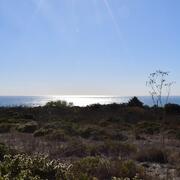
USGS coastal science plays a critical role in supporting the effective, science-based management of coastal ecosystems, where the biodiversity of land and sea meet. It provides managers with the information they need to make sound decisions. Through cutting-edge research, predictive modeling, and decision-support tools, USGS empowers resource managers to make informed, science-based choices. From...
Where Land Meets Sea: USGS Science for Resilient Coastal Habitats

Where Land Meets Sea: USGS Science for Resilient Coastal Habitats

USGS coastal science plays a critical role in supporting the effective, science-based management of coastal ecosystems, where the biodiversity of land and sea meet. It provides managers with the information they need to make sound decisions. Through cutting-edge research, predictive modeling, and decision-support tools, USGS empowers resource managers to make informed, science-based choices. From...
Learn More

Bioenergy and Pesticides: Lessons from the AltEn Bioenergy Plant
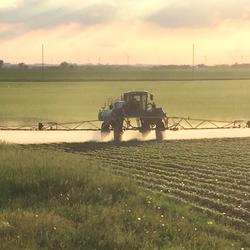
Ethanol production from seed corn, while reducing waste and promoting renewable energy, can have environmental and health implications. A USGS study on a former bioenergy plant that received pesticide-coated seeds used for ethanol production, revealed that the process led to contaminated wastewater and solid residue, resulting in elevated pesticide levels in nearby surface waters even after the...
Bioenergy and Pesticides: Lessons from the AltEn Bioenergy Plant

Bioenergy and Pesticides: Lessons from the AltEn Bioenergy Plant

Ethanol production from seed corn, while reducing waste and promoting renewable energy, can have environmental and health implications. A USGS study on a former bioenergy plant that received pesticide-coated seeds used for ethanol production, revealed that the process led to contaminated wastewater and solid residue, resulting in elevated pesticide levels in nearby surface waters even after the...
Learn More

Healthy Fish and Wildlife: Community Livelihoods, Fishing and Hunting Heritage, Recreation, and Economic Security

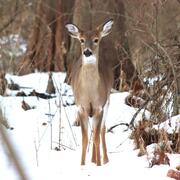
Healthy fish and wildlife underpin the economic vitality, food security, recreational enjoyment, and cultural heritage of fishing and hunting in communities across the United States. Fishing and hunting resources scale from the personal recreation of families to multi-billion-dollar industries. Recognizing these critical connections, the U.S. Geological Survey (USGS) works to understand, protect...
Healthy Fish and Wildlife: Community Livelihoods, Fishing and Hunting Heritage, Recreation, and Economic Security

Healthy Fish and Wildlife: Community Livelihoods, Fishing and Hunting Heritage, Recreation, and Economic Security

Healthy fish and wildlife underpin the economic vitality, food security, recreational enjoyment, and cultural heritage of fishing and hunting in communities across the United States. Fishing and hunting resources scale from the personal recreation of families to multi-billion-dollar industries. Recognizing these critical connections, the U.S. Geological Survey (USGS) works to understand, protect...
Learn More
Was this page helpful?