USGS employee, Caleb Schraeder, in cableway above river
USGS employee, Caleb Schraeder, in cableway above riverUSGS employee, Caleb Schraeder, in cableway over the Sacramento River above Bend Bridge near Red Bluff, CA.


Official websites use .gov
A .gov website belongs to an official government organization in the United States.

Secure .gov websites use HTTPS
A lock () or https:// means you’ve safely connected to the .gov website. Share sensitive information only on official, secure websites.


USGS employee, Caleb Schraeder, in cableway over the Sacramento River above Bend Bridge near Red Bluff, CA.
USGS employee, Caleb Schraeder, in cableway over the Sacramento River above Bend Bridge near Red Bluff, CA.

The namesake of the City of Steamboat Springs was once a geyser. Now the spring upwells into a large pool before flowing out to the Yampa River.
The namesake of the City of Steamboat Springs was once a geyser. Now the spring upwells into a large pool before flowing out to the Yampa River.

Photograph of the South Platte River in Denver, Colorado, taken by USGS personnel.
Photograph of the South Platte River in Denver, Colorado, taken by USGS personnel.

Mineral production lifecycle from exploration through reclamation.
Artistic rendition of the mineral lifecycle from a natural state through to exploration, permitting, mining, and reclamation. Designed for the Minerals Lifecycle Integrated Science Team to depict one aspect of their science focus.
Mineral production lifecycle from exploration through reclamation.
Artistic rendition of the mineral lifecycle from a natural state through to exploration, permitting, mining, and reclamation. Designed for the Minerals Lifecycle Integrated Science Team to depict one aspect of their science focus.

USGS hydrologists use thermal infrared (IR) imagery to evaluate the distribution of warm and hot springs near the Yampa River. Numerous diffuse springs discharge near the river, and IR imagery is useful as a screening tool to pinpoint points of discharge to be sampled for water quality.
USGS hydrologists use thermal infrared (IR) imagery to evaluate the distribution of warm and hot springs near the Yampa River. Numerous diffuse springs discharge near the river, and IR imagery is useful as a screening tool to pinpoint points of discharge to be sampled for water quality.
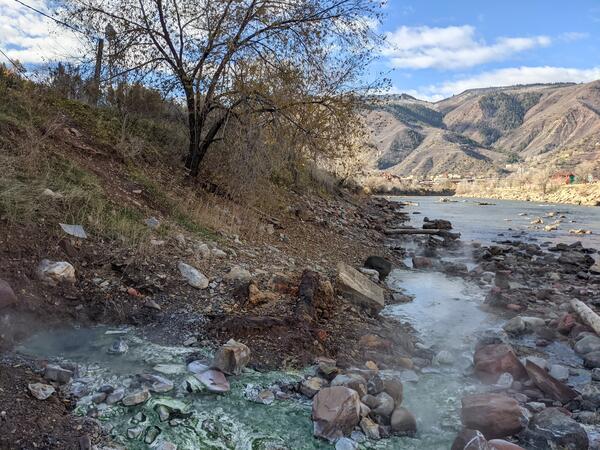
Geothermal groundwater discharge is a substantial source of salinity to the Colorado River. USGS scientists sample geothermal springs to learn more about the age of groundwater and the rock units that interact with groundwater.
Geothermal groundwater discharge is a substantial source of salinity to the Colorado River. USGS scientists sample geothermal springs to learn more about the age of groundwater and the rock units that interact with groundwater.
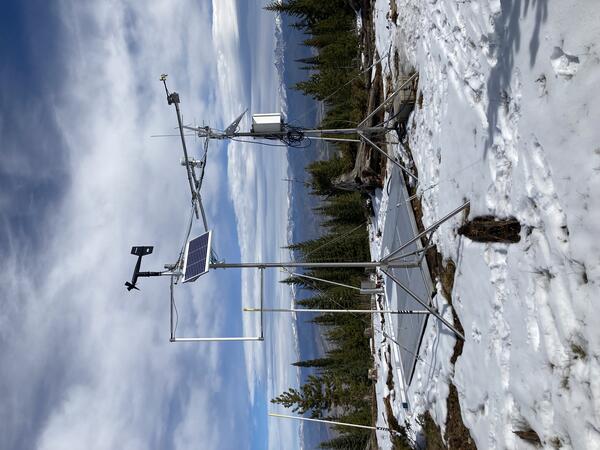
This image shows the Blue Ridge Meteorological Station after installation before snow accumulation. The image is useful to see the station structure and layout of installed sensors as well as the limited snow cover common in the early and late seasons.
This image shows the Blue Ridge Meteorological Station after installation before snow accumulation. The image is useful to see the station structure and layout of installed sensors as well as the limited snow cover common in the early and late seasons.
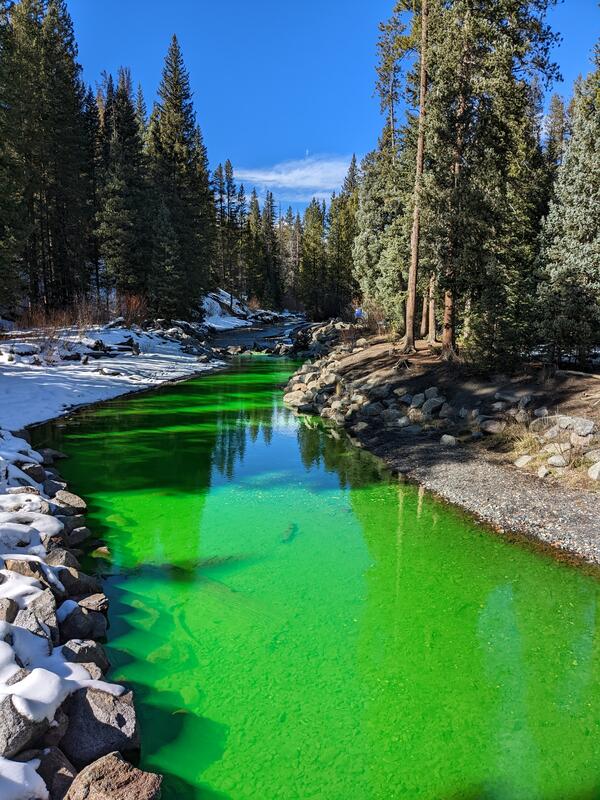
USGS scientists injected a non-toxic fluorescent dye into the Slate River to identify zones of groundwater discharge.
USGS scientists injected a non-toxic fluorescent dye into the Slate River to identify zones of groundwater discharge.

View upstream from U.S. Geological Survey site 09119000 Tomichi Creek at Gunnison, Colorado, showing topography and standing water in a flood irrigated pasture.
View upstream from U.S. Geological Survey site 09119000 Tomichi Creek at Gunnison, Colorado, showing topography and standing water in a flood irrigated pasture.

Image of well from Upper Black Squirrel Creek Designated Groundwater Basin monitoring network with Global navigation satellite system (GNSS) survey being conducted when the well was added to network in 2021.
Image of well from Upper Black Squirrel Creek Designated Groundwater Basin monitoring network with Global navigation satellite system (GNSS) survey being conducted when the well was added to network in 2021.

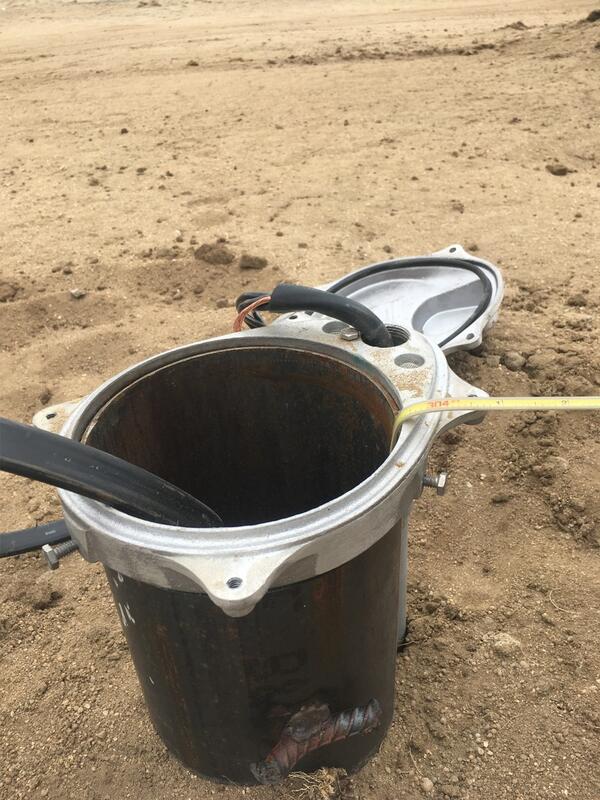
Image of well from Upper Black Squirrel Creek Designated Groundwater Basin monitoring network with measuring point visible.
Image of well from Upper Black Squirrel Creek Designated Groundwater Basin monitoring network with measuring point visible.

Rain Gauge installed after the 2020 Grizzly Creek fire in Glenwood Canyon, Colorado. Scientists installed a network of rain gauges and soil moisture sensors throughout the rugged burn area. These instruments provide real-time data on rainfall intensity and duration, which are critical factors in determining the likelihood of a debris flow.
Rain Gauge installed after the 2020 Grizzly Creek fire in Glenwood Canyon, Colorado. Scientists installed a network of rain gauges and soil moisture sensors throughout the rugged burn area. These instruments provide real-time data on rainfall intensity and duration, which are critical factors in determining the likelihood of a debris flow.

Scientific Investigations Map publication cover for Fountain Creek Elevation-change map project
Scientific Investigations Map publication cover for Fountain Creek Elevation-change map project

The National Water Quality Lab (Building 95) at the Denver Federal Center, Colorado.
The National Water Quality Lab (Building 95) at the Denver Federal Center, Colorado.

Image of well from Upper Black Squirrel Creek Designated Ground Water Basin monitoring network with electric water level tape indicator before measurement.
Image of well from Upper Black Squirrel Creek Designated Ground Water Basin monitoring network with electric water level tape indicator before measurement.

Looking downstream (south) at USGS streamgage 08223400 Rio Grande at Alamosa NWR near Alamosa, CO; non-contact radar suspended on the bank during gage installation next to the streamgage located on the bank on the left.
Looking downstream (south) at USGS streamgage 08223400 Rio Grande at Alamosa NWR near Alamosa, CO; non-contact radar suspended on the bank during gage installation next to the streamgage located on the bank on the left.

Looking across the stream (southwest) at USGS streamgage 08223400 Rio Grande at Alamosa NWR near Alamosa, CO; non-contact radar suspended above the stream with the streamgage located on the bank on the left just out of view.
Looking across the stream (southwest) at USGS streamgage 08223400 Rio Grande at Alamosa NWR near Alamosa, CO; non-contact radar suspended above the stream with the streamgage located on the bank on the left just out of view.

Looking downstream (west) at USGS streamgage 08227510 North Crestone Creek at Baca NWR near Crestone, CO; non-contact radar suspended above the creek with data logger and antennas on the bank on the right.
Looking downstream (west) at USGS streamgage 08227510 North Crestone Creek at Baca NWR near Crestone, CO; non-contact radar suspended above the creek with data logger and antennas on the bank on the right.

Looking upstream (east) at USGS streamgage 08227510 North Crestone Creek at Baca NWR near Crestone, CO; USGS hydrologist is servicing the streamgage.
Looking upstream (east) at USGS streamgage 08227510 North Crestone Creek at Baca NWR near Crestone, CO; USGS hydrologist is servicing the streamgage.

Looking upstream (east) at USGS streamgage 08227510 North Crestone Creek at Baca NWR near Crestone, CO; non-contact radar suspended above the creek with USGS hydrologist servicing the streamgage on the bank on the left.
Looking upstream (east) at USGS streamgage 08227510 North Crestone Creek at Baca NWR near Crestone, CO; non-contact radar suspended above the creek with USGS hydrologist servicing the streamgage on the bank on the left.