



National Park Service and U.S. Geological Survey employees tour the greenhouse in Joshua Tree National Park greenhouse. The plants growing in the Joshua Tree National Park greenhouse will be used for revegetation and restoration efforts in the park.
Images
If you are unable to access or download a product, email fresc_outreach@usgs.gov a request, including the full citation, or call (541) 750-1030.
Filter Total Items: 426
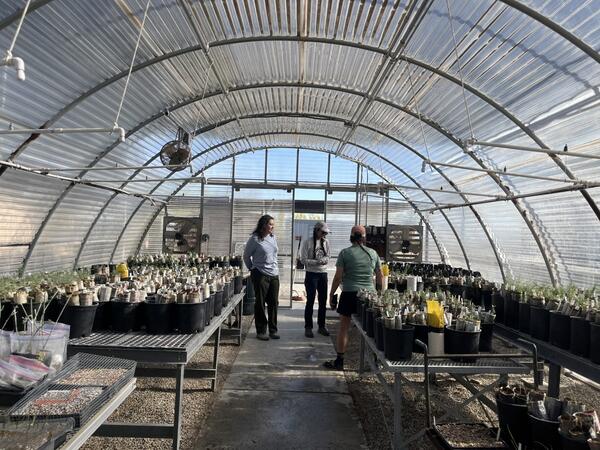
Greenhouse tour at Joshua Tree National Park
National Park Service and U.S. Geological Survey employees tour the greenhouse in Joshua Tree National Park greenhouse. The plants growing in the Joshua Tree National Park greenhouse will be used for revegetation and restoration efforts in the park.
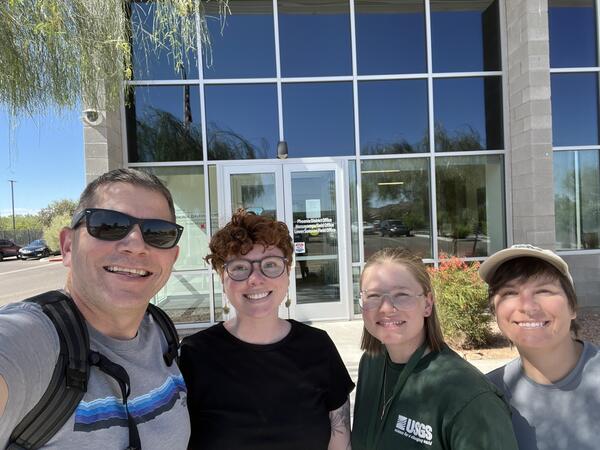
U.S. Geological Survey employees celebrate data collection for the Land Treatment Digital Library
U.S. Geological Survey employees celebrate data collection for the Land Treatment Digital LibraryU.S. Geological Survey employees (from left to right) Matthew Clark, Laura Shriver, Morgan Cheyney, and Sarah Birchard after collecting data for the Land Treatment Digital Library at the Bureau of Land Management Phoenix District Office.
U.S. Geological Survey employees celebrate data collection for the Land Treatment Digital Library
U.S. Geological Survey employees celebrate data collection for the Land Treatment Digital LibraryU.S. Geological Survey employees (from left to right) Matthew Clark, Laura Shriver, Morgan Cheyney, and Sarah Birchard after collecting data for the Land Treatment Digital Library at the Bureau of Land Management Phoenix District Office.
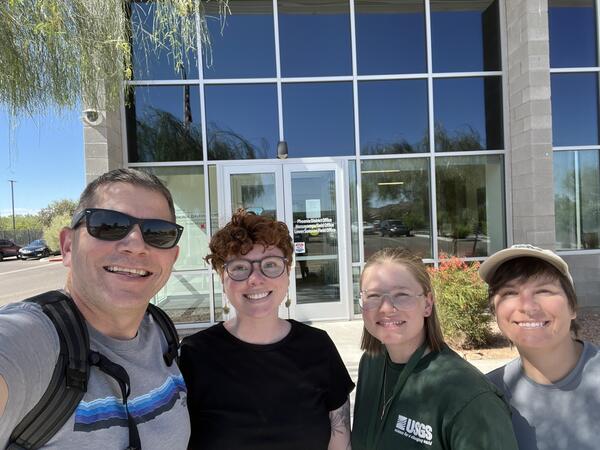
Celebrating data collection for the Land Treatment Digital Library
Celebrating data collection for the Land Treatment Digital LibraryUSGS employees Matthew Clark, Laura Shriver, Morgan Cheyney, and Sarah Birchard celebrate data collection for the Land Treatment Digital Library at the Phoenix Bureau of Land Management District Office, Arizona.
Celebrating data collection for the Land Treatment Digital Library
Celebrating data collection for the Land Treatment Digital LibraryUSGS employees Matthew Clark, Laura Shriver, Morgan Cheyney, and Sarah Birchard celebrate data collection for the Land Treatment Digital Library at the Phoenix Bureau of Land Management District Office, Arizona.
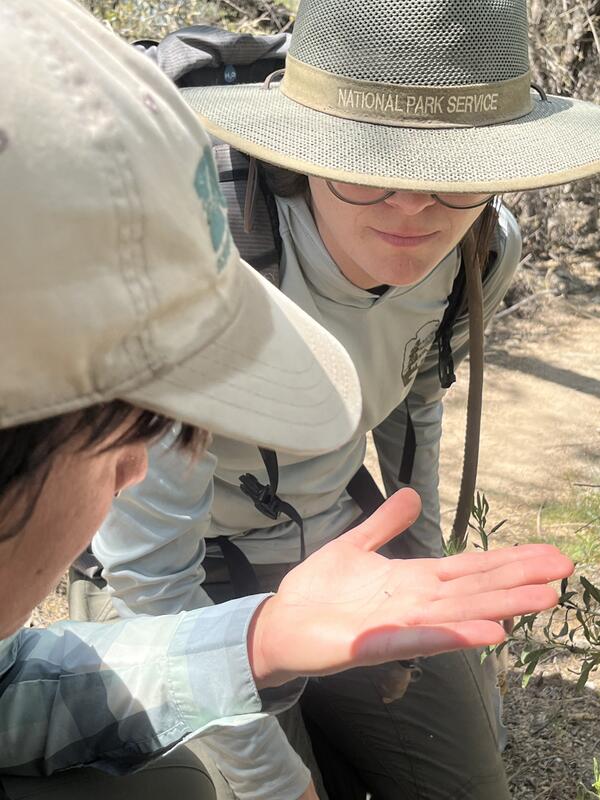
Exploring habitat in Organ Pipe Cactus National Monument
Exploring habitat in Organ Pipe Cactus National MonumentSarah Birchard (USGS) and Meghan Stan (NPS) explore habitat in Organ Pipe Cactus National Monument. Photos by Laura Shriver (USGS).
Exploring habitat in Organ Pipe Cactus National Monument
Exploring habitat in Organ Pipe Cactus National MonumentSarah Birchard (USGS) and Meghan Stan (NPS) explore habitat in Organ Pipe Cactus National Monument. Photos by Laura Shriver (USGS).
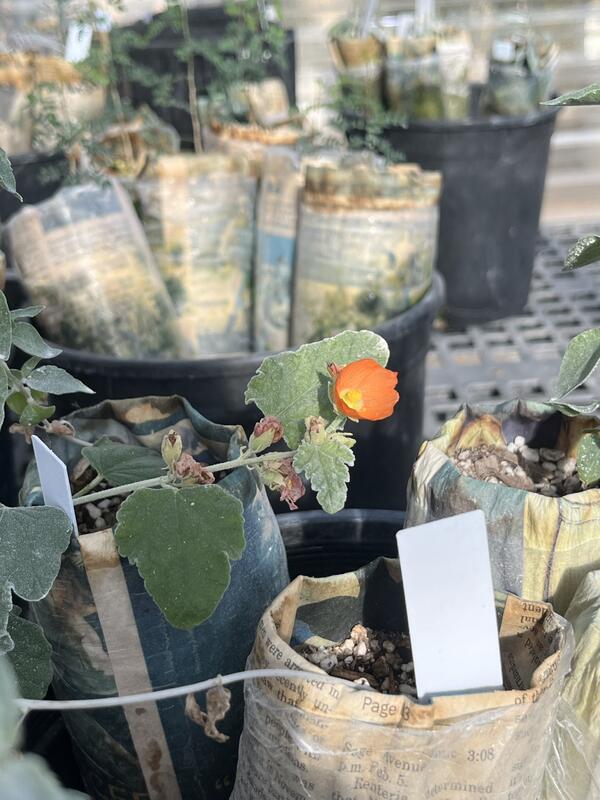
A native globemallow plant blooms in the Joshua Tree National Park greenhouse
A native globemallow plant blooms in the Joshua Tree National Park greenhouseA native globemallow plant blooms in the Joshua Tree National Park greenhouse. Photo by Laura Shriver (USGS).
A native globemallow plant blooms in the Joshua Tree National Park greenhouse
A native globemallow plant blooms in the Joshua Tree National Park greenhouseA native globemallow plant blooms in the Joshua Tree National Park greenhouse. Photo by Laura Shriver (USGS).
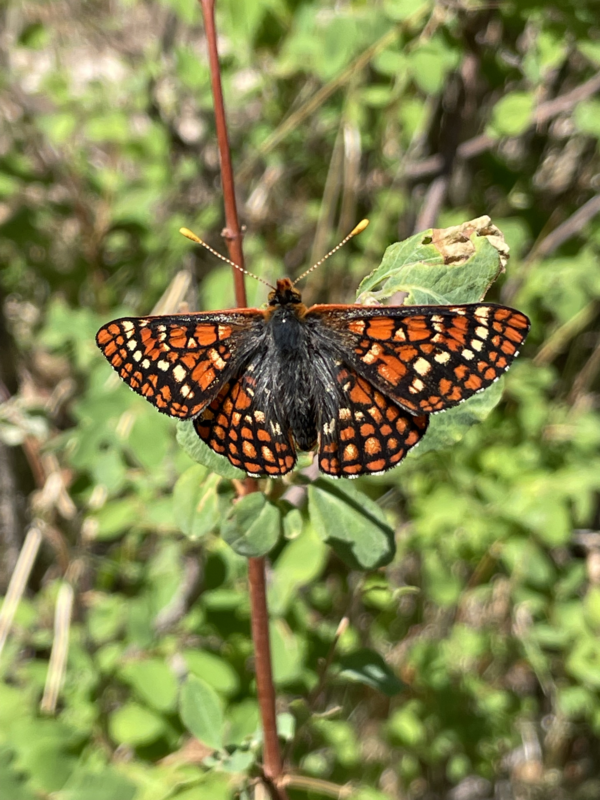
Sacramento Mountains checkerspot butterfly
The stunning orange and dark-brown butterfly is found only in high-elevation meadows in the Lincoln National Forest in southern New Mexico.
The stunning orange and dark-brown butterfly is found only in high-elevation meadows in the Lincoln National Forest in southern New Mexico.

Sacramento Mountains checkerspot butterfly
Sacramento Mountains checkerspot butterfly, found only in sunny meadows within the Sacramento Mountains of southern New Mexico.
Sacramento Mountains checkerspot butterfly, found only in sunny meadows within the Sacramento Mountains of southern New Mexico.
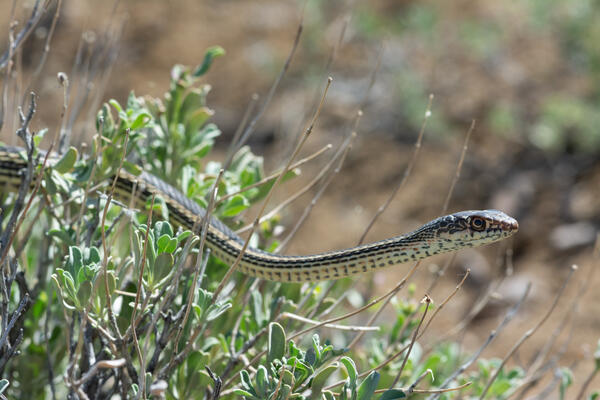
Desert striped whipsnake
A slender Desert Striped Whipsnake - coluber taeniatus.
A slender Desert Striped Whipsnake - coluber taeniatus.
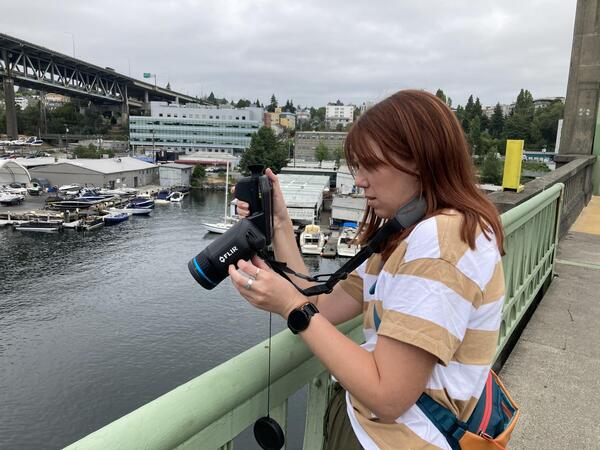
Testing a thermal infrared camera by capturing water surface temperature off the side of a bridge in Seattle, Washington
Testing a thermal infrared camera by capturing water surface temperature off the side of a bridge in Seattle, WashingtonPhoto of EAE testing and adjusting the forward-looking infrared (FLIR) camera parameters while directing the sensor at the water surface off the side of a bridge in Seattle, Washington.
Testing a thermal infrared camera by capturing water surface temperature off the side of a bridge in Seattle, Washington
Testing a thermal infrared camera by capturing water surface temperature off the side of a bridge in Seattle, WashingtonPhoto of EAE testing and adjusting the forward-looking infrared (FLIR) camera parameters while directing the sensor at the water surface off the side of a bridge in Seattle, Washington.
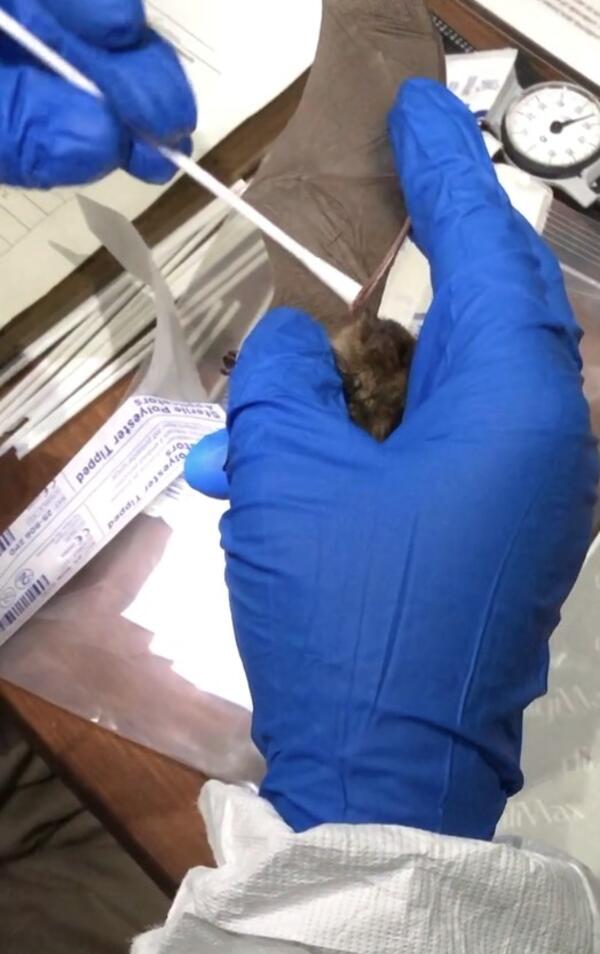
Collecting fungal samples to test for Pseudogymnoascus destructans
Collecting fungal samples to test for Pseudogymnoascus destructansIndividual bats are tested for Pseudogymnoascus destructans, the fungus that causes white-nose syndrome, by wiping a sterile swab across the skin of a bat's outstretched wing and muzzle.
Collecting fungal samples to test for Pseudogymnoascus destructans
Collecting fungal samples to test for Pseudogymnoascus destructansIndividual bats are tested for Pseudogymnoascus destructans, the fungus that causes white-nose syndrome, by wiping a sterile swab across the skin of a bat's outstretched wing and muzzle.
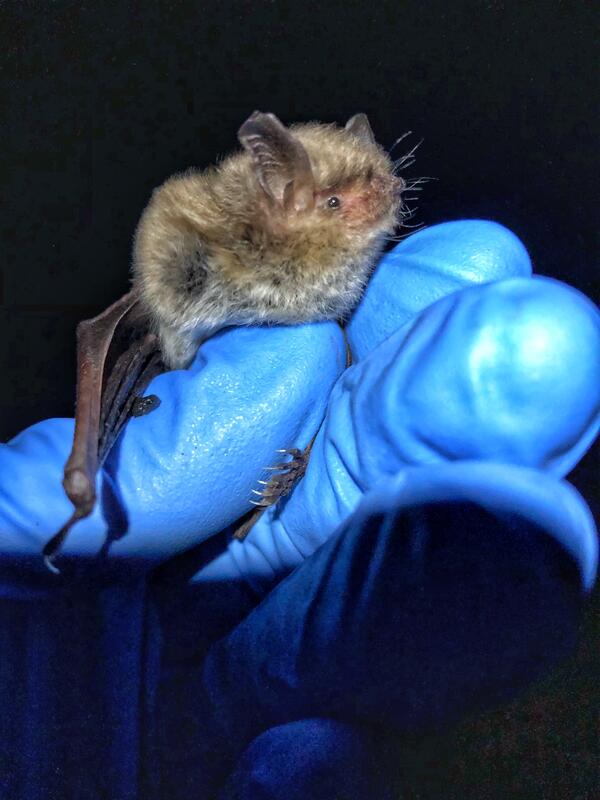
Yuma myotis bat
The Yuma myotis bat, Myotis yumanensis, has a body length of only 1.5-1.9 inches and they weigh less than half an ounce.
The Yuma myotis bat, Myotis yumanensis, has a body length of only 1.5-1.9 inches and they weigh less than half an ounce.
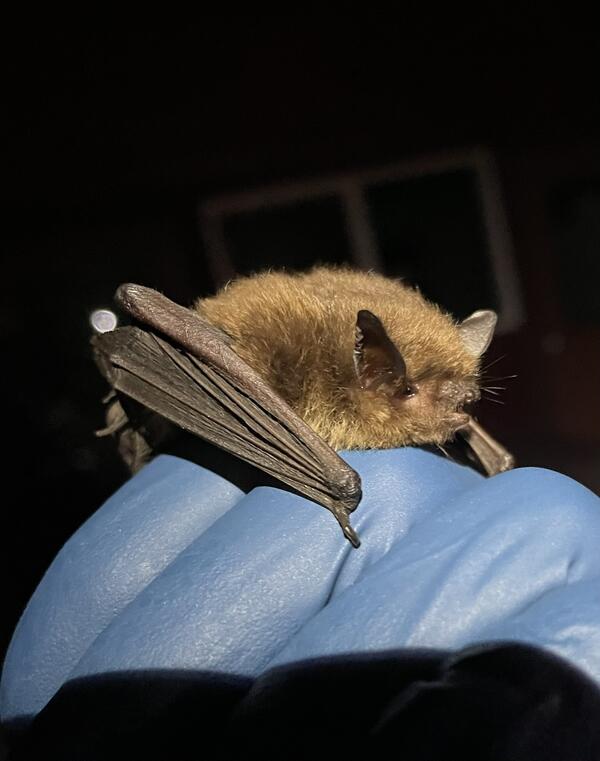
Perched Yuma myotis
Yuma myotis has a wide range throughout western North America, from the Southwestern regions of Canada into Mexico.
Yuma myotis has a wide range throughout western North America, from the Southwestern regions of Canada into Mexico.
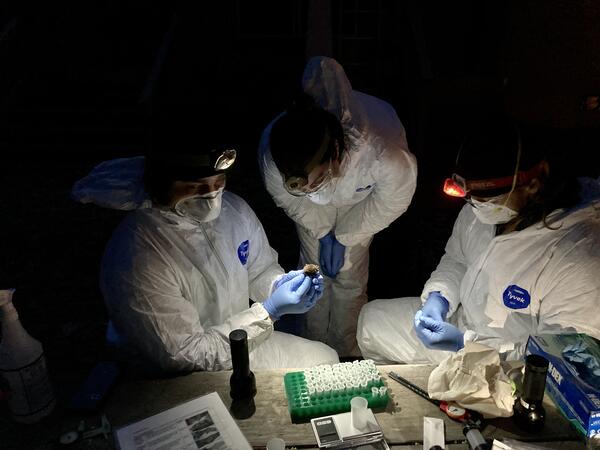
Setting up to collect samples from a bat
Scientists get ready to collect samples from a bat to test for Pseudogymnoascus destructans, the fungus that causes white-nose syndrome.
Scientists get ready to collect samples from a bat to test for Pseudogymnoascus destructans, the fungus that causes white-nose syndrome.
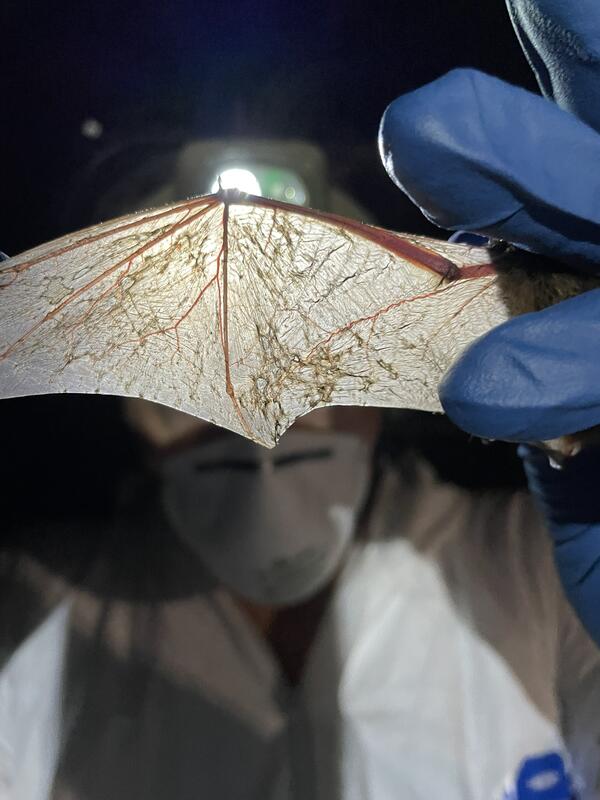
A bat's wing scarred by white-nose syndrome
Scars on the skin of this bat's wing suggest white-nose syndrome infection over the previous winter.
Scars on the skin of this bat's wing suggest white-nose syndrome infection over the previous winter.
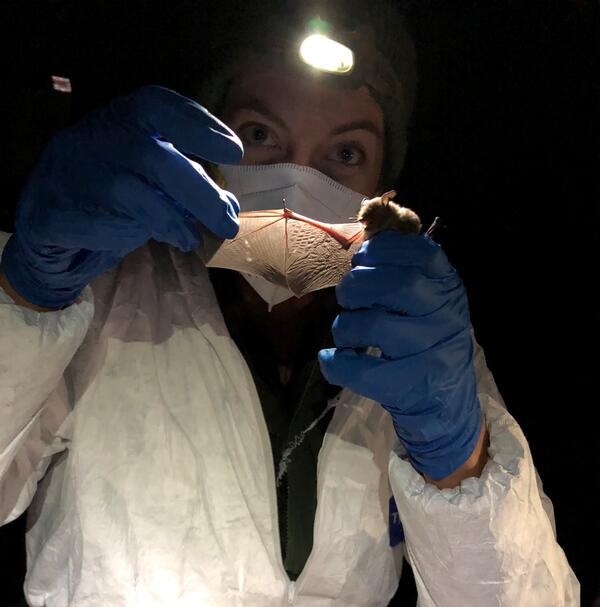
Looking for wing damage
Scientists look for damage on the skin of a bat's wing as an indicator of white-nose syndrome infection. This bat has no wing damage.
Scientists look for damage on the skin of a bat's wing as an indicator of white-nose syndrome infection. This bat has no wing damage.

Turtle coming out of brumation
Turtle found in the spring coming out of brumation. It is still covered in mud from being buried in the ground all winter. They can brumate up to several months!
Photo taken at Lookout Point Reservoir, Oregon.
Turtle found in the spring coming out of brumation. It is still covered in mud from being buried in the ground all winter. They can brumate up to several months!
Photo taken at Lookout Point Reservoir, Oregon.

15 year old female turtle
Northwestern pond turtles are sexually dimorphic (females and males look different). One way to tell female and male turtles apart is that they often have different color patterns on their face and throats. Females have a more speckled throat, while males throats tend to be more solidly white/yellow.
Northwestern pond turtles are sexually dimorphic (females and males look different). One way to tell female and male turtles apart is that they often have different color patterns on their face and throats. Females have a more speckled throat, while males throats tend to be more solidly white/yellow.

8 year old juvenile northwestern pond turtle
These turtles are considered juveniles until they reach about 5 inches long. In this part of their range turtles remain juveniles and usually do not begin to reproduce until they are over ten years old.
Photo taken at Lookout Point Reservoir, Oregon.
These turtles are considered juveniles until they reach about 5 inches long. In this part of their range turtles remain juveniles and usually do not begin to reproduce until they are over ten years old.
Photo taken at Lookout Point Reservoir, Oregon.

Turtle being released after receiving a new transmitter
Turtle being released after receiving a new transmitterWe glue transmitters onto their upper shells (called their carapace) using non-permanent epoxy. We will track these turtles until the transmitter battery dies (about 2 years) and soon after that the epoxy degrades, and the transmitter will fall off the turtle without harming the turtle or it's shell.
Turtle being released after receiving a new transmitter
Turtle being released after receiving a new transmitterWe glue transmitters onto their upper shells (called their carapace) using non-permanent epoxy. We will track these turtles until the transmitter battery dies (about 2 years) and soon after that the epoxy degrades, and the transmitter will fall off the turtle without harming the turtle or it's shell.

Juvenile Northwestern pond turtle
This is a juvenile turtle. When they aren't in scared or in danger, northwestern turtles are very curious and will look towards movements and unusual sounds to figure out what is going on. They have excellent vision and hearing.
Photo taken at Hills Creek Reservoir, Oregon.
This is a juvenile turtle. When they aren't in scared or in danger, northwestern turtles are very curious and will look towards movements and unusual sounds to figure out what is going on. They have excellent vision and hearing.
Photo taken at Hills Creek Reservoir, Oregon.

Return to overwintering spot
Northwestern pond turtles often return to the same area each winter for brumation. We tracked this turtle overwintering in almost the exact same area in the winters of 2023 and 2024. It's brumation location was only 11m apart between the two years.
Photo taken at Fall Creek Reservoir, Oregon.
Northwestern pond turtles often return to the same area each winter for brumation. We tracked this turtle overwintering in almost the exact same area in the winters of 2023 and 2024. It's brumation location was only 11m apart between the two years.
Photo taken at Fall Creek Reservoir, Oregon.