U.S. flag

An official website of the United States government

Land Management

Learn more about FORT research on land management.

Filter Total Items: 131

Developing Broad Scale Indicators for Monitoring Ecosystems and Landscapes

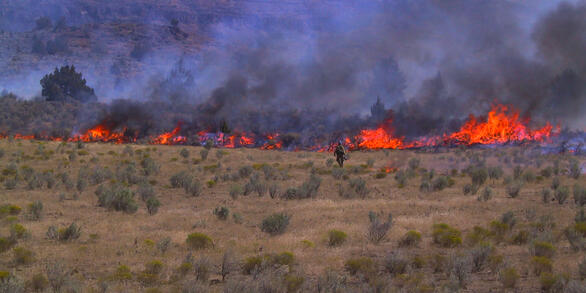
Many issues currently facing the Bureau of Land Management (BLM) and other large land managers span large landscapes, including sage-grouse conservation, wildfires, and energy development. Such challenges involve changes at both local and broad scales, but monitoring has typically focused at the scale of individual sites. The USGS is working to develop broad-scale indicators for monitoring...
Developing Broad Scale Indicators for Monitoring Ecosystems and Landscapes

Developing Broad Scale Indicators for Monitoring Ecosystems and Landscapes

Many issues currently facing the Bureau of Land Management (BLM) and other large land managers span large landscapes, including sage-grouse conservation, wildfires, and energy development. Such challenges involve changes at both local and broad scales, but monitoring has typically focused at the scale of individual sites. The USGS is working to develop broad-scale indicators for monitoring...
Learn More

Science Support for Implementing a Landscape Approach to Resource Management in the Bureau of Land Management

The Bureau of Land Management (BLM) is committed to implementing a landscape approach to resource management to help achieve sustainable social, environmental, and economic outcomes on the public lands it manages. USGS is providing science support for the effort, including identifying core principles of a landscape approach, demonstrating the benefits of multiscale data for evaluating potential...
Science Support for Implementing a Landscape Approach to Resource Management in the Bureau of Land Management

Science Support for Implementing a Landscape Approach to Resource Management in the Bureau of Land Management

The Bureau of Land Management (BLM) is committed to implementing a landscape approach to resource management to help achieve sustainable social, environmental, and economic outcomes on the public lands it manages. USGS is providing science support for the effort, including identifying core principles of a landscape approach, demonstrating the benefits of multiscale data for evaluating potential...
Learn More

Erosion and Invasive Saltcedar

Formation of arroyos in the late 1800s greatly increased erosion across the southwestern United States. Since the 1930s, however, this erosion has decreased, partly because of bank stabilization by introduced saltcedar. With Isleta Pueblo Indian Nation, the Aquatic Systems Branch developed a new sediment dating method using saltcedar tree rings. We applied the method in a landmark study of arroyo...
Erosion and Invasive Saltcedar

Erosion and Invasive Saltcedar

Formation of arroyos in the late 1800s greatly increased erosion across the southwestern United States. Since the 1930s, however, this erosion has decreased, partly because of bank stabilization by introduced saltcedar. With Isleta Pueblo Indian Nation, the Aquatic Systems Branch developed a new sediment dating method using saltcedar tree rings. We applied the method in a landmark study of arroyo...
Learn More

Riparian Ecology

Riparian ecologists at the Fort Collins Science Center study interactions among flow, channel change, and vegetation along rivers across the western United States and worldwide. Our work focuses on issues relevant to the management of water and public lands, including dam operation, invasive species, and ecological restoration. Investigations take place on a range of scales. For example...
Riparian Ecology

Riparian Ecology

Riparian ecologists at the Fort Collins Science Center study interactions among flow, channel change, and vegetation along rivers across the western United States and worldwide. Our work focuses on issues relevant to the management of water and public lands, including dam operation, invasive species, and ecological restoration. Investigations take place on a range of scales. For example...
Learn More

Riparian Vegetation Response to Dam Removal

Dam removal is an approach to river restoration that is becoming increasingly common. In most cases, dam removal is driven by considerations other than river restoration like dam safety, but how dam removal affects aquatic and riparian systems is of great interest in many dam removals. Scientists work in this area has had two areas of focus thus far: 1) studies of vegetation and geomorphic change...
Riparian Vegetation Response to Dam Removal

Riparian Vegetation Response to Dam Removal

Dam removal is an approach to river restoration that is becoming increasingly common. In most cases, dam removal is driven by considerations other than river restoration like dam safety, but how dam removal affects aquatic and riparian systems is of great interest in many dam removals. Scientists work in this area has had two areas of focus thus far: 1) studies of vegetation and geomorphic change...
Learn More

Large-scale streamflow experiments

Because the underlying cause of riparian system alteration is often attributed to the effects of dams on flow regime, managing flow releases, particularly high flows, from dams is an often-advocated approach to river and riparian restoration. Our work has focused on understanding effects of managed high flow releases (a.k.a., pulse flows, controlled floods) from dams along rivers in the lower...
Large-scale streamflow experiments

Large-scale streamflow experiments

Because the underlying cause of riparian system alteration is often attributed to the effects of dams on flow regime, managing flow releases, particularly high flows, from dams is an often-advocated approach to river and riparian restoration. Our work has focused on understanding effects of managed high flow releases (a.k.a., pulse flows, controlled floods) from dams along rivers in the lower...
Learn More

Science to Inform Riparian Ecosystem Restoration and Management

Throughout the world, riparian habitats have been dramatically modified from their natural condition. Dams, non-native species and climate change are often principal drivers of these changes, via their alteration of water and sediment regimes that determine key resources for riparian plants.
Science to Inform Riparian Ecosystem Restoration and Management

Science to Inform Riparian Ecosystem Restoration and Management

Throughout the world, riparian habitats have been dramatically modified from their natural condition. Dams, non-native species and climate change are often principal drivers of these changes, via their alteration of water and sediment regimes that determine key resources for riparian plants.
Learn More

Biological Invasions of Riparian Ecosystems

Beginning in the early twentieth century, non-native trees and shrubs, including tamarisk (also commonly known as saltcedar) and Russian-olive, were introduced to the United States for use as ornamental plants and in erosion-control plantings. These plants spread extensively, becoming the third and fourth most frequently occurring woody riparian plants in the American West.
Biological Invasions of Riparian Ecosystems

Biological Invasions of Riparian Ecosystems

Beginning in the early twentieth century, non-native trees and shrubs, including tamarisk (also commonly known as saltcedar) and Russian-olive, were introduced to the United States for use as ornamental plants and in erosion-control plantings. These plants spread extensively, becoming the third and fourth most frequently occurring woody riparian plants in the American West.
Learn More

Streamflow-fluvial Geomorphology-riparian Vegetation Interactions

The foundation for applying science to river and riparian restoration contexts lies in a basic understanding of the factors that drive riparian vegetation dynamics. Much of our research is focused on clarifying relationships between streamflow, fluvial geomorphology, and riparian vegetation, including various feedbacks.
Streamflow-fluvial Geomorphology-riparian Vegetation Interactions

Streamflow-fluvial Geomorphology-riparian Vegetation Interactions

The foundation for applying science to river and riparian restoration contexts lies in a basic understanding of the factors that drive riparian vegetation dynamics. Much of our research is focused on clarifying relationships between streamflow, fluvial geomorphology, and riparian vegetation, including various feedbacks.
Learn More

Energy Development and Changing Land Uses

Applied research and integrated regional assessments emphasize spatially explicit analyses of ecosystem components affected by energy development and land-use change in the western United States. Topics include sagebrush-steppe ecology; sagebrush habitat assessments; the effects of human activities (including energy development, transportation, and recreation) on habitats and wildlife behavior...
Energy Development and Changing Land Uses

Energy Development and Changing Land Uses

Applied research and integrated regional assessments emphasize spatially explicit analyses of ecosystem components affected by energy development and land-use change in the western United States. Topics include sagebrush-steppe ecology; sagebrush habitat assessments; the effects of human activities (including energy development, transportation, and recreation) on habitats and wildlife behavior...
Learn More

Wyoming Landscape Conservation Initiative: Inventory and Long-Term Monitoring

The Wyoming Landscape Conservation Initiative (WLCI) addresses effects of land-use and habitat changes on Southwest Wyoming’s natural resources. In partnership with twelve Federal, State, and local natural resource agencies, and non-governmental organizations– FORT and ten other USGS centers are conducting dozens of integrated science projects to assess the status of Southwest Wyoming’s natural...
Wyoming Landscape Conservation Initiative: Inventory and Long-Term Monitoring

Wyoming Landscape Conservation Initiative: Inventory and Long-Term Monitoring

The Wyoming Landscape Conservation Initiative (WLCI) addresses effects of land-use and habitat changes on Southwest Wyoming’s natural resources. In partnership with twelve Federal, State, and local natural resource agencies, and non-governmental organizations– FORT and ten other USGS centers are conducting dozens of integrated science projects to assess the status of Southwest Wyoming’s natural...
Learn More

Wyoming Landscape Conservation Initiative: Mechanistic Studies of Wildlife

The Wyoming Landscape Conservation Initiative (WLCI) addresses effects of land-use and habitat changes on Southwest Wyoming’s natural resources. In partnership with twelve Federal, State, and local natural resource agencies, and non-governmental organizations– FORT and ten other USGS centers are conducting dozens of integrated science projects to assess the status of Southwest Wyoming’s natural...
Wyoming Landscape Conservation Initiative: Mechanistic Studies of Wildlife

Wyoming Landscape Conservation Initiative: Mechanistic Studies of Wildlife

The Wyoming Landscape Conservation Initiative (WLCI) addresses effects of land-use and habitat changes on Southwest Wyoming’s natural resources. In partnership with twelve Federal, State, and local natural resource agencies, and non-governmental organizations– FORT and ten other USGS centers are conducting dozens of integrated science projects to assess the status of Southwest Wyoming’s natural...
Learn More
Was this page helpful?