
U.S. flag

An official website of the United States government

Geology, Minerals, Energy, and Geophysics Science Center

Scientists with the GMEG Science Center work on issues related to geologic processes, mineral and energy resource potential, and past climate, primarily in the Western United States. The science staff includes Geologists, Geophysicists, Geochemists, Biologists, and Geographic Information Systems specialists located in Arizona, California, Nevada, Oregon, and Washington.

News

Earth Science Matters - Vol. 21 | Issue 1

Earth Science Matters - Vol. 21 | Issue 1

Uncovering the Mysteries of the Bering Land Bridge

Uncovering the Mysteries of the Bering Land Bridge

Restoring Giants from the Ground Up: A Story of Fire, Soil, and Sequoias

Restoring Giants from the Ground Up: A Story of Fire, Soil, and Sequoias

Publications

Insights into Mountain Pass carbonatite formation from in-situ sulfur isotopes and geochemistry of sulfate and sulfide minerals Insights into Mountain Pass carbonatite formation from in-situ sulfur isotopes and geochemistry of sulfate and sulfide minerals

The Mountain Pass carbonatite stock hosts a world-class rare earth element deposit and may be classified as a carbonate-sulfate igneous rock, as it contains on average > 50 volume percent carbonate minerals and 20 to 30 volume percent sulfate minerals. The sulfates range in composition from barite to celestine and locally occur with sparse sulfide minerals. We investigate the origin of...
Authors
Erin Kay Benson, Kathryn E. Watts, Michael J. Pribil, Jay M. Thompson, Heather A. Lowers

Stepovers and beyond: Structural control of The Geysers geothermal system and the broader Clear Lake region Stepovers and beyond: Structural control of The Geysers geothermal system and the broader Clear Lake region

Fault geometry exerts a first-order control on geothermal systems by governing stress localization, fracture development, and permeability, yet in complex fault networks or broader shear zones, the relative influence of individual geometric features is often difficult to resolve. In the northern California Coast Ranges, The Geysers geothermal field is commonly interpreted to occur within...
Authors
Benjamin L. Melosh

Miocene evolution of the Humboldt Current Miocene evolution of the Humboldt Current

Diatom records from the East Pisco Basin (EPB) of southern Peru and offshore Ocean Drilling Program (ODP) Hole 682 A reveal stepwise increases in the primary productivity of the Humboldt Current during the middle and late Miocene. Although diatoms are present back through the late middle Eocene, successively enhanced diatom production occurs during the Miocene in four steps. The first...
Authors
John A. Barron, Thomas J. DeVries, Jason J. Coenen

Science

Geologic Mapping for Landscape Resiliency in California, Oregon, and Washington
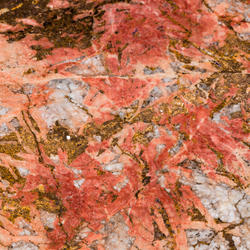
This project uses geologic and geomorphic mapping in the context of societally relevant problems in the Earth’s critical zone. Leveraging interdisciplinary research ties and interagency collaborations, it utilizes remote sensing data, corroborated with field observations, to determine i) the spatial distribution of geomorphic processes and ages of Quaternary deposits in the context of active...
Geologic Mapping for Landscape Resiliency in California, Oregon, and Washington

Geologic Mapping for Landscape Resiliency in California, Oregon, and Washington

This project uses geologic and geomorphic mapping in the context of societally relevant problems in the Earth’s critical zone. Leveraging interdisciplinary research ties and interagency collaborations, it utilizes remote sensing data, corroborated with field observations, to determine i) the spatial distribution of geomorphic processes and ages of Quaternary deposits in the context of active...
Learn More

Controls on Critical Element Enrichment in Carbonatite-Alkaline Igneous Complexes

The project seeks to determine the processes responsible for critical element enrichment in carbonatites and to enhance our ability to identify and assess economic deposits. This project will work at various scales to meet this objective and will primarily focus on deposits within the US or our USGS collaborative Nations.
Controls on Critical Element Enrichment in Carbonatite-Alkaline Igneous Complexes

Controls on Critical Element Enrichment in Carbonatite-Alkaline Igneous Complexes

The project seeks to determine the processes responsible for critical element enrichment in carbonatites and to enhance our ability to identify and assess economic deposits. This project will work at various scales to meet this objective and will primarily focus on deposits within the US or our USGS collaborative Nations.
Learn More

Large Magmatic Systems for Minerals

This project continues work on large magmatic systems in the U.S., where critical mineral commodities important to clean energy technologies can be concentrated. Modeling of large mafic intrusion extents will continue, and new geophysical methods will be applied to improve understanding of magmatic systems.
Large Magmatic Systems for Minerals

Large Magmatic Systems for Minerals

This project continues work on large magmatic systems in the U.S., where critical mineral commodities important to clean energy technologies can be concentrated. Modeling of large mafic intrusion extents will continue, and new geophysical methods will be applied to improve understanding of magmatic systems.
Learn More
Was this page helpful?