



We monitor hydrologic conditions so you can make informed decisions
Our Scientists operate state-of-the-art data networks that provide spatially-consistent data to compare to historic trends
Our Scientists operate state-of-the-art data networks that provide spatially-consistent data to compare to historic trends
We investigate and study our world and its relation to water
NJWSC is highly involved in research into our ecosystems, streams, groundwater, and their health and water quality
NJWSC is highly involved in research into our ecosystems, streams, groundwater, and their health and water quality
USGS National Water Dashboard for New Jersey
USGS Real-Time Water Data Mapper highlighting New Jersey
USGS Real-Time Water Data Mapper highlighting New Jersey
Coastal Floodplain Inundation Map
New Jersey Long-term Water Monitoring Networks
Learn about our Long-term Water Monitoring Networks
Learn about our Long-term Water Monitoring Networks
PFAS in Surface Waters of the Non-Tidal Passaic River Basin
North Jersey PFAS
North Jersey PFAS
New Jersey Water Science Center
Welcome! Since 1903, the New Jersey Water Science Center has been collecting high-quality hydrologic data and conducting unbiased water-science research to address the water-resource priorities of the Nation, global trends and support statewide water-resource infrastructure and management needs.
New Jersey Current Water Conditions
New Jersey Current Water Conditions

Real-time New Jersey Streamflow, Groundwater, and Water-quality conditions available through the National Water Data Dashboard interactive map application.

NJ WSC Quick Links
NJ WSC Quick Links
Explore some of our more popular science and tools
News
The Jersey Current: Spring/Summer 2026 - Vol. 1 | Issue 1
The Jersey Current: Spring/Summer 2026 - Vol. 1 | Issue 1
Geospatial Applications to Visualize Science and Support Decision‑Making Across Scales
Geospatial Applications to Visualize Science and Support Decision‑Making Across Scales
Predictions of PFAS in groundwater at drinking water supply depths in the U.S.
Predictions of PFAS in groundwater at drinking water supply depths in the U.S.
Publications
Aging of biosolids in fields prolongs the release of biosolid-borne PFAS and promotes the release of select PFCA in water Aging of biosolids in fields prolongs the release of biosolid-borne PFAS and promotes the release of select PFCA in water
Land application of biosolids can introduce PFAS into croplands. Biosolids transported to surface waters through runoff may subsequently release PFAS into aquatic environments. The objective was to evaluate the effects of the aging of biosolids and the presence of sediment on the release of biosolid-borne PFAS to water at the water-sediment interface under anaerobic conditions. Through...
The effect of temperature, flow, density and disease on smallmouth bass (Micropterus dolomieu) early life growth rate The effect of temperature, flow, density and disease on smallmouth bass (Micropterus dolomieu) early life growth rate
Individual growth rates of fish are influenced by gradually changing environmental conditions and rapid-onset events. However, there is a paucity of information on drivers of spatiotemporal variability in growth rates of fishes across large spatial extents. Using a 36-year dataset of smallmouth bass (Micropterus dolomieu) length-at-age data across 10 river reaches in Pennsylvania, USA (n...
Non-destructive sampling of larval amphibians shows tail tissues reflect whole-body methylmercury concentrations and trophic-related differences in bioaccumulation Non-destructive sampling of larval amphibians shows tail tissues reflect whole-body methylmercury concentrations and trophic-related differences in bioaccumulation
Mercury (Hg), and specifically methylmercury (MeHg), is a contaminant of global concern to humans and wildlife, but there is still limited understanding of its effects on many taxa. Amphibians are closely associated with water, where Hg is converted to MeHg, and high concentrations of MeHg can reduce survival of amphibians in the wild. However, limited non-lethal proxies exist for...
Science
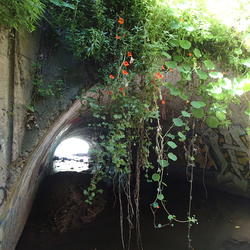
Northeast Region Urban Landscapes Capability Team
Learn about the Northeast Region Urban Landscapes Capabilities Team.
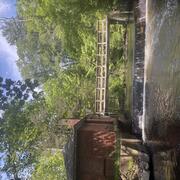
New Jersey ScienceBase Catalog
Hydrologic data collection, processing, analysis, dissemination, and archiving are major parts of the New Jersey Water Science Center program. ScienceBase is a primary repository for USGS data releases, published USGS scientific data and metadata, presented in a structured, discoverable format.

Coastal Plain Chloride Network
Chloride levels in groundwater are measured in selected wells on a 5‑year cycle to provide early warning of saltwater intrusion and to delineate the 250 mg/L line of equal chloride concentration within the principal aquifers of the New Jersey Coastal Plain.