



USGS READI-Net Tests Next Generation Environmental DNA Sampling Robot for Early Detection of Biological Threats
USGS READI-Net project team members and collaborators were trained by Monterey Bay Aquarium Research Institute staff on a next-generation environmental DNA autonomous robot—the Filtering Instrument for DNA Observation (FIDO). FIDO will enhance READI-Net’s ability to provide managers and scientists tools and strategies for early detection of biological threats.
READI-Net: Early Detection of Biological Threats
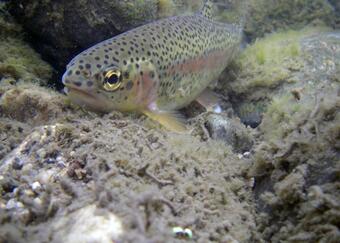
The USGS Rapid Environmental (e)DNA Assessment and Deployment Initiative & Network (READI-Net) project supports the Department of the Interior’s National Early Detection and Rapid Response Framework and works with its collaborators to use eDNA for the early detection of aquatic biological threats. Specifically, READI-Net develops cutting-edge autonomous eDNA sampling robots, sampling protocols, and analytical tools enabling managers and scientists to design early detection programs to address their specific needs.
eDNA, Early Detection, and Rapid Response
Organisms—fish, mussels, and snails, for example—leave behind genetic traces in the environment, which can be sampled and identified by environmental DNA methods.
- Only small amounts of eDNA in a water sample are needed to identify biological threats, like invasive species, even if the organisms themselves are not easily sampled using common approaches like hand netting, sieving, snorkel surveys, or trawling.
- Combining the use of eDNA with an autonomous autosampler
- allows managers to rapidly respond to biological threats, increasing the chances for targeted, effective, and cost-effective management actions by
- and provides the opportunity to eliminate target species before they can become established in new habitats, spread, and cause ecological and economic harm
READI-Net Tests New Technology to Detect Emerging Threats
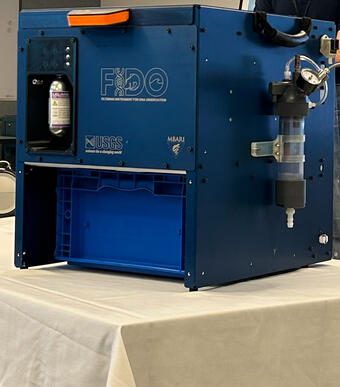
The USGS READI-Net project in partnership with Monterey Bay Aquarium Research Institute (MBARI) has collaborated on the development of a new and innovative eDNA sampling technology named Filtering Instrument for DNA Observation (FIDO)—named because it will become the best friend of managers, scientist, and READI-Net partners tasked with aquatic biosurveillance and biomonitoring.
On December 9-10, 2025, MBARI personnel trained USGS READI-Net project members and collaborators on the use of FIDO, which included the deployment of two FIDOs in the harbor of Moss Landing, CA—MBARI headquarters. Training participants also worked with MBARI to prepare a user manual for FIDO.
FIDO is an eDNA autonomous sampling robot and has the benefits over other sampling robots in that it:
- can collect and preserve up to 144 samples
- is portable by a single person
- can be remotely controlled and monitored
- is designed to be produced at relatively low cost.
Starting this winter, READI-Net will conduct further testing of FIDO in the lab and over the summer, field testing will be conducted in a variety of environments, including USGS stream gages, research vessels, and invasive species corridors.
FIDO will advance READI-Net’s ability to support its partners conducting aquatic biosurveillance and biomonitoring by providing technology that is more affordable, capable of doing more work, and provides the user flexibility on when, where, and how to use it. Having affordable, technologically advanced, and well-tested tools that quickly detect novel biological threats enables managers to rapidly respond and protect the ecosystems, recreation opportunities, and our local and regional economies.
Any use of trade, firm, or product names is for descriptive purposes only and does not imply endorsement by the U.S. Government.
Learn More About READI-Net
Learn More about eDNA: MBARI Video
Related

READI-Net: Providing Tools for the Early Detection and Management of Aquatic Invasive Species
Related