U.S. flag

An official website of the United States government

Images

Below are images associated with SBSC's science and staff. Images appear according to the year they were taken. To search, type a keyword or select a year from the dropdown menu. Or, click through the pages using the arrows at the bottom of the page. 

Filter Total Items: 641
Southwestern pond turtle (Actinemys pallida) partially emerged from the water, Mojave River
Southwestern pond turtle (Actinemys pallida), Mojave River, CA

A female southwestern pond turtle (Actinemys pallida) basks in the sun, Mojave River, CA. Photo taken by Shellie Puffer, 2017, SBSC, USGS.

Blowing dust in a fallowed agricultural field in central Arizona.
Bare Ground = Blowing Dust

Across the desert Southwest, ground void of plant material is prone to soil erosoin and dust storms. In this fallowed agricultural field, we see that a spring breeze can carry away fertile top soil and create air quality concerns.

Across the desert Southwest, ground void of plant material is prone to soil erosoin and dust storms. In this fallowed agricultural field, we see that a spring breeze can carry away fertile top soil and create air quality concerns.

Two side-by-side repeat photographs, from 1923, the other from 2017 showing environmental changes at Colorado River mile 130
Repeat photographs of the Colorado River at River Mile 130 below Lees Ferry

Repeat photographs, like this one from river mile 130 below Lees Ferry, capture changes in riparian plant communities along the Colorado River in Grand Canyon over time. Notice the increase in vegetation along the river bank. The historic photo on the left was taken by E.C. LaRue in 1923. The photo on the right was taken by Alan H. Fairley.

Repeat photographs, like this one from river mile 130 below Lees Ferry, capture changes in riparian plant communities along the Colorado River in Grand Canyon over time. Notice the increase in vegetation along the river bank. The historic photo on the left was taken by E.C. LaRue in 1923. The photo on the right was taken by Alan H. Fairley.

Biocrusts on the Colorado Plateau, Utah
Biocrusts, Utah, Colorado Plateau

Biocrusts on the Colorado Plateau, canyonlands, Utah. Image courtesy of Erika Geiger, USGS, 2017.

Biocrusts on the Colorado Plateau, canyonlands, Utah. Image courtesy of Erika Geiger, USGS, 2017.

Biocrusts with mosses, Utah

Biocrusts with moss species. Photo taken by SBSC in Utah, during surveys, 2017, courtesy of Erika Geiger.

Biocrusts with moss species. Photo taken by SBSC in Utah, during surveys, 2017, courtesy of Erika Geiger.

An extremely rare Mojave River western pond turtle was recently observed in the Mojave Desert.
An extremely rare Mojave River western pond turtle

An extremely rare Mojave River western pond turtle was recently observed by USGS scientists and staff from The Living Desert Zoo and Gardens in the Mojave Desert. Turtles of this population have rarely been seen since the late 1990s.

An extremely rare Mojave River western pond turtle was recently observed by USGS scientists and staff from The Living Desert Zoo and Gardens in the Mojave Desert. Turtles of this population have rarely been seen since the late 1990s.

USGS researcher photographs saguaro blossoms to collect research data
USGS researcher collects data on saguaro blooming patterns for phenology study

Southwest Biological Science center research ecologist Daniel Winkler photographs the top of a saguaro using the "world's largest selfie stick" to collect phenology data for a study that examined saguaro flowering patterns.

Southwest Biological Science center research ecologist Daniel Winkler photographs the top of a saguaro using the "world's largest selfie stick" to collect phenology data for a study that examined saguaro flowering patterns.

USGS researcher standing in a river holding a metal Hess sampler to sample aquatic invertebrates
Sampling invertebrates on the Colorado River downstream of Davis Dam with a Hess sampler

Sampling invertebrates on “Casino Row” at Laughlin, Nevada, just downstream of Davis Dam on the Colorado River, September 7, 2015. 

Person taking data in grassland with biocrust
Biocrusts in healthy grassland data collection

Person taking data in a healthy dryland grassland with dark biocrusts between bunchgrasses and cacti in Utah.

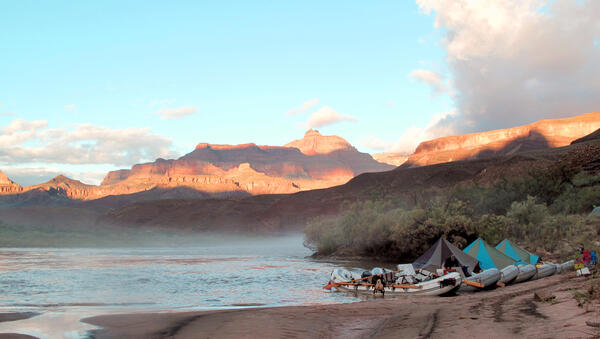
Sandbar on the Colorado River in the Grand Canyon being used as a camping spot.
Sandbar on the Colorado River

A river trip on the Colorado River in the Grand Canyon camping on a sandbar beach. Photo by Scott VanderKooi, USGS. Public domain.

A river trip on the Colorado River in the Grand Canyon camping on a sandbar beach. Photo by Scott VanderKooi, USGS. Public domain.

Sticky Trap for Insects Located on the Banks of a River, at the Confluence of the Litter Colorado River and the Colorado River
Colorado River sticky trap for emergent aquatic insects

Sticky trap for insects Located on the banks of the Colorado River, at the confluence of the Little Colorado River and the Colorado River in AZ.

Sticky Trap for Aquatic Insects (close-up) Showing Captured Insects
Sticky trap for aquatic insects on the bank of Little Colorado River

Sticky trap for emergent aquatic insects (close-up) showing captured insects. Photo by Eric Kortenhoeven, USGS.

A nurse tree cohort of Saguaro cacti in the Sonoran Desert, AZ

Similar aged saguaros can often be found in groups where nurse trees once stood. Nurse debris remains in place for years after the nurse died. Photo courtesy of Daniel Winkler, USGS SBSC.

Similar aged saguaros can often be found in groups where nurse trees once stood. Nurse debris remains in place for years after the nurse died. Photo courtesy of Daniel Winkler, USGS SBSC.

Photo of footprint damage to biocrusts.
Footprint damage to biocrusts

Many human activities can be unintentionally harmful to biological crusts. The biocrusts are no match for the compressional stress caused by footprints of livestock or people or tracks from vehicles.

Many human activities can be unintentionally harmful to biological crusts. The biocrusts are no match for the compressional stress caused by footprints of livestock or people or tracks from vehicles.

Photo of mature, dark-colored biocrust
Dark-colored mature biocrust

On the Colorado Plateau, mature biocrusts are bumpy and dark-colored due to the presence of lichens, mosses, and high densities of cyanobacteria and other organisms. These organisms perform critical functions, such as fertilizing soils and increasing soil stability, therefore reducing dust.

On the Colorado Plateau, mature biocrusts are bumpy and dark-colored due to the presence of lichens, mosses, and high densities of cyanobacteria and other organisms. These organisms perform critical functions, such as fertilizing soils and increasing soil stability, therefore reducing dust.

Photo of biocrust
Biocrust
Biocrust
Biocrust

On the Colorado Plateau, mature biocrusts are bumpy and dark-colored due to the presence of lichens, mosses, and high densities of cyanobacteria and other organisms. Disturbed biocrusts are lighter in color, looking more like the underlying sand than undisturbed ones, and are less capable of stabilizing soils or providing soil fertility.

On the Colorado Plateau, mature biocrusts are bumpy and dark-colored due to the presence of lichens, mosses, and high densities of cyanobacteria and other organisms. Disturbed biocrusts are lighter in color, looking more like the underlying sand than undisturbed ones, and are less capable of stabilizing soils or providing soil fertility.

Was this page helpful?