U.S. flag

An official website of the United States government

Images

Below are images associated with SBSC's science and staff. Images appear according to the year they were taken. To search, type a keyword or select a year from the dropdown menu. Or, click through the pages using the arrows at the bottom of the page. 

Filter Total Items: 641
View of sandbar on Colorado River at River Mile 65

View of reattachment sandbar located near the Carbon Creek drainage on Colorado River (River Mile 65).  Photo is from the long-term sandbar monitoring remote camera time-series archives, and shows the sandbar two months after the 2008 Spring High Flow Event.

View of reattachment sandbar located near the Carbon Creek drainage on Colorado River (River Mile 65).  Photo is from the long-term sandbar monitoring remote camera time-series archives, and shows the sandbar two months after the 2008 Spring High Flow Event.

Sandbar in Grand Canyon
Sandbar in the Colorado River in Grand Canyon

Sandbars in Grand Canyon are influenced by the amount of sand avaiable to build sandbars and the flow of the river, both of which are affected by Glen Canyon Dam.

Sandbars in Grand Canyon are influenced by the amount of sand avaiable to build sandbars and the flow of the river, both of which are affected by Glen Canyon Dam.

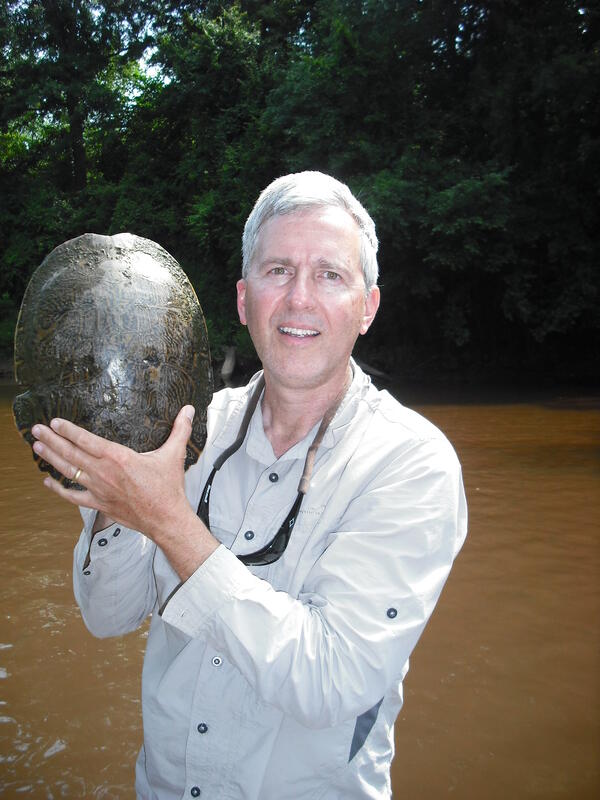
Dr. Jeff Lovich holding 2 turtles near Montezuma Well in AZ
Dr. Jeff Lovich holding a native and non-native turtle in each hand near Montezuma Well, AZ

Dr. Jeff Lovich holding a native and non-native turtle in each hand near Montezuma Well, AZ, April 2008. The small turtle is a native Sonora mud turtle (Kinosternon sonoriense) and the larger turtle is a non-native Red-eared slider (Trachemys scripta elegans). The red-eared sliders have been removed from Montezuma Well.

Dr. Jeff Lovich holding a native and non-native turtle in each hand near Montezuma Well, AZ, April 2008. The small turtle is a native Sonora mud turtle (Kinosternon sonoriense) and the larger turtle is a non-native Red-eared slider (Trachemys scripta elegans). The red-eared sliders have been removed from Montezuma Well.

Dr. Jeff Lovich is next to spur-thighed tortoises in Phoenix, AZ
Dr. Jeff Lovich and spur-thighed tortoises

Dr. Jeff Lovich kneels near spur-thighed tortoises at a rescue in Phoenix, AZ. Spur-thighed tortoises, also called Greek tortoises, are native to northern Africa through central Asia.

Dr. Jeff Lovich kneels near spur-thighed tortoises at a rescue in Phoenix, AZ. Spur-thighed tortoises, also called Greek tortoises, are native to northern Africa through central Asia.

A flat-tailed horned lizard on sand
A flat-tailed horned lizard

The flat-tailed horned lizard (Phrynosoma mcallii) lives in low, level, desert areas of Arizona, California, and Mexico that are suitable for solar energy development. Photo by Robert Lovich.

The flat-tailed horned lizard (Phrynosoma mcallii) lives in low, level, desert areas of Arizona, California, and Mexico that are suitable for solar energy development. Photo by Robert Lovich.

A Sonora Mud Turtle (Kinosternon sonoriense) hatchling, Montezuma Well, next to a quarter for a similar size comparison

A Sonora Mud Turtle (Kinosternon sonoriense) hatchling, Montezuma Well, with a quarter for a size comparison. Kinosternon sonoriense are found only in aquatic habitats in the southwestern United States and northwestern Mexico. They are listed on the IUCN Red List and some subspecies are listed as critically imperiled. Photo by Charles Drost, USGS, SBSC.

A Sonora Mud Turtle (Kinosternon sonoriense) hatchling, Montezuma Well, with a quarter for a size comparison. Kinosternon sonoriense are found only in aquatic habitats in the southwestern United States and northwestern Mexico. They are listed on the IUCN Red List and some subspecies are listed as critically imperiled. Photo by Charles Drost, USGS, SBSC.

A tamarisk plant with many pink flowers
Tamarisk plants can make many flowers

Tamarisk plants have been sucessful in southwestern US river- and stream-side habitats, in part because of its ablity to make many flowers and, therefore, seeds.

Tamarisk plants have been sucessful in southwestern US river- and stream-side habitats, in part because of its ablity to make many flowers and, therefore, seeds.

Shrubs re-sprout after a wildfire
Nonnative tamarisk re-sprouts after wildfire

Nonnative tamarisk is resistant to wildfire, in part due to its ability to resprout

Tamarisk growing along a river
A single species stand of nonnative tamarisk

Single species stand of nonnative tamarisk on the Lower Colorado River at Cibola National Wildlife Refuge, California

Small tress re-growing after a fire
Nonnative tamarisk re-grows following a wildfire
Tsegi Canyon, Laguna Creek, northern Arizona, photo taken in 2005 by Robert Webb
Repeat photograph of Tsegi Canyon, Laguna Creek, northern Arizona, 2005

Repeat photograph of Tsegi Canyon, Laguna Creek, northern Arizona, north of Rt. 160, taken by Dr. Robert Webb, USGS, in 2005. The original photograph in this series was taken in 1927 J.J. Hanks. The series is from the SBSC's Southwest Repeat Photography Collection, stake (camera point) s4821.

Repeat photograph of Tsegi Canyon, Laguna Creek, northern Arizona, north of Rt. 160, taken by Dr. Robert Webb, USGS, in 2005. The original photograph in this series was taken in 1927 J.J. Hanks. The series is from the SBSC's Southwest Repeat Photography Collection, stake (camera point) s4821.

Tsegi Canyon, Laguna Creek, northern Arizona, color photo taken in 2005 by Robert Webb
Repeat photograph of Tsegi Canyon, Laguna Creek, northern Arizona, 2005

Repeat photograph of Tsegi Canyon, Laguna Creek, northern Arizona, north of Rt. 160, taken by Dr. Robert Webb, USGS, in 2005. The original photograph in this series was taken in 1927 J.J. Hanks. This photo is a repeat photographic match taken in color to a B/W photo, both in 2005.

Repeat photograph of Tsegi Canyon, Laguna Creek, northern Arizona, north of Rt. 160, taken by Dr. Robert Webb, USGS, in 2005. The original photograph in this series was taken in 1927 J.J. Hanks. This photo is a repeat photographic match taken in color to a B/W photo, both in 2005.

Van Dorn water sampler, Lake Powell

A discrete water sample is collected from one of Lake Powell's Reservoir's main inflows. The Van Dorn water sampler pictured here is lowered to the desired depth and then triggered to close using a small metal weight. Photo by SBSC, 2005.

A discrete water sample is collected from one of Lake Powell's Reservoir's main inflows. The Van Dorn water sampler pictured here is lowered to the desired depth and then triggered to close using a small metal weight. Photo by SBSC, 2005.

Biocrusts in Canyonlands National Park

Intact biological soil crusts (biocrusts) in Canyonlands National Park. Photo taken by Jayne Belnap, USGS, 2004.

Intact biological soil crusts (biocrusts) in Canyonlands National Park. Photo taken by Jayne Belnap, USGS, 2004.

View of Colorado River confluence with the Little Colorado River
Repeat photograph of a boat on a beach along the Colorado River in Grand Canyon, 2002

This repeat photograph was taken in 2002 by USGS along the Colorado River and is a match of a historic image by E.C. LaRue from the 1923 Birdseye Expedition through Grand Canyon. The Birdseye Expedition surveyed a 251-mile stretch of the Colorado River from Lees Ferry to Diamond Creek.

This repeat photograph was taken in 2002 by USGS along the Colorado River and is a match of a historic image by E.C. LaRue from the 1923 Birdseye Expedition through Grand Canyon. The Birdseye Expedition surveyed a 251-mile stretch of the Colorado River from Lees Ferry to Diamond Creek.

Downstream view of Colorado River at LCR confluence
Was this page helpful?