



Colorado River
Colorado River
Filter Total Items: 41

Copper mining, critical minerals, and long-term drought in the Southwest United States
Long-term drought in the Southwest U.S. affects water use across many sectors as well as the natural environment. The Southwest U.S. is an important area for mining porphyry copper deposits, which consist of copper minerals disseminated in breccia, a type of rock composed of coarse rock fragments held together by cement or a fine-grained matrix, that are the World's largest source of copper...
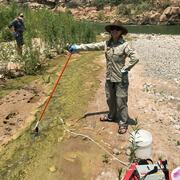
Early detection of aquatic threats: eDNA research in the Colorado River ecosystem & Lake Powell
The USGS and partners are conducting environmental DNA (eDNA) research in the Colorado River downstream from Glen Canyon Dam and in Lake Powell to detect invasive fish species and other aquatic threats before they become established. eDNA is a cutting-edge technology that makes it possible to identify invasive species before they are visible, even in vast or hard-to-survey environments like rivers...
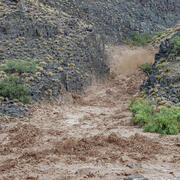
A New App to Report Flash Floods and Debris Flows in Grand Canyon
A new community science tool helps scientists gather valuable information on hazardous events such as floods, debris flows, and landslides that occur in the backcountry of Grand Canyon National Park. Visitors to Grand Canyon can help improve our understanding of the impacts these events have which helps to improve future warnings.

Lake Powell Research
Lake Powell is a large arid reservoir that represents about 70% of the water storage capacity for the Upper Colorado River Basin. It is the second largest reservoir in the United States by capacity (second only to Lake Mead). Lake Powell is an oligotrophic reservoir, which means that nutrient concentrations and algal production are generally low. This often results in very clear-water conditions...

SBSC: Providing Unbiased Actionable Science & Information to Support Natural Resource Management Needs of the U.S. & Department of the Interior Priorities
The U.S. Geological Survey Southwest Biological Science Center (SBSC) is uniquely positioned in the Colorado River Basin to provide sound information, specialized expertise, and innovative tools to support the management and sustained use of natural resources on public and Tribal lands in the Southwest U.S.
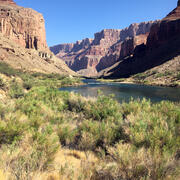
Vegetation monitoring: How one square meter can tell the story of 255 river miles along the Colorado River
The goal of SBSC's Grand Canyon Monitoring and Research Center’s (GCMRC) riparian vegetation monitoring program is to assess changes and trends in plant species composition and cover and relate those changes to river hydrology, climate, geomorphology, and the operations of Glen Canyon Dam.
Riparian Vegetation in Grand Canyon: An Overview
Riparian plant communities, associated with rivers and streams, are ecologically and culturally important areas in the southwestern U.S. Despite covering less than 2% of the land area in the southwest, the resources provided by these communities make them valuable to wildlife, the public, scientists, and resource managers.

SBSC science supports invasive species management
Invasive species can harm ecosystems, increase wildfires, damage forests, and outcompete native species. The US Geological Survey's Southwest Biological Science Center conducts research that provides our federal and state partners, cooperators and land managers with the tools, data and strategies to enhance biosecurity management. Scroll through the information below to read about different SBSC...

Study Uncovers Migration Patterns of Native Fish in the Colorado River
A study conducted by the USGS provides new insights into the migration patterns of three native fish species in the Colorado River: humpback chub, flannelmouth sucker, and bluehead sucker. This research highlights the importance of understanding native fish population dynamics within the Colorado River ecosystem in Grand Canyon, AZ.

River Sediment Dynamics
Sediment controls the physical habitat of river ecosystems. Changes in the amount and areal distribution of different sediment types cause changes in river-channel form and river habitat. The amount and type of sediment suspended in the water column determines water clarity. Understanding sediment transport and the conditions under which sediment is deposited or eroded from the various...

Colorado River Basin Science
The Grand Canyon Monitoring and Research Center, a branch of the Southwest Biological Science Center, conducts scientific assessments of the Colorado River in Grand Canyon, focused primarily on Lake Powell and the river ecosystem downstream of Glen Canyon Dam. On this page, we'd like to share related interactive tools and projects by other USGS Centers that cover science across the upper and lower...

Smallmouth bass expansion downstream of Glen Canyon Dam
In the Upper Colorado River Basin, smallmouth bass ( Micropterus dolomieu) are considered the greatest threat to native fishes and have been linked to declines in federally protected humpback chub ( Gila cypha), including one population that was rapidly extirpated in the past. Long-term management efforts have been underway to remove smallmouth bass from rivers in the Upper Basin, but smallmouth...