



This informational webpage provides an overview to community planners and emergency managers regarding coastal hazards associated with overwash, a regime within the storm impact scale. This page describes the conditions that lead to the overwash regime and the risks it poses to the beach and local community. Overwash is the third of four storm-impact regimes and leads to considerable impacts on local communities.
This page is part of an eight-page series on coastal storm-impact regimes, or storm-impact scale. It builds on the overview page How Storm-Impact Regimes Affect Beach Complexes: Coastal Hazards, three "Let's Get Technical" deep dives (Beach Complex, Dunes & Beach Metrics, and Water Levels), and four pages describing the storm-impact regimes (Swash, Collision, Overwash, and Inundation). You can explore the full set through the linked text or the clickable tiles at the bottom of this page. We suggest reading the How Storm-Impact Regimes Affect Beach Complexes: Coastal Hazards overview and the Collision Regime pages first.
Overwash Regime
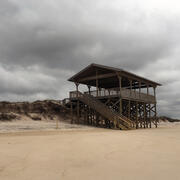
The overwash regime occurs when the total water level, from the combination of tide, storm surge, and wave runup, reaches or slightly exceeds the dune crest (Image 1). This regime is highly erosional to the beach complex, which creates long-term alterations and greatly increases risk to the adjacent communities.
Unlike swash and collision regimes, in which sand is only redistributed seaward of the beach (and could naturally return to the beach), overwash can also move sand landward of the dune crest. Sand can be mobilized from the entire beach complex and deposited. In some instances, this could simply be transported into a swale or secondary dune, or a saltwater wetland (natural systems), but in other cases, this material could impact human infrastructure such as beachfront buildings or roads.
In addition, seawater that transports the sand over the dune can cause minor flooding, typically in the form of water over roads. The extent of these impacts is likely to be confined to anything immediately behind the dune (tens of feet, but up to a hundred feet).

As with all regimes, impacts can vary significantly from one stretch of coast to another. Single locations or expansive regions of beach could overwash depending on the storm-induced water levels, the state or variability of the dunes alongshore, and the local dynamics of wave focusing and dispersal along a coastline.
If there is considerable local infrastructure (roads, railroads, structures), the local costs could reach into the tens or hundreds of millions of dollars for repairs, including sand removal from roads and bridges to restore traffic patterns.
This damage can be devastating for impacted coastal communities, but varies widely depending on how close local infrastructure is built to the beach complex.
Erosion and Risks to Communities Associated with the Overwash Regime
The beach and dune often lose an extensive amount of sand with an overwash event. This erosion is likely to lower the dune crest, which can increase the beach complex’s vulnerability to hazards from a subsequent storm. While some sand will likely gather in a local sandbar and return to the beach, these extreme conditions will also export a large volume of sand permanently away from the beach complex, making it unavailable to return naturally.
Additionally, the sand that is pushed onto roads or dune-adjacent coastal structures may be contaminated and require disposal rather than being returned to the beach complex. The beach will be severely impacted for years if left to rebuild naturally.
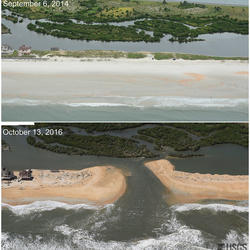
This slow recovery occurs because dunes form gradually, through the accumulation of wind-blown sand over time. As a result, local communities often invest in beach nourishment or dune fortification following an overwash event, rather than waiting for the dune to rebuild on its own (Image 2).

Impacts of the Overwash Regime
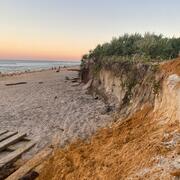
Any infrastructure adjacent to and immediately landward of the dune will likely be impacted by an overwash event. Sand can fill swimming pools, cover roads and driveways, or even pile against structures (homes, hotels, businesses). In addition to sand deposition, the force of the water during an overwash event can damage infrastructure directly (Image 3).

There are differences in the severity of overwash events, but recovering from an overwash could impose a major financial burden on impacted communities, insurers, and emergency management agencies.
Cleanup could take a significant amount of time, during which economic gains from typical beach activities could be depressed until cleanup is completed and safety can be assured for beachgoers. Infrastructure recovery could take days to a few weeks, while the beach complex is likely to be changed irrevocably without human intervention.
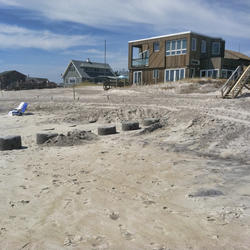
Where little to no human infrastructure exists, there are few overwash hazards (Image 4). The beach complex will likely re-establish to a new position slightly landward of its prior location, over years.

The big picture and the science behind it: The overview introduces the topic; the "Let's Get Technical" pages cover the beach complex, dunes, and water levels in detail.
How Storm-Impact Regimes Affect Beach Complexes: Coastal Hazards - Overview
Let's Get Technical: Beach Complex
Let's Get Technical: Dunes & Beach Metrics
Let's Get Technical: Water Levels
How severe is a coastal storm? Explore the four storm-impact regimes of increasing severity, from swash to inundation.
Swash Regime
Collision Regime
Overwash Regime
Inundation Regime

Swash Regime
Collision Regime
Inundation Regime

Let’s Get Technical: Beach Complex
Let’s Get Technical: Dunes & Beach Metrics

Let's Get Technical: Water Levels
How Storm-Impact Regimes Affect Beach Complexes: Coastal Hazards

Cape Canaveral Dune Vulnerability-Coastal Process and Hazard
This informational webpage provides an overview to community planners and emergency managers regarding coastal hazards associated with overwash, a regime within the storm impact scale. This page describes the conditions that lead to the overwash regime and the risks it poses to the beach and local community. Overwash is the third of four storm-impact regimes and leads to considerable impacts on local communities.
This page is part of an eight-page series on coastal storm-impact regimes, or storm-impact scale. It builds on the overview page How Storm-Impact Regimes Affect Beach Complexes: Coastal Hazards, three "Let's Get Technical" deep dives (Beach Complex, Dunes & Beach Metrics, and Water Levels), and four pages describing the storm-impact regimes (Swash, Collision, Overwash, and Inundation). You can explore the full set through the linked text or the clickable tiles at the bottom of this page. We suggest reading the How Storm-Impact Regimes Affect Beach Complexes: Coastal Hazards overview and the Collision Regime pages first.
Overwash Regime
The overwash regime occurs when the total water level, from the combination of tide, storm surge, and wave runup, reaches or slightly exceeds the dune crest (Image 1). This regime is highly erosional to the beach complex, which creates long-term alterations and greatly increases risk to the adjacent communities.
Unlike swash and collision regimes, in which sand is only redistributed seaward of the beach (and could naturally return to the beach), overwash can also move sand landward of the dune crest. Sand can be mobilized from the entire beach complex and deposited. In some instances, this could simply be transported into a swale or secondary dune, or a saltwater wetland (natural systems), but in other cases, this material could impact human infrastructure such as beachfront buildings or roads.
In addition, seawater that transports the sand over the dune can cause minor flooding, typically in the form of water over roads. The extent of these impacts is likely to be confined to anything immediately behind the dune (tens of feet, but up to a hundred feet).
As with all regimes, impacts can vary significantly from one stretch of coast to another. Single locations or expansive regions of beach could overwash depending on the storm-induced water levels, the state or variability of the dunes alongshore, and the local dynamics of wave focusing and dispersal along a coastline.
If there is considerable local infrastructure (roads, railroads, structures), the local costs could reach into the tens or hundreds of millions of dollars for repairs, including sand removal from roads and bridges to restore traffic patterns.
This damage can be devastating for impacted coastal communities, but varies widely depending on how close local infrastructure is built to the beach complex.
Erosion and Risks to Communities Associated with the Overwash Regime
The beach and dune often lose an extensive amount of sand with an overwash event. This erosion is likely to lower the dune crest, which can increase the beach complex’s vulnerability to hazards from a subsequent storm. While some sand will likely gather in a local sandbar and return to the beach, these extreme conditions will also export a large volume of sand permanently away from the beach complex, making it unavailable to return naturally.
Additionally, the sand that is pushed onto roads or dune-adjacent coastal structures may be contaminated and require disposal rather than being returned to the beach complex. The beach will be severely impacted for years if left to rebuild naturally.
This slow recovery occurs because dunes form gradually, through the accumulation of wind-blown sand over time. As a result, local communities often invest in beach nourishment or dune fortification following an overwash event, rather than waiting for the dune to rebuild on its own (Image 2).
Impacts of the Overwash Regime
Any infrastructure adjacent to and immediately landward of the dune will likely be impacted by an overwash event. Sand can fill swimming pools, cover roads and driveways, or even pile against structures (homes, hotels, businesses). In addition to sand deposition, the force of the water during an overwash event can damage infrastructure directly (Image 3).
There are differences in the severity of overwash events, but recovering from an overwash could impose a major financial burden on impacted communities, insurers, and emergency management agencies.
Cleanup could take a significant amount of time, during which economic gains from typical beach activities could be depressed until cleanup is completed and safety can be assured for beachgoers. Infrastructure recovery could take days to a few weeks, while the beach complex is likely to be changed irrevocably without human intervention.
Where little to no human infrastructure exists, there are few overwash hazards (Image 4). The beach complex will likely re-establish to a new position slightly landward of its prior location, over years.
The big picture and the science behind it: The overview introduces the topic; the "Let's Get Technical" pages cover the beach complex, dunes, and water levels in detail.
How Storm-Impact Regimes Affect Beach Complexes: Coastal Hazards - Overview
Let's Get Technical: Beach Complex
Let's Get Technical: Dunes & Beach Metrics
Let's Get Technical: Water Levels
How severe is a coastal storm? Explore the four storm-impact regimes of increasing severity, from swash to inundation.
Swash Regime
Collision Regime
Overwash Regime
Inundation Regime
Swash Regime
Collision Regime
Inundation Regime
Let’s Get Technical: Beach Complex
Let’s Get Technical: Dunes & Beach Metrics
Let's Get Technical: Water Levels
How Storm-Impact Regimes Affect Beach Complexes: Coastal Hazards